


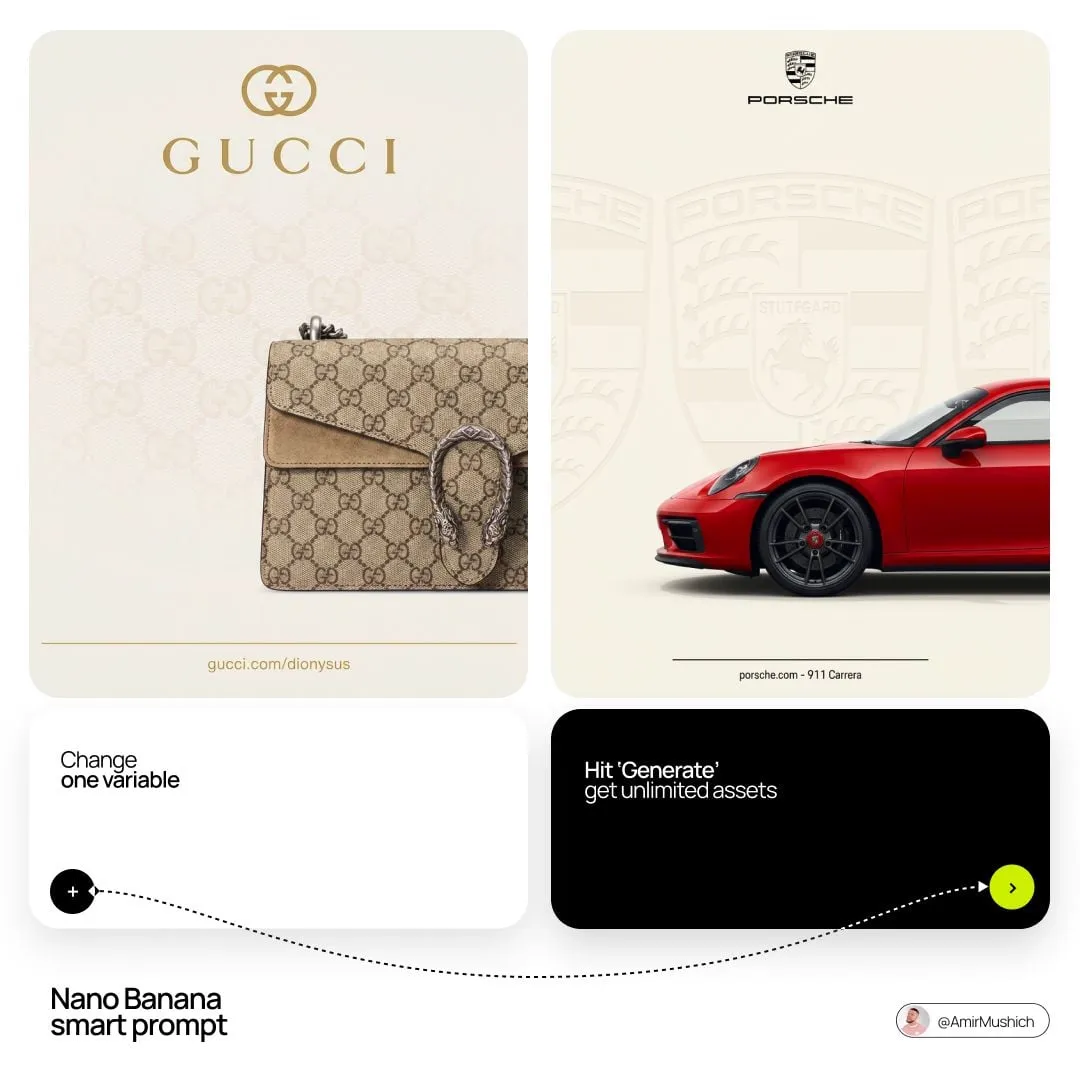
In 2025, video marketing is no longer a choice. Short attention spans, saturated feeds, and platforms that prioritize video have made moving images the default language of digital marketing. What has changed this year is the production side: AI has turned video creation from a slow, expensive process into a fast, scalable one. Consumer attention is shrinking while content volume grows, which means the brands that win are the ones that can produce more relevant video, faster, without losing quality.
This playbook covers the strategies that matter: dynamic personalization, visual consistency, data-driven scripting, platform-specific tactics for TikTok, Instagram Reels, YouTube, and LinkedIn, and the automation that ties it all together.
Why AI video marketing is now a necessity
The argument for AI video marketing is no longer about saving money. It is about surviving the volume race. A brand that publishes once a week is invisible next to competitors publishing daily, in multiple formats, across multiple platforms.
AI changes the equation in three ways:
- Speed: what took a production team a week now takes an afternoon.
- Scale: one concept can be turned into dozens of variations for different segments and platforms.
- Cost: the marginal cost of an extra variation is near zero compared to a traditional shoot.
The strategic consequence is that video marketing becomes a testing machine instead of a publishing calendar. You no longer bet everything on one expensive spot; you generate, measure, and double down on what works.
Visual consistency and brand identity
The biggest obstacle in AI video production used to be consistency. Characters changed between scenes, colors drifted, and the result looked synthetic. In 2025, reference-based generation has largely solved this, but only for teams that use it properly.
For marketers, consistency is not a technical nicety — it is brand identity. Every video you publish is a signal about who you are. If your palette, typography, and characters are stable, the audience recognizes you instantly. If they vary, the audience learns nothing.
The practical system:
- Build a brand reference kit: product shots, character images, color palette, and style frames.
- Document your rules: what may change (expressions, backgrounds, text overlays) and what never changes (logo, primary colors, product shape).
- Use the same references across every campaign so your library compounds over time.
- Review generated assets against the kit before publishing, not after.
Data-driven scripting and storyboarding
In 2025, marketing intuition is still valuable, but it is amplified by data. AI tools can analyze what your audience responds to — which hooks perform, which topics trend, which formats retain — and feed that into the scripting process.
The workflow:
- Collect signals: engagement data, search trends, customer questions, competitor analysis.
- Generate script variations: multiple hooks and structures based on those signals.
- Score them: against your goal (views, clicks, signups) before producing anything.
- Produce the top variations, not the one you personally like most.
Data-driven scripting does not remove creativity; it directs it. You still need a strong idea, but you no longer guess which idea deserves the production budget.
Platform playbooks: TikTok and Instagram Reels
Short-form platforms reward native content: vertical video, fast pacing, captions, and an immediate hook. AI helps you produce this at volume.
TikTok and Reels best practices in 2025:
- Hook in the first second: text on screen or a visual that stops the scroll.
- Keep it under 30 seconds for discovery content; longer only when retention is strong.
- Caption everything: most viewing happens with sound off.
- Use trending audio and formats, but adapt them to your brand message.
- Test multiple hooks: with AI, you can generate three versions of the same video with different openings and let the data choose.
The key metric is retention, not views. A video that holds attention for 20 seconds is worth more than one that gets a million accidental views and dies in two.
A final note on platform rhythm: consistency signals to the algorithm that you are an active publisher. A predictable schedule — even three posts a week — trains the platform to distribute your content and trains your audience to expect it. AI makes the cadence sustainable; the schedule itself is a strategic decision.
YouTube and long-form educational content
YouTube rewards watch time, and long-form educational content is where brands build real authority. AI supports this in several ways:
- Script research and structuring: outline complex topics and generate talking points.
- B-roll and illustrations: generate visuals for sections that lack footage.
- Thumbnails: generate and A/B test thumbnail concepts before publishing.
- Editing: auto-caption, cut silences, and repurpose long videos into clips.
Long-form strategy tip: use AI to plan a series, not just one video. A consistent series builds a compounding library that search and recommendations keep surfacing.
LinkedIn and corporate video
LinkedIn video has different rules: professional tone, slower pacing, and a focus on credibility. AI-generated video works here when it supports substance rather than replacing it.
Effective corporate AI video:
- Thought leadership shorts: a founder or expert explaining an insight, with AI handling backgrounds and captions.
- Product explainers: clear, calm demonstrations of how something works.
- Event and update recaps: fast summaries of webinars, launches, or reports.
- Personalized outreach: short video messages at scale, tailored per segment.
On LinkedIn, authenticity is the currency. Use AI to remove production friction, but keep the voice and the message genuinely human.
Technical foundations: generation engines, image-to-video, audio
Behind the tactics, a solid technical stack keeps your pipeline running. The essential components:
- Text-to-video engines: for scenes that start from nothing — concepts, abstract visuals, backgrounds.
- Image-to-video: for animating your product shots and brand frames while keeping details intact.
- Audio tools: text-to-speech for drafts and multilingual versions, voice cloning for consistent narration, and AI music for soundtracks.
- Editing tools: automatic captions, silence removal, and format resizing for every platform.
Choose one reliable tool per category and master it. The pipeline matters more than any single model.
Content management and distribution automation
Producing video is only half the work. Distribution is where automation pays off. A modern marketing team manages dozens of assets across platforms, each with its own format, captions, and metadata.
Automation opportunities:
- Auto-tagging: generate metadata and tags from the video content itself.
- Format adaptation: resize and re-caption assets for each platform automatically.
- Scheduling: publish at optimal times per platform without manual uploads.
- Repurposing: automatically cut long videos into short clips, pull quotes, and generate captions.
- Reporting: collect performance data into one dashboard.
The goal is a system where a single piece of content becomes a week of posts with minimal manual effort. This is what scales a small team into a content machine.
Measuring what matters
AI video marketing produces more data than ever, which makes choosing the right metrics more important. The metrics that matter depend on the goal:
- Awareness: reach, views, and share rate.
- Engagement: retention, comments, and saves.
- Conversion: click-through rate, signups, and revenue per campaign.
A measurement discipline that works:
- Define one primary metric per campaign before you publish.
- Compare variations against each other, not just against last month.
- Feed learnings back into the next scripting cycle.
- Cut what underperforms without sentimentality; AI makes replacement cheap.
One more discipline: review cadence. Set a fixed time each week to review the data — not when inspiration strikes. Consistency in measurement is what turns scattered experiments into a learning system. After four weeks of data, patterns emerge: which hooks retain, which topics convert, which formats die. Write them down. That document is your unfair advantage.
Repurposing: one video, many assets
The most efficient video marketing strategy is repurposing. One long-form video becomes a week of content:
- Cut the best moments into 30-second clips for TikTok and Reels.
- Pull quotes for LinkedIn posts and image cards.
- Transcribe and rewrite the transcript into a blog article or newsletter.
- Create a short teaser for YouTube Shorts and a highlight reel for your website.
AI makes each step faster: automatic transcription, smart clipping, caption generation, and format resizing. The result is a content system where every production dollar works multiple times.
The key is planning for repurposing before you shoot or generate. Note the moments in your script that will make good standalone clips. Mark them during production, and the repurposing session becomes a selection task, not a search task.
Building a reusable content library
Every video you produce should make the next one easier. This is the compounding effect of a content library:
- Assets: character references, style frames, and brand kits that carry across campaigns.
- Scripts: a folder of scripts with performance notes — what worked, what flopped, and why.
- Templates: prompt templates for your most common video types.
- Data: engagement metrics attached to each concept, so future planning is based on evidence.
A small library built over three months gives you a serious advantage: faster production, more consistent quality, and decisions based on your own audience's data instead of guesses.
Building the AI video stack step by step
Do not buy everything at once. Build your stack in four steps:
- Month one: pick one platform (start with TikTok or Reels) and one generation tool. Master the loop of hook, content, retention.
- Month two: add image-to-video for brand consistency and start a reference kit.
- Month three: add audio tools and editing automation; publish on a second platform.
- Month four: add distribution automation and reporting; scale to a weekly cadence you can sustain.
Each step adds capability without overwhelming the team. The trap is adopting ten tools in week one and mastering none.
Case study: a small team's AI video month
Imagine a three-person marketing team for a SaaS product. Their goal: 12 videos per month without hiring.
Week one: they plan the month, write six scripts from customer questions, and generate style frames. They pick the two strongest hooks per script.
Week two: they generate all assets in batches using consistent references. A designer reviews everything against the brand kit in one afternoon.
Week three: they edit, caption, and export in platform-native formats. One person handles distribution and scheduling.
Week four: they review the metrics, identify the top three performers, and feed the learnings into next month's scripts.
The output: twelve videos, several repurposed clips, and a documented system — produced by three people in their regular working hours. This is what AI video marketing looks like when it is run as a system rather than a series of one-off productions.
Common pitfalls in AI video marketing
- Publishing generated content without review: AI output is a draft until a human approves it.
- Ignoring brand consistency: without references, every video looks like a different brand.
- Chasing every new model: pick a stable stack and change deliberately.
- Measuring the wrong metric: views without retention or conversion tell you little.
- Stopping too early: the compounding effects of a library and data appear after months, not weeks.
FAQ
Do I need a big budget to start with AI video marketing?
No. Start with free or low-cost tools, one platform, and one format. Master the loop of produce, publish, measure, and iterate before expanding.
How do I keep AI video on-brand?
Build a reference kit and a style guide, and use them in every generation. Review assets against the kit before publishing.
Can AI video replace human creators and actors?
For many marketing use cases, yes — product demos, explainers, and social content can be fully generated. For brand storytelling that needs authentic human connection, hybrid approaches work best.
How often should I publish?
Consistency beats volume. Choose a sustainable cadence — three times a week beats ten times one week and nothing the next — and keep it for at least three months.
Conclusion
AI video marketing in 2025 is a system, not a trick. The brands that win will combine speed and scale with discipline: consistent visual identity, data-driven scripting, native content for each platform, and automation that frees the team to focus on ideas and judgment. The tools will keep changing, but the playbook is stable: produce variations, measure honestly, and let the audience decide what deserves more of your budget.
