
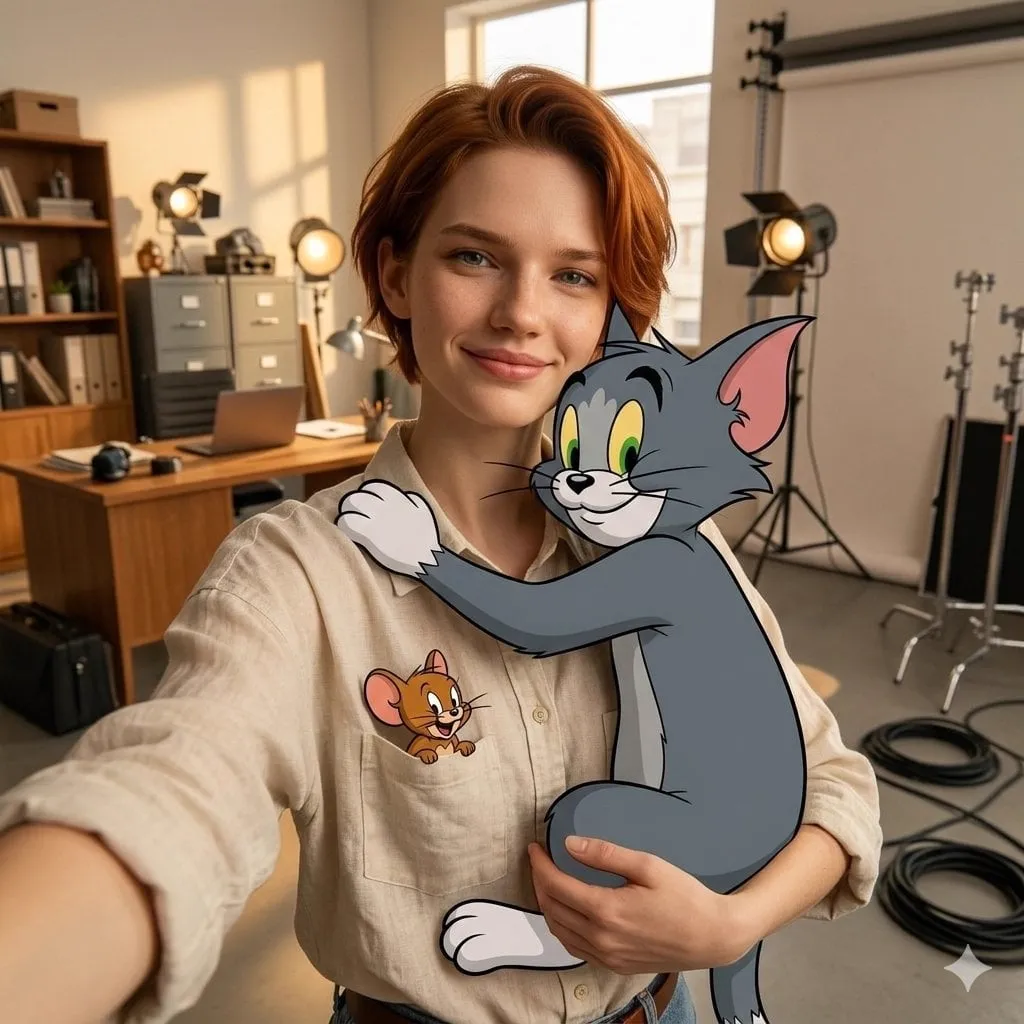
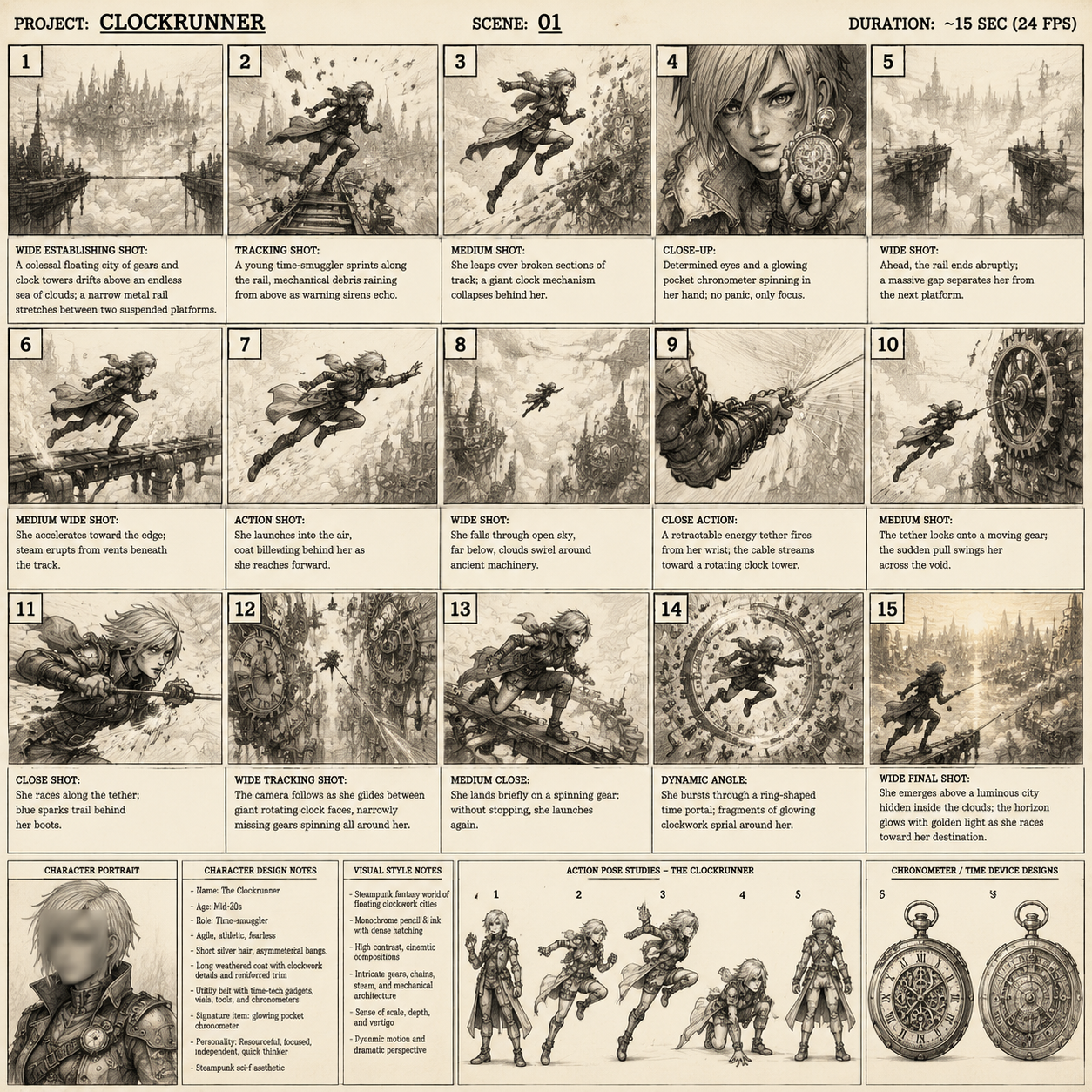
If you have spent more than an hour inside an AI video tool, you have seen the same frustration: the first shot looks incredible, and then the character comes back in scene two wearing a different jacket, a different face, and a completely different mood. Text-to-video models are brilliant at single moments and still unreliable at continuity. Multi-image fusion is the technique that fixes this, and it is changing what creators can reasonably expect from a generative workflow.
This guide explains what multi-image fusion actually does, how to choose the right generation model for each part of a project, and how to build a repeatable workflow that keeps characters, props, and locations stable across many shots. It is written for working creators: marketers, indie filmmakers, YouTube producers, and anyone who wants AI video to behave like a production tool instead of a slot machine.
What multi-image fusion actually does
Text-to-video models work from language alone. You describe a scene, and the model invents everything: the face, the clothes, the room, the light. That is powerful, but it is also the root cause of inconsistency. Change one word in the prompt and the model re-invents everything again.
Multi-image fusion works differently. Instead of starting from text only, the system starts from one or more reference images, often called keyframes. You give it a picture of the character, a picture of the location, a picture of the object, and the generation step uses those images as anchors. The result is a clip where the person in frame three is recognizably the same person from frame one.
In practice, the technique shows up in a few forms:
- Character reference: one image defines who appears on screen.
- Keyframe interpolation: the first and last frames are fixed, and the model fills in the motion between them.
- Style reference: an image defines the visual style, and the model applies it to new content.
- Multi-reference fusion: several images are combined into a single coherent scene.
The most useful mental model: think of fusion as giving the model constraints instead of asking it to guess. Every constraint you add removes a degree of freedom that previously produced drift.
Why model choice decides the ceiling
Fusion is only as good as the underlying generator. If the base model cannot render hands, no amount of reference images will save a close-up. If it cannot understand camera language, your carefully chosen keyframes will still come back as a flat static shot.
Modern video models fall into broad groups, and each group behaves differently under fusion:
- Cinematic premium models: the strongest prompt adherence, the best physics, and the most stable handling of multiple reference images. They cost more compute and render slower, but for hero shots, product close-ups, and anything with a human face, they are usually worth it.
- Balanced all-rounders: fast, good quality, cheap enough for iteration. Ideal for drafts, storyboards, social cuts, and anything where you need volume rather than perfection.
- Asian and specialized models: many excel at prompt adherence in stylized or culturally specific contexts, and some are extremely good at specific motion types like dance, martial arts, or distinctive camera moves.
- Open and community models: useful for experimentation, fine-tuning, and local pipelines, but typically require more manual setup and produce less predictable results than hosted frontier models.
A practical rule: use the cheapest model that passes your quality bar for drafts, then reserve premium models for the shots the audience will actually remember. Most projects have three or four hero shots and thirty filler shots. Treating them all the same wastes both budget and time.
Setting up a stable character kit
Before generating anything, build a small reference set. The single biggest mistake beginners make is trying to keep a character consistent using only text descriptions. It does not work. The model has no persistent memory of your character between generations; every generation starts from scratch unless you supply images.
A solid character kit looks like this:
- A front-facing portrait with neutral expression and even lighting.
- A three-quarter shot showing the body and outfit.
- A full-body shot for proportions and clothing details.
- Optional: detail crops for props, logos, tattoos, or distinctive accessories.
- Optional: a style sheet image showing the intended color palette and lighting.
Generate these images first with an image model, then feed them into the video model as references. When the kit is good, every shot of that character inherits the same face, outfit, and proportions. When the kit is bad, blurry, inconsistent lighting, mixed angles, the video inherits the mess.
Building a repeatable fusion workflow
Once the kit exists, the workflow is stable:
- Write the shot list before you generate anything. Scene number, action, camera move, duration.
- For each shot, pick the reference images that matter. Character shots need the character kit; location shots need the location reference; product shots need the product.
- Write a tight prompt that describes only what the references do not already define: the action, the camera movement, the emotion, the light direction.
- Generate a draft at low cost. Check motion and composition first; do not check pixels.
- When the draft is right, regenerate the same prompt with the higher-quality model and a fixed seed.
- Review the output against the keyframes. If the character changed, the problem is almost always in the reference set, not the prompt.
This order matters. Most creators reverse it: they polish the prompt first and discover the character drifted only after rendering the final version. References first, prompts second, polish last.
Handling motion between keyframes
The hardest part of any AI video project is not the single shot, it is the sequence. When you need a character to walk from one room to another across three shots, each shot must agree on where the character is, what they are wearing, and how the light falls.
The keyframe technique handles this cleanly. Generate the first frame of the sequence, generate the last frame, then ask the model to fill the motion between them. The model's job is now interpolation rather than invention, and interpolation is far easier to control.
For longer sequences, chain the keyframes: the last frame of shot one becomes the first frame of shot two. This is the same principle animators have used for a century. You animate the extremes and let the in-between work follow. AI does the in-between work faster than any human could, but someone still has to set the extremes, and that someone is you.
Common consistency failures and fixes
- The character's face changes between shots. Fix: add a stronger portrait reference and reduce prompt freedom; describe the face not at all and let the reference do the work.
- The outfit changes color mid-scene. Fix: add a detail crop of the fabric or outfit; keep the wardrobe words identical in every prompt.
- The location morphs between cuts. Fix: use a location reference image and keep camera descriptions consistent, same lens, same height, same lighting direction.
- Text on screen renders as gibberish. Fix: render text separately with an image editor and composite it in post; do not ask the model to draw readable text.
- Hands and fingers break in close-ups. Fix: change the shot, change the model, or use a model known for strong hand rendering; do not regenerate forty times hoping for luck.
- Motion feels floaty or rubbery. Fix: add explicit physics words such as weight, gravity, and contact; use first-and-last-frame control; prefer models with strong motion training.
Choosing a model per project type
There is no single best model, only best fits. A quick decision guide:
- Social media shorts with talking heads: a fast all-rounder with good lip sync and face stability is enough; spend your budget on scripts, not renders.
- Product ads: premium photorealistic models with strong lighting control; the product is the hero, and texture fidelity decides conversion.
- Narrative and cinematic work: premium models plus keyframe fusion; consistency matters more than speed.
- Anime and stylized content: specialized stylized models, where the base model already matches your art direction.
- Explainer and educational videos: balanced models with strong text rendering and diagram-friendly output; check whether the model handles UI elements well.
The role of first-to-last frame control
First-to-last frame control is the most underrated feature in modern AI video. It lets you fix the opening and closing frames of a shot and let the model invent the motion between them. For product demos, this means the product starts closed and ends open. For character work, it means the character starts at the door and ends at the window.
The technique is especially valuable when you need a specific final composition: a logo centered, a character looking at camera, an object in a precise position. Without it, you generate, check, regenerate, and hope. With it, you define the outcome and let the model handle the path.
Use it in combination with image references: the first frame can be generated from a still you already like, and the last frame can be a separate still. The model then produces motion that respects both. This is how creators get impossible shots like a full 180-degree camera arc around a character without any visible break.
When fusion is not enough
Multi-image fusion is a major step forward, but it does not solve everything. It does not give you true multi-character interaction. Two reference images of two different people still produce uncertain results when those people need to touch or talk. It does not guarantee lip sync; voice generation and lip animation remain separate problems. It does not preserve fine text or logos reliably; those belong in post-production.
Plan for these limits. Keep scenes with interacting characters simple and short. Generate voice separately and sync it in editing. Treat any screen or logo as a post-production element rather than a generation request.
Putting it all together
A realistic beginner-to-intermediate pipeline:
- Build the reference kit, about one hour, mostly in an image tool.
- Write the shot list, thirty minutes, do not skip this.
- Draft every shot with a fast model and fixed seeds.
- Review the sequence as a whole; fix references, not prompts.
- Re-render hero shots with a premium model.
- Add voice, music, and sound effects in an editor.
- Do the final grade and text overlays manually.
The difference between someone who uses AI video and someone who builds a production pipeline is exactly this structure. The tool changes every few months; the workflow survives because it is built on reference discipline, shot planning, and model selection, not on any single platform.
FAQ
How many reference images do I need for a character? Three is a good starting point: portrait, three-quarter, full body. Add detail crops only when the character has distinctive accessories.
Can I use a photo of a real person as a reference? For personal projects, usually yes, but check the terms of the tool you use and respect people's consent. For commercial work, prefer generated or licensed characters.
Why does my character still change even with references? Check the quality of the reference set first, then check that the model supports strong reference weighting. Some models treat references as suggestions rather than constraints.
Should I always use the most expensive model? No. Reserve premium models for hero shots. Drafting with cheaper models saves budget and reveals problems earlier.
How long does a typical AI video project take? A one-minute short with consistent characters usually takes a day of work the first time, and a few hours once the reference kit and shot list exist.
Conclusion
Multi-image fusion has quietly turned AI video from a novelty into a production tool. The models still drift, the hands still break, and the text still glitches. But with reference images, keyframe control, and a sane model selection strategy, those failures become rare enough to plan around. Start with the character kit, respect the shot list, and let the models fight over the details while you keep control of the story.
