
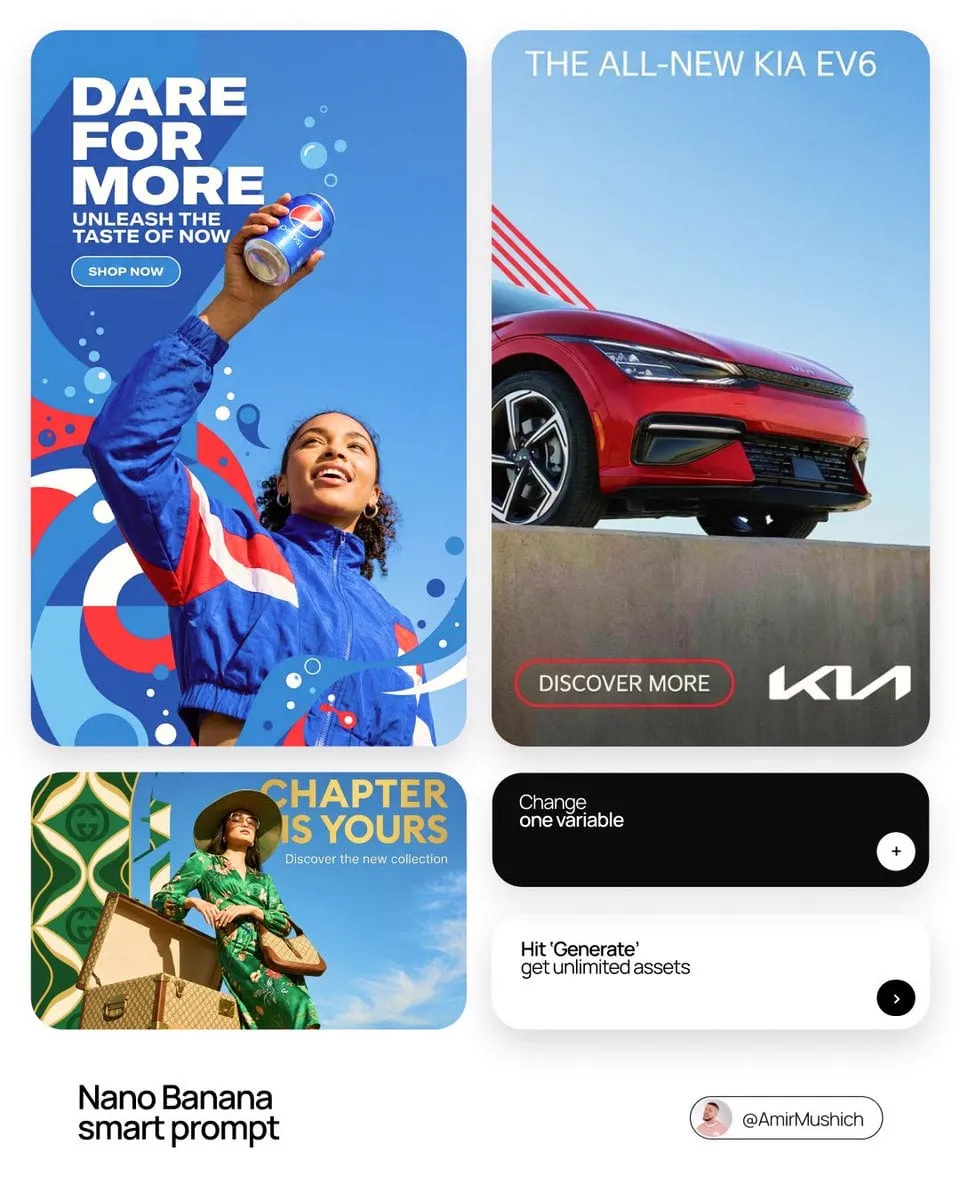
For most of the history of video production, making something worth watching required a team. You needed a director, a cinematographer, a lighting crew, editors, colorists, and a budget large enough to pay all of them. That model served the industry for a century, and then generative AI changed the math. In 2025, a single creator with a good idea and a well-organized process can produce video that competes with studio output — not by being easier, but by being fundamentally different. The tools are no longer the bottleneck; the bottleneck is how well you understand them, how you choose among them, and how you turn raw generations into a coherent story. This guide is a practical map of the AI video landscape: the models, the workflow, the techniques for consistency, and the habits that separate professionals from people who just press a button.
Why this matters now
The market for AI-generated content has been growing at a remarkable pace, with estimates pointing to sustained annual growth well above forty percent. Behind the numbers is a simpler truth: high-quality video production no longer requires a huge team or a huge budget. A solo creator can reach professional-grade tools that were out of reach just a few years ago. That is a massive opportunity, but it also means the bar has moved. When everyone has access to powerful generators, the difference between forgettable content and content that performs is no longer about access — it is about taste, process, and craft. The creators who treat AI video as a discipline, not a novelty, are the ones who build audiences and businesses on top of it.
The second reason this moment matters is speed. Attention is the currency of digital platforms, and attention is won in the first few seconds. The ability to go from idea to polished video in hours rather than weeks lets you test concepts, respond to trends, and iterate on feedback at a pace that traditional production cannot match. Speed is not a compromise; it is a strategic advantage.
Understanding the model landscape
The heart of any AI video workflow is the model you choose, and the market in 2025 is crowded. The good news is that the landscape breaks down into three useful categories.
Frontier models set the quality bar. Names like Flux, Runway, and Sora represent the current state of the art in realism, prompt adherence, and cinematic control. These are the tools you reach for when the project needs to look flawless: a commercial, a music video, a short film, a brand piece where every frame matters. They excel at understanding complex prompts and producing results that hold up under scrutiny. The trade-offs are cost per generation and processing time, which makes them a poor fit for high-volume experiments.
Asian-market models — Kling, PixVerse, MiniMax Hailuo, and others — have become the backbone of cost-effective production. They offer strong prompt adherence, solid physical realism, and competitive pricing, often with excellent performance on motion and character generation. For creators producing large volumes of content, whether for social platforms or client deliverables, these models deliver the best balance between quality and budget. The naming on this front changes quickly, so the smart practice is to test regularly rather than assume the tool you used last quarter is still the best value.
Specialized and open-source models round out the ecosystem. Luma, Pika, Vidu, and a growing family of open-source models focus on narrower strengths: coherent large-scale motion, anime styles, precise control over the first and last frame, or the ability to run locally on your own hardware. Open-source models in particular are worth learning because they give you full control, no per-generation cost, and the ability to fine-tune for your own style — at the price of setup effort and compute requirements.
How to choose the right model for a job
Choosing a model is a decision about trade-offs, and it helps to have explicit criteria. Prompt adherence is first: does the model actually do what you ask, or does it drift into generic output? Realism and physical coherence matter for any project that needs to feel grounded. Motion quality — how natural movement looks, how well objects and characters interact — separates professional output from uncanny results. Cost and speed determine whether a workflow is viable at scale, and controllability — keyframes, camera movement, style references — determines how much you can shape the output.
A useful rule is to separate exploration from production. When you are testing concepts, use fast, inexpensive models and generate many variations. When you have settled on a direction, switch to a higher-quality model for the final renders. This two-tier approach keeps costs down without sacrificing the final product. It also trains your eye: the more you compare outputs across models, the better you get at predicting which tool fits which task.
Building the workflow: from idea to finished video
A professional AI video workflow looks a lot like a traditional production pipeline, compressed and automated.
The first stage is concept and script. Write the story as a short script or a detailed outline. Identify the key moments, the emotional arc, and the visual language. This stage is where an AI director agent can help: tools that analyze your script, propose structure, break the story into shots, and suggest pacing. They will not replace your judgment, but they accelerate the transition from idea to plan.
The second stage is shot design. For each shot, define the composition, camera movement, and lighting. This is where you decide whether a scene needs a wide establishing shot, a close-up, a tracking shot, or a static frame. The more specific you are here, the better the generation results. If you have reference images, gather them now — they will power the consistency techniques described below.
The third stage is generation. Run the shots through your chosen models, using the criteria from earlier: cheap and fast for exploration, premium for finals. Generate multiple takes per shot and keep a selection system — a simple folder structure with clear naming will save you hours. Do not try to evaluate every frame in real time; generate in batches and review systematically.
The fourth stage is assembly and refinement. Edit the selected takes into sequence, adjust pacing, and handle audio: voiceover, music, and sound effects. AI tools for voice synthesis and audio sync have matured to the point where a single creator can produce a complete soundtrack without hiring a voice actor or composer. Finish with color grading and any cleanup passes — inpainting to remove artifacts, upscaling to improve resolution.
The consistency problem and how to solve it
The single biggest technical challenge in AI video is consistency. Generate ten shots of the same character and the tenth may look nothing like the first: different face, different clothes, different hair. For any project with a character, a brand, or a series, this is fatal.
The solution in 2025 is multi-image fusion and keyframing. The idea is simple: instead of relying on a text description alone, you feed the model a set of reference images that anchor the visual identity. For a character, that means several images of the same face from different angles, ideally in the same lighting. For a product, it means reference shots that pin down the exact design. The system fuses these references into a consistent identity and applies it across generations. The result is a character who looks like the same person in shot one and shot forty.
The discipline that makes this work is preparation. Build a reference library before you start generating: character sheets, style frames, color palettes. Treat these references as part of your creative asset — they are as valuable as the final video, because they make every future project with that character faster and more consistent. When you combine multi-image fusion with careful prompt design, you can maintain a recognizable style across an entire series, which is the foundation of any long-form or episodic AI project.
Monetizing your production capability
Once the workflow works, the question becomes what to do with it. The most direct path is client work: brands and agencies need video in volumes that traditional production cannot supply, and creators who can deliver fast, consistent, on-brand output have a strong negotiating position. Product demos, localized ad variants, social content, and short films are all in demand.
The second path is owning assets. Every project produces reference libraries, styles, and templates that you can reuse. Over time, these become a collection that generates income without new production: sell presets, offer style packs, license your character designs. Some creators take this further by training and publishing their own specialized models, effectively selling the ability to reproduce their style.
The third path is education and community. Creators who document their workflows, share prompts, and teach the craft build audiences that convert into courses, memberships, and consulting. This path compounds: the better your work, the more your audience trusts your teaching, and the more your teaching improves your work.
Practical habits that separate the pros
Keep a prompt and parameter log. Every project produces thousands of decisions, and almost none of them survive in memory. Document what worked, what failed, and why. A simple spreadsheet with prompts, models, parameters, and results is one of the highest-ROI habits in this craft.
Build and protect your reference library. Consistency is the difference between amateur and professional output, and references are the raw material of consistency. Organize them, version them, and treat them as assets.
Validate everything. AI output is probabilistic; every generation needs a human eye. Develop clear acceptance criteria — sharpness, prompt adherence, character consistency, audio quality — and apply them ruthlessly. It is better to reject twenty frames and deliver five perfect ones than to publish mediocre output.
Stay current without chasing everything. The model landscape changes monthly. Follow a few trusted sources, test new models on a small batch, and only adopt tools that measurably improve your output or reduce your costs. Do not rebuild your workflow every time a new model launches.
Frequently asked questions
Do I need to know how to code to work with AI video? No. The leading tools are prompt-driven and visual. Coding becomes useful only when you want advanced automation — building your own pipelines, fine-tuning models, or integrating with APIs — but it is not required to start producing professional work.
Which model should a beginner choose? Start with a fast, inexpensive model with good prompt adherence to learn the workflow and build an eye for quality. Upgrade to frontier models once you understand what you want to achieve and why. Choosing a premium model before you know what you need is paying for power you cannot yet use.
How do I avoid the uncanny valley? Prioritize models with strong physical coherence, use references to anchor identity, and be conservative with motion in early attempts. Small camera movements and natural pacing hide artifacts far better than wild action sequences. Iterate on the details — hands, eyes, and physics — until the output holds up.
Can AI video replace traditional filmmaking? It changes the economics, but craft still matters. Direction, storytelling, editing, and taste are more important than ever because the technical barrier has fallen. The creators who thrive are those who combine traditional filmmaking knowledge with fluency in the new tools.
How much does it cost to produce a video with AI? It ranges from nearly free for short experimental clips to meaningful budgets for premium, long-form projects. The key is controlling cost through the two-tier strategy: cheap exploration, premium finals. Track your per-minute cost and you will quickly learn where the value is.
Final thoughts
AI video production in 2025 is a craft with a steep but climbable learning curve. The tools are abundant, the models are improving monthly, and the competitive advantage lies not in access but in process: knowing which model fits which task, maintaining consistency through references and fusion, and turning raw generations into coherent stories. Start small, build a repeatable workflow, and treat every project as an investment in your library of references, prompts, and judgment. The technology will keep changing; the discipline you build around it is what will last.
