
Why Prompts Are the New Camera
Every generation of creative technology changes where skill lives. With still photography, skill moved from the darkroom to the lens. With AI video, skill is moving from the editing suite to the prompt box. The models have absorbed an enormous amount of visual knowledge, but they only express it through language, and language rewards precision.
Think of a prompt as a set of instructions you give to a very talented but very literal collaborator. If you say "make a nice video of a person walking," the model decides everything you did not specify: who the person is, where they are, what the light looks like, which lens is on the camera, what mood the scene carries. The output might be good, but it will be the model's interpretation, not yours. A killer prompt removes those ambiguities one by one until the model's interpretation and your intention overlap.
This is why prompt design has become a core competency for teams that produce AI video at any scale. The models themselves keep improving, but the interface stays the same. Anyone who can write precise, structured prompts gets better output from every model, today and next year.
The Anatomy of a Strong Video Prompt
A complete video prompt answers a handful of questions. It is useful to think of them as slots that can be filled or left empty, knowing that every empty slot is a decision the model makes for you.
Subject and action
The first slot is the subject and what they do. Be specific about who or what is in the frame and what is happening. "A chef in a professional kitchen flips a pancake" beats "a chef cooking" because it fixes the action and the setting. If the subject is a real person, product, or character, attach a reference image; words alone will never define a face.
Visual style and medium
The second slot is the look. "Photorealistic," "cinematic," "3D render," "watercolor animation," "documentary footage" — these style tags change everything downstream. The model's training data is organized partly by medium, so naming the medium reliably pulls the output toward that aesthetic.
Lighting and color
The third slot is light, the most underestimated lever in AI video. "Golden hour," "neon night," "soft studio softbox," "harsh noon sun" each produce a different emotional register. Color direction matters too: a teal-and-orange grade, a desaturated palette, or high-contrast black and white tells the model how to treat the image.
Camera and lens
The fourth slot is the camera. This is where cinema vocabulary pays off. Push-in, dolly, handheld, aerial, low angle, shallow depth of field, wide angle, macro — the model has seen these terms in countless captions and applies them. Many modern systems even accept explicit lens parameters like aperture and shutter speed.
Duration and motion quality
Finally, set expectations about motion: slow and contemplative, fast and energetic, smooth and weightless. Motion quality is often the difference between a clip that feels alive and one that feels like a moving slideshow.
Matching Prompts to Models
Prompts are not universal. Each model was trained on different data with different captioning conventions, so each model has its own language preferences. A phrase that produces excellent results in one system may do nothing in another.
The practical approach is to keep a per-model prompt library. When you discover that a model responds strongly to physical language like "motion blur" and "depth of field," record that. When another model needs explicit shot sizes like "close-up" or "medium shot," record that too. Over a few weeks, this library becomes the team's most valuable prompt asset, because it encodes the quirks of every tool you use.
Testing is part of the skill. Write one prompt, run it across the models you have access to, and note the differences. The same sentence can be a masterpiece in one system and noise in another, and only systematic comparison reveals which.
Lighting, Color, and Camera Language
Directors think in light; prompt writers should too. Lighting does three jobs in a shot: it reveals the subject, it sets the mood, and it tells the model what kind of scene this is. Naming the light source is often more effective than naming the emotion. Instead of "a sad scene," write "a dim room lit only by a desk lamp." The model knows what that looks like; it has seen it a thousand times.
Color theory adds another layer. Complementary palettes create tension, analogous palettes create harmony. Desaturation reads as documentary or melancholic. High saturation reads as commercial or playful. The model will not grade the footage the way a colorist would, but it will build the scene with the palette you name, and the difference is visible.
Camera Language: Lenses, Movement, and Depth of Field
Camera language is the fastest shortcut to professional-looking output. A static wide shot and a slow push-in of the same scene are different films. The model has learned these differences from real footage, so the vocabulary transfers directly.
Useful terms to master: "dolly in," "dolly out," "tracking shot," "handheld," "crane shot," "drone shot," "over-the-shoulder," "POV," "establishing shot," "close-up," "extreme close-up," "rack focus," "shallow depth of field," "fisheye," "anamorphic." Each one constrains the model's choices and pushes the result toward a specific feel. You do not need a film school diploma, but the vocabulary is the difference between generic and directed.
One caution: stringing too many camera terms together confuses the model. Pick one dominant movement and one lens character per shot. If you need more, break the scene into separate shots.
Keeping Consistency with References and Keyframes
No prompt can fully define a face, and this is where references outperform words. An image reference anchors the subject: the model knows exactly who appears in the frame. Keyframes go further, pinning down the appearance at specific moments so the character survives changes of scene and angle.
A strong workflow uses all three inputs together. Start with a reference image for the subject. Write a precise prompt for the action and environment. Add keyframes where the scene changes dramatically. This combination is the practical answer to the consistency problem, and it beats even the best prompt-writing on its own.
Structuring Time: Narrative in a Single Shot
A video prompt is not just a description of a picture; it is a description of a moment in time. The model decides how the scene evolves within the clip, and you can influence that evolution by describing the beginning and the end of the movement.
"Smoke rises from the cup as the camera slowly pushes in" implies a specific temporal arc. "A door bursts open and light floods the room" implies another. Describing change over time — what starts, what accelerates, what resolves — gives the clip a micro-narrative that feels intentional. For longer stories, generate multiple shots and let the edit build the narrative; expecting a single clip to tell a whole story is a common and expensive mistake.
A Repeatable Prompt Workflow
Prompt design improves fastest with a system. Here is a workflow that has worked across many teams.
Start with a prompt template that covers the slots above. Fill in the subject, style, lighting, camera, and motion. Generate a first take, then evaluate against the brief, not against the prompt. Most iterations fail because the original idea was weak, not because the prompt was bad.
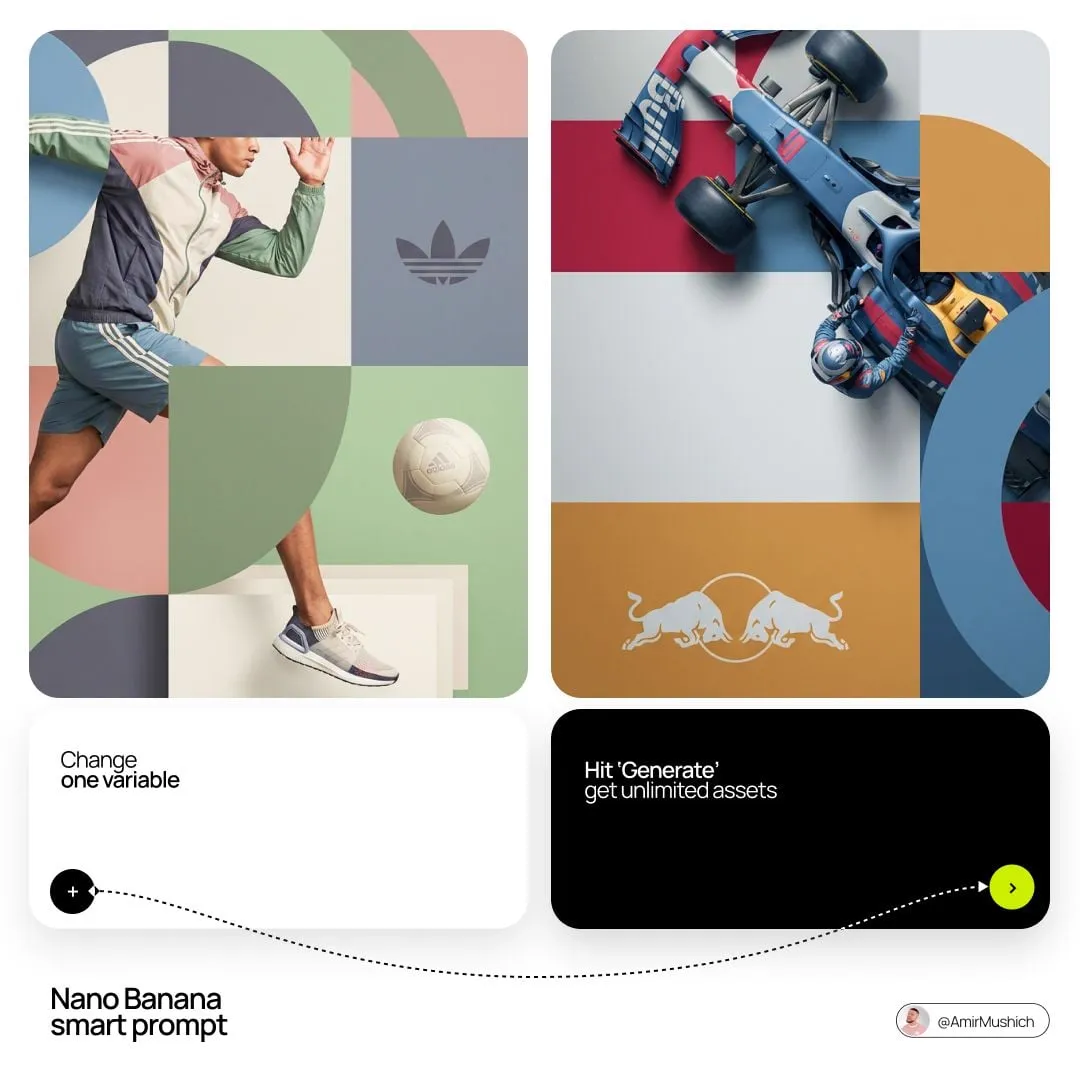
When a take misses, change one variable at a time. Adjust the lighting first, then the camera, then the style. Changing everything at once teaches you nothing. Keep a log of what you tried and what worked, because the learning compounds.
When you find a take that works, standardize it. Save the prompt, note the model, record the settings. Batch generation becomes safe only after the formula is proven.
Common Prompt Mistakes
The most common mistake is vagueness: "a cool video of a city." The model guesses, and the output is generic. The fix is specificity, not length. A focused ten-word prompt beats a rambling paragraph.
The second mistake is overloading. Thirty attributes in one prompt produce a stew where nothing is honored. Cut until only the elements that matter remain.
The third is ignoring the model. Every tool has a personality, and fighting it wastes generations. If a model cannot do realistic people, stop asking it to; use it for what it does well.
The fourth is skipping references. Words alone cannot pin down identity, and teams that insist on text-only prompts accept inconsistency they could have avoided.
The fifth mistake is treating the first take as the answer. Generation is stochastic: the same prompt produces different results each run. The first take is a sample, not a verdict. Run several takes, compare them against the brief, and choose deliberately. Professionals think in distributions, not single attempts.
Prompt Libraries, Team Standards, and Examples
Individually talented prompt writers produce inconsistent output when everyone works differently. Teams that scale AI video production build shared standards: a prompt template, a naming convention for assets, and a library where proven prompts live.
The template forces the important decisions. Every prompt records the subject, the style, the lighting, the camera, and the motion, even when a field is left blank on purpose. The library accumulates what works: the lighting phrase that consistently produces the brand's look, the camera term that the team's favorite model honors, the style tags that never survive contact with a given system.
The payoff is measurable. A new team member stops guessing and starts producing at the team's quality bar from week one. A campaign refresh starts from last quarter's best prompts instead of a blank box. Prompt standards are the documentation that turns a creative skill into a repeatable operation.
Before and After: A Worked Example
Theory is easier to see in contrast. Take the same idea and write it two ways.
A weak prompt: "A robot in a city at night, cinematic."
The model decides nearly everything. The robot could be humanoid or industrial; the city could be Tokyo or a generic skyline; the light could be neon or moonlight; the camera is a static wide shot. The output will be competent and forgettable.
A strong prompt: "A weathered humanoid service robot walks through a rainy neon-lit alley, rain bouncing off its scratched metal shoulders, its single optic glowing amber. Low-angle tracking shot, shallow depth of field, teal and orange palette, slow, deliberate motion."
Every clause removes a decision the model would otherwise make for you. The subject is specified, the environment is named, the light is described, the camera is chosen, the palette is fixed, and the motion quality is set. The result will look directed rather than generated.
The practical habit is to write the weak version first, then audit it: which words can the model misunderstand, and which decisions are left open? Each fix is one more constraint, and each constraint moves the output toward your intention.
FAQ
How long should a video prompt be?
Long enough to remove ambiguity, short enough to stay focused. Most strong prompts fit in a few sentences. Specificity beats length.
Do I need to know cinematography to write good prompts?
A basic camera vocabulary helps enormously, but you can build it in a few days. Learn the terms for movement, lens, and lighting, and your results will improve immediately.
Why does the same prompt give different results every time?
Generation is stochastic. The model samples from possibilities rather than returning one fixed answer. Run multiple takes and pick the best; this is normal and useful.
Should I use the same prompt for every model?
No. Each model has different preferences. Keep a per-model library and adapt. What works in one system may fail in another.
What is the fastest way to get better at prompts?
Systematic testing. Change one variable at a time, log the results, and build a library of phrases that work for your subjects and styles. The library is the asset.
