
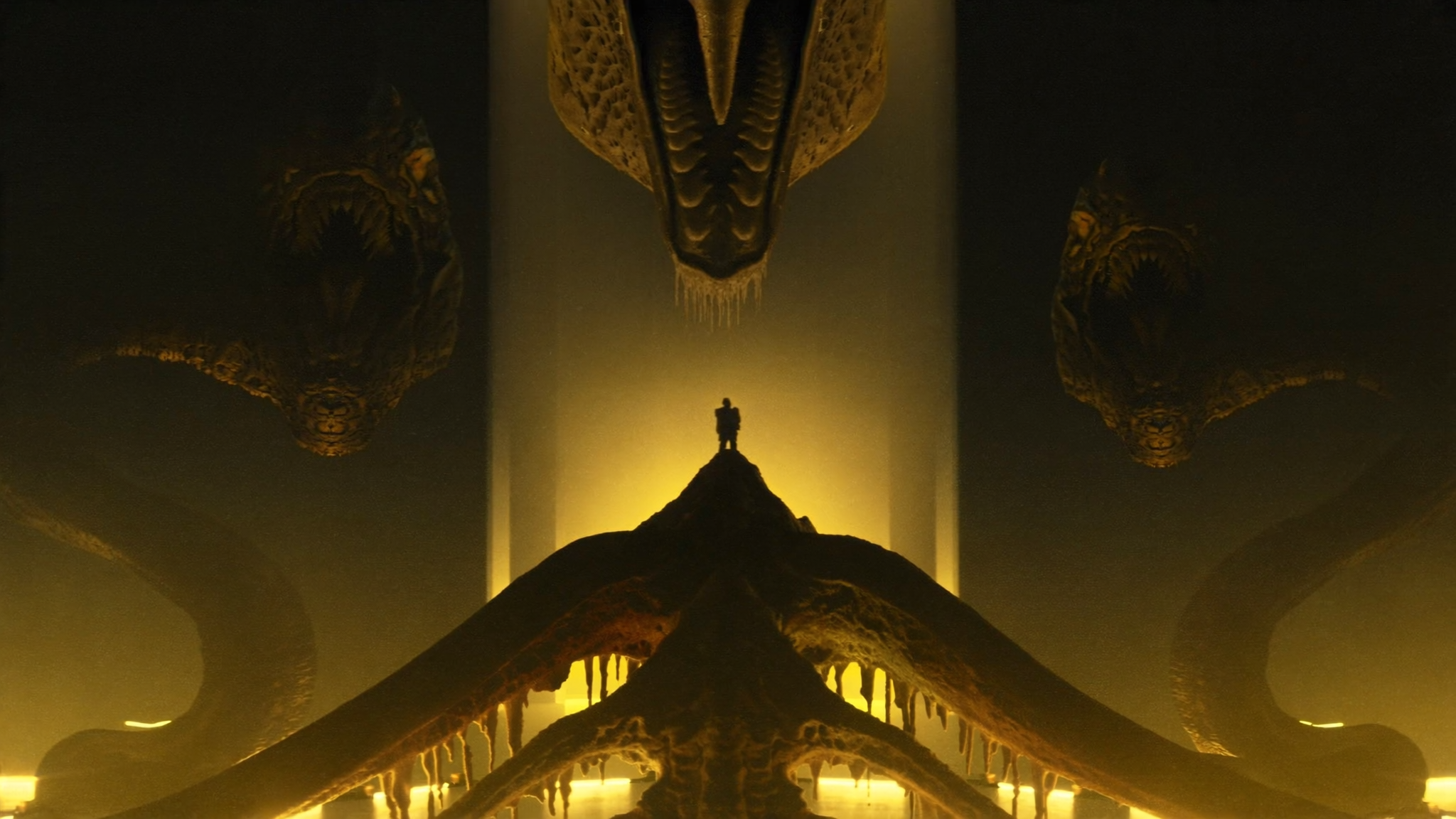
AI video generators have moved from experimental toys to everyday production tools. A single well-written prompt can now produce footage that looks like it came from a small studio: consistent characters, intentional camera moves, and lighting that actually matches the mood of the scene. The skill that separates impressive results from generic clips is prompt design. This guide explains how prompt-based video generation works, how to structure prompts that models understand, and how to build a repeatable workflow for ads, social clips, concept previews, and short films.
How Text-to-Video Models Actually Interpret Your Prompt
Before writing better prompts, it helps to understand what happens inside a video generation model. Most current systems are built on diffusion architectures trained on massive datasets of images, videos, and their text descriptions. When you type a prompt, the model embeds your words into a high-dimensional semantic space and then denoises random noise into frames that match that embedding.
Two practical consequences follow from this. First, the model understands concepts better than grammar. Phrases like "a person walking" work, but the model is really matching tokens to visual patterns, so precise nouns and concrete attributes beat elaborate sentences. Second, the model does not hold your intent in memory. Each frame is generated under the influence of the prompt, and when the prompt is vague, different frames can drift apart: the character's jacket changes color, the background shifts, or the camera angle jumps. This is why prompt writing for video is not the same as prompt writing for a single image. A single image only needs to look right once. A video needs to look right across dozens of frames while staying consistent.
Modern models reduce this drift with better temporal attention mechanisms, but the prompt remains the strongest lever you control. Models such as Runway Gen-4, OpenAI Sora, Kling AI, PixVerse, and MiniMax Hailuo all expose different prompt conventions, so part of the craft is learning which phrasing each tool rewards.
The Anatomy of a Strong Video Prompt
A strong video prompt usually contains five layers: subject, action, environment, style, and camera. Leaving any layer vague gives the model freedom to improvise, and improvisation is where inconsistencies come from.
Subject: name the main element precisely. Instead of "a girl", write "a teenage girl with short black hair, wearing a red bomber jacket and white sneakers". The more specific the visual identity, the easier it is for the model to keep it stable across frames.
Action: describe what is happening in plain physical terms. "She turns her head slowly and smiles" works better than "she feels happy". Models generate visible motion, not internal states, so describe movements, gestures, and interactions with objects.
Environment: set the place, time of day, weather, and relevant props. "On a rainy Tokyo street at night, neon signs reflecting in puddles" gives the model far more to work with than "in a city".
Style: state the visual language explicitly. Photorealistic, cinematic, anime, watercolor, claymation, pixel art, 8-bit, film grain, anamorphic, documentary. If you want a specific look, name it and add supporting adjectives.
Camera: describe lens, movement, and framing. "Slow push-in, shallow depth of field, close-up" or "wide static shot, then crane up". Camera language is one of the biggest upgrades you can make, because most beginner prompts ignore it entirely and the model defaults to a flat medium shot.
A complete example: "A middle-aged fisherman in a yellow raincoat repairs his net on a wooden dock at dawn, mist over the sea, cinematic natural light, slow dolly forward, medium wide shot, photorealistic, subtle film grain." Every element is concrete, and each one anchors the frames together.
Prompt Templates You Can Reuse
Templates do not replace judgment, but they remove the friction of starting from a blank field. Here are five that cover most production situations.
The product shot: "Commercial product video of [product], placed on [surface], [lighting], slow orbit around the object, [camera], [style], 4K quality, soft reflections."
The character scene: "[Detailed character description], [specific action], [environment], [time of day], [style], [camera movement], consistent appearance throughout."
The environment establishing shot: "Aerial establishing shot of [location], [weather], [time of day], sweeping drone movement, cinematic color grade, [style]."
The transition sequence: "[Scene A], then morph into [Scene B], smooth transition, particle effect, [style], [duration feel]."
The loopable background: "Seamless looping video of [subject], [motion], top-down or side view, [style], no cuts, continuous motion."
When you reuse a template, keep the style and camera fields identical across all of your shots. That consistency across prompts is what makes a series of clips feel like one project instead of a random playlist.
Choosing the Right Model for the Job
Not all models deserve the same prompt. Each family has strengths, and your prompt should play to them.
Runway Gen-4 is known for strong character consistency and cinematic output. It rewards descriptive character details and camera language, and it handles image-to-video well when you feed it a reference frame.
OpenAI Sora focuses on long sequences and physical plausibility. Its best prompts describe believable interactions, object persistence, and continuous action over time. If your scene involves water, fabric, or complex motion, Sora tends to keep the physics honest longer than most.
Kling AI and MiniMax Hailuo are strong on stylized and Asian aesthetic content, with good motion quality and expressive characters. They respond well to explicit style tags and exaggerated facial expressions.
PixVerse offers a large set of lens presets and multi-image reference, which makes it useful when you need precise composition control from a still frame.
Luma and Pika are solid all-rounders for short social clips, and they handle text overlays and simple effects gracefully.
The practical lesson is to match the model to the motion difficulty, not just to the style. Simple talking-head content can run on a fast, cheap model. A complex action sequence deserves a flagship model with better temporal consistency. Most serious workflows use two or three models, not one.
Building a Repeatable Prompt Workflow
A professional workflow treats the prompt as a draft, not a final artifact. Start by writing a one-paragraph creative brief that answers the five layers above. Then expand it into a full prompt and generate a single still frame first if the tool supports it. A still frame costs a fraction of a video generation and catches most identity and composition problems early.
Iterate on the still until the subject, style, and framing are right. Only then generate video. When the video comes back, review it in slow motion and note exactly where consistency broke: the face changed at second three, the jacket color shifted, the background warped. Take those notes back into the prompt and generate again.
Keep a prompt library organized by project. Store the winning prompt, the model used, and the seed or settings for each approved shot. Six months later, when you need to extend the project, you can reproduce the look exactly instead of rediscovering it. Versioned prompts are the cheapest asset library in video production.
Common Mistakes and How to Fix Them
The most common failure is a crowded prompt. Ten subjects, three styles, and four camera moves confuse the model, and it compromises by generating mush. Cut the prompt down to one clear subject, one primary action, one environment, and one style.
The second mistake is using abstract emotional language. "A dramatic scene" tells the model nothing visual. Replace emotions with physical cues: "low angle, hard shadows, slow zoom". The mood emerges from the visuals.
The third mistake is ignoring the first and last frames. Many models generate from a start frame, and some allow an end frame. If your shot begins with a close-up and ends with a wide shot, describe the transition explicitly rather than hoping the model will invent it.
The fourth mistake is inconsistent style tags across shots. If shot one says "cinematic, teal and orange grade" and shot two says "natural daylight", the project will look broken in the edit. Standardize the style block across all prompts in a project.
The fifth mistake is judging results on a phone screen at normal speed. Consistency problems hide at 30 frames per second. Review at half speed, zoom into faces and edges, and compare consecutive shots side by side.
Quick Wins for Social and Ad Content
For short-form platforms, lead with motion. The first second decides whether viewers stay, so open with a strong movement: an object falling, a face turning, a camera push-in. Put that motion into the prompt explicitly.
Keep text out of the frame whenever possible. AI models still garble small text, and a misspelled word kills the professional feel. Add captions in your editor instead.
Design for vertical framing if that is your platform. Some models produce square or landscape by default, so specify the aspect ratio and write the composition with vertical space in mind: subject centered, action happening in the middle band of the frame.
Finally, batch your prompts. Write ten variations of the same scene, generate them in a single session, and pick the best. The marginal cost of an extra attempt is low compared to the cost of a reshoot, and quality differences between attempts are often dramatic.
From Prompt to Finished Clip: A Worked Example
Let's walk through one complete example, from brief to approved clip. The project is a fifteen-second product teaser for a fictional coffee brand: a ceramic cup on a wooden table, morning light, steam rising.
The creative brief, in five lines. Subject: a matte black ceramic cup with a small white logo. Action: steam rising gently, with a light camera push-in. Environment: a rustic wooden table near a window, soft morning sun. Style: minimalist product photography, shallow depth of field. Camera: slow push-in from a medium shot to a close-up.
The full prompt: "Matte black ceramic coffee cup with a small white logo on a rustic wooden table near a window, soft morning sunlight, gentle steam rising from the cup, minimalist product photography, shallow depth of field, slow push-in from medium shot to close-up, photorealistic, subtle film grain."
First pass: generate a still frame. The composition is good, but the steam looks like smoke from a fire. Edit the prompt to "thin wispy steam, barely visible". The second still looks right. Now generate video on a mid-range model. The result has the push-in, but the logo wobbles slightly at the end. Regenerate with a slightly shorter push-in and a stable seed. The third attempt is approved, exported, and graded to match the brand palette.
This example shows the loop that defines the craft: brief, prompt, still, video, review, adjust. The same loop scales to character scenes, transitions, and background loops, and it gets faster as your prompt library fills with patterns that already work. Each approved attempt adds one more known-good recipe to reuse, which is why the first few projects are always the slowest.
FAQ
How long should a video prompt be?
Long enough to cover the five layers, short enough to stay readable. Most good prompts are between twenty and fifty words. Beyond that, extra words rarely add quality and often dilute focus.
Do I need the same prompt for every frame?
No. You need the same style and character block for every shot, but the action and camera fields should change to fit the story. Consistency comes from the shared identity fields, not from identical prompts.
Why does my character change appearance between shots?
Usually because the character description is too short or inconsistent. Write one canonical character description and paste it into every prompt for that project. If the tool supports reference images, use them as well.
What does the seed setting do?
A seed makes generation reproducible. When you find a shot you love, record the seed. The same prompt and seed will produce a very similar result, which is essential when you need to regenerate a scene after an edit.
Should I generate stills before videos?
Yes, whenever the tool allows it. A still frame is a cheap preview of the model's understanding of your prompt. Fixing problems at the still stage is dramatically faster than iterating on full video renders.
Can I combine AI footage with real footage?
Absolutely. Treat AI footage as additional coverage. Match the grade, grain, and lens look in post, and AI shots cut cleanly next to real ones, especially in montages and b-roll.
How do I keep a series of clips looking like one project?
Lock the style block, the character descriptions, and the camera language across all prompts. Generate a reference still early, and compare every new clip against it before you approve it.
Final Thoughts
Prompt video generation is not about memorizing magic phrases. It is about learning to describe the visible world precisely, then using that precision to hold a scene together across time. The tools improve every quarter, but the fundamentals stay the same: concrete subjects, physical actions, specific environments, declared styles, and intentional cameras. Build those habits, keep a clean prompt library, and review every render critically. The gap between average and professional AI video is mostly this: attention to detail at the prompt level. Start there, and the footage will follow.
