
The Short Version
If you have used AI video tools for more than a few months, you have probably noticed the same shift: the tools that once defined the category are no longer the only sensible choice. Runway and Sora became famous for good reasons, but the current landscape is much broader. Specialized models now offer better prompt control, stronger motion physics, faster iteration, and far more consistent characters across scenes.
The practical question is not which tool is the best. It is which tool fits the job in front of you. This guide walks through the strongest alternatives, the criteria that actually matter when you compare them, and a workflow you can use to test any new model without wasting a whole production cycle.
Why Look Beyond the Big Names
Runway and Sora earned their reputation by solving problems that earlier generators could not handle: coherent movement, cinematic framing, and believable scenes generated from a short prompt. But once a market matures, the leaders stop being the only reference point. Smaller teams and Asian model builders pushed hard in the same direction, often with different trade-offs.
Three things changed the market. First, diffusion models improved to the point where photorealism is no longer a differentiator by itself. Second, transformer-based video architectures made long-range consistency dramatically better. Third, creators stopped accepting tools as black boxes and started demanding control: over style, over camera movement, over which parts of an image stay fixed.
Runway and Sora still deliver excellent output, but they are not automatically the right tool for every creator, every budget, or every genre. The alternatives below cover the full spectrum, from open weights you can fine-tune to polished platforms that hide all the complexity.
What to Check Before You Choose a Video Model
Before comparing specific names, define what you actually need. Every model makes trade-offs, and the best choice depends on your production constraints.
Output Quality and Resolution
Look beyond demo clips. Generate the same scene with several models and compare at full resolution. Check facial details, hands, text rendering, and how the model handles reflections and shadows. A model that produces stunning landscapes may fall apart on a close-up of a face.
Motion and Physics
The hardest part of video generation is not making a single beautiful frame; it is making motion believable. Pay attention to how objects interact, how cloth and hair move, and whether the model respects gravity. Some models excel at slow atmospheric shots but produce wobbly results on fast action.
Consistency Across Shots
For anything longer than a single clip, character and scene consistency decides whether the result is usable. Test the same character across different angles, lighting conditions, and backgrounds. The best models today can lock an identity from a reference image, but the quality of that lock varies a lot.
Speed and Cost Efficiency
Generation speed changes how you work. A model that takes a minute per clip supports a very different workflow from one that takes ten minutes. Budget matters too, and the most expensive model is rarely the best value for high-volume work. Compare cost per usable clip, not the headline number.
Ease of Use
A powerful model behind a confusing interface is worth less than a simpler tool that gets used every day. Check whether the platform supports prompt presets, image-to-video, multi-image references, and keyframe control. Those features determine how much manual work remains after generation.
The Leading Alternatives, Compared
Flux Series: Precision and Prompt Control
The Flux family became a de facto standard for image generation, and its video extensions carry the same philosophy: unusually precise prompt adherence and strong style control. Flux Pro is the pick when you need a specific look and can describe it accurately. Flux Dev and Schnell offer faster, cheaper variants for exploration and drafts.
Flux shines in structured scenes where composition matters: product shots, architectural renders, and editorial-style imagery. Its weakness appears in very long sequences, where you still need to plan shot changes carefully. Use it when you want the model to follow instructions literally rather than interpret them loosely.
Kling: Strong Motion and Value
Kling AI, developed in China, became one of the most important competitors because it delivers impressive motion quality at a price that suits high-volume creators. The model handles complex camera moves, physical interactions, and realistic human motion better than many tools that cost several times more.
Kling is a strong default for social video, music visuals, and any project where you need many clips per week. The trade-off is that its aesthetic leans toward a recognizable look; you may need style references or post-processing to differentiate your output.
PixVerse: Creative Controls and Lens Options
PixVerse focuses on giving creators granular control over the camera. Its recent versions include a large set of cinematic lens controls, so you can simulate gimbal moves, rack focus, and depth-of-field changes without leaving the prompt interface.
This makes PixVerse a natural fit for creators who think in shots: short films, branded content, and anything where camera language matters as much as the subject. It is less suited to long-form narrative, where maintaining a single character across dozens of clips still requires careful reference management.
MiniMax Hailuo: Fast and Budget-Friendly
MiniMax Hailuo built its reputation on speed and accessibility. It is often the fastest path from idea to draft, which makes it ideal for ideation, client pre-visualization, and content pipelines that need volume. The quality is solid for stylized and semi-realistic work, though it may lag behind the top-tier models on extreme photorealism.
Hailuo is the tool to reach for when you need to test ten ideas before lunch. It is also a good learning tool, because the fast feedback loop teaches you prompt engineering faster than any slow premium model.
Luma Ray 2: Cinematic Light and Camera Work
Luma Ray 2 is designed for creators who want a filmic look without fighting the generator. It handles lighting, depth, and camera language with unusual sophistication, producing clips that feel shot rather than generated.
Choose Luma when the mood of the scene is the point: commercials, trailers, atmospheric storytelling. Its limitations appear in dense action and heavy effects, where dedicated motion-focused models may hold up better.
Vidu Q1: Multimodal Reference Power
Vidu Q1 pushes multimodal input further than most competitors. You can feed it multiple reference images and it uses them to inform style, identity, and composition. That makes it a strong partner for character work and for projects that combine assets from different sources.
The practical win is iteration speed: instead of regenerating from scratch when a reference changes, you update the reference and keep the rest of the pipeline intact.
Hunyuan Video: Open and Customizable
Hunyuan Video, from Tencent, matters for a different reason: it is open and actively improved by a large community. If you have the infrastructure, you can host it, fine-tune it, and integrate it into your own stack without depending on a platform's roadmap.
Open models are not for everyone. They require GPUs, setup time, and maintenance. But for teams with those resources, they offer the strongest control and the lowest marginal cost per clip at scale.
Alibaba Wan: First-Last-Frame Control
The Wan series stands out for its first-last-frame workflow. You provide the starting image and the ending image, and the model generates the motion between them. This is an extremely practical way to guarantee structure: the scene begins and ends where you decided, and the middle is the model's job.
Wan is excellent for transitions, looping content, and any shot where composition must be locked at both ends.
Matching the Model to the Job
No model wins everything. The reliable pattern is to build a shortlist of two or three models per job type and choose based on the specific scene.
Marketing Clips
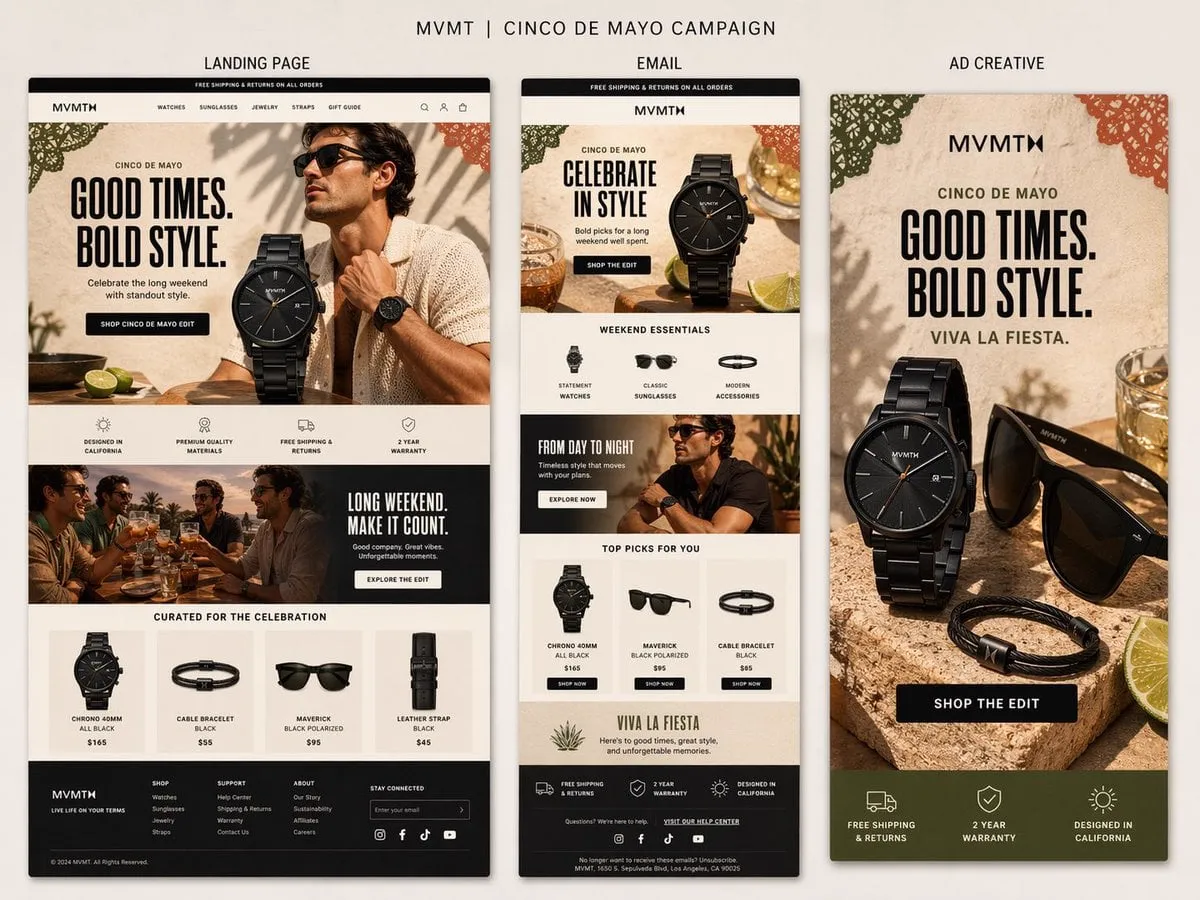
Marketing work demands fast turnaround, brand consistency, and strong visual polish. Combine a precision model like Flux for stills with a motion model like Kling or Luma Ray 2 for the moving shots. Keep brand colors and logos in reference images so the generator does not drift.
Long-Form Narrative
Narrative work is all about identity. Use a model with strong multi-image fusion, such as Vidu Q1 or Wan with first-last-frame control, and maintain a character sheet with several reference angles. Expect to regenerate scenes that break consistency instead of patching them in post.
Product Demos
Product videos need accuracy: correct labels, shapes, and proportions. Start with image generation for the hero shots, then animate with a motion model that respects structure. Test text rendering early, because it is one of the weakest areas for many generators.
Artistic and Stylized Work
For stylized output, open or fine-tunable models give you the most freedom. Hunyuan Video and the Flux ecosystem support style transfer that keeps your signature look across a whole project. This is where the tools stop feeling generic.
How to Combine Two Models in One Project
Most serious projects use more than one model, and the pattern is simple: the image model builds the world, the video model brings it to life, and a fast model handles the variations.
Start with the image model. Generate your hero frames, character sheets, and style references there, where precision is highest and iteration is cheap. Approve the look before you animate anything. Then hand the approved frames to the video model with clear motion instructions. The video model's job is movement, not design.
Keep a fast model for variations. When a client asks for a different angle, a different color, or a different duration, generate the variation quickly before deciding whether it needs premium treatment. This keeps the expensive parts of the pipeline focused on the content that actually ships.
The discipline that makes this work is a shared reference library. Every model in the pipeline reads from the same character sheets, style frames, and color palettes. If each tool starts from the same visual base, the outputs align even when the tools themselves are very different. This is also why you should never let a single vendor own your references: keep your own copies, organized by project, in a folder you control.
A Simple Workflow to Test Alternatives
Use the same scene for every test so the comparison is fair.
- Write one detailed prompt describing the subject, setting, lighting, and camera move.
- Prepare two reference images: one for style, one for the main subject.
- Generate the clip with each candidate model at the highest resolution you plan to use.
- Score each result on consistency, motion, prompt adherence, and aesthetic fit.
- Run the winner through your normal post-production and note where manual fixes were needed.
Repeat this once a quarter. The market changes fast, and a model that was second-best three months ago may now be the right default.
Common Mistakes and How to Avoid Them
- Chasing the most famous model instead of the best fit. Choose by job type, not by brand recognition.
- Testing only on impressive demo prompts. Your real prompts are usually harder.
- Ignoring consistency until the edit phase. Test identity early and often.
- Using one model for everything. Most serious pipelines use at least two.
- Forgetting that prompts are a skill. The same model with a better prompt beats a better model with a lazy prompt.
Frequently Asked Questions
Is it worth switching away from Runway or Sora?
Only if your specific pain point is solved by an alternative: cost, consistency, speed, or style control. Run a side-by-side test on your own workload before committing.
Which model is best for beginners?
Start with the fastest, cheapest option you can find, learn prompt patterns, then graduate to premium models once you know what you are optimizing for.
Can I use open models without a big GPU budget?
Open models need real compute for practical use. If you do not have the hardware, consider hosted versions or platform integrations instead.
How do I keep the same character across clips?
Use a consistent set of reference images, choose a model with strong multi-image fusion, and keep lighting and camera distance similar across the sequence.
How long does a typical clip take to generate?
It ranges from under a minute to over ten, depending on the model, resolution, and length. Check the platform documentation and plan your pipeline around the real number.
Final Thoughts
The era of a single dominant video model is over. The winning approach is a small toolkit: one precision model, one fast model, one cinematic model, and maybe one open model for special cases. Learn what each does best, standardize your references, and test regularly.
Runway and Sora remain strong options, but they are now part of a larger menu rather than the whole meal. Build your workflow around your actual production needs, measure results with real scenes, and you will get more value from the same budget almost immediately.
