


Advertising has always been a fight for attention, but the battlefield has changed. Audiences scroll past content in a fraction of a second, and the brands that win are the ones that produce emotionally resonant, visually striking video faster than the competition. In 2025, that race is being decided by teams who know how to use generative AI well and teams who still treat video production as a slow, expensive, linear process.
This guide is for advertisers, marketers, and creative agencies who want to understand how AI video tools are reshaping production. You will learn how to pick the right model for each task, how to keep visual quality and consistency high, and how to fold AI into an efficient advertising pipeline without losing the human creative judgment that makes a brand distinctive.
Why AI Advertising Video Became a Strategic Necessity
The pressure on advertising teams has intensified on every front. Media consumption has fragmented across dozens of platforms, each demanding video in a different aspect ratio, length, and tone. A single campaign that once produced one 30-second spot now needs a hero video, several vertical variations, dozens of short clips, and still-cutdowns for paid media. The volume task alone would overwhelm a traditional production line.
Consumer expectations have also risen. Viewers have seen so much content that flat, generic promotional videos no longer hold attention. They respond to cinematic quality, consistent characters, and stories that feel designed rather than assembled. Producing that quality at scale by hand is prohibitively expensive.
Generative AI changes the math. Instead of filming, a team can generate, and instead of a two-week edit, they can iterate in hours. The bottleneck shifts from production logistics to creative direction, which is exactly where human talent matters most. In 2025, adopting AI video is less a trend and more an operational necessity for any team that needs to stay visible.
Choosing the Right Model for the Right Job
Not all AI video generation is the same, and the biggest mistake beginners make is treating the available models as interchangeable. Each model family has strengths, and matching the model to the task separates efficient teams from frustrated ones.
Flagship Models for Hero-Quality Visuals
When you need a cinematic hero spot, resolution, motion quality, and prompt adherence matter above all. Flagship models deliver rich detail, natural movement, and the ability to follow a detailed scene description. They are the tools you reach for when the video is going to represent your brand in front of millions.
The trade-off with flagship models is cost and generation time. They consume more resources per generation, and iteration is slower. Reserve them for the assets that genuinely matter rather than experimenting with them for every variation.
Balance and Efficiency Models for Volume
Between the premium tier and the free tier sits a large group of models that offer an excellent quality-to-cost ratio. These are ideal for social media variations, story ads, and any content where you need many outputs quickly. They may not have the polish of a flagship render, but at phone-screen sizes and six-second lengths, the difference is often invisible.
Smart teams design with this tiering in mind. They use flagship models to establish a visual language and then use efficient models to spin out all the variations that feed a multi-platform campaign. The result is consistency across the campaign without paying flagship prices for every clip.
Specialized Models for Consistency and Control
Some of the most valuable models are not the most famous. Character-consistency models keep the same face and outfit across multiple shots, which is essential for a campaign that tells a sequential story. Style-transfer and control models lock a distinctive look or enforce specific camera movements. These turn AI from a novelty generator into a dependable production tool.
How to Get Consistent, On-Brand Visuals
The hardest problem in AI advertising is not generating a good image; it is generating hundreds of images that all feel like the same brand. Consistency is what turns a collection of clips into a campaign.
Build a Visual Reference Before You Generate
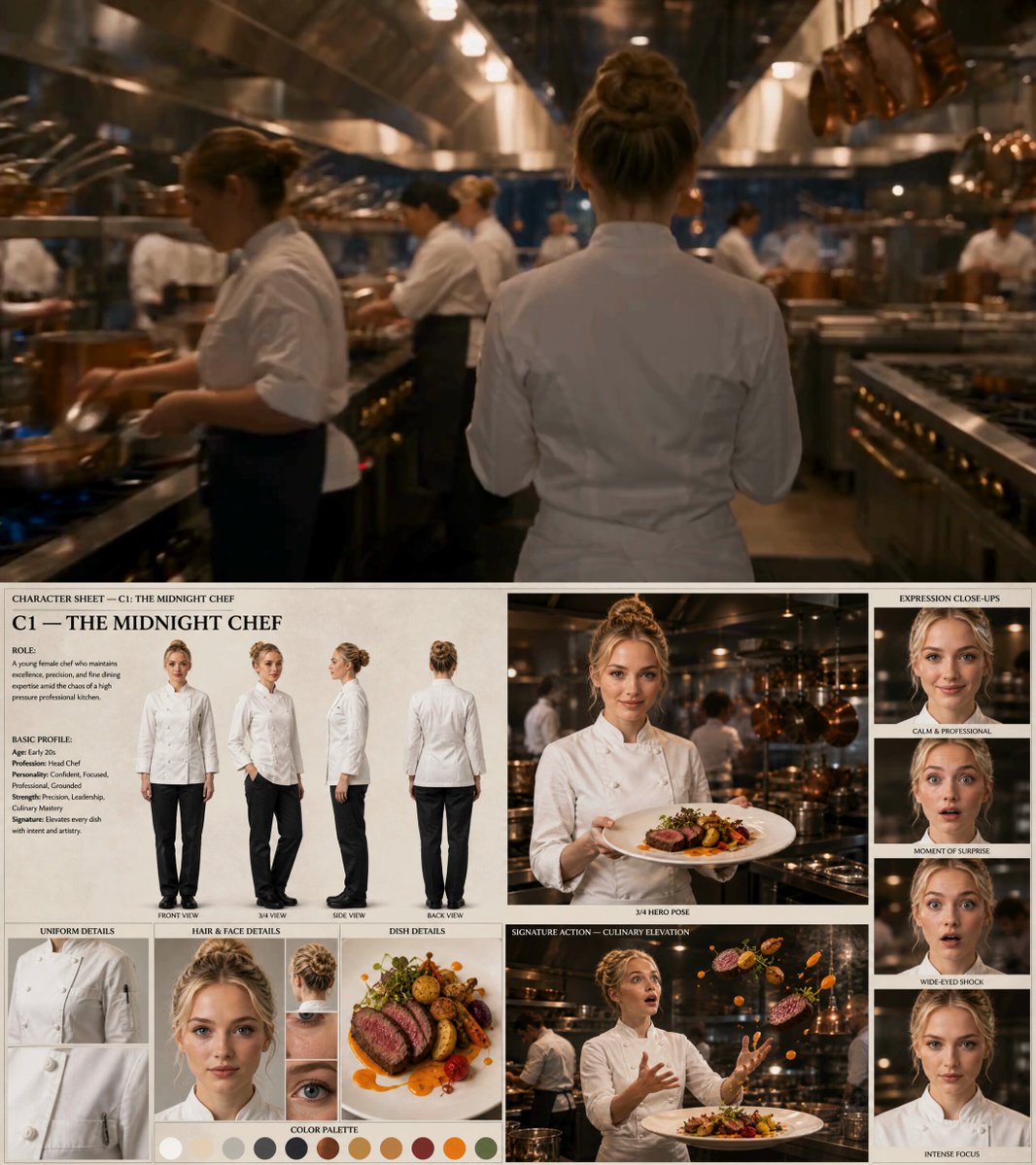
Before the first generation, define your brand's visual language. Write down your color palette, your lighting style, your preferred camera angles, and the emotional tone of every scene. Some tools let you supply reference images that anchor the style, which dramatically improves consistency across shots. Treat this reference set as your art direction document, just as you would for a live shoot.
Keep Character and Asset Persistence in Mind
If your spot features a spokesperson or a product, you want that character or object to remain identical in every shot. Choose tools and workflows that preserve character identity across generations. This matters most for narrative ads, where a viewer will notice if a face changes between scenes and instantly lose trust in the production.
Reuse a Consistent Prompt Vocabulary
Standardize how you describe your brand across every prompt. The same descriptor used every time, such as warm cinematic natural light or high-contrast product shot, becomes a thread of consistency running through all of your outputs. As you find phrasings that work well, collect them in a prompt library your whole team can draw from.
The Advertising Production Workflow With AI
Moving from idea to published campaign has become dramatically faster with AI. Here is an end-to-end workflow that teams successfully use.
Phase One: Concept and Script
The process still starts with an idea. Write a tight script and a shot list before opening any generation tool. AI is a powerful executor, but it is a poor strategist; the strategy has to come from humans. This phase is where you define your message, your audience, and the emotional arc.
Phase Two: Style Frames and Look Development
Generate static style frames to lock the visual direction before you commit to full motion. Because still frames are far cheaper and faster to generate than motion clips, this is where you explore looks, color grades, and compositions without burning your budget. Approve the style frames and only then begin motion work.
Phase Three: Generation and Iteration
With the style locked, generate the motion assets. Run multiple versions of each shot and systematically curate. Iteration is where AI shines; the ability to test five pitch angles and three character variants in a single session is something no traditional shoot can match. Keep only what passes your creative bar.
Phase Four: Assembly and Sound
Bring the approved clips into your edit. Here AI's role often extends beyond visuals; voice-over and music generation can fill the audio track in minutes, and many generated tools interoperate with standard editing software. Assemble the edit, sync to sound, and create your platform variations from the master.
Phase Five: Testing and Optimization
Do not assume the first cut is final. Because AI production is fast, you can test multiple iterations against real audiences and double down on what performs. The cheap iteration loop is the entire point; treat every campaign as a series of small bets rather than one expensive gamble.
Getting Cinematic Quality Without a Camera Crew
One of the most liberating aspects of AI video is that visual quality no longer depends on budget for equipment, locations, or talent. Cinematic language, the grammar of lighting, lens choice, depth of field, and camera movement, is now available in a prompt.
To achieve cinematic results, write for cinematography, not just content. Mention the camera, the lens, the lighting, and the motion. A prompt that describes a slow dolly-in on a subject in golden light creates a different result than a prompt that only describes the subject. Team members who understand basic cinematography get dramatically better results, which is why advertising agencies increasingly invest in teaching visual literacy alongside tool proficiency.
Building a Creative Direction Playbook for Your Team
The teams that get the most out of AI advertising do not improvise every project from scratch. They build a shared creative direction playbook that encodes their learning and their brand identity, and they treat it as living documentation rather than a static file.
Start with a style guide. Document your approved palettes, lighting treatments, and camera vocabularies so every team member works toward the same visual language. Include example prompts that reliably produce on-brand results, and update the examples whenever you discover a stronger phrasing. A prompt that once took a designer an hour to refine becomes a resource the whole team can reuse in seconds.
Next, document your approval gates. Define what makes a frame acceptable before it is promoted to a motion generation, and what makes a clip acceptable before it goes into an edit. Clear gates prevent the most common failure, which is expensive motion generations produced from weak, unapproved stills.
Finally, build a feedback log. After every campaign, record which styles, hooks, and character designs overperformed and which fell flat. Fold that evidence back into the playbook at the start of each quarter. Over time, your team's default output drifts measurably closer to your brand's ideal, because the playbook itself becomes the accumulated memory of everything you have learned.
Common Pitfalls and How to Avoid Them
Even experienced teams stumble into the same traps. Knowing them in advance saves time, budget, and creative confidence.
The first pitfall is skipping the style-frame phase and jumping straight to motion. Every flagship generation is expensive, and exploring looks in full motion burns through resources fast. Lock your direction with cheap still frames first, and only then commit to animation.
The second is chasing one perfect prompt. There is rarely a single prompt that nails a shot; the professional approach is prompt families. Generate a small batch of variations around a shared theme and curate. The time spent selecting the strongest take repays itself many times over, and it is the difference between a forgettable clip and a campaign highlight.
The third is abandoning the campaign mid-way. AI makes iteration cheap, so it is tempting to constantly restart. Fight that impulse. Finish a coherent set of assets, publish, and learn from measured performance rather than endlessly regenerating without a goal. Discipline and finishing are what separate teams that make progress from teams that spin.
Measuring Success and Optimizing Over Time
The final advantage of AI-driven advertising is the ability to learn and improve. Because output is cheap, you can treat generation as an experiment engine. Track which styles, hooks, and character designs drive the strongest engagement, and fold those learnings back into your prompt library and style references.
Build a feedback loop. After each campaign, review what worked, update your visual reference set, and refine your prompt vocabulary. Over a few campaigns, your team's AI output will become measurably closer to your brand's ideal, because the system itself is the repository of everything you have learned.
Frequently Asked Questions
Is AI-generated advertising video recognizable to viewers?
Done well, no. The best AI advertising is indistinguishable from traditionally produced video, especially on social media where screens are small and playtimes are short. The moments that betray AI are usually prompted carelessly, with inconsistent characters or unnatural motion. Careful prompting and curation keep output professional.
Do I still need a human creative director?
Absolutely. AI executes ideas but does not originate a brand strategy. The human role shifts from manual production to creative direction, art direction, and strategic judgment. Teams that automate everything and skip direction produce generic, forgettable output.
How fast can I really produce a spot?
A well-tuned team can go from concept to a polished multi-variant spot in days rather than weeks. The exact time depends on the visual complexity and the number of variations, but the compression is dramatic compared with traditional production, which is the core reason advertising teams are adopting the technology.
What is the biggest mistake beginners make?
Using one model for everything and generating without a locked style direction. That produces inconsistent, expensive, and off-brand results. Define your style first, tier your models by task, and curate aggressively.
Will AI advertising replace the need for paid ad budgets?
No. AI reduces production cost, not media cost. The distribution still requires ad spend, and in fact the efficiency of AI production lets you test more creative versions within the same budget, which can improve return on ad spend.
Final Thoughts
Generative AI has turned advertising video production from an expensive, slow craft into a fast, iterative, and creative discipline. The brands that thrive will not be the ones with the biggest budgets but the ones with the strongest art direction and the most disciplined workflows. The tools are accessible; the advantage comes from the teams that learn to direct them.
Start by producing a single campaign with a clear style reference and a deliberate model tiering strategy. Iterate on what works, build your prompt library, and treat every campaign as a chance to get sharper. Advertising has always rewarded speed and creativity. AI has just raised the ceiling on both.
