

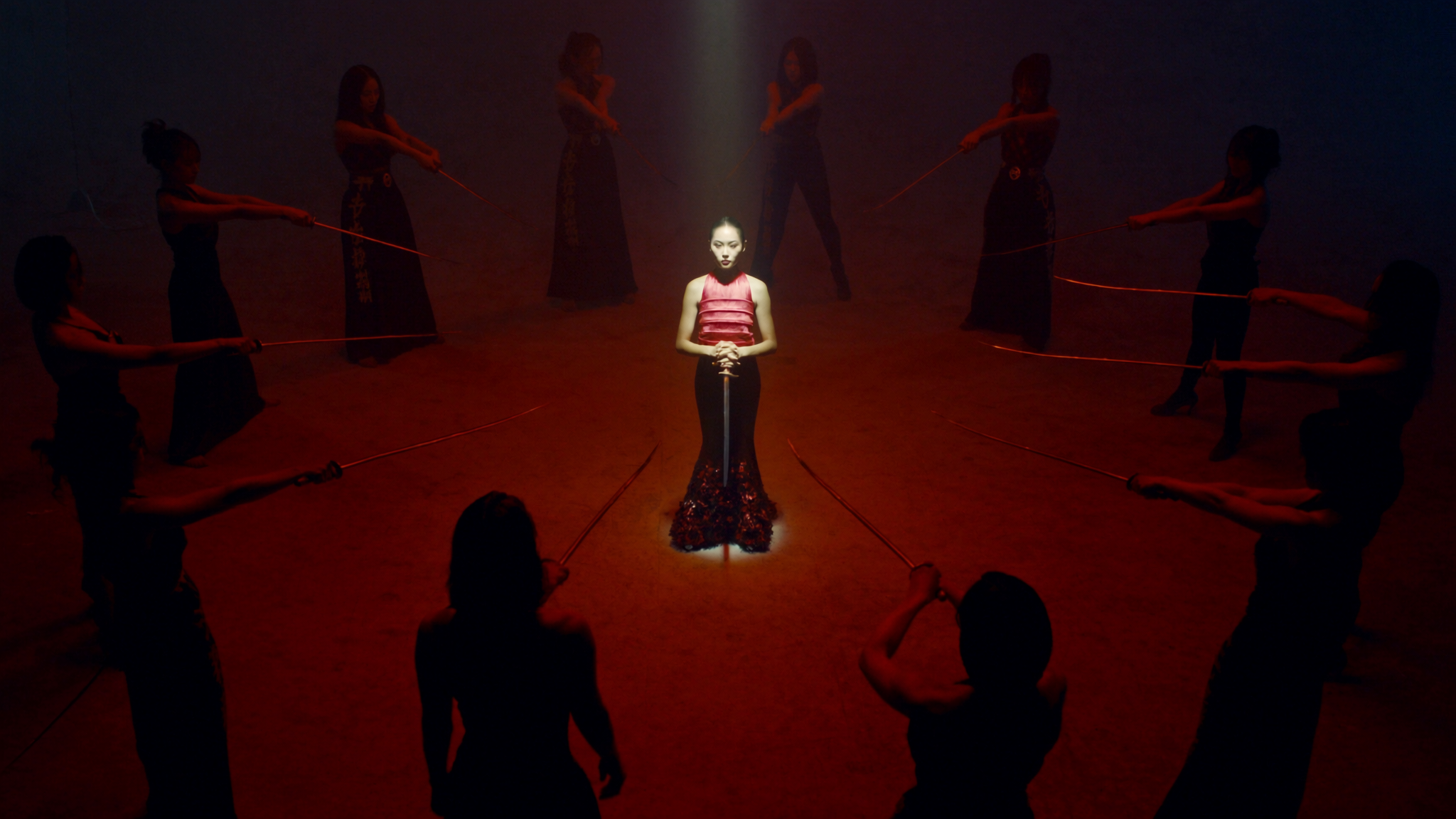
Korean content has one of the most demanding visual standards in the world. K-drama viewers notice a slightly off color grade, music video fans track every styling detail, and variety show audiences expect a polished rhythm from cut to cut. That standard is exactly why K-content creators have become early, aggressive adopters of AI video tools: they cannot afford slow pipelines, and they cannot afford inconsistent visuals either. The result is a production culture where AI is not a gimmick but a practical answer to the eternal problem of doing more without losing quality.
This playbook is written for creators who want to adopt that culture. It covers the formats that matter, the model mix that fits Korean storytelling, the consistency problem that defines the craft, and a step-by-step pipeline you can copy on your next project.
Why K-Content Is Racing Toward AI Production
The pressure on K-content teams is simple: global reach rose faster than production capacity. Audiences on every continent now watch K-drama, K-pop, and K-variety, which means the same production team must serve more formats, more languages, and more distribution channels than ever before. Traditional production scales by adding people and days. AI video scales by adding compute and templates.
That is the real reason behind the adoption wave. It is not that Korean teams love technology for its own sake; it is that the economics of a hit show now depend on producing a huge amount of polished footage on a tight schedule. AI tools compress the two most expensive stages: pre-visualization and iteration. Directors can show clients a near-final look before a single camera is booked, and editors can test dozens of approaches without burning a shoot day.
Understanding the Formats You're Actually Making
Before choosing models, map your formats. Each format makes different demands.
Drama and web series need character consistency above everything else, because the audience will notice if a face changes between episodes. Music videos and performance clips need motion quality and a strong visual signature; the song is fixed, so the imagery must be distinctive. Variety and talk content needs speed and flexibility, with a lower bar for cinematic polish but a high bar for turnaround. Webtoon-style and branded content needs a consistent graphic style, often closer to illustration than to photorealism.
Write down which formats you produce most. That list becomes the brief for your model toolkit.
Building a Model Mix for Korean Storytelling
You do not need one model per format. You need a small set of models whose strengths line up with your recurring needs.
Cinematic Drama
For drama sequences, the priority is photorealistic quality with controllable camera work. Flagship text-to-video models handle establishing shots, emotional close-ups, and believable environments. Pair them with a reference workflow: generate a character sheet once, then feed it into every shot so the identity holds. Models that support image references will keep a character's face, outfit, and mannerisms stable across scenes — the single most important capability for narrative work.
Music Videos and Performance Clips
Performance content lives on motion. Use a motion-oriented model for choreography, camera pans, and energetic cuts, then clean up with interpolation for slow-motion inserts. The rhythm of the edit matters more than raw resolution, so favor tools that let you iterate quickly on short clips rather than waiting for one long render.
Variety, Webtoon, and Livestream Content
These formats reward speed and style flexibility. Keep a fast, forgiving model for throwaway shots and tests. For webtoon-style segments, use a stylized model that holds clean line art and flat color. For livestream highlights, the pipeline should be nearly automatic: cut, caption, generate transitions, export. The goal is minutes per clip, not hours.
Solving the Consistency Problem
Consistency is the craft of AI video, and it deserves a dedicated workflow. Three layers work together.
The character layer: build a reference sheet for every recurring character — front, side, three-quarter views, in the lighting you plan to use. Feed this sheet to every generation involving that character. Text alone is never enough.
The environment layer: treat locations as assets. Generate reference images for each recurring set and reuse them across shots. A drama episode that takes place in one apartment should pull every background from the same visual source.
The shot layer: use first-and-last-frame control for scenes that must open and close in a known state. When you specify both ends of a shot, the model cannot drift as far as it can with a single prompt. This technique is the fastest way to cut revision cycles.
A Step-by-Step Pipeline You Can Copy
Here is a production pipeline that works across formats. Adapt the details, keep the order.
Pre-Production
Write the shot list first: subject, camera movement, duration, and desired look for every shot. Build the character and environment reference sheets. Prepare a prompt template with a fixed structure — subject, action, camera, lighting, mood, style — so every prompt in the project is comparable.
Shot Generation
Generate in two passes. First pass with a fast, cheap model: validate composition and narrative flow. Second pass with the flagship model: render the final version of shots that passed. Keep the reference sheets attached to every generation. Log which model produced which shot and how many attempts it took, because that log is the data you need for future planning.
Assembly and Editing
Bring the best takes into your editor. Match the color baseline across all clips, because shots from different models rarely match out of the box. Align audio, then handle the seams: use interpolation for smooth transitions and first-last-frame outputs for hard cuts that must hold identity.
Color, Sound, and Delivery
Grade everything to one consistent look. Add sound design early rather than at the end; AI video is silent, and the audio layer is what makes a cut feel finished. Finally, export per platform: vertical for short-form, 16:9 for broadcast-style content, with captions burned in or delivered as files depending on the channel.
Choosing the Right Tool for Each Shot
Keep the decision matrix simple. Photoreal hero shot: flagship model with references. Fast action: motion specialist. Stylized or illustrated look: dedicated stylized model. Slow motion or transition: interpolation tool. Scene open and close: first-and-last-frame control. If a shot type recurs, standardize the tool for it; if it appears once, use whatever is fastest.
To make this concrete, walk through a typical two-minute teaser. The opening establishing shot of a Seoul skyline at dusk goes to the photoreal flagship, with a reference frame for the color grade you want. The two character shots — the protagonist in a rain-soaked alley — run on the same flagship, fed by the character sheet and the alley reference. The quick action beat between them, a hand grabbing a rail, goes to the motion specialist, which handles the speed without smearing. The transition from the alley to the interior is built with a first-and-last-frame model, so the doorway holds its shape while the scene changes. The final slow-motion insert of rain hitting the pavement is an interpolation pass over a short motion clip. Every shot used a different tool, and the viewer sees one coherent piece of footage. That is the payoff of building the matrix before production starts.
Managing Time and Compute Budgets
Two habits separate efficient teams from the rest. First, batch aggressively: group all draft generations into one session and all final renders into another, so you are not waiting idly between single runs. Second, grade visibility against cost: shots that the audience will see at full quality get the expensive treatment, and everything else gets the fast treatment. This is not about saving money; it is about spending render time where the viewer is looking.
Mistakes That Kill Production Speed
- Generating a full scene when one shot failed. Regenerate the shot, not the scene.
- Changing the prompt format mid-project. A stable template is what makes results comparable.
- Skipping the reference sheets to save time. You will spend twice the time fixing inconsistent characters later.
- Judging quality on small previews. Always inspect the exported frame at full resolution.
- Delivering without a color pass. Unmatched clips from different models look amateur no matter how good each one is.
Team Structure and Roles
AI video production changes more than the tools; it changes who does what. The old model had clear boundaries: a director, a DP, an editor, a colorist, a VFX artist. The AI model has fewer boundaries, and teams that do not re-draw them waste the technology's potential.
In practice, three roles cover most of the work. The pipeline designer owns the workflow: the shot lists, the prompt templates, the reference assets, the routing rules, and the quality gates. This is the most valuable role, and it is rarely a job title — it is a discipline someone on the team must own. The prompt operator runs the generation passes, validates drafts, and manages the retry loop. The edit and grade owner assembles the shots, unifies the look, and handles the audio and delivery. On a small team, one person may wear all three hats; the point is to know which hat you are wearing at any moment, because the decisions are different.
The role that disappears is the one that cannot be justified economically: the person whose only job was executing repetitive edits. That work becomes templates and batch jobs. The roles that grow are the ones that involve judgment: deciding what a shot should be, judging whether a generation matches the intent, and designing the pipeline that makes good output routine.
There is also a cultural point. The teams that succeed treat AI tools as junior collaborators to be supervised, not as magic boxes to be trusted. Every generation is a draft that needs review. The editor who approves a mediocre shot because "the AI made it" is making the same mistake as the editor who approved a mediocre take because the schedule was tight. Standards do not relax because the tool is new; they become more important, because the volume of output is higher.
Finally, build the review habit into the schedule. A fixed review slot — daily during production, weekly during planning — where the team watches the week's output together and logs what to change. This is how a multi-model pipeline gets better over time instead of drifting toward visual chaos.
Frequently Asked Questions
How many AI models does a K-content team actually need? A practical starting set is four: a photoreal flagship, a motion specialist, a stylized model for illustration-style content, and an interpolation tool. Add more only when a recurring need appears.
Can AI video replace a real drama shoot? Not entirely, and it should not try to. AI excels at pre-visualization, background plates, transitions, and augmentation. Live-action shoots still carry performance and physical reality that AI cannot fully replicate. The winning approach is hybrid.
How do I keep the same actor's face across an entire episode? Build a strong reference sheet from approved stills and feed it into every shot with that actor. Combined with first-and-last-frame control for scene boundaries, this holds identity far better than prompt text alone.
Is AI video production cheaper than traditional production? For iteration and pre-visualization, yes, dramatically. For a hero shot that must look perfect, the cost can approach traditional levels. The savings come from speed and from avoiding reshoots, not from replacing the whole production.
What about copyright and platform rules? Rules vary by platform and region. Before releasing AI-assisted content commercially, review the distribution terms and keep records of the tools and models you used. When in doubt, disclose the AI-assisted workflow.
The pattern is clear: K-content's visual standard did not change, but the production math did. Teams that combine a deliberate model toolkit, disciplined reference workflows, and a repeatable pipeline can produce more polished footage in less time than ever before. That is the real secret — not a single model, but a system built around many.
