

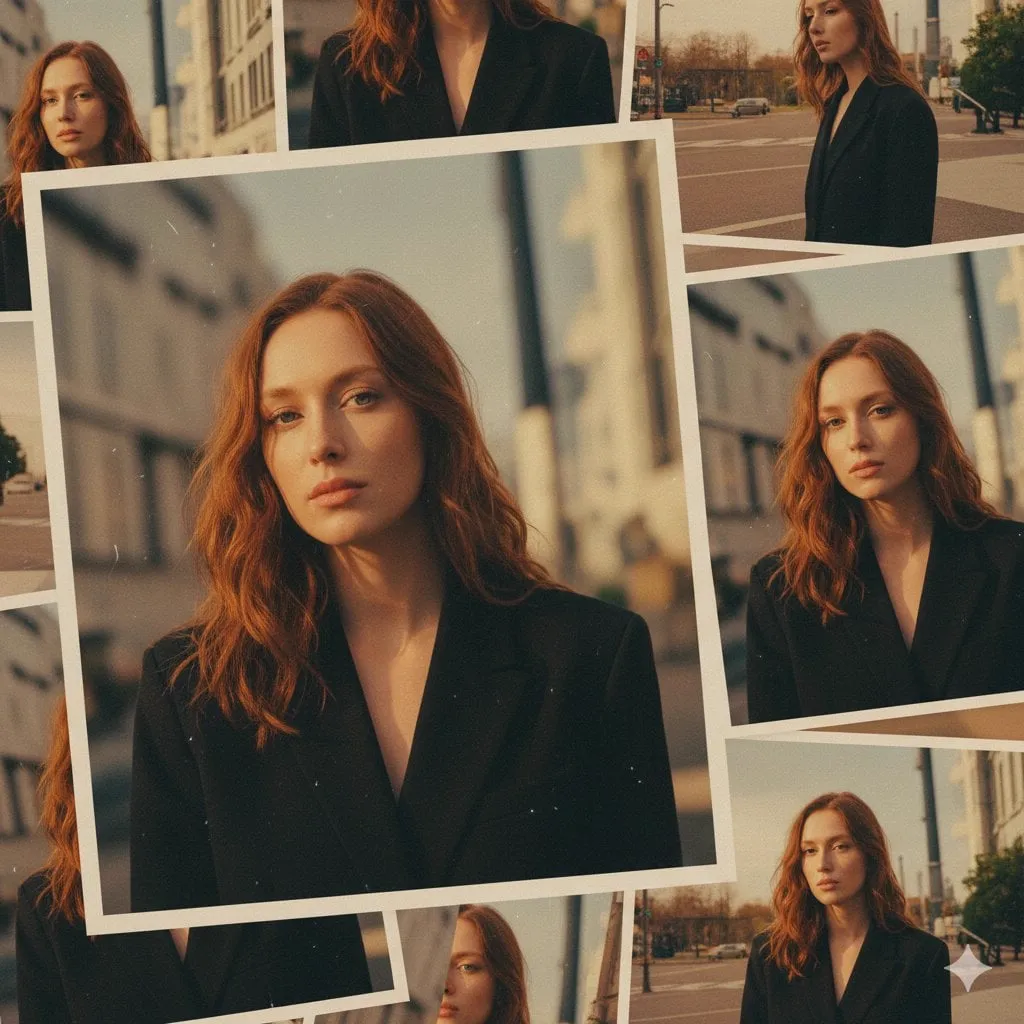
For most of video history, visual effects meant one of two things: a big studio budget or hours of painstaking manual work. Compositing, rotoscoping, green screen cleanup, and 3D tracking were skills that took years to learn and expensive hardware to run. That wall has started to crack. Generative AI has moved visual effects from a specialized craft into a capability that a single creator can use on a laptop, and the results are changing what is possible in short-form video, music videos, commercials, and even narrative film.
This playbook explains what generative VFX can do today, the techniques that actually matter, and a workflow that fits into real production. It is written for editors and creators who already understand the basics of video production and want to expand what they can deliver without growing their team.
The shift from manual compositing to generative VFX
Traditional VFX is a chain of precise, deterministic steps: shoot the plate, track the camera, build the element, match the lighting, composite, grade. Every step requires skill and every error is visible. Generative VFX changes the model. Instead of building an effect element by element, you describe the desired result and the model generates it, then you integrate and refine.
That change has two big consequences. The first is speed. A shot that used to take a day of compositing can be generated in minutes, with the remaining time spent on integration and polish. The second is accessibility. Editors who never learned After Effects or Nuke can now produce effects that would have been technically out of reach, because the artistic judgment matters more than the technical execution.
It is not a replacement for traditional VFX; it is a complement. Practical effects, high-end compositing, and 3D still have their place, especially for photoreal film work. But for the volume of content that brands, agencies, and creators produce daily, generative VFX offers a new tier of capability at a fraction of the cost.
What generative VFX can do today
The capabilities are expanding quickly, but the core set that matters for working editors falls into four categories.
Scene and shot generation
The most direct use: generate footage that does not exist. Need a drone shot of a city at sunrise, a close-up of a product in a surreal environment, or a background plate for a talking-head video? Text-to-video models can generate these from a prompt, and image-to-video models can animate a still you already have. This is invaluable for b-roll, transitions, and establishing shots that would otherwise require travel, permits, or a camera crew.
Style transfer and look development
Style transfer takes the look of one piece of media and applies it to another. A live-action shot can be restyled as an anime frame, a watercolor painting, or a cinematic film stock. This is powerful for music videos, brand content, and social series that need a consistent visual identity. The technique is not just a filter; modern models reinterpret the content with the target style, preserving motion and composition.
Inpainting, outpainting, and cleanup
Inpainting fills in or replaces parts of an image or frame: removing a microphone boom, replacing a logo on a shirt, or adding an object that was not there. Outpainting extends the frame beyond its original edges, which lets you reframe shots or change aspect ratios without losing composition. Cleanup is the quiet hero of production: removing crew reflections, fixing continuity errors, and cleaning up set imperfections that would otherwise force a reshoot.
Virtual sets and camera moves
Generative models can take a subject shot against a plain background and place them in a completely different environment, with matching lighting and perspective. Combined with camera-move controls, this replaces much of the traditional green screen work for talking heads and product demos. The quality is not always broadcast-ready, but for social content and internal productions it is often indistinguishable from a real set.
Keeping characters and locations consistent
The biggest technical weakness of generative video has been consistency. Generate the same character in ten shots and you may get ten different faces. This matters enormously for VFX work, because effects are usually part of a longer sequence, and a character whose face changes between cuts destroys the illusion.
The practical toolkit includes reference images, consistent seeds, and character training. Provide the same reference set for every generation of a character. Use tools that support character or subject reference modes, which lock the identity across prompts. For recurring locations, treat them like characters: collect reference frames and reuse them so the environment stays recognizable from shot to shot.
A working rule: plan the sequence before generating. Decide the character's design, wardrobe, and key poses once, then generate every shot against that fixed spec. Do not regenerate characters from scratch per shot; the drift will kill the sequence.
Motion, physics, and realism
Static images with AI effects are easy; motion is where things get hard. Viewers forgive a lot in a still frame, but they immediately notice unnatural movement, morphing limbs, or physics that do not behave. The good news is that modern video models have improved dramatically on motion, but the editor's job is to work with the model's strengths and hide its weaknesses.
Keep motion simple for the most complex effects. Fast camera moves, complicated choreography, and heavy interaction between characters are exactly where models fail. Plan shots so that the AI-generated element has straightforward motion, and let the editing carry the energy. If you need complex motion, generate the element at higher quality and use traditional tools to composite it with the live footage, rather than expecting the model to handle everything in one pass.
When in doubt, shorten the shot. A three-second VFX shot that looks great is worth more than a ten-second shot that reveals artifacts. Generative VFX works best as punctuation, not as long takes.
A practical AI VFX workflow
The workflow has four phases, and the key is to separate creative decision-making from generation volume.
Ideation and shot planning
Write the shot list first. For each effect shot, specify the goal, the source material (live footage or generated plate), the reference style, and the integration point in the edit. This is the phase where you decide what needs to be generated and what should be done with traditional tools. Doing this on paper saves hours of failed generation later.
Generation and iteration
Generate multiple candidates per shot, not one. A common mistake is to fall in love with the first output and build the edit around it. Instead, generate five to ten variations, pick the two best, and refine those. Keep the prompt, seed, and settings logged so you can reproduce a winner. Iteration is cheaper than integration: it is easier to regenerate a bad shot than to fix a bad composite.
Assembly and integration
Bring the generated elements into your editing timeline. Match the grade, the grain, and the motion blur between the generated footage and the live footage. This is where many AI VFX projects fall apart: the generation is great, but the integration is rushed, and the shot never sits in the frame. Spend real time on color matching and edge quality.
Polish and review
Watch the assembled sequence at full resolution, on a decent screen, in one sitting. Look for continuity errors, lighting mismatches, and motion artifacts. Fix the most visible problems first; minor imperfections that only appear on pause are usually acceptable for social distribution. Then do a second pass for sound: effects shots often need matching ambience and design to feel real.
Choosing between AI and traditional tools
The decision is not AI versus traditional; it is which tool fits the shot. Use traditional compositing when you need pixel-perfect control: logos, product details, and anything where the client will inspect the result. Use generative tools when you need volume, speed, or impossible imagery: background plates, stylized looks, cleanup, and creative flights of fancy.
Budget is the other factor. Traditional VFX has high setup costs and low marginal costs per shot, once the pipeline exists. Generative VFX has near-zero setup costs but real per-generation costs and unpredictable iteration counts. For a single hero shot, traditional may be cheaper. For fifty social clips, generative wins easily.
Building a practical VFX toolkit
You do not need a huge software stack to start. A practical generative VFX kit has four layers, and most editors already own two of them.
The generation layer is where the effect is created. Text-to-video tools such as Runway, Kling, Pika, and Luma cover scene generation, style transfer, and motion; image tools like Midjourney and Adobe Firefly handle stills, concept art, and style references. The choice between them depends on the effect: character-heavy shots favor tools with strong reference features, while fast-paced social content favors speed and cost per generation. Test the same prompt in two or three tools before committing; the differences are larger than the marketing suggests.
The integration layer is your editor. DaVinci Resolve is a strong choice because it combines editing, color grading, and Fusion compositing in one tool; After Effects remains the standard for heavier motion graphics and keyframed compositing. Whichever you use, the integration layer is where generated footage becomes part of a coherent sequence, so investing in color-matching and tracking skills pays off more than learning new generation tricks.
The cleanup layer handles the flaws: denoising, deflicker, and upscaling tools refine generated output before it reaches the timeline. Modern denoisers and upscalers are fast enough to run on a normal workstation, and they often rescue shots that would otherwise be discarded.
The organization layer is the one everyone forgets. Keep a project folder per client or per series with the prompt, seed, settings, and reference images logged for every generated shot. When a client asks for a revision two months later, you can reproduce the exact shot instead of starting over. This discipline is what turns one-off experiments into a repeatable production capability.
Common pitfalls and how to avoid them
The most common pitfall is generating without a plan. You end up with hundreds of clips that do not match each other, and the edit becomes a patchwork. Solve it with the shot list and reference discipline described above.
The second is ignoring consistency. Characters change face, locations change layout, and the sequence loses coherence. Solve it with reference images and fixed specs.
The third is over-relying on the model for complex motion. The artifacts are always where the motion is hardest. Solve it by simplifying the motion in generated shots and using traditional compositing for the complex elements.
The fourth is skipping integration. A generated plate that does not match the grade or the lighting of the surrounding footage looks worse than no effect at all. Integration is not a step after generation; it is half the job.
Frequently asked questions
Will generative VFX replace traditional VFX artists? Not soon. It replaces the low-end and medium-volume work, which actually creates more demand for senior artists to do the high-end integration and to direct AI pipelines.
What hardware do I need to start? Most generation happens in the cloud, so a mid-range laptop is enough for the workflow described here. The bottleneck is your editing software and your patience during iteration, not your GPU.
How do I keep a character consistent across a whole video? Use the same reference images, fix the design before generating, and prefer tools with dedicated character-consistency modes. Generate the character once per look and reuse it.
Can I use generative VFX for commercial client work? Yes, but disclose it. Clients increasingly ask about AI usage, and a clear workflow note about which shots were generated and how they were reviewed is now part of professional delivery.
Final thoughts
Generative VFX is the biggest capability jump for video editors since the transition to digital editing. The barrier is no longer technical skill; it is judgment: knowing what to generate, when to use traditional tools, and how to integrate everything into a coherent sequence. The creators who will benefit most are not the ones with the most powerful models, but the ones with a disciplined workflow, consistent references, and an eye for what makes a shot feel real. Start with one category, build a repeatable process for it, and let the capability expand from there.
