
The Standard Has Shifted: Still Is No Longer Enough
In the early days of AI imagery, a striking static picture was the goal. Creative teams now expect more. A still image is a starting point, and the real craft is making it move in ways that feel physical, intentional, and continuous. The transition from a frozen frame to believable motion is the skill that separates casual AI users from producers who can rely on generated footage for real projects. This guide walks through that transition step by step, from choosing the right model to refining the final motion until it no longer reads as machine-made.
The good news is that the shift to motion is more accessible than ever. Modern image-to-video tools are designed to take a single still and infer a natural physical action. The craft is in controlling that inference: guiding the camera, keeping the subject recognizable, and steering the movement so it stays within the bounds of what your scene requires. None of it demands a film school degree, but all of it benefits from the kind of deliberate planning this guide lays out.
What Change, Physically, Still Means for AI
When a model turns text into a picture, it solves a layout problem: what should exist in the frame and how should it look. When it turns a still into motion, it solves a physics problem as well: how should those things displace over time. This temporal dimension is what makes moving pictures harder and more interesting. The model has to keep a character recognizable across every frame while shifting its pose, handle camera perspective, and preserve the style you locked in the original image.
Understanding this helps you set better expectations. You are not simply asking the model to wiggle a picture. You are asking it to reason about how a leg bends, how cloth follows a body, how a background parallaxes behind a moving subject, and how light stays consistent. When a result fails, it is almost always failing one of these subtle physical or temporal constraints, not the core idea of the image itself.
Choosing the Right Model for the Motion You Need
Not every image-to-video engine behaves the same way, and the right pick depends on what your shot demands. Some models are specialists in subtle, realistic human movement and are excellent for talking characters and natural gestures. Others are built for bold stylized animation and cinematic camera moves. A few emphasize speed and iteration at the cost of fine detail, ideal when you want to test many direction ideas before committing to a hero render.
The practical approach is to keep a small rotation of tools and know what each is strongest at. Match the model to the shot type, not the other way around. If you are animating a face reacting to dialogue, choose a model with strong expression control. If you are establishing a sweeping environment, pick one known for coherent camera motion. This pairing is the single biggest lever on the quality of the final result.
The Reference Is Everything: Lock Your Visual Baseline
An image-to-video model reproduces the style of your source as faithfully as it can, so the quality of your starting image is decisive. Before you animate, make sure the still is exactly what you want, because motion will inherit its flaws. If the lighting is off or the character design is unsettled, changing it after animation starts is far more painful than fixing it up front.
Therefore, keep the still as your canonical reference. When you generate motion, feed the model that exact image and describe the movement you want in enough detail. The more your prompt reinforces what is already in the frame, the more the model will stay true to it rather than drifting into invented details. A clean, well-composed, high-resolution source is the foundation of natural, believable animation.
Preserve Character and Style Consistency
The hardest thing to maintain is identity. A character you locked in a still can subtly change its face, clothing, or proportions as the model invents intermediate motions. Guard against this by anchoring each shot to the same reference image and keeping style descriptors consistent across every animation pass. Where your tool allows, use a consistent character reference file and recheck the first and last frames against your canonical still before you accept the result.
This discipline matters most in multi-shot projects. A single stylized face that morphs slightly from shot to shot reads as an error to the viewer. Consistent references are how you keep a whole sequence feeling like one production instead of a collection of disconnected experiments.
Direct the Camera to Sell the Motion
Motion reads as natural not only because a subject moves, but because the camera moves in ways a viewer subconsciously expects. A locked frame over a walking character can feel flat; a slow push-in or a lateral follow sells the reality of the scene. Where your tool supports camera controls, use them intentionally: a gentle zoom for emphasis, a tracking frame behind the subject, or a handheld-style wobble for urgency.
Keep the camera language consistent with the mood of the piece, and avoid over-drive. Constant exaggerated camera movement exhausts the viewer and hides the subject. Usually the best motion is a composed, deliberate camera matched to the physical action in the frame. The camera should serve the movement, not compete with it.
Getting Realistic Human Movement Right
Realistic human motion is the threshold most viewers judge a project on, and it is also the hardest to fake. Pay attention to a few telltale details. Limbs should move in natural arcs, feet should track along believable paths, and weight should appear to shift rather than float. Even a character who is only slightly off triggers an instinctive uncanny reaction.
To get this right, describe the action biomechanically. Instead of asking for a person walking, tell the model the cadence, the posture, and the intention: a tired stroll, a hurried stride, a confident entrance. Instructing the physical quality rather than just naming the verb gives the model the information it needs to produce a believable performance. Start with simple, single-action shots and build up to compound motion only once the basic mechanics hold.
Handling Complex Actions and Object Interaction
Once basic motion works, you will want interactions: a hand reaching for a cup, a character opening a door, an object reacting to a touch. These are demanding because they coordinate multiple elements moving relative to one another. Break them down. Generate the character motion and the object interaction in stages if necessary, and keep the physics legible: an arm reaching should follow a natural path, a grasped object should not pass through the hand, and contact should cause believable reaction.
When a complex interaction fails, repair it in steps rather than starting entirely over. Isolate whether the problem is the arm path, the hand-to-object contact, or the object's response, and re-prompt only that piece. Iterating a single failed element is far cheaper than regenerating the whole sequence and keeps the parts of the shot you already like.
Fine-Tuning Parameters for Temporal Smoothness
The feel of motion is set by the temporal parameters your tool exposes, things like frame count, interpolation settings, and the strength of adherence to the source. A common failure is motion that jitters from frame to frame, which reads as unstable even when the pose is technically correct. Smoothing these parameters helps the eye track the movement cleanly, while too much smoothing can make the motion feel floaty or weightless.
There is a sweet spot between a result that is too still and one that jitters. Adjust incrementally and watch the footage at a few playback speeds, not just one. Pay attention to how the background behaves too; a stuttering background ruins an otherwise perfect subject. Tune until the whole frame, subject and environment, moves as one coherent physical system.
Refining With Fusion and Post-Processing
Generation rarely lands the final pass in one shot. Professional workflows refine the output with a mix of re-generation and post-processing. Stylized effects, film grain, and color grading can be layered on top to unify the footage and hide minor artifacts. If your tool supports it, use image-fusion techniques to blend subtle corrections back into the frames rather than re-animating from scratch.
Do not overpolish. The goal is believable, natural motion, not sterile perfection. A little texture and imperfection is what makes footage feel organic. Reserve your heavy refinement budgets for hero shots and keep the export settings aligned with wherever you will publish so the motion stays crisp on the final screen.
A Practical Checklist for Your Next Animation
Before you start, run through a short checklist. Lock the still and confirm it is exactly the baseline you want. Pick a model matched to the shot type so the tools amplify, not fight, the motion. Describe the action in physical detail so the model understands the performance. Keep character and style references consistent across every pass. Direct the camera with intention. Tune temporal smoothness so the movement reads as one physical system. And refine in stages, isolating failures rather than restarting.
Follow this checklist and you will move beyond lucky one-off results into a repeatable process for producing natural, believable AI animation. The standard has shifted, but so has the toolbox. With the right reference, the right model, and a disciplined workflow, a single still image can become a sequence that moves the way you imagined it, and that moves your audience.
A Worked Example: Animating a Character Walking Through a Market
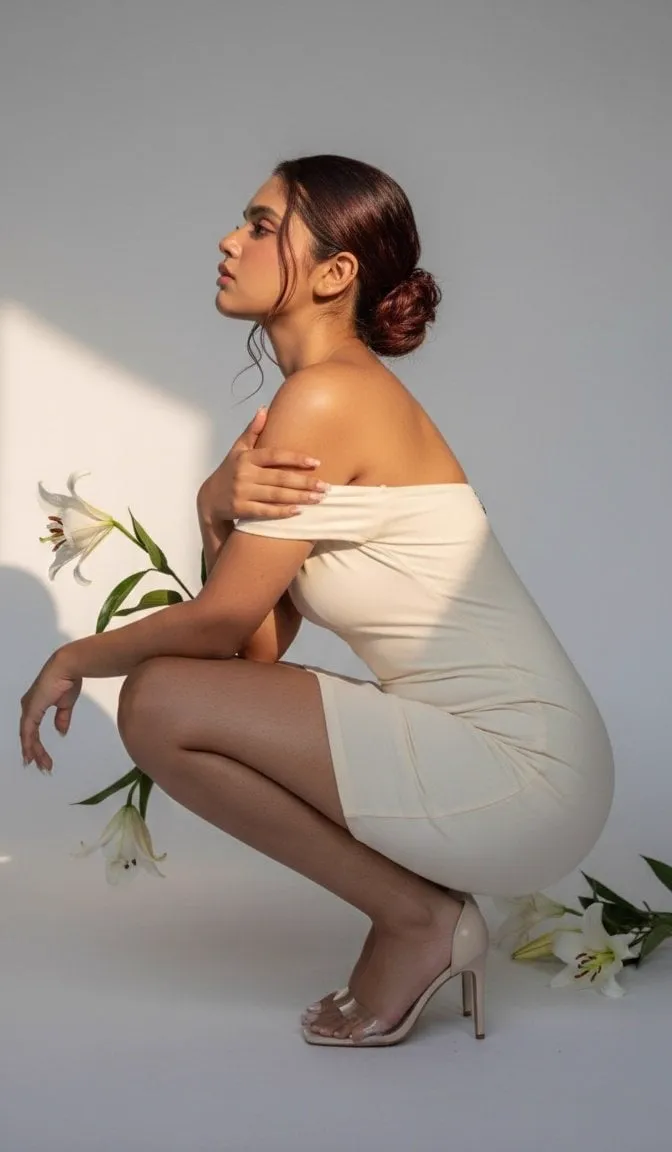
Let us apply the whole process to a common request: taking a still of a character standing in a colorful market and making them walk naturally through the frame. This shot touches every topic covered so far, so it is a good proof of the method.
Start by locking the still. Make sure the character pose, clothing, and the market background are exactly what you want, because everything that follows inherits them. Choose a model strong at realistic human locomotion rather than one optimized for stylized effects, since the walk is the star of the shot. Describe the movement biomechanically: a relaxed, unhurried stroll with a gentle arm swing, not just the single word walking, and include the physical details the model needs to infer believable weight.
Keep the reference tight. Feed the model the exact still and repeat the style descriptors so the character does not drift into a different face or outfit. Direct the camera with one deliberate decision, in this case a slow lateral follow that keeps pace with the character rather than a dramatic orbit, so the motion sells the real space of the market.
Review the first pass for the classic failure points. Does the background warp unnaturally as the character moves? Do the feet slide rather than plant? Is the shadow consistent with the light you locked? Each of these is a temporal or physical tell. Adjust the parameters that control adherence and smoothness, and re-prompt only the failing element rather than the whole shot.
When the mechanics hold, refine. A touch of film grain and a gentle color grade unify the footage and mask minor artifacts. Check the shot at multiple playback speeds and on the screen where it will actually be shown. With the still locked, the right model chosen, the motion described physically, the reference kept tight, and the camera directed with intent, the walk reads as a person moving through a real place rather than a picture being passed through a filter.
Frequently Asked Questions
Do I need a strong starting image to animate well?
Yes. Motion inherits the quality and style of your source still. A clean, well-composed reference gives the model solid ground to stay consistent with, so invest time in the still before animating.
Why does my character keep changing between frames?
Inconsistency usually comes from a loose or changing reference. Anchor every animation pass to the same canonical image and keep style descriptors identical, and the model will stay far closer to your original design.
How do I make human movement look natural?
Describe the motion biomechanically rather than naming a verb. Specify posture, cadence, and intention, and start with simple single-action shots. Realistic weight and natural limb paths are what sells human movement.
What should I do when a complex action looks wrong?
Isolate the failing element, whether it is the arm path, the hand-to-object contact, or the reaction, and re-prompt only that piece. Repairing one stage is cheaper and safer than regenerating the whole sequence.
Final Thought: Rehearse the Physics, Then Let the Model Run
The most reliable way to make an AI image move naturally is to know exactly what natural is. Study how real motion behaves, describe it in physical detail, anchor your references tightly, and control speed and camera with intent. When you do, the model stops being a black box that surprises you and becomes a tool you can direct. The standard has risen, and with the process above you are equipped to meet it, turning a single still into a moving image your audience believes.
