
Text-to-image AI has moved from a curiosity to a core part of the creative stack. Designers use it for concept art and mood boards, marketers for campaign visuals and social media assets, and product teams for rapid prototyping. The quality gap between generators has narrowed, but real differences remain in speed, style control, photorealism, and workflow fit. Choosing the right tool for your use case matters more than picking the "best" model in a vacuum.
This guide compares the leading AI image generators in practical terms: what each one is best at, how they differ in control and speed, and how to build a repeatable workflow that turns text into visuals you can actually use. You will also find prompting techniques that work across all tools, plus advice on integrating image generation into a video production pipeline.
What makes a great AI image generator
Before comparing tools, it helps to define the criteria that matter. Five dimensions separate a useful generator from a frustrating one.
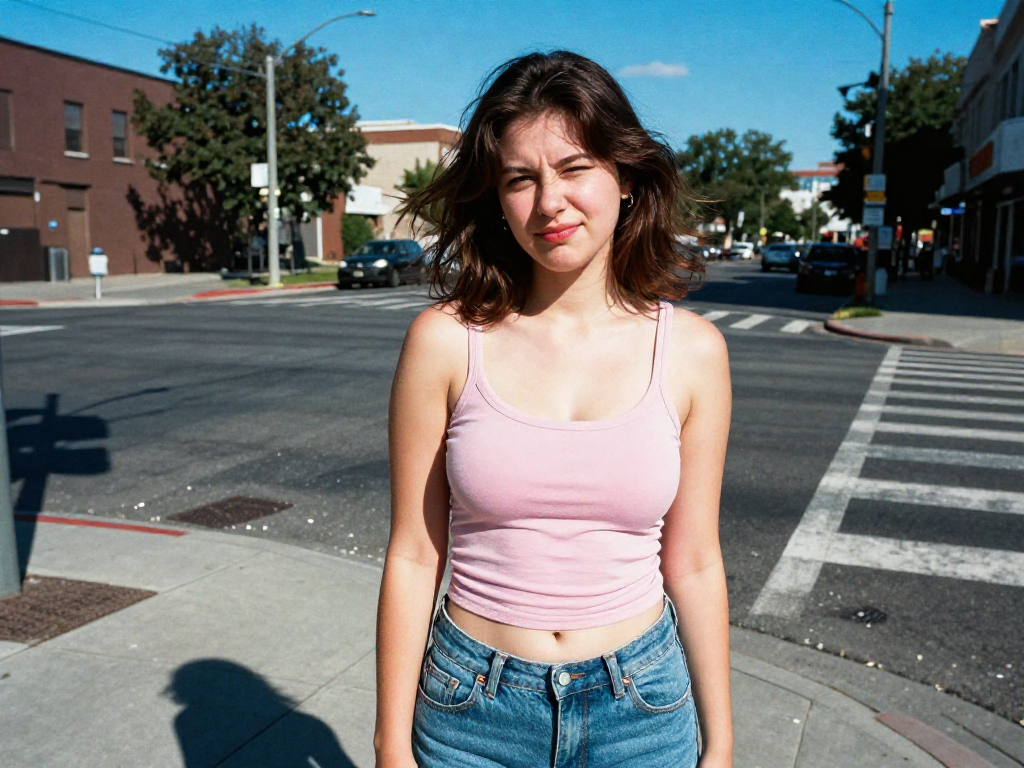
Photorealism matters when the image must pass as a photograph: product shots, lifestyle scenes, architectural visualization. Some models are trained to excel here; others prioritize creative interpretation.
Prompt understanding is the ability to follow complex instructions. A prompt with multiple subjects, spatial relationships, and style constraints will break weaker models. This is often the difference between a tool that feels intelligent and one that feels random.
Style control covers everything from a specific artist's look to a defined brand aesthetic. Some models reproduce style prompts reliably; others drift toward a generic default.
Speed and iteration determine how many versions you can explore in a session. Faster models let you test ideas cheaply; slower ones force you to be selective.
Consistency across a series matters when you need a set of images with the same character, color palette, or lighting. This is critical for brand campaigns and multi-scene video work.
No single tool wins all five categories. Your choice should reflect which dimensions matter most for your work.
The leaders in photorealism: Flux and its rivals
At the top of the photorealistic tier, the Flux family has set a new benchmark. Flux models are known for superior prompt adherence and hyper-detailed output, especially in skin texture, fabric, and complex scenes with multiple elements. The non-destructive training approach behind these models produces cleaner images with fewer artifacts than many competitors.
Flux variants exist for different needs: full-power models for maximum quality, faster versions for iteration, and lightweight models that run on consumer hardware. This range makes Flux a strong default choice for product visualization, advertising concepts, and any project where realism is the goal.
Other strong photorealistic options come from the video-first players. Runway's image tools inherit the cinematic quality of its video models, making them excellent for film-style stills and concept frames. Kling and Luma, best known for video, also produce high-quality stills that match the look of their motion output, which is useful when you plan to animate the image later.
The practical takeaway: for a single high-impact image, run the same prompt through two or three top models and compare. The best one varies by subject matter, and the difference is often visible within seconds.
Creative and stylized generators
Not every project needs realism. Brand campaigns, editorial illustration, and social media content often benefit from a distinctive artistic style, and several tools excel at creative interpretation.
Midjourney remains the reference for stylized output with a strong aesthetic default. Its images have a recognizable quality that suits moody, atmospheric, and painterly looks. The trade-off is less fine-grained control over specific details compared to more technical tools.
Stable Diffusion stands out for control. Its open ecosystem means you can install models fine-tuned for specific styles, adjust every parameter, and integrate the generation into custom pipelines. For teams with technical skills, it is the most flexible option available. The cost is complexity: out-of-the-box results require tuning to match commercial tools.
For animated and illustrative looks, many specialized models deliver consistent cartoon, anime, and 3D-render styles. If your brand has a defined illustration style, search for a fine-tuned model that matches it rather than fighting a general-purpose generator.
The pattern across creative tools is clear: the more distinctive the style you need, the more you should prioritize models and workflows built around that style instead of a one-size-fits-all generator.
Video-first models that also generate images
The boundary between image and video generation is dissolving. The models leading the video space also produce excellent stills, and understanding this changes how you build a production pipeline.
Runway Gen-4 builds on its cinematic heritage: images and clips keep characters, locations, and objects consistent over time. If you plan to animate a still into a short video, generating the base image with a video-first tool guarantees that the motion output matches the visual language.
Kling and Luma operate the same way. A still generated on their platforms carries the same character and lighting style as the videos they produce. This is a huge advantage when your workflow is image-to-video rather than text-to-video: you design the frame, lock the look, and then bring it to life.
OpenAI's Sora family, primarily known for video, also signals that the future is multimodal. Models that understand narrative and motion from the start produce stills with a natural sense of composition and depth.
The workflow implication is simple: decide early whether your images are final assets or frames for animation. If they are frames, generate them on the same platform or model family you will use for the video. Mixing platforms invites style drift that is hard to fix later.
Choosing by use case
The best way to choose a generator is to start from the job it must do.
For marketing and social media, speed and volume matter. Generate multiple variations, test them in context, and iterate quickly. Models with fast tiers and batch generation save real time. Style consistency across a campaign argues for a tool with strong reference-image support.
For product design and concept work, prompt understanding and detail quality win. You need the generator to follow precise specifications: exact colors, materials, proportions, and lighting. Flux-class models and Stable Diffusion with tuned settings deliver the most control.
For film and video production, choose a model whose stills match its motion output. Generate concept frames, lock the art direction, then animate. This workflow keeps the entire project visually coherent.
For personal projects and exploration, prioritize low friction and inspiration. A generous free tier, an intuitive interface, and surprising creative output beat maximum control.
Write down your primary use case before comparing prices or benchmarks. The right tool for a marketing team is often the wrong tool for a film studio.
Prompting techniques that actually work
Good prompting is a skill that transfers across all generators. These techniques produce reliably better results.
Be specific about the subject. "A ceramic teapot with a turquoise glaze" beats "a teapot". Specificity is the cheapest way to improve output.
Describe light before style. Lighting defines mood more than any other single factor. Specify direction, quality, and color: "soft golden hour light from the left" changes an image more than "beautiful".
Use the camera vocabulary. Focal length, angle, and depth of field control how the image feels. "85mm portrait, shallow depth of field, eye-level shot" produces a photographic look; "wide 24mm, dramatic low angle" produces something else entirely.
Add negative space. Tell the model what not to include when it matters: "no text", "no watermark", "no people". Negative prompts are supported in many tools and prevent common failures.
Iterate on one variable. Change a single element between runs instead of rewriting everything. This teaches you what each part of the prompt controls and builds a mental model of the tool.
Keep a prompt library. Save prompts that work, organized by style, subject, and use case. Over time, this library becomes your fastest asset.
Building consistency across a series
Generating a single great image is one thing. Producing a consistent series is another, and it is what professional work requires.
Start with a reference image. Generate the character or key object once, choose the best result, and use it as a reference for every subsequent image. Tools with multi-image fusion can combine a subject reference with a style reference, keeping identity stable while the scene changes.
Lock the style guide. Define the palette, lighting, and art direction in a short reusable block, and append it to every prompt. Repetition creates coherence even when the models vary slightly.
Validate before scaling. Create three test images across the range of scenes you need, and check that identity, colors, and mood hold. If they drift, adjust the reference and style guide before producing the full set.
This discipline matters even more when images feed into video. A character that changes between frames will be obvious in motion, and no amount of post-production can fully repair it.
Integrating image generation into video workflows
For creators working in video, images are usually means to an end. Here is how to integrate them cleanly.
Generate concept frames first. Before generating any motion, produce stills for every key scene. This validates the art direction and the script at a fraction of the cost of video generation.
Lock the look on stills. Fix the character references, the color palette, and the lighting in the image phase. Video generation is expensive and slow; do not use it to discover style problems.
Animate the approved frames. Use image-to-video generation to bring the concept frames to life. The motion should match the still exactly, because the generator starts from your locked artwork.
Keep the audio in mind. Pair the visual pipeline with automated music and sound design so the final assembly is fast. Many platforms now offer integrated audio generation that matches the mood of the visuals.
Building a simple image pipeline
For teams and creators who produce images regularly, a fixed pipeline beats ad hoc generation. Here is a minimal setup that works.
Start with a prompt template. Structure every prompt the same way: subject, action, environment, lighting, camera, style. Keep the template in a document or a tool snippet so it is one click away. Templates do not limit creativity; they standardize the boring parts so you can spend energy on the interesting parts.
Maintain a style block. Write one paragraph describing your brand's visual identity and append it to every prompt. Whether you are generating one image or a hundred, the style block is what makes the set feel like one body of work.
Keep a reference library. Store approved character images, object shots, and color palettes in an organized folder. When a new project starts, pull references from the library instead of regenerating everything from scratch. This is especially valuable for recurring characters in series content.
Standardize the review step. Define what "good enough" means before you start: resolution, style match, absence of artifacts, correct aspect ratio. Review against that checklist instead of by mood. This speeds up approval and keeps quality consistent across team members.
Track what works. Log prompts and settings that produced approved images. Over a few months, this log becomes a knowledge base that new team members can learn from and that makes iteration measurably faster.
FAQ
Which AI image generator is the most realistic?
Flux-class models currently lead in photorealism and prompt adherence. For the most demanding shots, run the same prompt through two top models and compare.
Is there a free AI image generator good enough for real projects?
Yes, several tools offer free tiers that produce usable images, often with limitations on resolution or daily usage. They are excellent for learning and low-stakes work.
How do I get the same character in multiple images?
Generate a reference image of the character, then use it as an input reference for every new image. Multi-image fusion tools make this much more reliable.
Why do my images look generic?
Generic prompts produce generic results. Add specificity in subject, lighting, camera, and style. Keep a library of strong prompts and reuse them.
Can I use AI-generated images commercially?
Usually yes, but check each tool's license. Restrictions vary on resale, trademark use, and how the tool may train on your images.
Should I generate images and video with the same tool?
When the images are frames for animation, yes. Same-family models keep characters and style consistent between stills and motion.
