
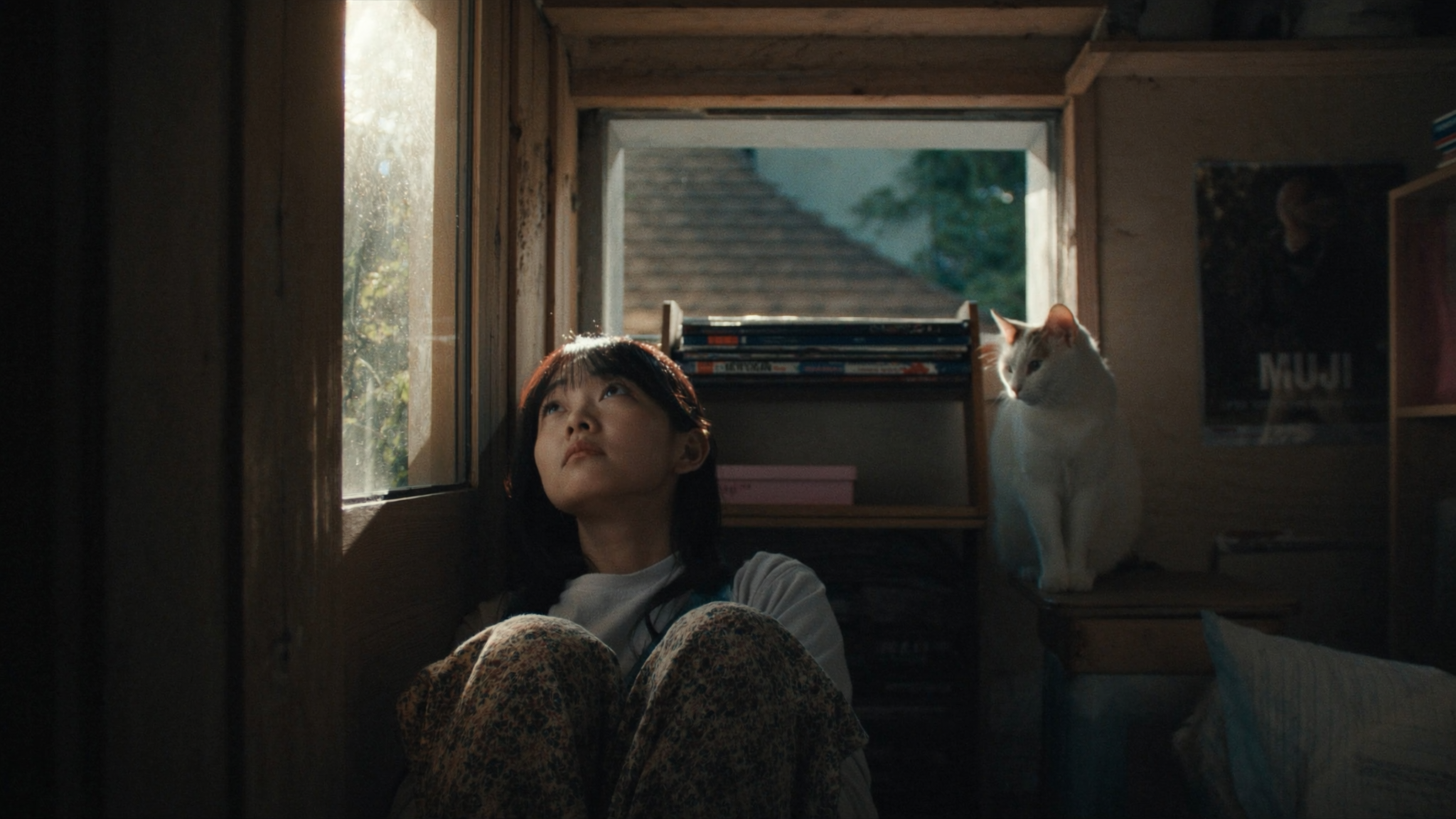
The idea of typing a sentence and watching a video appear was science fiction a few years ago. Today it is an everyday tool for marketers, filmmakers, educators, and hobbyists. But the landscape has grown so fast that the real problem is no longer finding a tool; it is knowing which tool to use when.
Every AI video model has a personality. Some are exceptional at photorealistic imagery but weak at complex motion. Some understand narrative and camera language but cost more per generation. Some are cheap and fast but need careful prompting to look good. Choosing the right one, or more often the right combination, is what separates impressive experiments from professional output.
This guide covers the main model families for text-to-video and image-to-video generation, what each one does best, and how to build a workflow around them.
What to Look For Before You Compare Models
Model comparisons are only useful if you know what you are comparing. Different projects need different strengths. Before looking at any specific model, decide which of these matter most for your project.
Output quality is the obvious one: resolution, detail, lighting, overall polish. For brand work and client-facing content, this usually dominates.
Prompt adherence is how closely the result matches your instructions. If you have a specific vision, a model that interprets loosely will frustrate you no matter how pretty its output is.
Motion coherence is how naturally things move: weight, physics, fluidity. This is the dimension that separates video models from image models, and it is the hardest to judge from still-frame previews.
Character and scene consistency is how stable the identity stays across shots. This matters for anything longer than a single clip.
Speed and cost determine how much you can iterate. For drafts and exploration, cheap and fast wins; for finals, premium is justified.
The Photorealistic Standard: Flux and Runway
If your project lives or dies on visual fidelity, the Flux family is the benchmark. Flux models are known for exceptional prompt adherence and detail: accurate reflections, convincing textures, and compositions that respect what you actually asked for. They excel at generating keyframes, concept art, and hero images that you can later animate. For still-quality video work, Flux is often the best starting point, because a great keyframe leads to a great animation.
Runway has been a consistent leader in video generation, and its Gen-series models pushed the boundary of coherent, cinematic motion. Runway is especially strong at video-to-video: reimagining existing footage, applying styles, and extending clips while keeping the visual language intact. Filmmakers and motion designers tend to love it because it thinks in footage, not just prompts. If you have source material and want to transform it, Runway belongs near the top of your list.
Together they make a natural pair: use Flux for the still frames and keyframes, Runway for the motion passes and transformations.
The Narrative and Physics Leaders: Sora and Kling
Some projects are not about a single beautiful shot; they are about a scene that holds together. This is where OpenAI's Sora made its mark. Sora generates sequences with an unusual grasp of physics and spatial relationships: objects persist between frames, shadows follow light sources, and the camera moves with intent. For storytelling, explainer content, and anything where the video must feel like a scene rather than a clip, Sora is the model to watch.
Kling, meanwhile, has earned a reputation for expressive motion and strong character performance. It handles subtle movements well, a glance, a hesitation, a shift in weight, which makes it a favorite for character-driven content in both realistic and stylized modes. If your project involves people or characters performing, Kling rewards that kind of work.
The practical pattern: route your narrative-heavy, physics-sensitive shots to these models, and reserve the pixel-perfect models for shots that are about beauty rather than meaning.
The Control-Focused Options: PixVerse and Luma
Not every creator needs maximum photorealism. Many need maximum control: specific camera moves, predictable compositions, consistent product rendering. Control-focused models fill that role.
PixVerse has focused on giving users precise command over cinematic parameters, with better handling of camera directions and stylistic choices. It is a reliable workhorse for commercial creators who need consistent output across many variations, such as ad creatives or social content.
Luma's Ray series brought a distinctive approach to camera and motion control, with an emphasis on deliberate, coherent movement. It is well suited to architectural visualization, product cinematics, and projects where the camera movement is part of the story itself.
These models reward precise prompting. If you can describe camera movement, lens behavior, and composition with precision, you will extract far more value from them than from models that ignore such details.
The Budget and Open-Weight Players: MiniMax Hailuo, Hunyuan, and Wan
Premium models are not the right choice for every step of a project. Drafting, testing ideas, high-volume social content, and internal prototypes all benefit from fast, inexpensive generation. The gap between budget models and the premium tier has narrowed dramatically.
The MiniMax Hailuo series has surprised many with its physical realism at a modest cost. It handles natural motion and everyday scenes well, making it an excellent default for quick turnarounds and for validating an idea before you spend premium resources on it.
The open-weight families, Alibaba's Wan and Tencent's Hunyuan, have matured quickly too. They appeal to teams that want to run models on their own infrastructure, for privacy, cost control, or fine-tuning. Out of the box they trail the commercial leaders on fine detail, but they improve with every release, and for many internal use cases they are more than sufficient.
A smart workflow uses these models for the exploration phase and saves the premium tier for finals. The habit of drafting cheap and finishing premium is the single biggest cost lever in AI video production.
Image-to-Video: The Reliable Path to Control
Text-to-video gets the headlines, but image-to-video is often the more practical technique. Instead of describing an entire video from nothing, you generate or supply a still image, then animate it.
The advantages are significant. Composition is locked in advance, so you do not waste generations on framing mistakes. Style is controlled through the image itself, not through fragile descriptions. And character or product consistency is far easier, because the model has a concrete reference of what it is animating.
Most of the models mentioned support image-to-video alongside text-to-video. The professional pattern is to create a strong keyframe first, using a model like Flux or even a simple image generator, and then animate it with the video model that best matches the motion you need.
Reference-Based Generation and Multi-Image Fusion
The next step beyond image-to-video is multi-image reference: feeding a model several images of the same character, product, or location so it locks onto their identity across shots. This is the technique that makes multi-shot projects possible.
The workflow looks like this. Before production, build a reference sheet: several views of the character, the product from different angles, the location in different lighting. Feed these references into the generation for every shot. The model then produces clips where the identity stays stable, even when the scene, angle, or lighting changes.
This is the professional answer to the consistency problem. Text descriptions drift; images do not. If you want characters or products to survive across an entire project, reference-based generation is not optional, it is the method.
Building a Multi-Model Workflow
Given that every model has strengths and weaknesses, the most effective approach is orchestration: route each part of a project to the model that handles it best.
A typical professional workflow looks like this. Develop the concept and keyframes with a high-fidelity image model. Animate the keyframes with a video model chosen for the motion style you need. Use a narrative-capable model for scene-level shots that must hold together. Draft and test variations with a fast budget model. Composite everything in your editor and finish it like any video project.
The models that win are not the ones that top a single ranking; they are the ones that fit the job. Build a small personal playbook: which models you used for which shots, which prompts and references worked, which failures taught you something. After a few projects, that playbook will be more useful than any comparison article.
Post-Production: Where Generated Footage Becomes Video
The generation stage gets all the attention, but the finished product is made in the edit. A folder full of generated clips is raw material, and the gap between raw material and a professional video is exactly the post-production work that every good editor already knows.
Sound comes first, even though it is the most overlooked. A silent clip feels unfinished no matter how beautiful the visuals are. Music sets the emotional tone, sound effects give weight to actions, and voice or narration carries information. Editing to the beat of the music also improves perceived quality dramatically: cuts that land on the rhythm read as intentional even when the underlying footage is imperfect.
Color and grade come second. Generated clips from different models often have slightly different color temperatures and contrast curves. A simple grade across the whole timeline unifies them into a single look. This is the cheapest way to make a multi-model project feel coherent, and it fixes many of the small inconsistencies that viewers notice without being able to name.
Format and motion come third. Each platform has its own aspect ratio and attention pattern: vertical for short-form social, horizontal for long-form and desktop, square for feeds. Generate or reframe for the target format rather than exporting one master and cropping blindly, because cropping changes composition. Add subtitles for silent viewing, keep text minimal, and let the strongest five seconds lead the video, because that is what decides whether anyone keeps watching.
Finally, treat iterations as part of the edit. When a clip does not work in context, go back to generation with a more specific note: this shot needs more time, this one needs a wider angle. The edit is the feedback loop that makes the whole workflow improve, because it tells you exactly which shots the project actually needed. Teams that edit as they go produce better footage, not just better final videos.
Frequently Asked Questions
What is the difference between text-to-video and image-to-video?
Text-to-video generates a clip entirely from a description. Image-to-video animates a starting image, which gives you more control over composition and style. For professional work, image-to-video is usually the more reliable path.
Which model is best for a complete beginner?
Start with a balanced, budget-friendly model to learn prompting and workflow basics. Once you understand the medium, add premium models for finals and specialized models for specific needs.
Do I need to learn every model?
No. Master two or three across different categories: one for visual quality, one for motion or narrative, one for fast iteration. Add more only when a project demands it.
How do I keep a character consistent across shots?
Use reference images. Generate a character sheet early and feed those images to models that support multi-image reference. Text alone will always drift.
Is AI video ready for client work?
For most commercial formats, yes, if you use references, iterate, and finish the edit properly. The bar for social media, ads, and explainers is achievable today.
The Takeaway
The current generation of AI video models is specialized, not universal. Each family has a clear strength, and the creators getting the best results are the ones who stop looking for a single best tool and start routing work across a small portfolio of models. Define what your project actually needs, choose the right model for each phase, and build the references and playbook that make the whole system repeatable. The technology will keep evolving, but the workflow habits you build now will serve you no matter which models dominate next. The creators who treat this as a craft, learning each tool's strengths and weaknesses through deliberate practice, are the ones who will still be ahead when the next generation of models arrives.
