
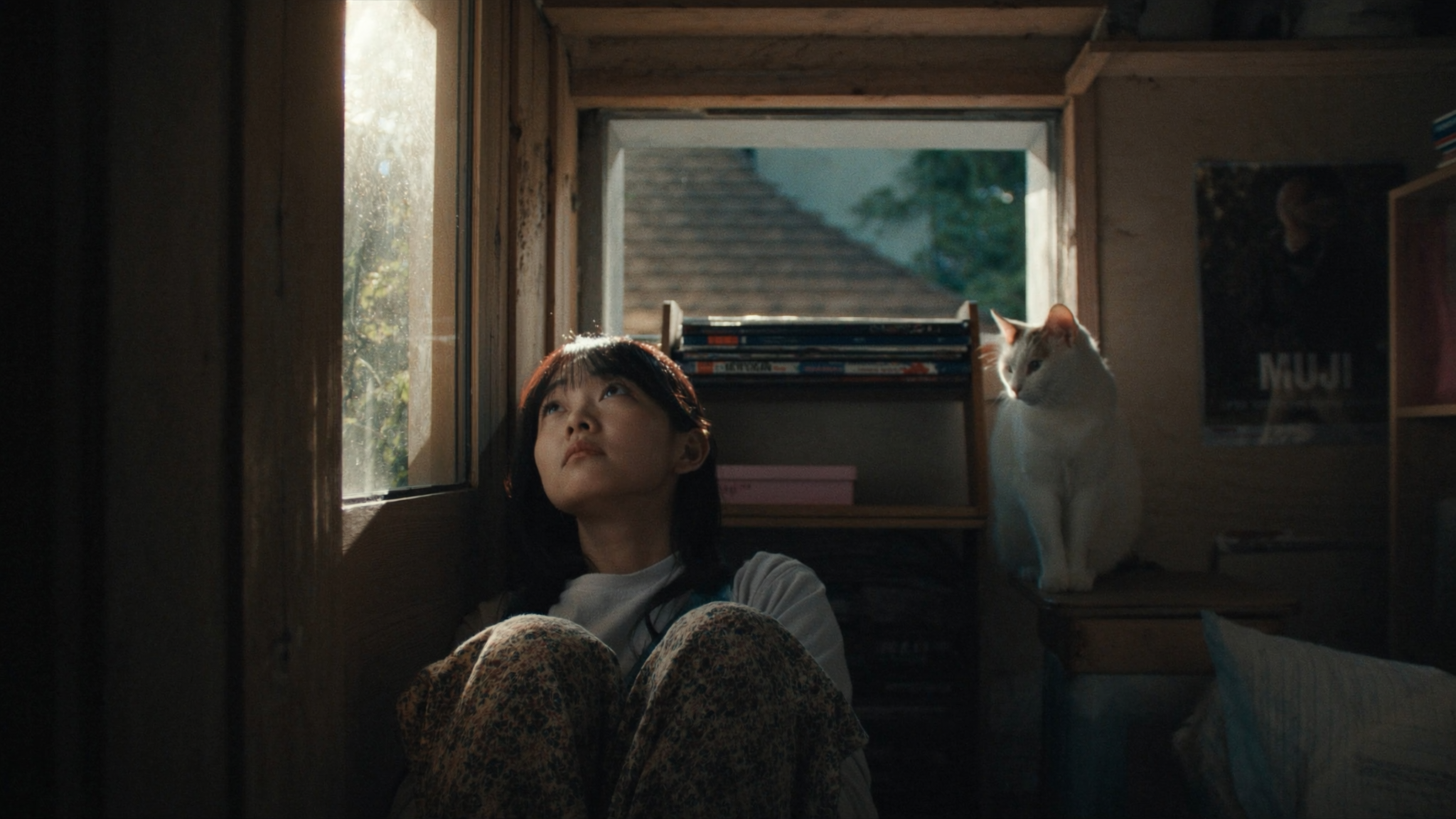
The Buyer's Problem in 2025
The AI video market has exploded, and with it the confusion. Every week there is a new model, a new benchmark, a new demo reel, and a new claim about being the best. For content professionals, the problem is not scarcity; it is selection. Choosing the wrong tool means wasted budget, wasted time, and a pipeline that produces content nobody watches.
The honest framing is that there is no single best AI video generator. There are tools that are best at specific jobs: best at visual quality, best at consistency, best at speed, best at cost, best at control. A professional stack combines several. This guide gives you the criteria to evaluate any tool, the landscape of the leading models, and a decision framework for building a pipeline that fits your work.
The Criteria That Matter for Professionals
Five criteria separate professional tools from consumer toys.
Visual quality: evaluate real output, not demo reels. Look at faces, hands, motion, and physics. The demo is the best case; your prompt is the average case. Test with your own prompts.
Consistency: can the tool keep a character, a product, or a style stable across multiple scenes? For narrative and brand content, consistency is the difference between a tool you can build on and a toy.
Control: how precisely can you direct the output? Camera language, lighting, framing, and style should be addressable through prompts and references. Control is what turns generation into direction.
Speed and cost: what does an iteration cost, and how long does it take? Professionals iterate constantly. Fast, cheap drafts are the foundation of a working pipeline; premium hero generation is the finishing layer.
Workflow fit: does the tool integrate with your process? Batch generation, asset management, export options, and API access matter when you produce weekly. A brilliant model that lives in a walled garden is worth less than a good model that fits your pipeline.
The Leading Model Families
The 2025 landscape organizes into a few families, each with distinct strengths.
The Flux series has become a benchmark for high-quality image generation and stylized visual work. It is the anchor for many image-to-video workflows and for creators who need precise visual control. Runway Gen-4 is the workhorse for short clips: strong motion, strong scene control, and a mature toolset for commercial and social production.
OpenAI's Sora line set the standard for long, coherent generations. It handles complex scenes, camera moves, and physics better than most, and it changed what people expect from a video model. Kling AI models are known for expressive character animation and strong performance on text-to-video and character-driven work.
On the efficiency side, tools like PixVerse, MiniMax, and Luma focus on speed, accessibility, and practical iteration. They are the right choice for drafts, variations, and high-volume social content where throughput beats final-frame polish.
The pattern to notice: the leaders are not interchangeable. Quality leaders, consistency leaders, and speed leaders serve different jobs. A professional pipeline uses each where it is strongest.
Evaluating Quality and Consistency Objectively
Subjective impressions are not enough. Build an evaluation routine that produces comparable data.
Create a standard test set: three prompts you actually use in production, one character reference, and one style reference. Run every candidate tool through the same test set. Score each output on resolution, motion quality, identity consistency, and prompt adherence.
Watch the motion, not the stills. A beautiful first frame with liquid motion is a failed test. Generate the same scene multiple times and check the variance: a tool with a wide variance is hard to rely on.
Check consistency across scenes, not just within one clip. Generate the same character in three different settings and compare. The tool that keeps the character recognizable across all three is the tool you can build a series on.
Control: The Professional Differentiator
The most overlooked criterion is control. Consumer tools accept a prompt and return whatever they want. Professional tools let you direct: specify the camera move, the shot size, the lighting, the mood, and the reference. Control is what separates generation from direction.
Learn the vocabulary of filmmaking and use it in your prompts. Push-in, tracking, aerial, close-up, golden hour, shallow depth of field: these terms are understood by the better models, and they dramatically improve the hit rate. Build a prompt library of your best instructions and reuse it across projects.
References multiply control. A reference image anchors the character, the product, or the style, and the model generates variations around it. Reference-based workflows are the professional standard for series and brand content.
Specialized Models and Advanced Techniques
Beyond the general-purpose leaders, specialized models expand what is possible.
Reference-to-video techniques let you take an existing clip or image and generate a new video that preserves its identity. This is the foundation of character consistency and product animation. Open-source and custom models, including options like Hunyuan and Alibaba's Wan, offer deep customization: fine-tuning on your own data, self-hosting, and control that closed platforms cannot match. They trade convenience for control, and for teams with technical capacity, that trade is often worth it.
Emerging models appear constantly, and the professionals who win are the ones who test early and integrate fast. Build a monthly evaluation habit: run the new candidates through your standard test set, and promote the winners into the pipeline. The tool landscape is an asset; manage it like one.
The Decision Framework
Choose your pipeline by the work you do, not by the benchmark leaderboard.
If you produce branded series content: prioritize consistency and reference workflows. Your stack centers on tools that keep characters and style stable, with premium generation for hero shots.
If you produce high-volume social content: prioritize speed and cost. Your stack centers on fast, cheap generation with enough quality for the platform, and premium tools only for the best-performing formats.
If you produce cinematic or narrative work: prioritize quality and control. Your stack centers on the quality leaders with strong camera and lighting control, and you invest in the iteration time that quality requires.
If you produce product and commercial content: prioritize reference workflows and control. Product consistency, style anchors, and precise lighting matter more than raw generation power.
Building the Pipeline
A professional pipeline has four stages: explore, draft, produce, deliver.
Explore: test new models and styles against your standard test set. Keep the winners, drop the rest.
Draft: generate fast variations of the current project. Test hooks, structures, and styles cheaply. This is where you fail without cost.
Produce: generate the hero version with the best tool for the job. Use references, refined prompts, and multiple passes. Check every clip against your quality gate.
Deliver: assemble, add audio and captions, and publish. Measure performance and feed the data back into the explore stage.
Common Mistakes
The first mistake is chasing the leaderboard. Benchmarks measure demos, not your workflow. Test with your own content.
The second mistake is standardizing on one tool. The landscape changes monthly, and your needs differ by project. Maintain a small stack and evaluate regularly.
The third mistake is ignoring consistency. A tool that cannot keep a character stable is useless for series work, no matter how beautiful the single frames.
The fourth mistake is skipping the edit. Generated clips are material; the story comes from the cut, the sound, and the pacing. Plan the edit before you generate.
The Near Future: What to Watch
The market is moving fast, and the tools you choose today will be different in a year. The professionals who win will be the ones who anticipate the directions instead of reacting to releases.
Watch for longer coherent generations. The current frontier is duration: models that can hold a scene, a character, and a narrative together for minutes rather than seconds. When that matures, the assembly problem shrinks and the director's job shifts from stitching clips to shaping the whole. Pipeline builders should design for interchangeable clips; the format will change under them.
Watch for better physical understanding. The next quality leap is not resolution; it is physics: how water splashes, how fabric moves, how weight transfers in a step. Models that understand physics produce footage that survives the scrutiny of professional viewers. Evaluation routines should include physics tests today, because the models that pass them are the ones to bet on.
Watch for deeper control layers. Camera control, lighting control, and character control are moving from prompt language to explicit interfaces: sliders, rigs, and parameter panels that let directors command the scene the way they command a real set. Tools that expose control will win professional budgets; tools that only accept prompts will stay consumer toys.
Watch for audio-visual integration. Video models are beginning to generate sound, dialogue, and music together with the image. The pipeline that used to be video plus audio is becoming a single generation problem. Professionals should treat audio as part of the generation brief, not an afterthought.
Watch for open-source and custom models. The gap between closed platforms and open models is closing, and teams with technical capacity are fine-tuning models on their own data for proprietary styles. The tools that let you own your model, your style, and your data will increasingly be the professional choice.
The strategy for all of this is boring and reliable: keep a standard test set, re-evaluate monthly, and keep your pipeline modular. The models will keep changing; the discipline of testing and integrating will not. The professional advantage is not owning the best model; it is being able to adopt the best model quickly without rebuilding the pipeline.
Building a Prompt Library
A prompt library is the cheapest asset you can create, and it pays off in every project. Every time a prompt works, save it with a note about what it did. Every time a prompt fails, save that too, with the lesson.
Organize by purpose: hooks, camera moves, lighting setups, character descriptions, style anchors, and platform adaptations. A new project becomes a matter of assembling proven pieces instead of writing everything from scratch.
Version your prompts. The same idea with a wider lens, a different mood, or a changed camera move produces different results. Save the variations and tag them, so the library grows in capability, not just in size.
Share the library with your team. A prompt that one person discovered is wasted if it stays on their machine. A shared library raises the baseline quality of every project and makes onboarding faster. The library is the institutional memory of your production; treat it like one.
FAQ
Which AI video generator is the best overall? There is no overall winner. The best tool depends on whether you prioritize quality, consistency, speed, cost, or control. Define your priority and choose accordingly.
Should I pay for premium models? For hero shots and client work, yes. For drafts and exploration, no. The budget rule is simple: spend premium where the output is seen, and cheap where it is not.
How often should I re-evaluate the tools I use? Monthly. The market moves fast, and a six-month-old evaluation is stale. A standard test set makes re-evaluation cheap and objective.
Do open-source models make sense for professionals? For teams with technical capacity, yes. Open-source and custom models offer control, privacy, and cost advantages, at the price of setup and maintenance effort.
What is the most important skill in AI video production? Direction. The models execute; the professional decides the composition, the motion, the mood, and the story. The skill transfers across every tool.
Final Thoughts
The AI video market rewards professionals who evaluate systematically and build deliberately. Use a standard test set, watch the motion not the stills, and judge consistency across scenes. Match the tool family to the job: quality leaders for cinematic work, consistency leaders for series work, speed leaders for volume work. Build a pipeline that explores, drafts, produces, and delivers, and re-evaluate monthly. The best tool is not the one with the best demo; it is the one that fits your work.
