


For years, the pixel has been the undisputed building block of digital imagery. Every screen, every photo, every video frame is ultimately a grid of tiny colored squares, and for decades the entire industry of computer graphics has been built on manipulating that grid. But a quiet shift is underway in AI-driven visual production. Instead of treating an image as a flat raster of independent pixels, a new wave of image processing organizes visual information into modular, intelligent units that carry context about what they represent, how they relate to their neighbors, and how they should behave when a scene changes. This approach is often described as Lego Pixel Technology, because it treats visual content like a set of interlocking building blocks: discrete pieces that snap together into larger structures and can be rearranged without breaking the whole.
This article explains what modular image processing actually means, why it matters for creators working with AI video tools, and how to apply it in a practical production workflow. You will learn how semantic blocks differ from ordinary pixels, how style consistency is maintained across shots, and which parts of an AI pipeline benefit most from structured visual data. The goal is to give you a mental model you can use immediately, whether you are generating short clips for social media or assembling a longer narrative project.
What Is a Semantic Block?
The core idea behind modular image processing is the semantic block. A traditional pixel stores two pieces of information: a color value and a brightness value. A semantic block stores much more. Alongside color, it can carry depth information, surface orientation, material properties, and identity data that says what object this part of the image belongs to. When a character appears in a frame, the semantic blocks covering the character's face do not just know the skin tone in that region; they know they are part of a face, and they can keep that association even if the camera angle changes.
Think of it as the difference between a printed photograph and a 3D scene file. The photograph is fixed: you can crop it, but you cannot turn the subject's head. A scene file knows that the head is an object attached to a body, and it can be re-rendered from any angle. Semantic blocks push in that direction without requiring a full 3D reconstruction. They give the image a lightweight internal structure that machine-learning models can read and reuse.
This structure matters most when an image is passed through a generative model. Models that operate on flat pixels often treat every region of the frame with equal importance. Models that can read semantic structure know that the person in the foreground is more important than the blurred background, that the red jacket should stay red even as the lighting changes, and that the bottle on the table should not morph into a cup when the scene is re-rendered.
How Semantic Blocks Are Linked Together
On its own, a semantic block is just a labeled region. The real power appears when blocks are linked into higher-order structures. The linking mechanism resembles dependency injection in software architecture: each block declares what it depends on, and the system resolves those dependencies at render time.
In practice, this means a block for a character's hand can declare a dependency on the block for the character's wrist, which in turn depends on the arm and the shoulder. When the model moves the arm, the hand follows automatically, and the system knows that the ring on the finger belongs to the hand. This is fundamentally different from traditional frame-by-frame generation, where every frame is produced independently and the model has to guess that the ring in frame 12 is the same ring that appeared in frame 3.
The modular approach also makes partial updates possible. If a creator wants to change only the lighting in a scene, the system can re-render the lighting-dependent blocks while keeping the geometry blocks untouched. This selective regeneration is what allows creators to iterate quickly on a single aspect of a shot without triggering unpredictable changes everywhere else.
Maintaining Consistency Across Styles
One of the hardest problems in AI video production is style consistency. A creator may want a character to appear in a photorealistic scene in one shot and in an anime-styled scene in the next. With traditional pipelines, that transition usually means generating two completely independent images, and the character will often look noticeably different between them.
Modular image processing solves this by separating identity from appearance. The semantic blocks carry identity information that is independent of the rendering style. The system knows the character's face shape, proportions, and key features regardless of whether it is being rendered photorealistically or as anime. When the style changes, only the appearance layer changes; the identity layer stays stable.
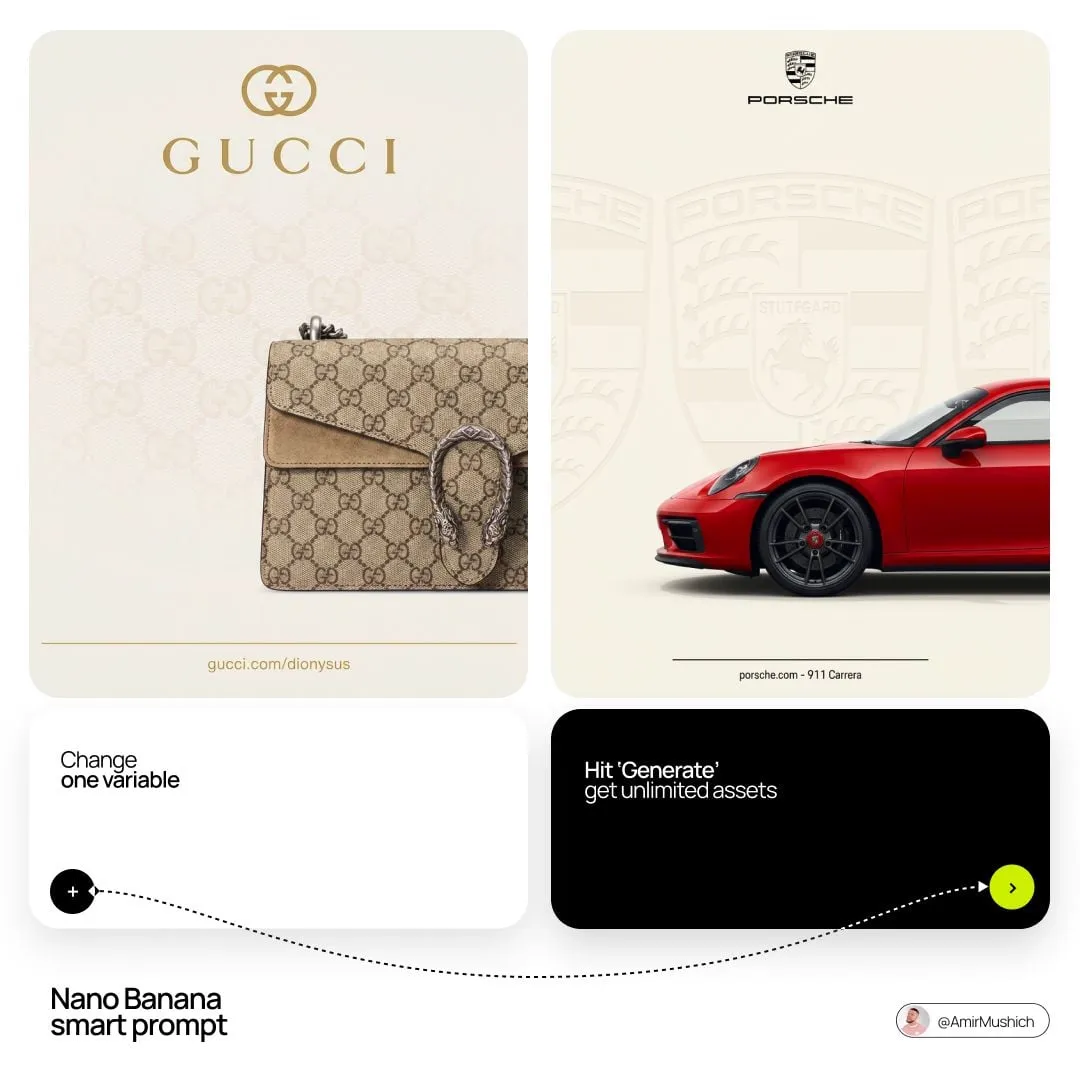
This separation has a direct practical benefit: creators can produce multi-style projects where the same character, product, or location remains recognizable across radically different aesthetics. That is a major advantage for branded content, where the product must stay identifiable even when the creative treatment changes dramatically from ad to ad.
How Modular Processing Fits Into AI Video Pipelines
A complete AI video pipeline can be divided into three stages: pre-processing, generation, and post-generation assembly. Modular image processing improves all three.
In pre-processing, the system analyzes the source material and builds the semantic structure. This stage is often called semantic tagging. The model identifies objects, people, and regions, assigns identity labels, and estimates depth and material properties. The quality of this stage determines everything that follows. If the system fails to recognize that two shots contain the same person, no later stage can fix the inconsistency.
During generation, the structured data guides the video model. Instead of prompting the model with nothing but text, the pipeline passes the semantic layout as a conditioning input. The model knows where the subject should be, how the camera should move, and which elements must remain stable. This dramatically reduces the number of generated frames that have to be discarded because of artifacts such as flickering textures or morphing objects.
In post-generation, the system validates the output against the original semantic plan. It checks that the character still looks like the character, that the product's logo is legible, and that the color grading is consistent with the brief. Frames that fail validation can be re-generated selectively rather than forcing a full restart. This is where the "output validation" step of a modern pipeline earns its keep: a few minutes of automated checks can save hours of manual review.
Choosing the Right Generation Model
The semantic layer is model-agnostic. Whether you generate with a high-end cinematic model such as OpenAI Sora or a fast and affordable option such as Kling, the structured input improves the result. But the choice of model still matters, and the criteria are the same as ever: prompt adherence, motion quality, character consistency, resolution, and cost per clip.
For projects where narrative impact matters most, a premium model with strong cinematic control is usually worth the higher cost. These models handle complex camera movements, subtle lighting changes, and multi-character scenes with fewer artifacts. For high-volume work such as product variants or social clips, a faster model is the right call, especially when the semantic layer is already doing the heavy lifting of keeping elements consistent.
A practical approach is to test a new style or a complex scene on a premium model first, lock the look, and then use a faster model for the bulk variations once the visual language is established. This hybrid workflow is common among professional creators who need both quality and volume.
Real-World Workflow Example
Consider a creator producing a three-scene story about a coffee brand. Scene one shows the bag on a wooden table, photorealistic. Scene two shows the same bag in a stylized illustration. Scene three shows a close-up of pouring coffee, back in photorealistic style.
With modular image processing, the creator builds the semantic plan once: the bag is the central object with a fixed identity, the table is background context, and the pour is an action sequence. Each scene is generated with a different style instruction, but the identity blocks keep the bag's shape, colors, and label recognizable. The pour scene inherits the same lighting language as scene one, so the transition feels intentional rather than jarring.
The same workflow applies to character-driven content. A creator producing an episodic series can define the protagonist once and reuse the identity across episodes, changing outfits and settings without rebuilding the character from scratch each time. That is the kind of leverage that makes modular processing attractive for anyone producing content on a schedule.
Monetizing Consistent Visual Assets
There is an economic angle to consistency as well. Consistent, high-fidelity assets are more valuable than one-off images because they can be reused across campaigns, formats, and platforms. A brand asset that survives style changes can feed a dozen ads, a hundred social posts, and an entire product line's worth of content.
For freelancers and agencies, this changes the deliverable. Instead of selling individual videos, you can sell a reusable visual system: the character, the product shots, the brand palette, all defined once and available for future projects. Clients pay more for systems than for one-offs, because a system reduces their future production costs.
Backend Considerations for Structured Visual Data
The infrastructure behind this approach deserves a brief mention, because storage and retrieval of semantic data is nontrivial. Semantic blocks are metadata, not just image data, and they need to be stored, indexed, and queried efficiently. Relational databases such as PostgreSQL, often deployed through platforms like Supabase, are a natural fit because the linked structure of semantic blocks maps well to relational tables: each block is a row, and its dependencies are foreign keys.
For teams building their own pipelines, this means thinking about data modeling from day one. A flat file storage approach works for finished videos, but the intermediate semantic data needs a queryable home. Getting this right early avoids painful migrations later, and it is one of the reasons that production teams increasingly treat their content pipelines as software projects rather than media projects.
Common Mistakes to Avoid
The biggest mistake creators make with any new image-processing approach is expecting it to work without structured input. Modular processing improves results only when the input is actually analyzed and tagged. Feeding a low-quality source image into a pipeline and expecting semantic blocks to fix it will fail, because the semantic analysis cannot recover information that is not there.
The second mistake is over-reliance on a single model. The semantic layer improves consistency, but generation models still have their own biases and failure modes. Keep multiple models in your toolkit and be willing to switch based on the scene type.
The third mistake is skipping validation. The post-generation checks are what catch the subtle inconsistencies that kill viewer immersion. Automate them where you can, and always review the output on a calibrated screen rather than a phone.
Frequently Asked Questions
Does modular image processing replace traditional video editing? No. It changes how generated frames are produced and kept consistent, but editing, sound design, and color grading still happen in your usual tools.
Is this approach available in consumer tools? Parts of it are filtering into mainstream generators in the form of better character consistency and image-to-video conditioning. Expect the structured features to become more explicit over time.
Does it work for live-action footage? The semantic analysis works on any footage, but the benefits are largest in generated content, where you control the entire pipeline.
How much technical skill do I need? Very little if you are using tools that handle the semantic layer internally. If you are building your own pipeline, you will need database and model integration skills.
Conclusion
The move beyond flat pixels toward modular, context-aware image processing is one of the more practical advances in AI video production. By organizing visual information into semantic blocks that can be linked, reused, and re-rendered, creators gain what was previously out of reach: consistent characters across styles, selective regeneration, and assets that survive rebranding and reformatting. The technology is not magic, and it does not replace good storytelling or good taste. But it removes one of the biggest technical obstacles between an idea and a polished, consistent video. Whether you are a solo creator or part of a production team, building your workflow around structured visual data is a decision that will keep paying off as the tools mature.
