

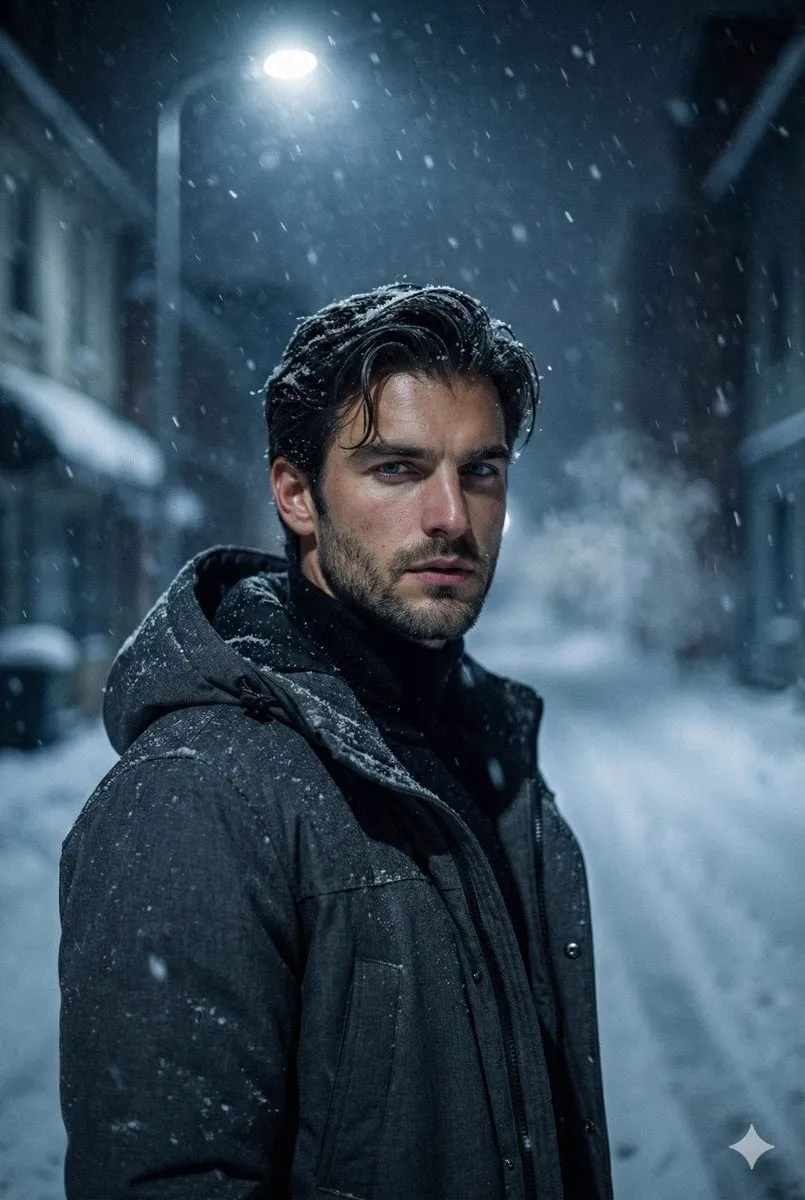
Every AI filmmaker has hit the same wall. You generate a beautiful shot of your protagonist, and it looks perfect. Then you generate the next scene, and the character has different eyes, different hair, a different jacket. By the third scene, it is a completely different person wearing your character's name. Character consistency is the single biggest obstacle between AI creators and real storytelling — and the most common reason AI videos feel like impressive clips rather than actual stories. This guide explains why it happens and how multi-image fusion techniques solve it, with a practical workflow you can use today.
Why Text Prompts Cannot Hold a Character Together
Most video generation platforms rely primarily on text prompts to define visual elements. Modern models are astonishingly good at generating photorealistic individual shots. What they struggle with is identity persistence across shots: the same person, from different angles, in different lighting, in different locations, over time.
The reason is structural. A diffusion model generates each image from a probabilistic sample conditioned on your prompt. The prompt describes attributes in words — "a young woman with red hair and green eyes" — but words are lossy. "Red hair" can be rendered as a dozen different shades of red. "Green eyes" can drift into hazel. Add changes in camera angle, lighting, and scene, and each generation becomes a new interpretation of the description rather than a continuation of the previous one. This is not a bug in any single model; it is how text-conditioned generation works.
What Multi-Image Fusion Actually Does
Multi-image fusion solves this by changing the input: instead of describing the character only with words, you give the system reference images. The model learns the character's visual signature — face shape, skin tone, hair texture, clothing details, proportions — and then conditions each new shot on those references.
Think of it as creating a visual fingerprint for the character. Once the fingerprint exists, the text prompt no longer needs to carry the full burden of identity. It can focus on what the character is doing, where they are, and how the camera moves. The model handles the "same person" part through the references, and the "what is happening" part through the words. This division of labor is the foundation of reliable character consistency.
Creating a Master Reference Character
The quality of your references determines the quality of your consistency. Start by generating a master reference character: one image that clearly establishes the face, hairstyle, key clothing, and general body type. A good master reference is:
- Well lit, with the face clearly visible and not obscured by dramatic shadows;
- Simple in composition, focused on the character rather than the environment;
- Consistent in style with the final video you want to produce;
- Stored separately from scene-specific variations.
Once you have a master reference, treat it as canonical. Every scene generation references it. If you need variations — a costume change, a different emotional expression — generate those from the master rather than creating new references from scratch, so the identity remains anchored.
Fusing References Across Models
One of the practical advantages of image-fusion workflows is that they work across different generation models. You might draft a scene with a fast, cheap model and then render the final version with a higher-fidelity one. As long as both runs reference the same character images, the identity transfers between models. This model-agnostic approach keeps your pipeline flexible: you can switch tools based on cost and quality without losing the visual anchor.
Controlling Time and Place with Frame References
Characters are not the only thing that needs consistency. Locations, props, and lighting do too. Use the same fusion approach for your environment: capture a reference of the key location and reference it in every scene set there. For serialized content, keep a small reference library — one folder for characters, one for locations, one for signature props — and reference the appropriate images in each generation. This turns consistency from a per-shot gamble into a systematic practice.
A Practical Workflow for Multi-Scene Stories
Here is a repeatable pipeline for producing a story with consistent characters across multiple scenes.
Step 1: Lock the Character Before Writing Scenes
Generate and approve the master reference character first. Decide the look before you start producing scenes, not in the middle of production. Changing the look later means regenerating everything.
Step 2: Write Scene-Specific Prompts, Not Character Descriptions
For each scene, describe the action, location, camera, lighting, and mood. Leave the character description out of the prompt — or keep it to a single identifying phrase — and let the reference image carry identity. This keeps prompts shorter, cleaner, and less prone to contradicting the reference.
Step 3: Generate and Check Continuity
Generate the first shot of each scene and compare it against the reference and against the previous scene. Look at the face first: eye shape, hairline, skin tone. Then check clothing and props. Consistency problems are cheapest to fix at the first shot of a scene, before the whole sequence has been generated.
Step 4: Use a Consistency Review Pass
Before assembling the final video, run a review pass: place the key frames from all scenes side by side and check that the character reads as the same person across every transition. This is the same discipline an animation studio uses with model sheets — a reference card that everyone checks against.
What an AI Director Agent Adds
Character consistency is not only a technical problem; it is also a direction problem. This is where AI director agents come in: instead of you manually managing references and prompt discipline for every shot, a director agent can plan the shot sequence, assign the right references to each scene, and keep the narrative arc in mind while you focus on creative decisions.
The agent's value shows most clearly in longer narratives. A multi-scene story has dozens of decisions: which shots establish the setting, which close-ups carry the emotion, how transitions signal time passing. An agent that has been given the story goal, the character references, and the scene list can produce a structured shot plan that keeps the visual language consistent — the same job a human director does with a storyboard, but executable directly against generation models.
Measuring Consistency and Correcting Course
Consistency is a quality you can evaluate. Practical checks include:
- Side-by-side comparison of the same character across scenes;
- Attention to details that drift first: hairline, eye color, accessories, costume seams;
- Consistency of lighting direction within the same location;
- Emotional continuity: does the character's expression match the narrative moment?
When you catch a drift, fix the reference rather than the prompt. If a scene keeps producing a wrong eye color, check whether the master reference itself is ambiguous or whether an automatic enhancement is altering it. Sometimes the problem is upstream: a noisy or low-detail reference produces inconsistent results even with perfect workflow discipline.
Consistency in Practice: Three Scenarios
The right approach to character consistency depends on what you are making. Here is how the discipline adapts to three common scenarios.
Scenario One: Short-Form Series with a Recurring Host
A creator runs a daily short-form series starring the same AI character. The demand is volume, and the risk is that the character drifts between episodes. The practice here is a locked master reference used across every episode, plus a template prompt that describes the character only with a single identifier phrase. When the series needs a new outfit for a special episode, the creator derives it from the master rather than building a new character, so the face stays stable while the wardrobe changes. Over a hundred episodes, the audience recognizes the character instantly — that recognition is the entire value of the series.
Scenario Two: Narrative Short Films with Multiple Scenes
A filmmaker produces a five-scene short with two characters and a location change. The demands are higher: identity must hold across lighting changes, costume continuity matters, and the location must read as the same space. The practice is a full reference library — master characters, location anchors, prop references — and a director-agent-generated shot plan that assigns the right references to each scene. The continuity review happens at the first shot of each scene, before the scene is generated in full. The payoff is a film that audiences watch as a story rather than as a demo reel.
Scenario Three: Branded Content with Product Consistency
A brand commissions a campaign where a mascot appears across product shots, social videos, and an out-of-home teaser. The risk is not just character drift but product drift: the mascot's color, the logo placement, the packaging design all need to match existing brand assets. The practice is to use brand-approved assets as the reference base and to lock those references with marketing sign-off before generation begins. Consistency here is a compliance requirement, not just an aesthetic one — and the reference-based workflow turns brand guidelines into executable generation parameters.
What All Three Have in Common
Notice the pattern: in every scenario, the reference is established before production, kept stable during production, and checked at the start of each new scene. The workflow is not glamorous, but it is what separates reliable storytelling from lucky clips. Consistency is a habit, and like all habits, it is easier to build into the process than to bolt on afterward. It also compounds: every project that reuses an existing reference library starts further along than the last one, because the visual assets are already approved and battle-tested. Over time, your library becomes a growing archive of reusable worlds, and the marginal cost of each new consistent story keeps dropping.
A Quick Consistency Checklist
If you take nothing else from this guide, keep this checklist next to your generation tool:
- One master reference per character, approved before production starts;
- One set of location anchors per recurring setting;
- Prompts describe action, camera, and mood — identity lives in the references;
- First shot of every scene checked against the master before generating the rest;
- Side-by-side review of key frames across all scenes before final assembly;
- Any drift fixed at the reference level, not patched with prompt words.
Run this checklist and consistency stops being a source of anxiety. It becomes a routine, and routines are what make multi-scene storytelling reliable at scale. Consistency is not an artistic luxury; it is the contract between your story and your audience, and honoring that contract is what turns a viewer into a believer.
FAQ
Why does my character change between scenes even with a good prompt? Because text is a lossy representation of identity. Word-level descriptions allow the model too much latitude in interpretation. Reference images constrain identity directly.
Do I need one reference image or several? Start with one strong master reference. Add more only when you need variation coverage — different angles or expressions — and derive them from the master.
Does multi-image fusion work with any video model? Support varies by tool, but the technique is increasingly standard. If your tool does not support explicit image references, some platforms let you use image inputs as starting frames, which achieves similar anchoring for the first shot of a sequence.
How do I keep locations consistent? Use the same approach for environments: create location references and use them in every scene set there. Keep lighting descriptions consistent across scenes in the same location.
Is character consistency worth the extra effort for short content? For a single standalone clip, probably not. For series, branded content, narrative work, or anything where a character appears in more than one scene, it is not optional — it is what makes the audience believe the story.
Conclusion
Character consistency is the difference between AI clips and AI stories. Text prompts alone will keep failing at identity persistence, because that is structurally what they do. Multi-image fusion gives you a reliable alternative: anchor the character with a reference, keep prompts focused on action and camera, and review continuity scene by scene. Combined with a director agent for longer narratives, this workflow turns one-off impressive clips into coherent, repeatable, emotionally effective storytelling — the kind of content audiences come back for.
