
Anyone who has generated more than one AI video knows the feeling: the hero of scene one is a stranger by scene three. The same prompt, the same vibe, and yet the face, the outfit, and even the proportions drift. This has been the single biggest obstacle to AI storytelling for years, and it is now being solved at the source. This article explains how reference-based character definition works, why it matters for long-form and serialized content, and how to use it in a real two-scene project.
The Consistency Problem That Defines AI Filmmaking
Narrative film depends on continuity. Audiences accept wild premises, impossible action, and strange worlds, but they do not accept a main character who changes appearance between shots. Traditional filmmaking enforces continuity through casting, wardrobe, makeup, and careful shot logs. Generative video had no equivalent mechanism, so every cut risked a new character.
This is not a small annoyance; it is a structural limitation. A single impressive clip is easy. A series, a campaign, or a feature-length story requires the same character to survive across dozens or hundreds of generated shots. Until the consistency problem was addressed, AI video could produce moments but not stories. The techniques now emerging treat character identity as a reusable asset, defined once and applied many times.
How a Character Blueprint Works
The core idea is simple: instead of describing a character with words alone, you show the system what the character looks like. This is usually done through reference images, sometimes called a visual signature or character blueprint. You provide several images of the same subject from different angles and in different situations, and the system learns what is stable about them: the face shape, the hair, the outfit, the proportions.
Once the blueprint exists, it can be applied in any scene, in any style, at any time of day in the story. The character can move from a desert to a space station and still read as the same person, because the identity is anchored to images rather than to a description that the model may reinterpret on every render.
The quality of the blueprint determines the quality of the consistency. A few blurry or conflicting references produce a vague signature that drifts. A clean, well-lit, multi-angle set of references produces a character that holds together under pressure. In practice, the time spent building the blueprint is the best investment in the entire project.
Building the Blueprint: A Step-by-Step Process
Start with a clear idea of who the character is. Not just the look, but the mood, the posture, the way they occupy space. These qualities belong in the prompts that generate the references, and they shape how the blueprint reads.
First, generate or collect a set of reference images. Aim for at least three to five images: a front view, a side view, a full-body shot, and one action shot. Keep the style of the images consistent with the world you are building. If the story is photoreal, the references should be photoreal; if it is stylized, they should match that style.
Second, review the references for internal consistency. Do the eyes, hair, and wardrobe match across all images? Where they do not, regenerate before you go further. Small conflicts in the references become large conflicts in the final video.
Third, feed the references into the generation process for each scene. Use them as anchors for every shot that features the character. For shots where the character is not central, you can rely on prompts alone, but for close-ups and dialogue scenes, the references are non-negotiable.
Finally, keep the blueprint versioned. As the story evolves, you may want a new outfit or a different mood. Save each version separately, and note which renders were produced from which version. This discipline makes it possible to revisit and refine scenes without losing the archive of what worked.
Two Scenes, One Character: Putting the Blueprint to Work
Scene One: Building the World Around a Fixed Character
With the blueprint locked, the first scene is about the environment. Let's say the story opens in an ancient, sunlit market. The character is a traveler examining goods at a stall. The reference images guarantee that the traveler's face and clothing stay stable, so the creative energy goes into the world: the light, the textures, the camera movement, the crowd.
Write the scene prompt around the character's action, not just their appearance. "The same traveler from the references examines a stack of ceramic bowls, warm morning light, dust motes, handheld camera" gives the model both the identity anchor and the cinematic direction. Generate the keyframes first, review them, and only then produce the motion.
The discipline of reviewing keyframes before rendering motion is what keeps the scene on plan. A keyframe that fails the mood test will produce a render that fails it too, at ten times the cost.
Lighting is the hidden consistency tool. The same character photographed in warm morning light and in cold neon light should still be the same character, but the mood changes completely. When you design a scene, decide the light first, then the composition, then the action. The blueprint keeps the face stable, but light is what makes the audience feel the scene.
Scene Two: Changing Style Without Losing the Character
The real test of a blueprint is a style change. The second scene takes the same traveler into a neon cyberpunk alley at night. Different palette, different lighting, different world, but it must still be the same person.
This is where reference-based consistency earns its keep. The blueprint keeps the identity stable while the scene prompt does the heavy lifting on the environment. The traveler's face, hair, and proportions hold, even as the wardrobe is re-styled or the lighting shifts from amber to cyan.
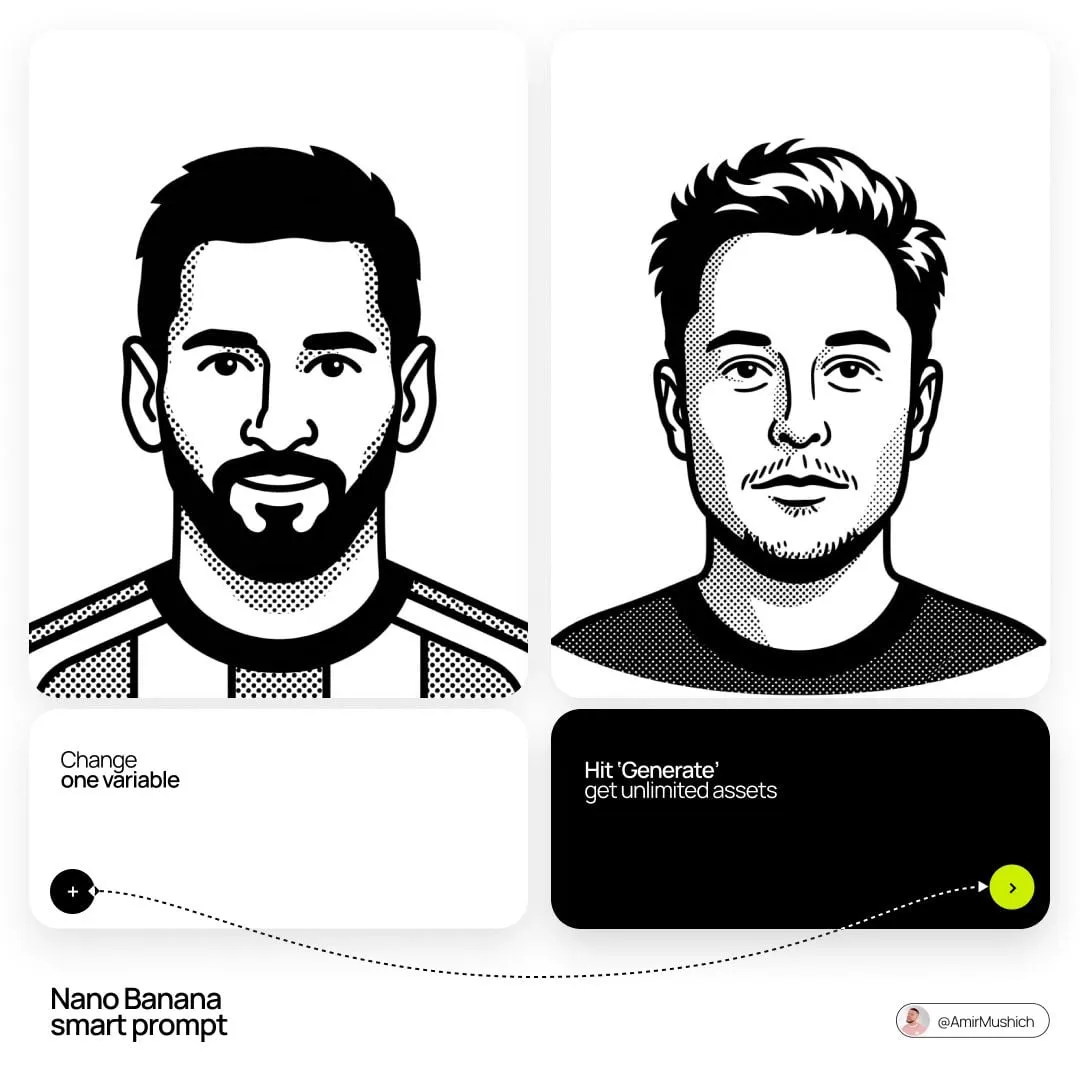
The trick is to change one variable at a time. Keep the character's core features identical, and change the setting. If you also change the outfit, the mood, and the camera style all at once, the result can drift even with good references. Introduce changes in layers, review after each layer, and the character will survive the transformation.
Consistency in Motion: Walk Cycles, Gestures, and Props
Static consistency is only half the battle. A character can look right in every frame and still feel wrong if their motion changes between scenes: a walk cycle that snaps from scene to scene, a gesture that appears from nowhere, a prop that changes size between shots.
The fix is to define the character's motion signature alongside the visual signature. Note how the character walks, their habitual gestures, and the props they carry. Include those notes in the scene prompts, and check the generated motion against them during review. If a walk cycle breaks, regenerate that shot with a tighter motion description rather than accepting the drift.
For props and objects, treat them as mini-characters. A bag, a weapon, or a piece of jewelry that appears in several scenes deserves its own reference set. The same multi-image logic that keeps a person stable keeps an object stable, and audiences notice when it does not.
From Two Scenes to a Series: Scaling Consistency
Once a two-scene test works, the same discipline extends to a full series. The blueprint stays the same; what changes is the volume. A ten-episode season means dozens of scenes, and each one needs the same character, the same palette, and the same internal logic.
The practical approach is to build a shot bible before production: a document that lists every scene, the character's state in that scene, the environment, the lighting, and the emotional beat. Each entry points to the same blueprint and to the relevant reference images. When a shot fails, the bible tells you whether the problem was the reference, the prompt, or the scene design.
Episode-level consistency also depends on continuity details that are easy to forget: a scar, a missing button, the way a character stands. Add these details to the blueprint notes and repeat them in every prompt that involves the character. Small details are what make an audience believe the world is real, and they are exactly what generative systems lose first.
The Technical Layer: What Makes Consistency Feasible at Scale
Behind the scenes, consistency at scale depends on infrastructure most creators never see. Reference data must be stored and indexed so that every generation job can pull the right blueprint at the right moment. Task queues schedule the jobs across GPU pools, balancing cost and speed. Versioned storage keeps the project recoverable when a render goes wrong.
For the creator, the practical lesson is architectural thinking. Treat your character blueprints, reference sets, and prompts as structured assets with names, dates, and versions. Whether you use a full platform or a simple folder system, the discipline of organized assets is what makes large projects possible. The tools handle the heavy compute; you handle the structure.
Using Consistent Characters for Brands and Ads
Character consistency is not just for fiction. Brands use recurring characters in mascots, spokespeople, and influencer-style content. A consistent AI character can appear in a launch video, a tutorial series, and a social campaign without a single casting session. For agencies, this is a new kind of reusable asset: a character that belongs to the campaign, costs nothing to book, and never has a bad day.
The commercial angle is simple. Consistency builds recognition, and recognition builds trust. A mascot that looks identical across every touchpoint feels like a real presence, not a generated afterthought. That is why the same techniques used for a two-scene short film are now standard practice in branded content production.
A Practical Consistency Checklist
Before you render any scene, run this checklist:
- Is the character blueprint loaded for every shot that features the character?
- Are the references consistent with the scene's style and time of day?
- Does the keyframe match the planned composition and camera angle?
- Is the scene changing one variable at a time from the previous scene?
- Are continuity details (clothing, props, marks) noted and repeated in the prompts?
- Is the version of the blueprint recorded against the renders?
The checklist looks tedious, and that is the point. Consistency is a process, and processes need checklists. The teams that ship consistent work do not have better taste; they have better systems.
FAQ
Why does my AI video character change between scenes? Most likely because each scene was generated from prompts alone. Without reference images anchoring the identity, the model reinterprets the character every time.
How many reference images do I need? Three to five consistent images are a solid start. More help when the character has complex features or appears in many styles.
Can a blueprint survive a style change, like photoreal to anime? Yes, though you should change style and identity variables in layers. Keep core features stable, adjust the environment, then adjust the wardrobe.
Do I need to regenerate the blueprint for every project? Each character needs its own blueprint, but a well-built blueprint can be reused across episodes, seasons, and campaigns.
Is this technique available in free tools? Reference-based generation is increasingly common and some free tiers support it. Check the documentation for the specific feature name, often called image reference, character reference, or multi-image fusion.
How do I fix a character that drifts only in close-ups? Close-ups put more pressure on the reference, because the face fills the frame. Add face-focused reference images to the blueprint and regenerate the close-up with those images anchored. If the drift persists, reduce the number of style changes applied to that shot.
Is character consistency possible in real-time or livestream settings? Real-time generation is still limited compared to offline rendering, but the reference-based techniques carry over. The practical path is to pre-render character assets and scenes as much as possible, and to keep real-time generation to shots where drift is acceptable.
