

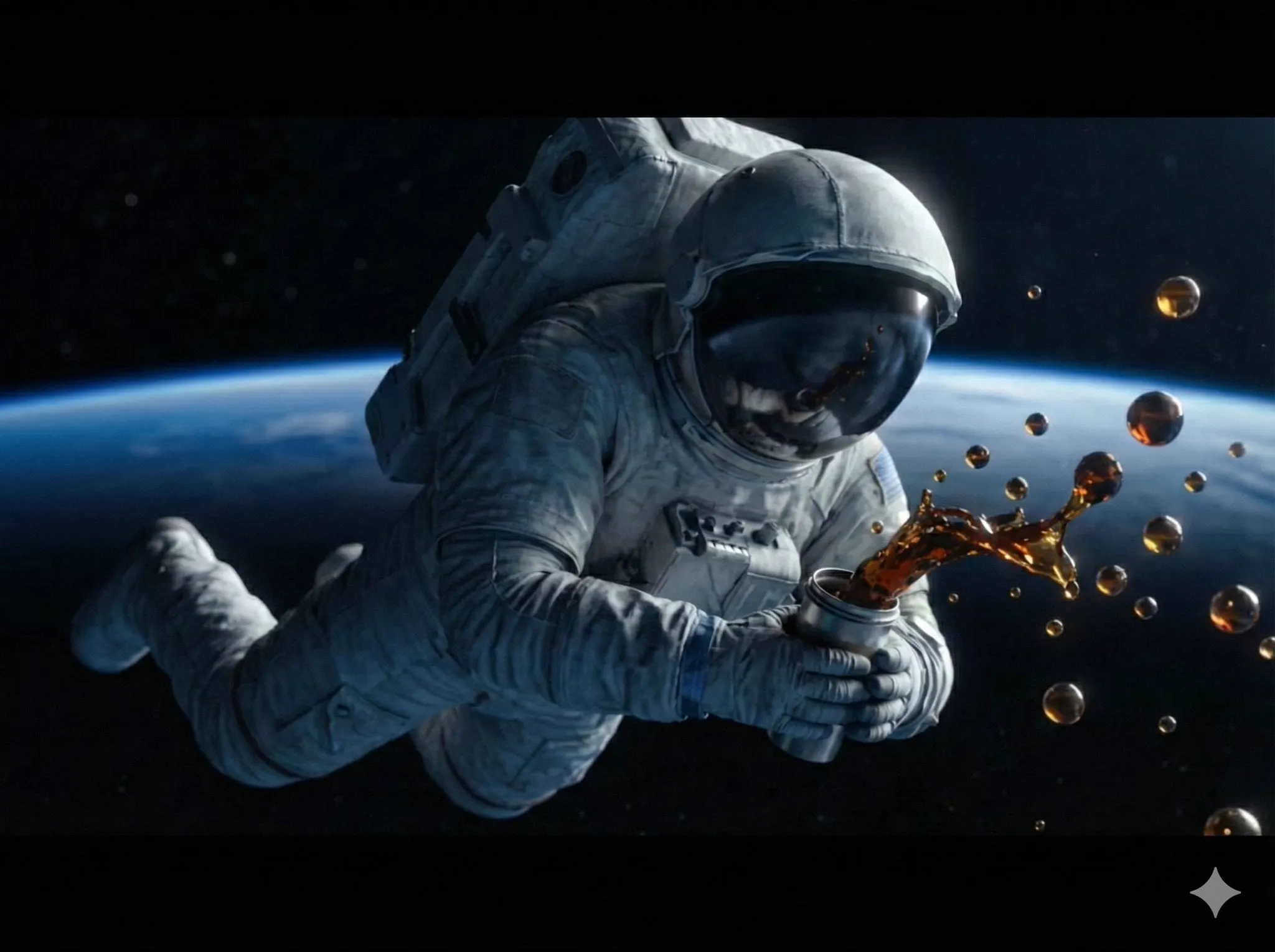

Among all the problems in AI-generated content, one has resisted solution longer than any other: keeping a character visually stable across scenes. Text prompts drift. Models reinterpret. Faces morph between shots. The industry has tried longer prompts, stricter negative prompts, and careful seed management — all of which help around the edges and none of which solve the core problem.
The approach that finally moved the needle is multi-image fusion, and its most impressive form starts with a single image. This article goes deep on the technique: how identity is extracted from pixels, how it is anchored in the model's latent space, how different models adopt it, and what it means for production pipelines that need consistency at scale.
The Consistency Bottleneck
Every text-to-video generation starts from a prompt, and prompts are lossy descriptions of a person. "A young woman with brown hair and a green jacket" leaves the model free to fill in cheekbones, jawline, hair texture, jacket shade, and a hundred other details. The model fills them differently on every run, and the differences accumulate across scenes. The result is visual instability: a character who reads as one person in a close-up and another person in a wide shot.
The root cause is structural. Identity lives in the pixels, not in the words. No matter how carefully you phrase the prompt, the model has to reconstruct the face from a verbal summary, and reconstruction always loses information. The fix, therefore, is to stop describing the character and start showing it.
Multi-Reference Embedding: How Identity Gets Captured
The technical core of multi-image fusion is multi-reference embedding. When you provide one or more images of a character, the system does not paste those images into the output. Instead, it analyzes them and extracts intrinsic features: facial structure, skin tone, hair shape and color, eye spacing, distinctive clothing patterns, body proportions.
Each of these features is converted into a high-dimensional vector through an encoder module. The vectors are then combined into a single identity representation that lives in the model's internal space — the latent space where the model reasons about images. From that point on, the identity acts as a conditioning signal: the decoder is instructed to produce frames that are consistent with this identity, not just with the text prompt.
Why the Latent Space Matters
The latent space is where the model stores its understanding of what images look like. Images that are visually similar sit close together in this space; images that are unrelated sit far apart. Anchoring a character's identity in the latent space means the model does not have to rediscover the character on every generation. The identity is already there, occupying a specific region of the space, and every new scene must pass through that region on the way to the output.
This is why fusion is more robust than prompt tricks. A seed number gives you reproducibility for the same prompt; it does not constrain identity across different prompts. A reference image constrains identity directly, regardless of what the scene prompt says. The distinction is fundamental: seeds control randomness, references control meaning.
From One Image to a Character
The striking thing about modern fusion is how little input it needs. A single good image can establish a workable identity anchor. The system extracts the face, the hair, the proportions, and the key visual attributes from that one image, and the identity holds across scenes — within limits.
The limits are worth understanding. A single image anchors the features it shows: the front of the face, the front of the outfit, the current lighting. It does not show the profile, the back of the head, or how the character looks under different light. When a scene demands a new angle or a new expression, the model has to extrapolate from what it has, and extrapolation is where drift creeps back in.
The practical answer is a small reference set rather than literally one image: a front view, a three-quarter view, a profile, a different expression, and ideally the character in the signature outfit under even light. Five well-chosen images cover the gaps a single image leaves open. The technique is still called multi-image fusion even when the starting point is one image, because the method — extracting and embedding identity — is the same; the reference set just fills in more of the picture.
How Different Models Adopt the Identity
Every generation model interprets the same identity anchor in its own way. Models tuned for fine detail render texture sharply and can reproduce clothing patterns with high fidelity. Models optimized for physical realism pay more attention to how the character moves and interacts with gravity, light, and environment. Stylized models bend the identity toward their visual language.
For a creator, this variation is a feature, not a bug. The identity anchor keeps the character recognizable; the model's fingerprint gives the scene its flavor. The practical discipline is to standardize the input: the same reference set, the same prompt structure, the same style lock, no matter which model is handling a given shot. When the model changes, generate a test frame and compare it against the established look before committing. If the interpretation drifts too far, either tune the prompt for that model or use it for shots where the character is less prominent.
Balancing Quality and Cost
Models also differ in compute cost. Premium models produce hero-quality frames but consume substantial resources; lighter models produce solid frames more economically. Multi-image fusion makes the trade-off easier to manage, because consistency no longer depends on using the same expensive model everywhere. The identity holds across model boundaries, so you can spend the premium compute where the audience is looking — the character close-ups, the dramatic reveals — and use economical models for transition shots, wide establishing frames, and background material.
The economic logic compounds across a project. Every scene that generates correctly on the first pass saves the re-rolls that inconsistency used to cause. In a large project, the difference between a consistent pipeline and a drifting one is not a quality difference; it is a budget difference.
Storytelling Benefits of Stable Identity
Consistency is not a technical vanity metric; it is what makes stories legible. Audiences identify with characters, and identification requires recognition. When a protagonist changes face between scenes, the audience does not consciously notice a rendering issue — they unconsciously feel that something is wrong, and the emotional connection weakens.
Stable identity unlocks narrative formats that were previously impractical: multi-scene commercials, episodic web series, educational content with a recurring host, branded characters that appear in campaign after campaign. Each of these formats depends on the audience being able to recognize "the same person" at a glance. Fusion delivers that recognition as a production guarantee rather than a hopeful accident.
Pipeline Efficiency and Implementation Details
On the engineering side, multi-image fusion slots into a generation pipeline as a conditioning stage. The reference images are processed once, up front: the encoder extracts the identity vectors, and those vectors are stored for the duration of the project. Every generation request references the stored vectors rather than re-processing the images, which keeps the per-request cost low.
Data Handling
The reference set should be curated before it enters the pipeline. Consistency starts with the inputs: images of the same character, in the same outfit where possible, with even lighting and no heavy filters. Inconsistent references produce a muddled identity anchor, and the model will average out the contradictions into a character that matches none of the images exactly.
GPU Optimization
Generation is compute-bound, so the pipeline is typically organized as a queue: jobs arrive, they are matched to the appropriate model, and workers process them in batches. Reference vectors are cached so repeated scenes do not re-run the encoding step. Results are persisted on completion so a crash never loses an accepted frame. These are standard production habits, but they matter more in generation pipelines because the compute cost of redoing work is so high.
For teams building their own tools, the lesson is to treat the identity layer as a first-class service: encode once, cache aggressively, and let every model in the fleet consume the same anchor. Version the anchors as carefully as you version code, because a subtle change in the reference set can alter every downstream scene without any obvious error at the point of change.
Testing the Anchor: A Quality Gate
The identity anchor is only as good as the test that validates it. A disciplined quality gate catches drift before it becomes expensive, and it belongs between every stage of the pipeline.
The first gate is the kit itself. Before generating anything, review the reference set: does every image show the same character, the same outfit where it matters, and even lighting? Contradictory references produce a muddled anchor, and no amount of prompting fixes that.
The second gate is the pilot scene. Generate one representative scene — a different angle, a different environment, a different expression than the references — and compare the output against the kit. This is the moment the anchor proves itself. If the pilot drifts, fix the kit or the prompt now, while the cost is one scene instead of twenty.
The third gate is model switching. Every time a shot uses a new model, generate a test frame and compare it against the established look before committing. Model fingerprints vary, and the anchor holds identity but not style perfectly across all of them. A thirty-second test protects an entire shot.
The fourth gate is the series review. After several scenes exist, put them side by side and watch them as a viewer would. Cross-scene drift is easier to see in sequence than in isolation. Any character who stops reading as themselves at this stage gets fixed before the audience ever sees it.
The gates are cheap; the failures they prevent are not. In a production pipeline, a minute of testing at each stage is worth hours of rework at the end.
Frequently Asked Questions
Can one image really carry a whole series?
A single image can anchor the core identity, but it leaves gaps that drift into view under new angles and lighting. Use a small reference set — five or so images — for anything longer than a couple of scenes.
What makes a good reference image?
Sharp focus, even lighting, the character's signature features clearly visible, and ideally the outfit they will wear in the story. Avoid heavy filters and extreme angles for the primary references.
Why does my character still drift with references in place?
Check three things: is the same reference set used everywhere, is the style lock consistent, and are you switching models without testing frames? Drift usually traces back to one of those three.
Is multi-image fusion the same as image-to-video?
No. Image-to-video animates a still image into a clip. Fusion builds an identity anchor from reference images and applies it across many scenes. They are complementary: fusion keeps identity stable, image-to-video turns a moment into motion.
How much compute does the identity encoding cost?
The encoding happens once per character set and is cached afterward, so its ongoing cost is negligible compared to scene generation. The expensive part remains generating frames, which is why re-roll prevention matters.
Do I need separate anchors for different outfits?
Not always. If the outfit is part of the identity you want preserved, include it in the reference set. If the character changes clothes scene to scene, describe the outfit in each prompt and keep the anchor focused on the face and body — the anchor holds the person, the prompt holds the wardrobe.
The Takeaway
Multi-image fusion solves the consistency problem by moving identity out of the prompt and into the model's latent space. A single image can start the process; a small, well-chosen reference set completes it. The result is a character who stays the same person across scenes, models, and budgets — and that stability is what turns a collection of AI clips into a story worth following.
