
The moment every AI filmmaker dreads happens in the edit. Scene one shows the hero with sharp green eyes and a leather jacket. Scene three shows the same character with brown eyes and a denim jacket. The shots are individually beautiful, the motion is fluid, the lighting is moody, but the story has quietly broken, because the character is not the same person anymore.
This is the character consistency problem, and it is the most discussed obstacle in generative video. Text-to-video models have conquered single-scene quality; they still struggle with multi-scene identity. The fix that has emerged from the trenches is multi-image fusion: building a character seed from reference images and injecting that identity into every generation. This guide explains the technique, shows you how to build a reliable workflow around it, and covers the traps that waste hours.
Why Characters Change Between Scenes
The root cause is statistical. A generative model does not retrieve a character; it constructs pixels from probabilities. Feed it a description, and it assembles a face that fits the prompt, the style, and the noise it started from. Run the same prompt twice, and you get two different faces. Across a scene change, the drift becomes visible: the face shape, the eyes, the costume, even the rendering style all shift slightly.
The problem is compounded by the sequential nature of video generation. Each frame depends on the previous one, and small errors accumulate. A character that is stable within a five-second shot can drift noticeably across a cut, because the cut resets the context. Without an external anchor, the model has no reason to remember that scene two must match scene one.
What Multi-Image Fusion Does Differently
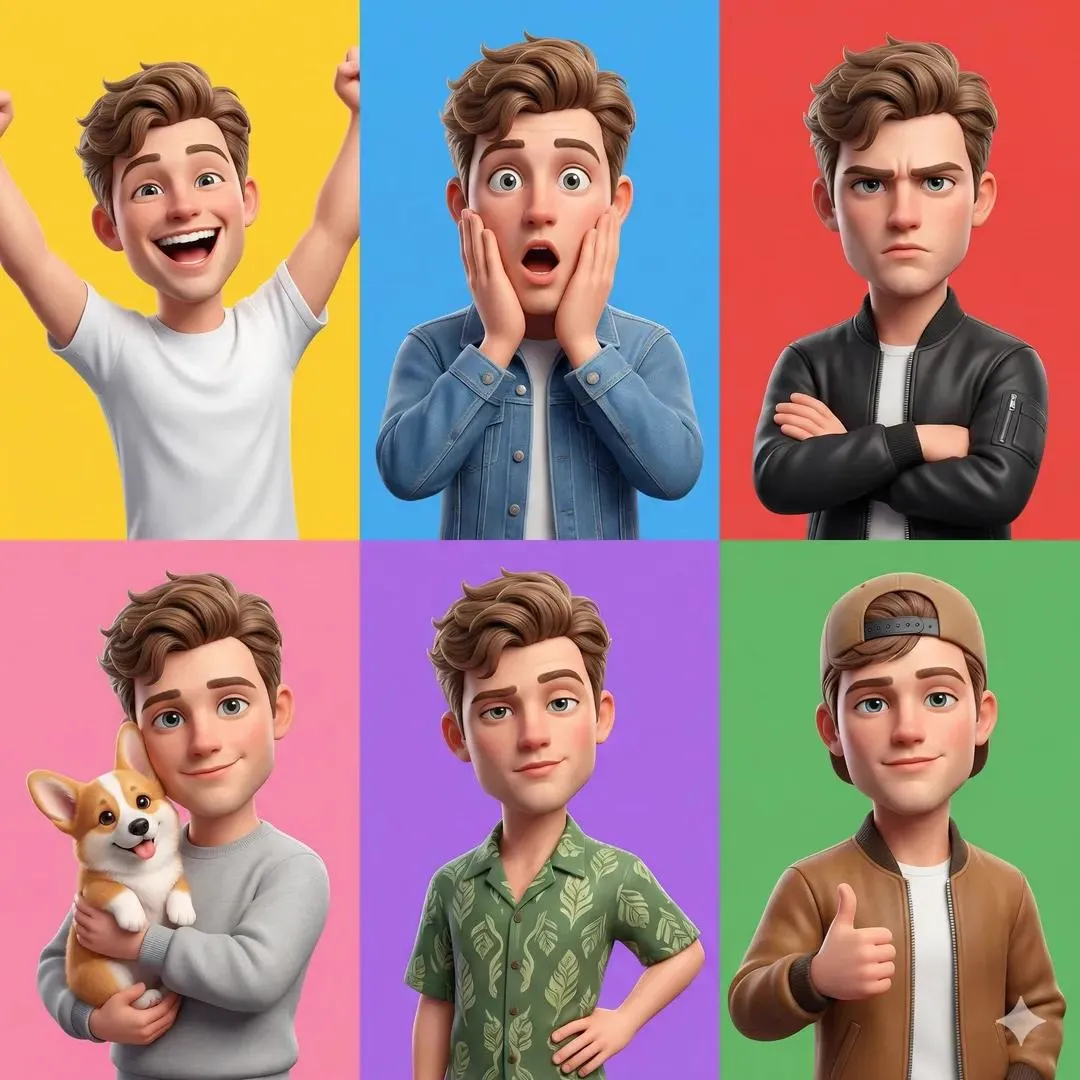
Multi-image fusion replaces memory with reference. Instead of asking the model to remember the character from a text description, you give it images: the hero from the front, the side, in daylight, in shadow, smiling, serious, in the day outfit and the night outfit. The system extracts the essential features of the character, compresses them into an identity vector, and injects that vector into every generation in the project.
The result is that scene two starts from the same identity as scene one. The prompt can change the action, the framing, and the environment, but the character anchor stays constant. This is the difference between hoping the model cooperates and engineering the outcome. It is also why fusion has become the default technique for anyone producing serialized content.
Building a Character Seed: The Foundation
The quality of your output is decided before you generate a single frame, in the images you choose for the seed. A strong seed is the cheapest insurance policy in AI video production.
Angles and Lighting
Cover the angles your story will need: front, three-quarter, profile. Match the lighting of the references to the lighting of the scenes, or the model will bake the reference lighting into every shot. If your story moves from a neon night to a golden afternoon, include references for both, so the character reads correctly in each environment.
Expressions and Emotion
Characters feel, and the seed should prove it. Include a neutral expression, a smile, a serious look, and an intense one. This is not decoration; it gives the model a consistent emotional baseline for the character's face, so that a sad scene changes the mood without changing the identity.
Wardrobe and Accessories
Costume is identity. Decide the wardrobe before you build the seed, and include each outfit the story needs. Changing outfits mid-series is fine as long as the face, the hair, and the build stay anchored. Keep accessories consistent too: a distinctive scar, a hairstyle, a prop. These details are what the audience uses to recognize the character, so they must not drift.
The Limits of Text-to-Video Alone
Understanding the failure mode of pure text-to-video explains why the fusion workflow is structured the way it is. A text prompt describes a character in words, but words are ambiguous: "a young woman in a red coat" leaves the eye color, the face shape, the hair texture, and a thousand other details to the model's whim. Every new scene is a new roll of the dice.
Sequential generation adds another limitation. Even with a consistent prompt, models that generate frame by frame accumulate drift over long outputs, and they are expensive to rerun. The practical lesson is not to abandon text-to-video, it is to stop using it as the sole carrier of identity. Use text for action and environment; use references for identity.
A Workflow for Consistent Characters Across Scenes
A reliable workflow has five stages. First, design the character: write the character sheet, then generate or collect reference images covering angles, expressions, and outfits. Second, build the seed: load the references into your fusion tool, review the extracted identity, and test it on two or three unrelated scenes to confirm it holds. Third, generate each scene with the seed active, writing shot descriptions that specify action and framing without re-describing the face. Fourth, verify early: check the first frames of every generated clip against the seed, and regenerate any shot that drifts. Fifth, assemble and re-check the full sequence on a timeline, because a cut can reveal subtle drift that a single clip hides.
The verification steps look like extra work, but they are the cheapest edits in the pipeline. Catching a drift at the shot level costs one regeneration. Catching it after assembly costs an entire edit.
Choosing Models and Managing Style Transfer
Different models handle references differently. Some are built for photorealism and preserve facial identity well; others are optimized for stylized animation and may interpret the seed loosely. Test the seed on every model you plan to use, and do not assume that a good result on one model transfers to another.
Style transfer interacts with consistency in a useful way. If your project needs a consistent visual style, a painterly look or a filmic grade, you can include style references in the seed alongside the character references. The system then anchors both the identity and the aesthetic, which is how teams produce episodes that feel like one continuous work rather than a collection of experiments.
Verifying Consistency Before You Export
Verification is a discipline, not an afterthought. Build a checklist and run it before exporting anything: face, eyes, hair, build, costume, accessories, and rendering style. Compare each shot against the seed, not against your memory of the seed. Two shots side by side will reveal drift that a solo glance misses.
If a scene drifts, resist the urge to fix it in post. A hand-painted correction on one frame will not match the next frame. Regenerate the scene with a stronger reference or a more specific shot description. If the drift keeps happening, the problem is the seed: return to the reference set, remove contradictory images, and rebuild.
Automating Consistency for Longer Narratives
The same principles scale to features, series, and campaigns. The secret is treating the seed as a living asset. As the story progresses, add new references for new outfits, new locations, and new emotional states, and update the seed for each act. Keep the core identity images untouched, so the through-line stays intact, and document which references are active for each scene.
Automation helps at the edges: batch generation, scheduled renders, and automatic comparison of generated frames against the seed. But the creative decisions, which references to trust, when to update the seed, remain human. The tool removes the drudgery; the creator keeps the judgment.
Common Mistakes and How to Avoid Them
The first mistake is a weak seed: two or three random images with different lighting and different expressions, which gives the model contradictory information. The second is skipping the test: building a beautiful seed and discovering on shot twenty that it does not hold. The third is re-describing the face in every prompt, which fights the seed instead of trusting it. The fourth is fixing drift in post, which multiplies the work instead of eliminating it. The fifth is ignoring style consistency while obsessing over the face, producing a hero who looks the same in completely different worlds.
A Worked Example: One Hero, Eight Scenes
A concrete example makes the workflow tangible. A creator wants a two-minute short with one protagonist, let us call her Mara, across eight scenes: morning at home, a walk through the city, a tense conversation, a chase, a quiet rooftop, a flashback, a night drive, and a final confrontation.
The seed. The creator writes a character sheet first: late twenties, shoulder-length dark hair, olive jacket, calm but watchful expression. Then he generates fifteen portraits and selects seven: front, three-quarter, profile, warm light, cold light, neutral, and one with a guarded, intense look. He checks the seven images against each other, discards two that subtly disagree on the hairline, and loads the remaining five into the fusion tool.
The test. Before touching the real scenes, he generates three throwaway shots, a wide street shot, a close-up in shadow, and a fast-moving chase frame. All three keep the face, the jacket, and the hair. One detail drifts: in the chase frame, the jacket turns a shade lighter. He adds a low-light reference to the seed and reruns the test. Stable.
The production. Each of the eight scenes is generated with the seed active. The prompts describe action, framing, and environment, never the face. Two scenes pass on the first take. Three need a second take for motion quality. Two need environment tweaks, the night drive wants more neon, the flashback wants a warmer grade. One scene, the chase, keeps failing on the hair, and the fix is a prompt change, "hair tied back," which the seed absorbs cleanly.
The verification. Before assembly, the creator lays the first frame of each scene side by side and compares them to the seed. One scene shows the eyes a touch wider and the brows higher; alone it would pass, side by side it reads as a different mood. He regenerates that scene with the expression specified in the shot description, and the sequence locks.
The lesson. Nothing in this process required luck or expensive retries. The seed did the identity work, the test caught the drift early, and the verification caught the subtle variation that single shots hide. Eight scenes, one hero, one coherent story, and a template the creator can reuse for the next short.
Frequently Asked Questions
How many reference images do I need? For a main character, five to ten high-quality images covering the angles, expressions, and outfits the story uses. Quality beats quantity, and contradictory images are worse than missing ones.
Can I use images generated by AI as references? Yes, and most teams do. Generate a set, select the best, and use them as the seed. The loop of generate, select, refine is how professional character sheets are built.
What if my character needs to change over the story? Update the seed at act boundaries. Keep the core identity images constant and add the new state as additional references. The audience should be able to trace the change without ever doubting it is the same person.
Does fusion work for non-human characters? Yes. The technique anchors any visual identity: animals, robots, vehicles, creatures, and even objects. The principles of angles, consistency, and test-first apply unchanged.
How long does it take to set up? The first character takes the longest, a few hours including the test scenes. Once the workflow is in place, subsequent characters take less, because the pipeline is known.
Character consistency is the difference between a demo and a story. Multi-image fusion gives you the anchor you need, but the craft is in the seed, the verification, and the discipline to regenerate instead of patch. Master that loop, and your next project will not just have beautiful scenes; it will have characters the audience believes in, scene after scene.
