

Why Prompt Quality Decides Output Quality
Most people treat a large language model like a search box: they type a short phrase and hope for the best. The results are usually generic, and the conclusion is that AI cannot really be creative. The truth is the opposite. Modern language models are extremely capable, but their output is bounded by the instructions they receive. A vague prompt produces a vague answer; a precise, well-structured prompt produces something you can actually use. This is the core idea behind prompt engineering, and it applies whether you are writing a blog post, drafting dialogue for a video, generating concept art, or brainstorming a product name.
The practical consequence is simple: if you want more creativity from ChatGPT, you have to give it more to work with. That does not mean writing longer prompts for the sake of length. It means giving the model a clear role, enough context, a specific task, and the constraints that shape the result. When those four pieces are in place, the model stops guessing and starts designing. The difference between a hobbyist and a professional AI user is rarely the model they use; it is how they brief it.
The Four Building Blocks of a Creative Prompt
Every strong prompt can be broken into four parts. You do not need to use all of them every time, but when a prompt fails, one of these four is usually missing.
Role: Who the model should be
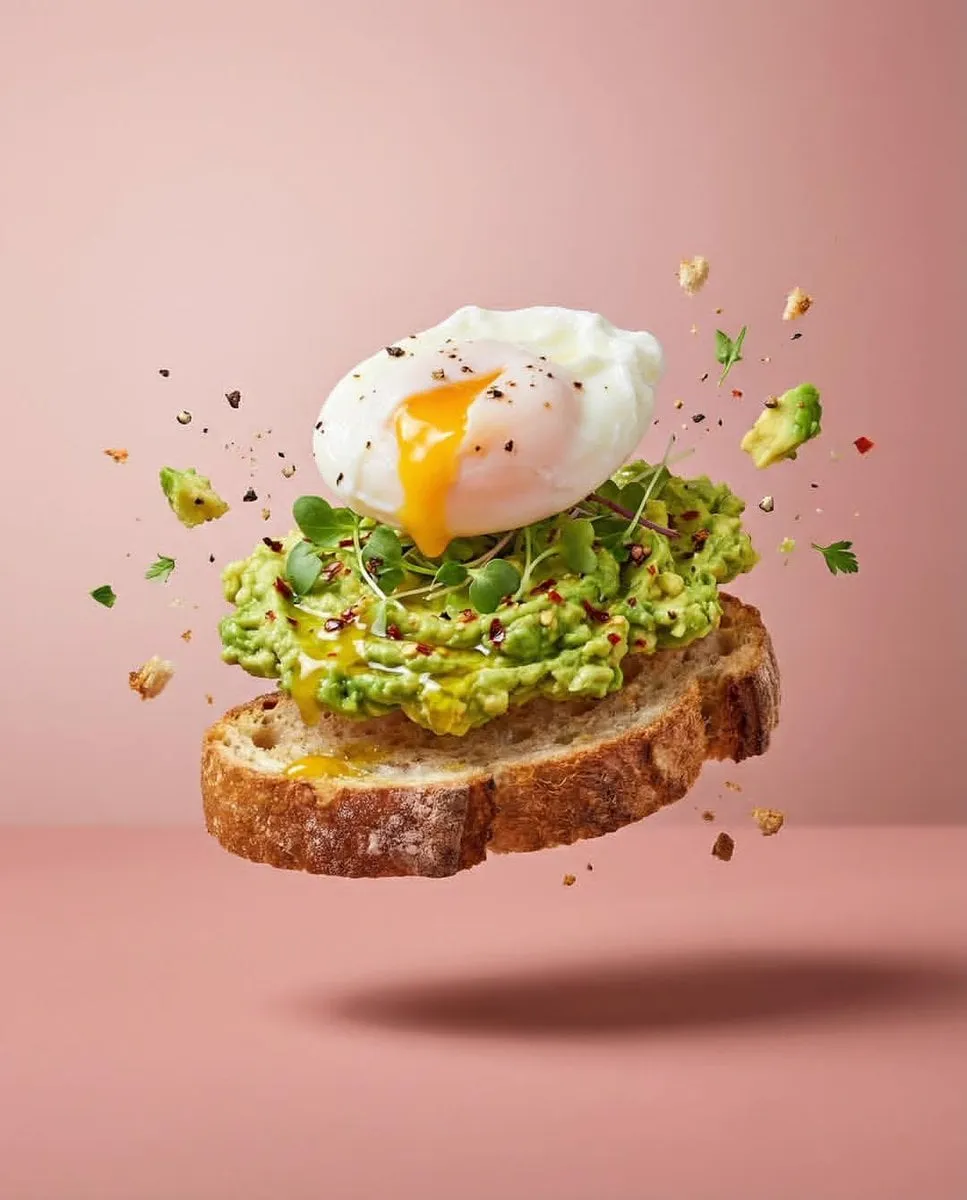
The first move is to assign a persona. "You are a senior screenwriter with ten years of experience in short-form thriller content" changes the vocabulary, pacing, and judgment of the output far more than people expect. The role tells the model which conventions matter. It is not magic; it is context. When you say "you are a food photographer", the model will reason about lighting, plating, and angles. When you say "you are an engineer", it will reason about trade-offs and failure modes.
Context: What the model should know
Context is the background information the model needs before it can produce something relevant. This includes the audience, the format, the tone, and any reference points. For example: "This article is for independent video creators with limited budgets. They publish three times per week on TikTok and Instagram. Keep the tone practical and slightly informal." The model uses this to calibrate every sentence. Without context, it defaults to generic encyclopedic language that sounds impressive and says nothing.
Task: What the model should do
The task is the actionable verb at the center of the prompt: generate, rewrite, compare, outline, criticize, expand, summarize. Be explicit about the deliverable. "Write five hooks for a video about meal prep" is a task. "Give me some ideas" is not. The more specific the task, the more specific the output. If you want ten options, say ten. If you want them ranked, say ranked. If you want each option in two sentences with a title, say that too.
Constraints: What the model must respect
Constraints are the guardrails that turn a generic draft into a usable artifact. Word count, tone, banned phrases, format, point of view, and even the rhythm of sentences are all constraints. A short-form video script benefits from a constraint like "maximum 120 words, spoken language, ending with a call to action." A brand brief benefits from "do not use the word innovative, avoid clichés, keep it under 200 words." Constraints are also where you inject your own creative direction. The model is not the artist; you are. The constraints are your brushstrokes.
Advanced Techniques: Chain-of-Thought, Reflection, and Iteration
Once the basics are solid, you can move to techniques that consistently produce better creative work.
Chain-of-thought prompting
Instead of asking for a final answer, ask the model to reason step by step. For creative tasks this looks like: "First list three possible directions for this story. For each one, note the emotional tone and the main conflict. Then pick the strongest and write the opening scene." By forcing the model to externalize its reasoning, you can steer it before it commits to a final draft. You also get a valuable byproduct: alternative directions you might not have considered.
Reflection and self-critique
A simple but powerful loop is to ask the model to critique its own first draft. "Write the draft, then list its five weakest points, then rewrite it addressing those points." This works because the model is good at evaluation even when its first pass is mediocre. Two or three rounds of this often produce work that is noticeably sharper than the initial output. You can also act as the critic yourself and feed your notes back into the next prompt.
Iterative refinement
The single best habit in prompt engineering is treating the first output as a rough draft, not a final answer. Build a loop: generate, evaluate, adjust, regenerate. If a character sounds flat, tell the model what is flat and ask for a revision with more specific direction. If the tone is too formal, say so and give an example sentence that matches the tone you want. Every round of feedback is a round of context, and the model compounds on it. This is why experienced users get dramatically better results than beginners with the same model: they iterate.
Multimodal Prompts: Images, Audio, and Video
Creativity is not limited to text. ChatGPT and other multimodal assistants can now work with images, voice, and generation pipelines that produce visuals and sound. The same prompt principles apply, with a few additions.
Describe what you cannot see
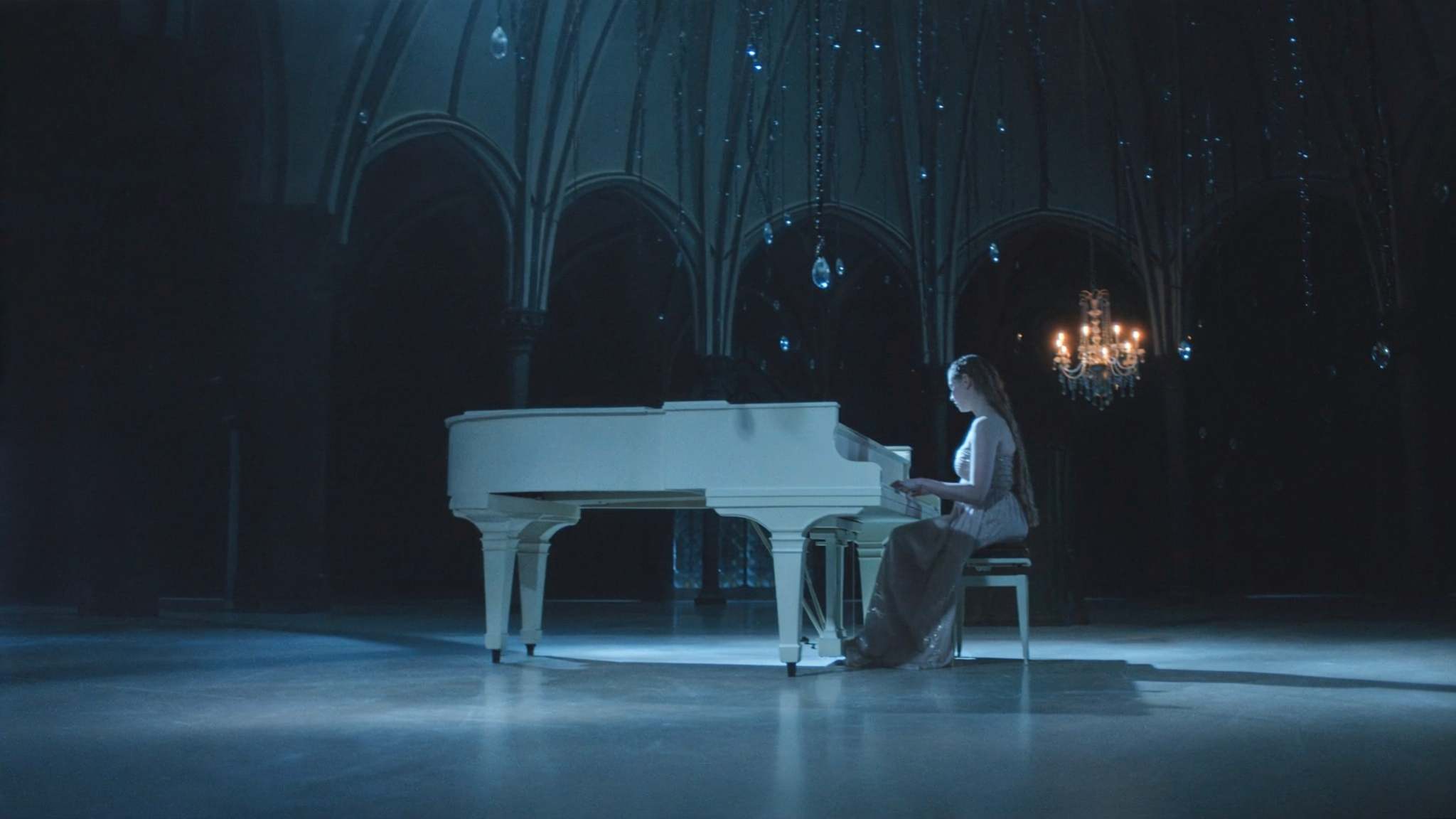
For image generation, the prompt must translate visual ideas into language: lighting, camera angle, lens, color palette, composition, mood, and reference styles. Instead of "a castle", write "a weathered stone castle on a cliff at golden hour, low-angle shot, volumetric fog, muted teal and amber palette, cinematic lighting." The detail is not decoration; it is the instruction set for the visual model.
Keep characters and worlds consistent
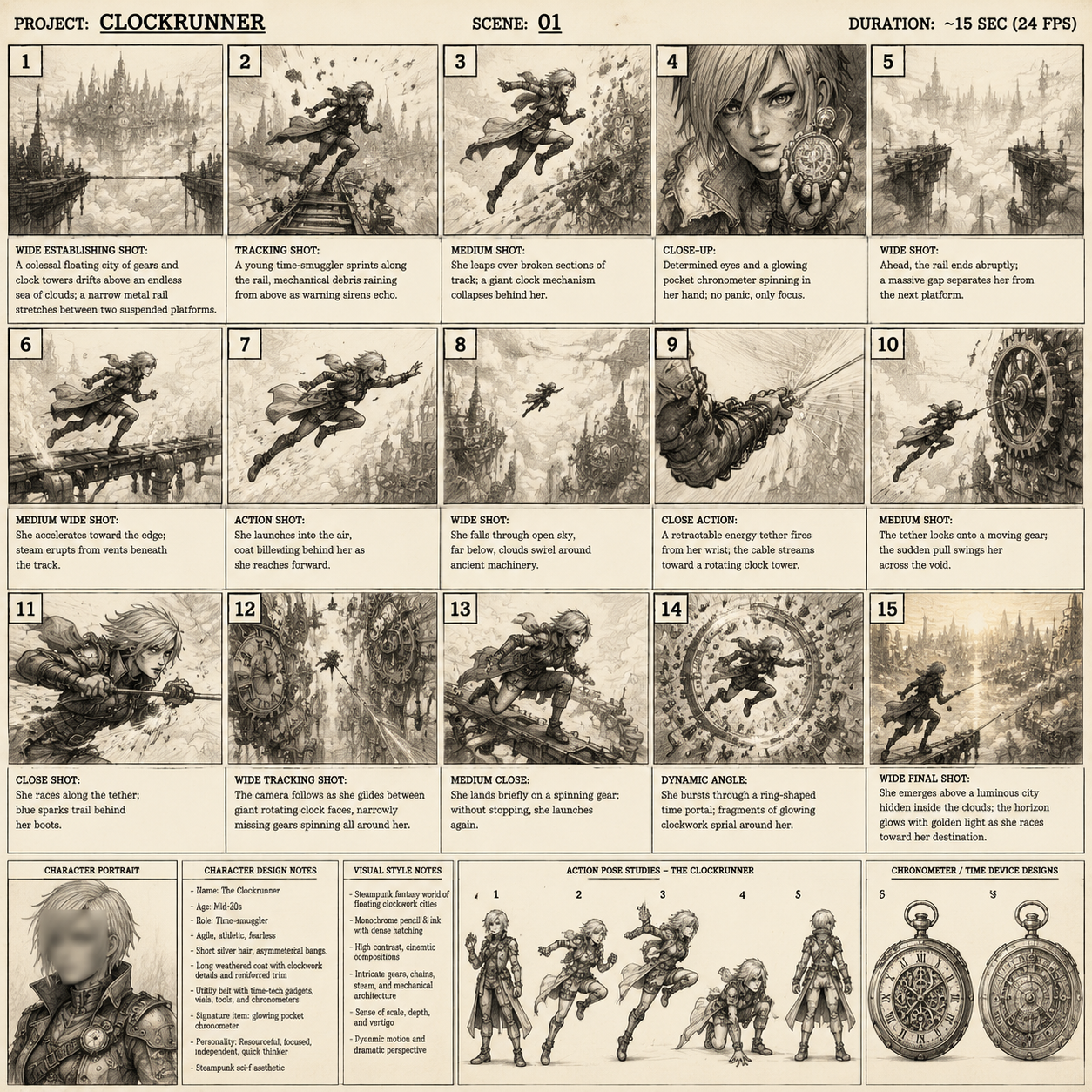
One of the biggest creative problems with AI-generated media is consistency: the same character looks different in every frame. The solution is to build a reusable description block that defines the character's appearance, wardrobe, and personality once, then reference it in every prompt for that project. Keep this block in a separate document and paste it into each generation prompt. This is the same discipline professional studios use with character sheets, and it works surprisingly well for solo creators too.
Use images as input
Modern multimodal models can accept a reference image and build on it. You can upload a sketch and ask for a finished illustration, upload a screenshot and ask for a rewritten caption, or show the model a frame from a video and ask for a matching shot description. When you use an image as input, tell the model exactly what to preserve and what to change. Otherwise it will guess.
Creative Workflows You Can Steal
Theory is useful, but templates are faster. Here are three workflows that produce consistent creative output.
Workflow 1: From idea to finished draft
Start with a one-line idea. Prompt the model to expand it into a premise, then an outline, then a first draft, then a revision. At each step, add constraints: word count, audience, tone, and the sections you want. This works for articles, video scripts, and even dialogue. The key is to never jump straight from idea to final draft in one prompt; the intermediate steps give you control points.
Workflow 2: Building a story bible
For serialized content, create a story bible: characters, locations, rules of the world, and recurring motifs. Prompt the model to help you build and expand this document. Then, for every episode, prompt with the relevant sections of the bible included as context. This keeps the series coherent across dozens of outputs, which is the hardest thing to achieve with AI and the most valuable.
Workflow 3: Idea generation at scale
When you need volume, separate quantity from quality. Prompt the model for fifty rough ideas with a strict one-line format. Then prompt it to cluster the ideas into themes, then to expand the strongest clusters into concepts, then to pick the best concept and develop it fully. By separating the brainstorming phase from the development phase, you avoid the common failure mode where the model gives you one decent idea buried in a mediocre list.
Meta-Prompts and Automation
Once you have prompts that work, turn them into reusable templates with placeholders. A meta-prompt looks like this:
"You are a [role]. Write [deliverable] for [audience]. The topic is [topic]. Requirements: [constraints]. Format: [format]."
Fill in the brackets each time. This turns prompt engineering into a system rather than a series of one-off efforts. You can keep a library of these templates for the recurring tasks in your work: hooks, outlines, scripts, descriptions, captions, and revisions. A small library of ten good templates will outperform an hour of improvising every single time.
You can go further and chain templates together with simple automation. If your workflow is outline to draft to polish, you can run those three templates in sequence, feeding the output of one into the input of the next. This is the foundation of automated content pipelines, and it works for solo creators who want to publish consistently without hiring a team.
Common Mistakes and How to Fix Them
The most common mistakes in creative prompting are easy to diagnose.
Vague roles produce generic voice. Fix it by being specific about experience, genre, and audience.
Missing constraints produce bloated output. Fix it by declaring the length, tone, and format up front.
Skipping iteration produces first-draft quality. Fix it by building a generate-critique-rewrite loop into every important task.
Overloading the prompt produces scattered results. Fix it by splitting one giant prompt into a sequence of focused prompts.
Treating the model as an oracle produces disappointment. Fix it by remembering that the model is a collaborator that executes your direction. The creative vision still has to come from you.
Prompt Templates for Real Creative Tasks
To make this concrete, here are three reusable templates you can adapt today.
Template: Writing a compelling hook
"You are a hook writer for short-form video. Write [N] opening lines for a video about [topic] aimed at [audience]. Each hook must be under 15 words, start with a curiosity gap or a strong claim, and avoid clickbait. Rank them by predicted retention."
This template works because it separates the creative problem into role, audience, constraint, and ranking criterion. The model does not just list ideas; it evaluates them against the goal you actually care about, which is holding attention.
Template: Character voice sheet
"You are a character designer. Based on this description [paste description], produce a voice sheet for the character: speech rhythm, typical vocabulary, recurring verbal tics, emotional range, and three sample lines in different moods. Keep the voice distinct from [other character]."
The voice sheet is the audio twin of a visual character sheet. It keeps a character consistent across episodes, scripts, and even different AI tools. Once you have a voice sheet, you can paste it into any generation prompt that involves that character.
Template: Turning rough notes into a structured outline
"You are a content strategist. Here are my rough notes: [paste notes]. Turn them into an outline for [format, e.g., a 1500-word article, a 5-minute video]. Include a hook, [N] main sections with one key idea each, and a conclusion with a call to action. Flag anything that needs fact-checking."
This template is the workhorse of daily production. It converts messy thinking into a structured plan in one pass, and it forces the model to separate the signal from the noise in your notes. The outline is then the input for the drafting step.
When to break the templates
Templates are scaffolding, not chains. If you feel the output becoming predictable, vary the structure deliberately: ask for a mind map instead of an outline, a debate between two perspectives instead of a single essay, or a set of constraints that contradict each other. Creative breakthroughs often come from breaking the pattern on purpose.
Putting It All Together: A Weekly Creative System
Prompt engineering becomes powerful when it is a system, not a bag of tricks. A simple weekly rhythm looks like this: on Monday, you brainstorm fifty raw ideas with an unconstrained prompt. On Tuesday, you cluster the ideas into themes and pick three concepts. On Wednesday through Friday, you develop one concept per day using the outline-to-draft-to-revision workflow. Every prompt in this system is a template, and every result feeds the next step.
The system has two benefits. First, it separates divergent thinking, coming up with many ideas, from convergent thinking, committing to one, which is exactly how professional creative teams operate. Second, it produces a paper trail: the fifty raw ideas, the three concepts, and the final drafts are all saved, so you build a reference library of what worked and what did not. After a few months, that library becomes a personal training set for your own taste.
Frequently Asked Questions
How long should a prompt be?
Long enough to include role, context, task, and constraints, and no longer. Most strong prompts are a few sentences. Huge prompts that repeat the same idea add no value and can actually dilute the model's focus.
Should I always use the same template?
No. Templates are a starting point. Creative work benefits from varying the structure of your prompts just as it benefits from varying the structure of your articles. The template is the floor, not the ceiling.
Can ChatGPT really be creative?
It can be a powerful creative partner if you direct it properly. Its strength is generating many options quickly and combining ideas in unexpected ways. Your job is to curate, direct, and refine. The best results come from the partnership, not from either side alone.
What is the fastest way to improve my results?
Iterate. Take one task you do regularly and run it through three rounds of generate, critique, rewrite. Then save the winning prompt as a template. Do this for your five most common tasks and you will have a small toolkit that makes every future task faster and better.
Do these techniques work for image and video tools too?
Yes. The role-context-task-constraints framework applies to visual generation as well, and the consistency tricks, like reusable character descriptions, matter even more there. The discipline of writing precise, structured prompts is the same across every generative tool.
