
Two creators use the same AI video tool. One produces flat, generic clips that look like everyone else's output. The other produces shots that stop the scroll: moody light, confident camera moves, characters that feel like they belong in a film. Same tool, same models, completely different results. The difference is almost always the prompt.
Cinematic prompting is a craft. It is the ability to translate what a director sees in their head into a specification a model can follow, using the vocabulary of film: light, composition, camera, time. This guide breaks that craft into learnable pieces, with concrete examples you can adapt to your own projects.
Why Some AI Videos Look Cinematic and Others Don't
The gap between "generated" and "cinematic" is not a quality gap in the models. It is a specification gap in the prompts. The models can render dramatic lighting, shallow depth of field, and camera movement. They do it when the prompt asks for it, and they do something generic when the prompt does not.
Consider two prompts for the same subject. "A woman in a cafe" returns a serviceable image. "A woman in her forties in a dim cafe, face lit by a single warm window, steam rising from her coffee, shallow depth of field, slow push-in" returns a scene with a mood. The second prompt works because it specifies the visual language of film: a light source, an atmosphere, a camera behavior.
Cinematic output is the result of cinematic input. The models have absorbed a vast amount of film vocabulary, but they can only use what you ask for. Learn the vocabulary, and you unlock what the models already know how to do.
The Three-Pillar Prompt Structure
The reliable backbone of a cinematic prompt has three pillars: subject, style, and cinematography.
The subject is what the viewer sees: who, what, where, and what is happening. Be specific about the character, the setting, and the action. "A tired delivery rider" is a subject. "A tired delivery rider in a yellow raincoat parking his scooter outside an all-night noodle shop" is a subject you can build a scene around.
The style is the visual world: the medium, the mood, the palette. Photorealism, film grain, anime, noir, muted colors, high contrast. The style tells the model what the world should feel like. It is the difference between a documentary frame and a dream sequence.
The cinematography is how the camera sees: shot size, angle, movement, lens, depth of field. This is the pillar that separates a snapshot from a shot. "Medium close-up, low angle, handheld, 35mm, shallow depth of field" is not jargon; it is instruction.
Assemble the three pillars in one prompt, keep the format consistent, and you have a reusable structure. The same pillars apply to every model, which makes them the foundation of a multi-model workflow.
The Language of Light
Light is the first thing the eye reads in a frame, and it is the most underused tool in AI prompting. Naming the light transforms a prompt.
Start with the source and the direction. "Hard sunlight from above," "soft window light from the left," "cold blue ambient with a warm practical lamp." The direction tells the model where the shadows fall, and the shadows are what give the frame depth.
Name the quality. Hard light produces sharp shadows and drama. Soft light flattens and flatters. The classic cinematic vocabulary, chiaroscuro for high-contrast, dramatic lighting, golden hour for warm, low sun, rim light for separation from the background, are all understood by the models. Use the terms.
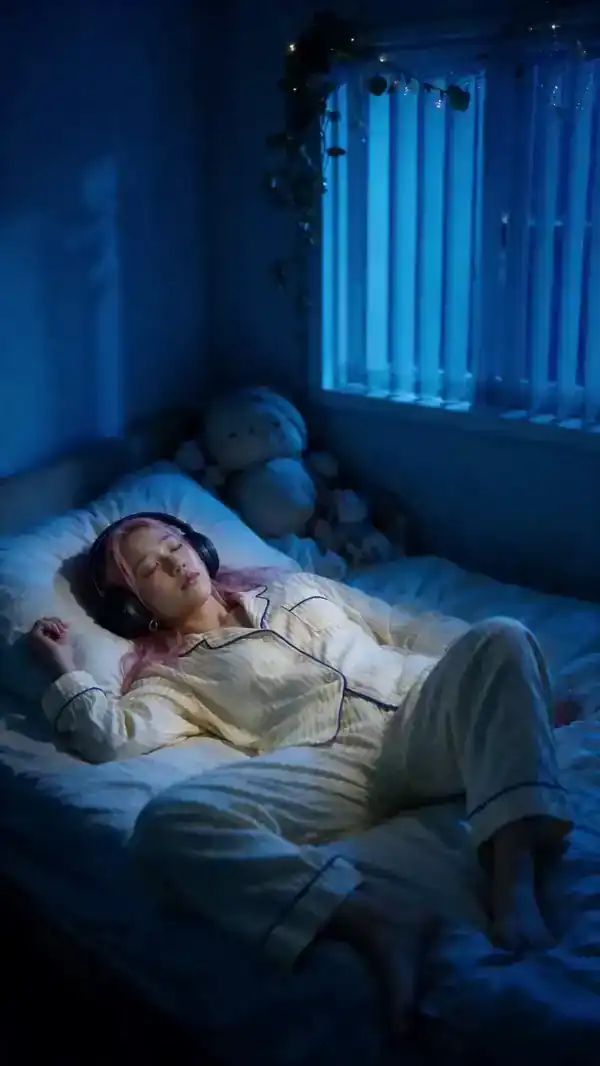
Then name the color. Warm and cool contrast is the engine of cinematic color: a blue night scene with a warm face light, a cold office with a warm desk lamp. Saying "warm key light, cool fill" tells the model to build the scene in two temperatures, and the frame instantly reads as designed.
An example: "A detective at a desk, face lit by a single desk lamp, deep shadows, cold blue moonlight through the window behind him, film noir style." The subject is simple; the light carries the mood.
Composition and Camera Perspective
Composition is where beginners get stuck on the medium shot. Every frame is a medium shot, every angle is eye level, and every video looks the same. Cinematic prompting escapes that by varying how the camera sees.
Learn the shot sizes: extreme wide for context, wide for the scene, medium for the body, close-up for emotion, extreme close-up for detail. Each shot size changes what the viewer feels. Cut between them in your shot list, and the video gets a rhythm.
Learn the angles. Eye level is neutral. Low angle makes the subject feel powerful or looming. High angle makes the subject feel small or vulnerable. Dutch angle creates unease. The angle is a statement about the character, so choose it deliberately.
Learn the movement. A static shot is a choice. A push-in builds intimacy. A dolly-back reveals context. A handheld shot brings urgency. A crane shot gives scale. Models vary in how well they follow movement instructions, so test yours, but the vocabulary is the same.
Put it together: "A low-angle tracking shot following a child running through a wheat field at sunset, the camera stays low, wheat passing in the foreground." The composition does the storytelling before the story even starts.
Temporal Control: Time, Speed, and Motion
Video is a time medium, and the prompt can control how time feels. This is the dimension that image prompts do not have, and it is where video prompting gets interesting.
Slow motion reads as drama and importance. "Slow motion" or "shot at high frame rate" as an instruction changes the feel of a moment completely. Fast motion or time-lapse reads as scale and the passage of time.
The pace of action matters too. "The wave crashes in slow motion, spray hanging in the air" is a different shot than "the wave crashes violently, water churning." The verbs carry the timing.
Duration and sequence are harder to control, but the vocabulary still helps. "A long, unbroken take," "a quick cut of," "a static shot that holds for a beat" give the model and your editor a shared understanding of how the moment should breathe.
The lesson: when you prompt, think about time as a creative input. You are not just describing a picture; you are describing a moment with a duration and a tempo.
Using Model Strengths for Cinematic Work
The models in your library have different personalities, and cinematic prompting works with them rather than against them.
Fidelity-first models like Flux are your choice for frames where the image quality is the star: hero shots, detailed environments, photorealistic product scenes. Push the style and the texture; the model will deliver detail.
Narrative models like Runway Gen-4 are your choice for shots where the camera and the story move together. Give them a clear action, a camera move, and a mood, and they will return footage that feels like a film rather than an animated still.
Kling and Hailuo are strong for character-driven and expressive content. Kling rewards precise prompt adherence, so spell out the action and the movement. Hailuo rewards expressive direction, so describe the performance as much as the picture.
The cinematic habit is to match the shot to the model's personality before you write the prompt. The prompt gets easier, and the result gets better.
The same principle applies to your own skill. Cinematic prompting improves fastest when you review your own output with a critical eye: pick one shot per week, write down why it works or fails, and adjust your vocabulary accordingly. Over a few months, you will build a personal library of prompts and phrases that reliably produce the look you want. That library is worth more than any single prompt trick, because it encodes your taste in a form the models can actually execute.
Consistency Across Scenes
Cinematic video is a sequence, and a sequence only works if the shots belong together. Consistency is a prompting discipline.
The first rule is the character contract: a master description of every character, reused verbatim in every prompt that features them. The second rule is the location contract: the same for places. The third rule is the style block: a shared string of style and light language appended to every prompt.
Reference images make the contracts concrete. Generate or collect a reference sheet for each character and location, and use multi-image reference where the platform supports it. The reference carries the identity; the prompt carries the action.
If you route shots to different models, test the style block across them before production. One shot per model, same prompt, compare, and adjust until the outputs sit together. The style block is the translation layer; it is what makes a multi-model film look like one film.
Example Prompts Deconstructed
Reading good prompts is the fastest way to improve. Here are three, with the reasoning.
"A lone astronaut standing on a ridge, back to camera, facing a colossal gas giant rising over an alien horizon, rim-lit by its light, deep space darkness, cinematic wide shot, anamorphic lens, slow dolly-in." Subject: astronaut, ridge, planet. Style: cinematic, anamorphic, space. Cinematography: wide shot, rim light, slow dolly-in. The prompt builds scale, isolation, and mood in one sentence.
"A street food vendor at night in Bangkok, steam rising from the grill, neon signs reflecting in puddles, warm tungsten light on the food, cool ambient on the street, medium shot, handheld, shallow depth of field." Subject: vendor, grill, street. Style: night, neon, wet reflections. Cinematography: medium shot, handheld, shallow depth of field. The contrast of warm and cool does the cinematic work.
"A ballet dancer mid-leap in an empty warehouse, single beam of light from a high window, dust motes floating, slow motion, low angle, long shadow on the concrete floor." Subject: dancer, leap, warehouse. Style: single beam, dust, slow motion. Cinematography: low angle, long shadow. The frame is composed around light, movement, and space.
Study the structure, steal the vocabulary, and make the prompts your own. Then run the experiment: take one of your existing prompts, apply the three-pillar structure, add one lighting term and one camera term, and compare the two outputs side by side. The difference will show you exactly what the vocabulary buys.
Frequently Asked Questions
How long should a cinematic prompt be? Long enough to specify subject, style, and cinematography, and no longer. A paragraph of purposeful detail beats a page of adjectives. Every word should be doing work.
Do I need to know film terms to use these techniques? The terms help because the models know them, but you can learn the handful that matter, shot sizes, camera movements, lighting names, in an afternoon. That small vocabulary changes your results dramatically.
Why do my prompts work for stills but fail for video? Video adds the temporal dimension. The prompt needs motion and timing, not just a picture. Specify what moves and how, and think about the duration and pace of the moment.
Can I mix multiple models in one video? Yes, with discipline. Use the same style block, the same character and location contracts, reference images, and a human review gate. Test the style across models before full production.
How do I know which model is right for a shot? Match the model's personality to the shot's needs: fidelity models for hero frames, narrative models for story and camera, expressive models for character and performance. Then let your retake rate and cost per usable shot guide you.
Conclusion
Cinematic AI prompting is a skill with three parts: a prompt structure that separates subject, style, and cinematography; a film vocabulary that includes light, composition, camera, and time; and a consistency discipline that keeps every shot in the same world. None of it requires a film degree, and all of it compounds.
Learn the vocabulary, build reusable contracts for your characters and your style, and match each shot to the model that serves it best. The models already know how to make cinematic images. Your prompts are the director's instructions that let them show it.
