
There is a difference between generating video that looks good and directing video that tells a story. The first is a technical achievement; the second is an artistic one. Too many AI video projects fail at the second step. A creator spends hours perfecting a single photorealistic shot, then joins it to another handsome but unrelated shot, and the result is a polished collection of images with no emotional spine. The model did what it was told. The problem is that nobody told it a story.
Mastering cinematic AI video is ultimately about learning to think like a director across every stage of the process: how you structure a narrative, how you write prompts that carry intent, how you hold visual consistency, and how you let the tools suggest the cinematography you might not have reached on your own. This guide walks through that craft, from the logic of a story arc to the practical grammar of a director's prompt.
Why Storytelling Is Now the Differentiator
Generative video quality has risen so quickly that raw fidelity is no longer rare. Any competent model can now produce a convincing cityscape, a believable human face, or a sweeping landscape. When every creator has access to the same powerful engines, the output that stands out is the one with a clear point of view, a coherent sequence, and an emotional purpose.
Audience expectations have risen to match. Viewers have seen enough AI spectacle that a striking image alone no longer impresses. What holds their attention is the sense that someone decided how the shots connect and what the whole thing means. Storytelling is the layer that turns generative ability into something resembling authorship, and it is the only layer that competitors cannot copy by tweaking a prompt.
Start With the Audience's Emotional Journey
A story is not a list of events; it is a designed set of emotions. Before writing a single prompt, decide what you want the viewer to feel at each point. Ask what tension you are building, what shift you want them to experience, and what they should take away.
A useful tool is to sketch a one-line emotional spine for your piece, such as curiosity to wonder, comfort to unease, or calm to exhilaration. Whatever it is, every shot should either advance that spine or deliberately pause it for effect. When you can say why each shot exists in emotional terms, you are directing rather than generating.
This orientation also resolves the endless content question of what to make. Choose the emotion you want your audience to carry, then find the story that most directly produces it.
Directorial Prompts Are Briefs, Not Descriptions
The largest shift in mindset is treating a prompt as a director's brief rather than a flat description. A description lists what is on screen. A brief directs how it should feel, move, and be seen.
Build each prompt around four director-level concerns. Decide the framing: close on the player's eyes or a wide establishing the whole room. Direct the camera: a slow push, a handheld unease, a locked-off stability. Set the emotional tone through light and atmosphere, such as cold blue isolation or warm amber nostalgia. Specify motion that serves the story, like a character moving toward a doorway as their resolve builds.
When you write prompts at this level of intent, the model stops merely illustrating words and starts executing decisions. The difference is visible in the output: deliberate, purpose-driven shots rather than attractive but aimless ones.
Hold Your World Together With Consistency
Cinematic storytelling breaks the moment visual world drifts between shots. A character whose face changes every cut, or a location whose architecture shifts, destroys the suspension of disbelief that narrative depends on.
Treat recurring faces, places, and props as fixed assets. Design each one once as an approved still, then reuse that still as the anchor for every appearance. Keep a written description of the essential features so prompts never contradict the anchor. Apply the same style cues and colour temperature across every shot. Consistency is not a detail of cinematic craft; it is the frame that makes the story legible at all.
The more stable your world, the more the audience can focus on what you actually want them to feel instead of noticing glitches.
Building Cinematic Language From Specific Model Strengths
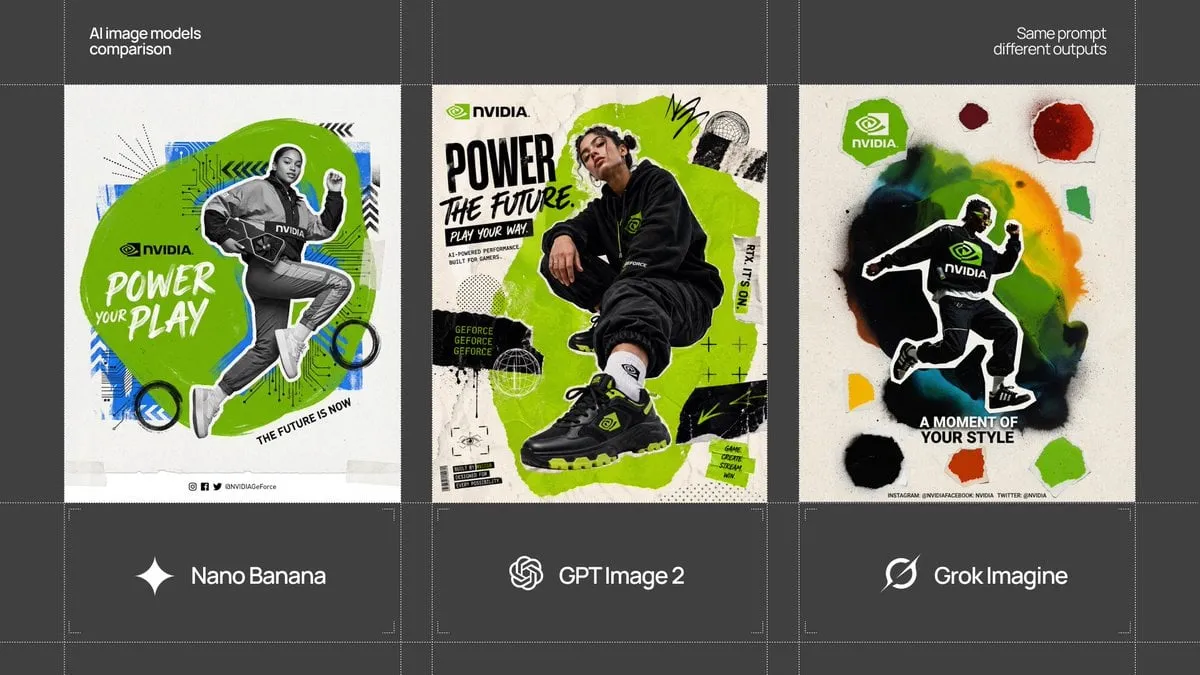
Different models carry different strengths, and a director learns each one's temperament. Some models excel at photorealistic restraint, others at stylised expression, others at faithful motion from reference. Match the tool to the emotional register you need rather than defaulting to the flashiest model.
For intimate character moments, choose a model that reads faces and subtle motion well. For grand establishing shots, use a model that handles scale and light. For stylised sequences, pick an engine tuned for expressive shapes and colour. Testing a prompt across models and keeping notes on which one delivered which kind of performance gives you a personal casting agency for your scenes.
Letting a Director Agent Suggest the Cinematography
Cinematic thinking is a skill, but it need not be reached entirely through trial and error. Many modern pipelines include an AI agent that acts like a directing layer: it can translate your loose narrative into concrete camera directions, suggest when a shot should push in or pull back, and help select the right model for the emotional moment.
Treat this as a collaborator rather than an oracle. Feed it your story and emotional spine, and let it propose shot plans and framing decisions you can approve or reject. The best use of such an agent is to surface options you might not have imagined and to move you faster from narrative intent to directorial execution, while you remain the final decision-maker on taste.
Multi-Scene Prompting for Real Narrative Arcs
A single well-directed shot is a photograph with motion. A narrative arc is a sequence that builds. Moves beyond one-shot prompting by planning an arc across several connected scenes.
Define the beginning, middle, and end of your story in emotional and visual terms. Plan each scene's entry and exit so cuts feel motivated. Use first-to-last frame control to give individual shots a clear trajectory through space and time, so each clip advances rather than merely moves. Build connective material, transitions, reaction shots, and context that bind the beats into a legible narrative.
When you sequence shots with intent, the finished piece carries momentum. Viewers follow because each cut leads somewhere.
Looping Feedback Through Editing
A director's work is not finished at the first render; it lives in the edit. Build a feedback loop that moves between generation and assembly, tightening both with each pass.
Cut a rough sequence early, with music, even at low resolution, to feel the pacing before you invest in high-fidelity renders. Identify which beats land and which drag. Adjust prompts and shots to serve the rhythm, and apply a consistent grade across every clip so the piece reads as one film rather than a patchwork. Style transfers and small edits can also pull individual shots into the visual language of the whole.
Editing is where individual good shots become a good film, and treating it as part of the creative loop is what makes the difference.
A Practical Cinematic Workflow
To direct an AI video from idea to finished story, work through a repeatable pipeline. Define the audience and the emotional spine you want them to follow. Draft a short story outline in beats, each with a clear emotional job. Write directorial prompts for every beat, specifying framing, camera, mood, and motion. Design anchor stills for every recurring character and location. Generate prototypes at low cost and review pacing and emotional logic. Re-render priority shots at high quality. Edit the sequence with music and a consistent grade. Archive the anchors, prompts, and notes for reuse.
Consistency across projects is what lets you learn fast and keep improving.
Troubleshooting Cinematic Output
When a shot fails to move the story forward, examine it like a director. If the image is beautiful but the emotion is flat, strengthen the light and mood cues in the prompt. If the camera feels random, decide its purpose and make it deliberate. If characters drift, tighten anchors and check for contradictions. If cuts fail to connect, revisit the emotional spine and make each beat's job explicit. If the robot or style feels generic, add storytelling detail: a prop, a glance, a shift of light that implies a moment.
Frequently Asked Questions
Do I need to be a director to make cinematic AI video? No, but thinking like one dramatically improves the result. Start by asking what the story wants to make an audience feel.
Should I always begin from a still image? It is the strongest route to consistency and control, especially for scenes with recurring characters. Use text for early ideation, then anchor approved images for production.
How long should a cinematic AI piece be? Quality matters more than length. A tight, well-told short generally out-performs a sprawling, disconnected longer piece.
What is the fastest way to improve? Lock your visual world down as stable anchors, then practice pacing and emotional logic in the edit. Consistency and story are the two skills that compound fastest.
The tools for cinematic AI video are powerful enough now that the limiting factor is no longer technology but directorial judgment. Start with what you want an audience to feel, hold your world consistent, write prompts with intent, and let the edit sharpen the story. Do that, and you are no longer generating clips, you are making films.
Working With Cinematography Without Using a Camera
Beginners often assume that because generative tools create images from text, traditional visual language does not apply. The opposite is true. Every concept borrowed from real cinematography translates directly into prompts, and understanding a handful of them transforms generic output into deliberate staging.
Start with framing and shot size. A close-up on a character's eyes builds intimacy and tension; a wide shot establishes a world and leaves the viewer smaller within it; a medium shot is the workhorse of dialogue and action. State the shot size in every prompt, because it is the fastest lever for emotional tone. Then consider the camera move. A slow push in draws attention and raises tension, a lateral dolly can reveal new information, and a locked-off, static frame creates a sense of stability or unease depending on context.
Lighting direction is the third element worth learning. Side lighting carves contours and suggests drama, a high key creates a light, truthful mood, and low or dramatic lighting hints at danger or mystery. Describing these directions in plain language, such as "hard rim light from the left," gives the model strong cues that it turns into believable imagery.
The grammar of all this is reusable. Write prompts that state the frame, the lens feel, the camera intent, the light source and mood, and the action. With those consistent cues, an entire sequence holds together visually, and each shot visibly serves the story rather than merely looking impressive. You are effectively acting as a director of photography with an infinitely patient camera that will run any shot you describe.
Building a Personal Reel to Learn Fast
Complex cinematic craft is best learned through many short, finished pieces rather than one long, ambitious project that stalls. Build a personal reel of two-to-five-second fragments, each exploring a single technique, an emotional tone, a camera move, or a style. Keep each fragment tiny enough to complete and refine in a single session.
Rotate the technique each time. One fragment studies a slow push on a character's expression; the next works on a wide establishing reveal; another experiments with dramatic side lighting; another tests a stylised, non-photoreal look. As you finish each, note what the model did well and where it fell short, and record the prompt that produced the strongest result.
This accumulation of small studies compounds quickly. After a few dozen fragments, you will have both a personal reference of reliable prompts and a trained instinct for what to ask. When a real project arrives, you can reach for techniques you have already proven rather than experimenting live under deadline. The goal is not to produce a portfolio of severed clips but to build the vocabulary of directed shots you can later assemble into finished films.
An especially effective discipline is to interleave a longer narrative piece after every handful of fragments, applying what you learned in a connected story. The combination of focused practice with occasional applied projects is the fastest route from generating clips to directing films.
