
![[BRAND NAME] | [OBJECT] Act as a High-End Commercial Product Photographer and...](https://storage.brightvectorlabs.com/prompts/bright/product-and-brand/2046265195434070061-0.webp)
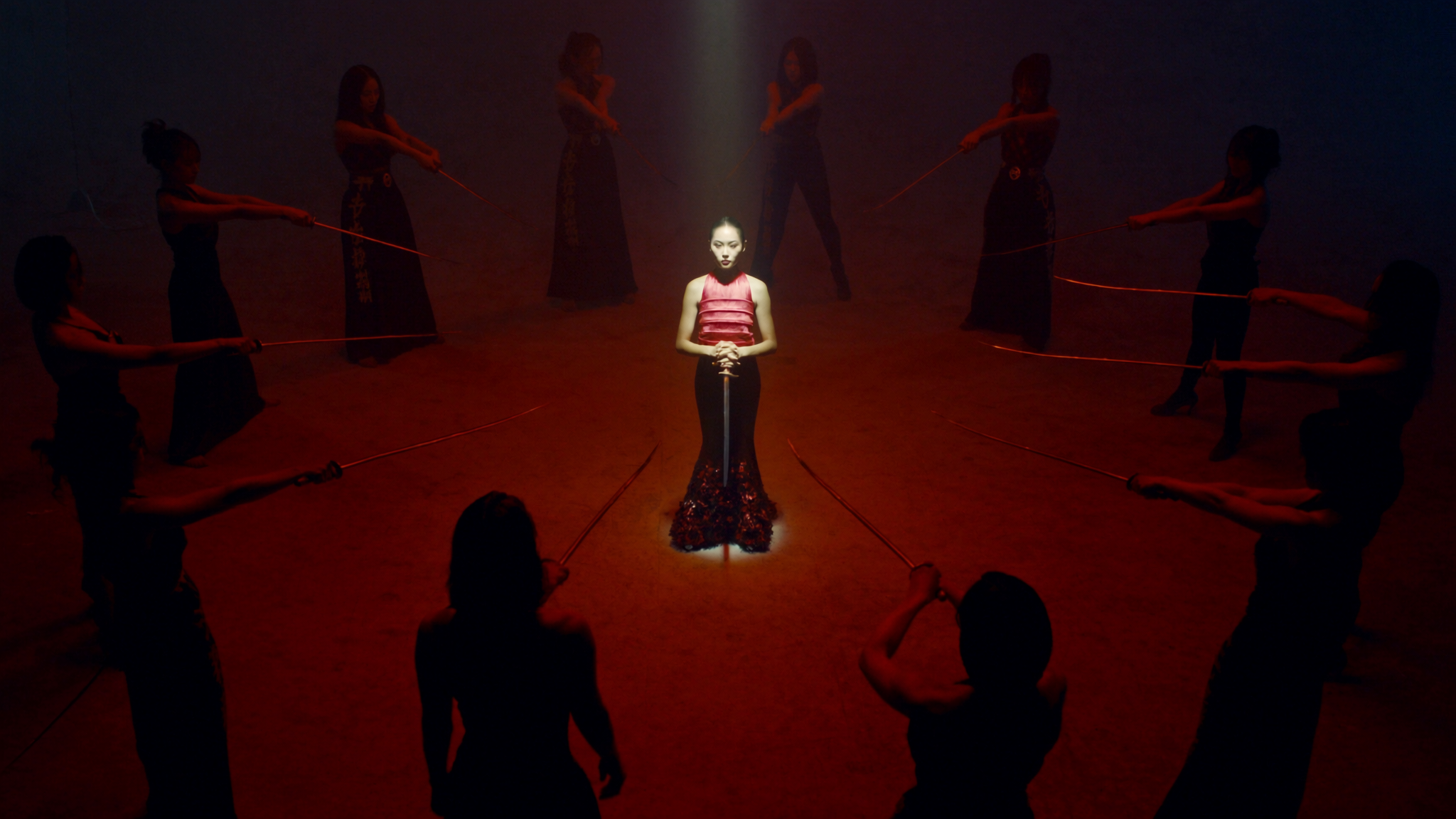
Cinematic shot design used to be a specialist skill. You needed to understand lenses, composition, camera movement, and the subtle grammar of how shots connect into sequences. AI has changed that equation. Tools now exist that can analyze a script, propose a shot list, recommend camera angles, and keep visual elements consistent across a whole production. The result is that filmmakers — and people who never imagined themselves as filmmakers — can design cinematic shots with professional discipline.
This is a practical guide to working with an AI director: what these tools do, how to use them at each stage of production, and where their limits are. It is written for creators who want to move beyond generating individual clips and toward building coherent, designed sequences.
What an AI director agent does
An AI director agent is a layer of intelligence that sits on top of video generation models. Instead of feeding a prompt directly to a generator, you work with the agent: it interprets your story, plans the visual approach, selects appropriate models, and guides the generation of individual shots. Its job is not to replace your creativity but to bring directorial structure to the process.
The practical difference is visible immediately. A raw prompt-to-video workflow produces clips. An agent-guided workflow produces a plan — a shot list, a sequence of camera setups, a consistent visual identity — and then executes it. The clips become shots, and the shots become a scene.
For solo creators, this is transformative. The planning and design work that once required a team — or years of experience — is now accessible in a single tool. For studios, it means faster pre-production and more consistent output across projects.
From prompt to shot list: script analysis
Every cinematic production starts with understanding the text. When you give an AI director a script or a detailed description, it begins by analyzing the narrative structure: who the characters are, what happens in each scene, where the emotional turning points fall, and what each moment needs visually.
The output of this analysis is a shot list — a breakdown of the scene into individual shots, each with its purpose, content, and suggested camera language. The list answers questions you might not have asked yet: Do we need an establishing shot to set the location? Should the key reveal be a close-up or a slow push-in? Where does the scene need a cut for pacing?
The shot list is a planning artifact, and planning is where most productions are won or lost. Generating shots without a plan produces fragments; generating from a plan produces a sequence. Even if you discard half of the AI's suggestions, the exercise of making them forces you to think in shots — the core habit of cinematic design.
A good way to treat the first draft of the shot list is as a conversation. Read each proposed shot and ask what it contributes: Does it establish the space? Does it reveal information at the right time? Does it create the emotional distance or closeness the moment requires? The questions are the same ones a director asks during prep, and answering them against the AI's suggestions is how the plan becomes yours. Keep the shots that serve the story, rewrite the ones that do not, and delete anything that exists only because it was easy to generate.
Camera guidance: angles, movement, and tracking
Camera language is the voice of the director. The angle tells the audience how to feel about a subject: low angles confer power, high angles create vulnerability, eye-level shots establish equality and intimacy. Movement shapes the experience: a tracking shot follows and includes the viewer, a handheld shot creates urgency, a static frame demands attention.
AI director tools apply this language automatically. Given a scene description, they suggest appropriate angles and movements — and can often generate the shots directly with those parameters. A confrontation might be framed with a low angle and a slow dolly toward the subject; a discovery might use a whip-pan into a close-up.
The skill for the creator is evaluation. Understanding why a low angle reads as powerful, or why a tracking shot creates emotional involvement, lets you accept good suggestions confidently and override them when the story needs something different. The tools encode the grammar; the director chooses the sentences.
Choosing models for photorealism and style
The visual style of a production is defined by model choice. Photorealistic scenes demand engines that handle light, texture, and physical behavior convincingly. Stylized work — animation, fantasy, graphic looks — benefits from models with strong artistic character. The same shot generated by different engines looks like it came from different worlds.
The practical approach is to build a style map. Test the models available to you against the types of scenes you produce, and record which engines deliver the look you want for each category: dialogue, action, product, environment, stylized. Keep the map updated, because models improve and new engines appear regularly.
Model choice also affects consistency. Some engines are better at maintaining character identity across shots; others drift. For productions where a character appears in many scenes, prioritize consistency in the model selection — or use reference-locking techniques to hold the identity regardless of the engine.
Multi-image fusion for shot-to-shot consistency
The most common reason a sequence fails is inconsistency: a character who changes appearance, an environment that shifts between scenes, a style that drifts. Multi-image fusion addresses this by letting you establish visual references that travel with the production.
The workflow is simple in concept. Create reference images for your characters, key objects, and environments — from multiple angles where possible. Feed these references into the generation process for every shot, so the model maintains the same visual identity throughout. The references become the anchor of your production.
Build the reference set before you need it. A few minutes spent capturing the hero's face, outfit, and the main locations saves hours of repair work later, and it keeps the style consistent from the very first shot instead of correcting drift after it has already appeared.
This is especially important for longer projects. A short clip can survive minor inconsistencies; a scene or a series cannot. Building the reference set early — and testing it before generating the full sequence — prevents the costly discovery of drift halfway through production.
Scene composition and angle selection
Composition decides what the frame contains and where the eye goes. The classic principles — rule of thirds, leading lines, depth through foreground elements, balance of visual weight — are the foundations of readable, pleasing frames. AI tools apply these principles when they compose generated shots, which is why their defaults often look better than random generations.
But composition is also expressive. A deliberately unbalanced frame can create tension. A subject placed at the very edge can suggest isolation. Negative space can make a moment feel vast and lonely. The director's job is knowing when the rules serve the story and when breaking them serves it better.
The practical tip is to review composition at the storyboard stage, not after generation. If a shot's composition does not serve the moment, change the plan before spending render time. The AI can suggest and execute; the evaluation of what the story needs is yours.
Applying custom styles
A recognizable style is one of the most valuable assets a creator can have. Custom styles — a particular color treatment, a specific lighting approach, a recurring visual motif — can make a body of work identifiable at a glance. AI tools support style application in several ways: through consistent prompts, through reference images, and through custom models trained on a particular aesthetic.
The challenge is consistency across shots and projects. A style that works in one shot may drift in the next unless it is codified. Define your style concretely — palette, lighting direction, texture handling, lens character — and encode it in the references and prompts you reuse. The more explicit the definition, the more consistent the output.
Style should serve the story, not decorate it. A dramatic color treatment that fits a thriller will fight a gentle romance. The discipline is choosing the style for the project's needs and applying it uniformly, rather than letting a favorite look dominate every production.
Real-time applications in professional filmmaking
The techniques above are not limited to social media or web content. Professional filmmaking is adopting AI-assisted production for pre-visualization, concept testing, and even final shots. Directors use AI shot design to explore visual approaches before committing to expensive live production, and producers use it to communicate vision to clients and crews.
Pre-visualization is the most mature application. An AI-generated shot list with sample frames gives stakeholders a concrete sense of the intended look, reducing miscommunication and rework. For independent productions, this capability opens production styles that were previously out of reach.
The professional context also clarifies the limits: AI tools assist, but the standards of craft remain. Real productions still need careful color management, sound design, and editorial judgment. The tools compress the distance between idea and visual, which is their real gift to filmmakers.
Limits of AI directing and where human judgment wins
Honest assessment matters. AI directing tools have clear limits. They can struggle with complex physical logic, with subtle performance and emotion, and with long-range narrative coherence. They do not have taste in the human sense — they apply patterns, and the patterns can become formulaic. They cannot know what your specific audience needs from this specific story.
Where human judgment wins is in meaning. Why this story, why now, why in this tone — those questions have no algorithmic answer. The emotional truth of a scene, the cultural context of an image, the unexpected choice that makes a moment memorable: these remain the director's domain.
The healthy relationship with the tool is partnership. Use it for speed, consistency, and access to craft knowledge. Keep the story, the taste, and the final call for yourself. The tool multiplies your capability; it does not replace your vision.
It is also worth being honest about the practical edges. AI generation is still probabilistic, so plan for retries: budget time and compute for the shot that refuses to behave. Review every generated shot against the reference set before accepting it, rather than trusting the first pass. And when a scene carries the emotional weight of the whole project, consider generating it in multiple passes and selecting the take that actually lands. These habits turn a powerful but imperfect tool into a reliable production partner.
Frequently asked questions
How do I start using an AI director for my projects? Begin with a single scene. Write a detailed description or script, let the tool produce a shot list, and generate the shots according to the plan. Compare the result with your previous prompt-only workflow and you will see the difference immediately.
Do I need reference images for every character? For any character who appears in more than one or two shots, yes. The reference set is what keeps the character recognizable across the production.
Can AI directing tools work with any video generation model? Many tools are model-agnostic, letting you route shots to different engines. Check the tool's documentation to see which models it supports.
How much of the creative process should I automate? Automate the mechanical layers — parameter settings, consistency maintenance, first-pass planning. Keep the creative decisions — tone, pacing, emphasis, final choices — for yourself.
Is this suitable for professional client work? Yes. The planning artifacts, the consistent output, and the speed make it attractive for client work. The differentiator is still your judgment and reliability.
Cinematic shot design used to be a gatekeeper skill; AI has turned it into a learnable craft. The tools give you the grammar, the references give you consistency, and the planning gives you structure. What you bring — the story, the taste, the judgment — is what makes the difference between generated footage and a film.
