

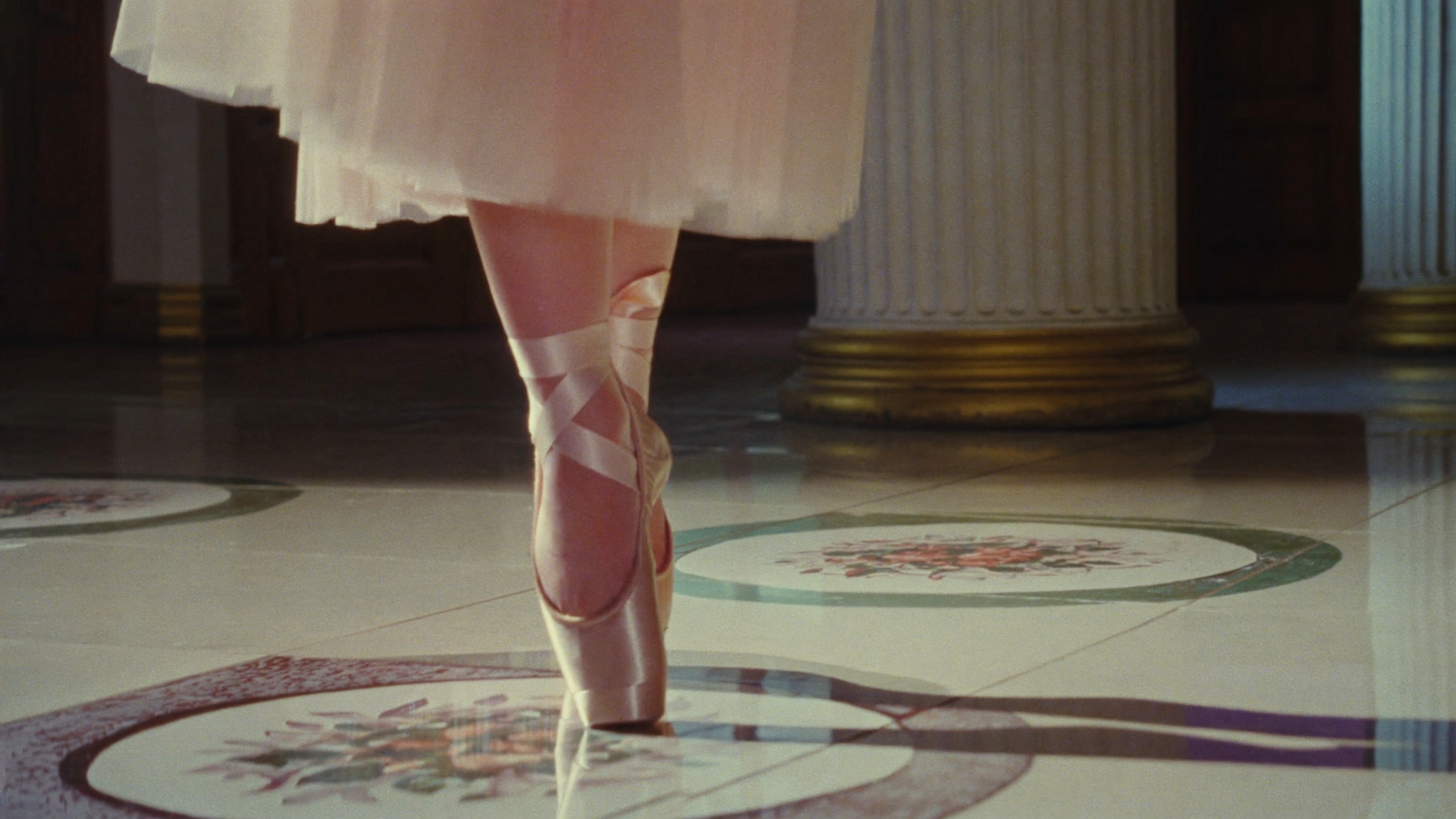
Why film grammar still matters in the AI era
Generative AI has democratized video production. Anyone can now describe a scene and get a moving image in minutes. That accessibility creates a strange situation: the technical barrier has fallen, but the quality gap between creators has never been wider. The difference is not access to tools; it is understanding of visual language.
Cinematography is that language, and composition is its grammar. Classic films, made with physical cameras, crews, and budgets, developed a vocabulary that survives unchanged: every element in the frame should have a purpose. For creators working with AI, this means going beyond the default output and consciously deciding how the subject sits relative to the background, where the light comes from, and what the camera angle communicates.
No matter how intelligent a generation model becomes, it operates on data and parameters. It can execute your instructions brilliantly, but it cannot replace your judgment. The creators who produce remarkable work are the ones who know what to ask for. That knowledge comes from the same lessons the great cinematographers learned decades ago.
Composition: the grammar of the frame
Composition is the arrangement of visual elements within the frame. It is the first thing a viewer processes, often without realizing it.
The rule of thirds
Divide the frame into a three-by-three grid. Place your subject on one of the intersecting lines instead of the center. This simple shift creates tension, balance, and visual interest. Classic films use it constantly, and AI models respond well when you describe it: "subject positioned on the left third, negative space on the right."
Leading lines
Lines in the image guide the eye toward the subject: a road, a railing, a row of windows, a shadow. Leading lines give the frame depth and direction. Describe them explicitly in your prompts, and check the output to confirm the eye actually travels where you intended.
Frame within a frame
Use windows, doorways, arches, or foreground objects to frame the subject. This technique adds layers and makes the image feel composed rather than accidental. It also gives the AI a strong structural instruction that is hard to misinterpret.
Deep focus and its meaning
Classic films like Citizen Kane used extreme depth of field to keep foreground and background sharp simultaneously. That choice conveys relationships: power, isolation, connection. In AI video, you can request deep focus for information-rich scenes and shallow focus when you want to isolate a character emotionally. Focus is not a technical default; it is a storytelling decision.
Camera angles and point of view
The camera angle is a tool of empathy and power. Classic films deliberately choose angles to shape the audience's emotional response.
A low angle makes a subject look powerful, dominant, or threatening. A high angle makes the same subject seem small, vulnerable, or trapped. Eye-level shots create neutrality and identification. Dutch angles introduce unease or disorientation.
In AI prompts, these choices are easy to request: "low angle looking up at the character," "overhead shot," "eye-level close-up." The models understand the vocabulary. The skill is knowing when to use which. Ask yourself what feeling the viewer should have about this subject, then pick the angle that produces it.
Changing the point of view can also move the story: a shot from behind a character creates mystery, a shot over the shoulder creates connection, a POV shot puts the audience inside the action. Classic directors used these variations to control information, revealing and hiding details deliberately.
Depth of field: separating focus and context
Depth of field controls how much of the image is sharp. It is one of the strongest tools for directing attention.
A shallow depth of field isolates the subject, blurs the background, and signals intimacy or importance. It is the standard language of interviews, close-ups, and emotional moments. A deep depth of field keeps everything in focus and is used for establishing shots, ensemble scenes, and sequences where the environment matters as much as the characters.
With AI, depth of field is expressed in the prompt and in the choice of lens: "85mm, shallow depth of field, creamy bokeh background" produces a completely different image than "wide angle, everything in focus." The lens choice also changes perspective distortion. A 35mm lens feels documentary and intimate; a 50mm feels natural; an 85mm compresses space and flatters faces. Learn the basic lenses, and you will know how to ask for the look you want.
Lighting: drawing emotion from darkness and light
Lighting is the most powerful mood control in cinematography, and the most underused by new creators.
The three-point setup
The classic lighting scheme uses a key light, a fill light, and a backlight. The key light establishes the main direction of light. The fill light softens shadows. The backlight separates the subject from the background. In AI prompts, you can request this explicitly: "key light from the left, soft fill, rim light on the shoulders." The result reads as professional immediately.
Genre-based lighting
Different genres use light differently. Film noir lives in high contrast: deep shadows, hard light, slashes of light across darkness. Comedies and bright brand content use high-key lighting: even, soft, shadow-free. Horror and thriller push shadows to hide information. Learn the conventions of the genre you are working in, then describe them.
Shadows as characters
The best cinematographers treat shadows as an active element, not an absence of light. A shadow across a face can hide intent, signal danger, or create mystery. An approaching silhouette creates dread. In AI video, you can direct shadows: "long shadows stretching across the room," "the character's face half in shadow." These instructions transform a flat scene into a dramatic one.
Pacing, editing, and camera movement
Cinema is a time-based art. The length of a shot, the rhythm of the cuts, and the placement of movement all control tension.
Shot duration as control
Long takes create weight, realism, and tension. Short takes create energy, urgency, and chaos. Classic directors used both deliberately: a long take during a quiet moment lets the audience breathe; rapid cutting during an action beat raises the pulse. When editing AI-generated clips, apply the same logic. Do not cut everything at the same speed.
Cut on action and match cuts
A cut on action hides the edit by cutting during movement, making the transition feel continuous. A match cut links two shots through a visual similarity: a circular object cuts to a full moon, a spinning wheel cuts to a spinning record. These transitions feel intentional and cinematic. In AI production, plan them in advance by generating shots that share a shape, a color, or a movement.
The power of stillness
Not everything needs to move. A locked-off shot with subtle internal motion can be more powerful than a flashy camera move. Static shots give the audience time to absorb detail and emotion. Use movement for meaning, not decoration.
Camera movement: dolly, tracking, and the stationary frame
Camera movement is language. A dolly-in increases emotional intensity; a dolly-out reveals context or creates isolation. A tracking shot follows the subject and builds momentum. A handheld shot introduces energy and instability. A crane shot establishes scale.
In AI generation, you can request all of these: "slow push-in on the character's face," "tracking shot following the runner," "aerial crane shot revealing the city." The models render these moves, and the results feel far more cinematic than a static frame.
The discipline is restraint. A camera should move for a reason. If a shot works locked off, leave it locked. Viewers notice movement that has no purpose, and it undermines the professionalism of the piece.
Mise-en-scène: sets, objects, and symbolism
Mise-en-scène covers everything placed in front of the camera: sets, props, costumes, colors. Classic films designed these elements to carry meaning. A cluttered desk says something about a character's mind. A red object in a muted scene draws the eye and carries symbolic weight. The color palette of a film creates a consistent emotional world.
For AI creators, this is a huge advantage: you can design the environment as precisely as the character. Describe the set, the props, the palette, the era, the mood. "A minimalist apartment, warm afternoon light, a single red chair" generates a completely different world than "a busy office, fluorescent lighting, gray tones."
Symbolism works the same way. If your story is about renewal, put a plant in the frame. If it is about confinement, use windows and bars. The audience may not notice consciously, but the meaning lands. This is the difference between a video that looks nice and a video that feels designed.
How to apply these lessons to AI prompts
The practical translation of cinematography into AI work has four steps:
- Decide the purpose of the shot before writing the prompt. What should the viewer feel?
- Choose the frame: angle, distance, lens, depth of field.
- Choose the light: direction, quality, contrast, color.
- Choose the movement: static, push-in, tracking, handheld.
Then write the prompt in that order: subject, action, composition, lighting, lens, camera move, mood. Test one variable at a time when the result is wrong, so you know which change fixed it.
Color and palette: the emotional contract
Color is the fastest way to tell the audience how to feel. Before a single actor appears or a word is spoken, the palette of the frame sets the emotional temperature.
Warm palettes, dominated by amber, orange, and soft reds, suggest comfort, nostalgia, and energy. Cool palettes, built on blues and teals, suggest calm, distance, and technology. Desaturated images feel serious and documentary; saturated images feel vibrant and stylized. Classic films are masterclasses in this control: one palette for the ordinary world, another for the dream, another for the danger.
In AI generation, color direction belongs in the prompt and in the grade. Describe the palette explicitly: "muted teal and orange grade," "soft pastel tones," "high-contrast black and white." Then apply a final grade across all shots so the entire video shares one look.
Consistency is the point. A palette that changes randomly between shots breaks the emotional contract; a palette that holds steady makes even average shots feel like part of one designed piece. Choose the palette with the story in mind, document it, and protect it through the whole pipeline.
Building a reusable style reference
Professional creators stop describing their style from scratch on every project. They build a style reference: a document that captures the palette, the lighting rules, the lens choices, the camera moves, and the mood words that define their work.
The style reference has three parts. The visual part collects example images: frames from films, stills from previous projects, color swatches. The technical part records the prompts and settings that produced the approved look: lighting language, lens terms, camera vocabulary. The creative part states the rules: always use warm key light, never use handheld for calm scenes, keep skin tones natural.
With a style reference, every new project starts from a known baseline instead of a blank page. It also makes collaboration possible: a team can share the same language and produce consistent work even when different members generate different shots. Over time, the style reference becomes your signature.
FAQ
Do I need to study classic films to make good AI video? Not formally, but watching them with intention accelerates your eye enormously. The techniques transfer directly.
What is the fastest improvement for a beginner? Composition and lighting. Both are simple to describe in prompts and change the result dramatically.
Can AI models actually follow cinematography terms? Most modern models understand common camera and lighting vocabulary. The terms also help you stay consistent across shots.
How many shots should a short video have? Enough to tell the story without repetition. Quality per shot matters more than quantity.
Is color grading still necessary? Yes. Even great generations benefit from a consistent grade, which ties the shots together into one visual world.
Conclusion
The tools have changed, but the language of cinema has not. Composition, lighting, angle, depth, pacing, movement, and mise-en-scène are the same skills that made classic films endure, and they are exactly the skills that make modern AI-assisted video stand out.
Technology removes the physical limits of production. Judgment removes the creative limits. Learn the grammar, practice it in your prompts, review your outputs with a cinematographer's eye, and your videos will stop looking generated and start looking directed. That is the lesson the classics were teaching all along.
