
There is one question that separates hobbyist AI video from professional AI video: does the same character appear in every scene? A single beautiful shot is easy. A character who walks through a whole story, ten scenes, three locations, two lighting setups, and still looks like the same person, is hard. It is also the difference between content that viewers trust and content that viewers scroll past.
This guide lays out a complete system for character consistency in AI-generated video. It covers the theory of why characters drift, the practical tools that lock an identity, and a step-by-step workflow you can run on any project. The goal is not a magic setting; it is a repeatable process.
Why Characters Drift: The Root of the Problem
Every generation starts from noise and builds an image according to a prompt. Text is ambiguous. Write "a woman in a red jacket" and two different generations, or even two scenes from the same model, will interpret the words differently: the jacket becomes a different red, the face shifts, the proportions change. When scenes are generated separately, the drift compounds. The character in scene three is not a variant of the character in scene one; it is a completely new interpretation that happens to share a description.
The problem gets worse with longer projects. Short clips hide drift because there is little time to compare. A multi-scene story exposes every inconsistency, and audiences, trained by years of high-quality media, notice immediately. Estimates from production teams routinely suggest that a majority of long AI video projects fail to keep a unified visual identity for their main characters, which is why consistency has become the defining quality bar of the field.
The solution is not to write better prompts. The solution is to stop relying on words for identity and start relying on images.
Reference Keyframes: The Anchor of Identity
The foundation of every consistency system is the reference keyframe: an image that defines the character once, used as an anchor for every generation. Instead of describing the face, the outfit, and the props in text, you show the model what they look like.
Good reference keyframes have specific qualities. They should show the character clearly, with the face visible and well lit, no motion blur, no filters that change skin tone or proportions. They should capture the costume and any signature props, because those are the elements audiences use to recognize a character at a glance. They should be high resolution, because the model uses the details, the shape of the eyes, the texture of the jacket, to constrain its output.
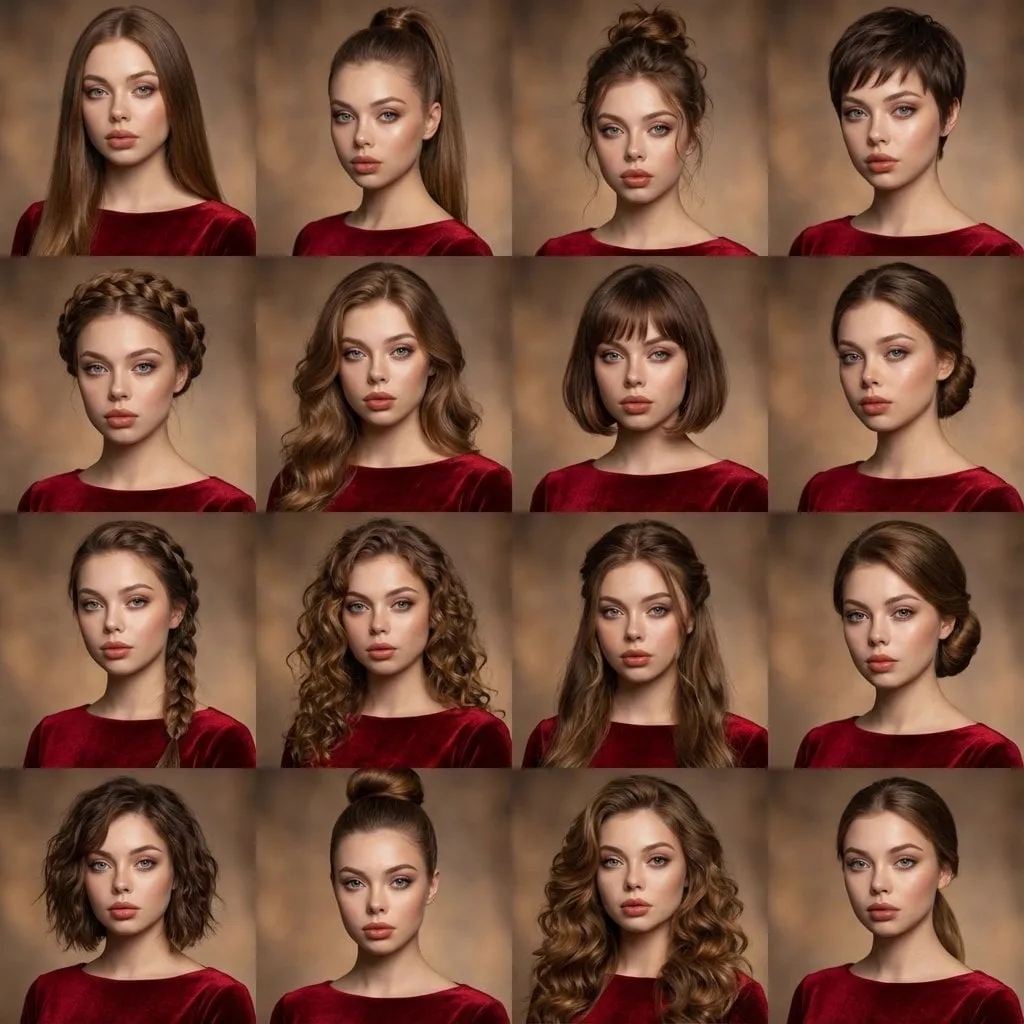
Build a reference set rather than a single image. One image for the face, one for the full body and costume, one for any important props, and ideally a few angles of the same design. The more complete the set, the more stable the character across varied scenes. A character defined by three images will drift less than a character defined by one.
Conditioning and Multi-Image Fusion: How the Model Uses References
Reference images only help if the generation actually uses them. Modern tools support conditioning, where the reference is fed into the model alongside the prompt, and the output is constrained to match the reference's identity. The prompt describes what happens in the scene; the reference describes who appears in it.
Multi-image fusion takes this further by blending several references at once. The face comes from the face reference, the costume from the body reference, the prop from the prop reference, and the model reconciles them into a single consistent character. This is the technique that makes complex identities practical: a character with a distinctive face, a uniform, and a signature weapon can carry all three through every scene.
The practical benefit is enormous. A brand mascot can appear in a product demo, a celebration scene, and a behind-the-scenes style clip, and remain the same character. A presenter can appear across an entire course series without the viewers wondering if it is the same person.
Video Fusion: Unifying Scenes After Generation
Reference keyframes solve identity at the moment of generation. Video fusion solves continuity after the fact. Fusion technology stitches separately generated clips into a continuous sequence, matching lighting, color, and camera behavior across shots.
This matters because even a perfectly consistent character can look wrong if scene two is bright and warm while scene three is dark and cold for no narrative reason. Fusion evens out the technical differences, so the character's journey feels like one continuous world rather than a series of disconnected stills.
The workflow is simple: generate all the scenes with the same references, then run a fusion pass over the sequence. The pass aligns the visual parameters, and the cuts become invisible. For any project with more than two or three scenes, fusion is not optional.
Custom Models: Locking a Character for the Long Term
For recurring characters, the most powerful option is a custom model: a specialized engine trained on the character's reference images, so every generation starts from a deep understanding of the identity rather than a fresh interpretation.
The investment is worth it when the character appears across many projects: a series protagonist, a brand spokesperson, a mascot that will star in dozens of videos. The custom model guarantees the same face, the same proportions, and the same visual style every time, with less prompt engineering and fewer failed generations.
The trade-off is setup time and compute cost. For one-off projects, reference keyframes plus fusion are enough. For a character with a future, the custom model pays for itself quickly. Start with references, and graduate to a custom model when the character proves it has a life beyond the first video.
The Step-by-Step Workflow: From Concept to Consistent Series
Here is the full workflow, ready to run on your next project.
Phase one: establish the base identity. Design the character on paper: face, body, costume, props, color palette. Generate or source a clean reference set, three images minimum. Review the set before generating anything else, because every mistake here multiplies downstream.
Phase two: write the scene plan. Break the story into scenes and list what happens in each. Note which scenes need which settings and moods, and flag any scene that will stress the identity, action sequences, costume changes, extreme close-ups.
Phase three: generate with the references. Use the same reference set and consistent prompt wording for every scene. Change only what should change: the action, the location, the lighting. Do not rephrase the character description, because rephrasing invites reinterpretation.
Phase four: apply the fusion pass. Stitch the generated scenes together, matching lighting, color, and camera behavior. Watch the full sequence and check every scene transition for visual breaks.
Phase five: review and export. Review the character at key moments: close-ups, action, emotional scenes. Fix the weakest link, because one bad scene breaks the illusion for the whole piece. Export only when the character is stable in every frame.
Advanced Strategies for Difficult Productions
Some productions make consistency genuinely hard, and they need advanced techniques.
Costume changes. When a character changes outfits, keep the face reference constant and change only the wardrobe description, or better, provide a reference for each outfit. The audience recognizes the face first; the costume is secondary but must not contradict the story.
Action sequences. Fast movement creates motion blur, which hides identity. Generate action shots with the same references and check the freeze frames, not just the moving preview. A character that looks wrong when paused will look wrong to attentive viewers.
Different ages or states. If the story needs the character older, injured, or transformed, create a variant reference set for that state and use it consistently. Do not rely on text to age a character, because the drift will be unpredictable.
Style changes. If the project mixes realistic and stylized scenes, keep the same facial structure in both styles by generating the stylized version from the realistic reference. The character can change rendering style without changing identity.
A Case Study: Twelve Scenes, One Character
To see the system in action, consider a production that would fail without it: a twelve-scene brand story for a small outdoor gear company. The protagonist is a guide character who appears in every scene, from a mountain summit to a campfire to a store interior, and the brand requires the same face, the same jacket, and the same backpack in all twelve locations.
The team starts with the identity phase. They generate a reference set of five images: a clean face portrait, a full-body shot in the guide's outfit, a back view showing the backpack, a close-up of the jacket logo, and a three-quarter action pose. The set is reviewed and locked before any scene is generated, because every subsequent failure would trace back to this moment.
The scene plan splits the twelve scenes into three groups: exterior action, interior dialogue, and product close-ups. Each group gets its own prompt template, but every template references the same identity set. The wording for the character is never rephrased; only the scene variables, location, action, and mood, change.
Generation runs scene by scene with the references applied throughout. Two scenes come back weak: the action scene at the summit loses the backpack in one shot, and the campfire scene shifts the jacket color toward orange. Rather than regenerating everything, the team fixes only those two scenes, one with a tighter prop reference and one with a color-corrected costume image.
The fusion pass stitches the twelve scenes into a continuous sequence, evening out lighting across the exterior, interior, and close-up groups. The final review checks the guide's face at every major beat, and the project ships with a character who reads as one person from the first frame to the last. The same workflow, with the same reference set, will produce the next twelve scenes next quarter.
Quality Control: Building a Consistency Review
Consistency is maintained by review, not just by technique. Build a review ritual into every project.
Compare faces first. Put the reference image next to the generated frames and look at the eyes, the nose, the jawline. These are the features the audience subconsciously tracks.
Check the costume and props. Verify colors, logos, and shapes match the reference. A jacket that changes from red to orange between scenes is a consistency failure even if the face is perfect.
Watch the sequence in motion. Some artifacts only appear in motion, and some only appear when paused. Review both ways.
Test on the smallest screen. A phone screen hides detail, which means the character must be recognizable from broad features, not fine textures. If the silhouette, color, and costume read correctly at arm's length, the identity is solid.
Frequently Asked Questions
How many reference images do I need?
A minimum of three: face, full body, and props. More is better when the character is complex or the project is long. The set should cover every element that defines the identity.
Why does my character still change even with references?
Check whether the reference is actually being applied to every generation, whether the prompt wording stays consistent, and whether the reference itself is clean and high resolution. Drift usually comes from one of these three gaps, or from skipping the fusion pass.
Do I need a custom model for every character?
No. References plus fusion handle most projects. A custom model is worth it only for recurring characters that will appear across many videos, where the setup cost amortizes.
Can I keep a real person consistent, like a brand spokesperson?
Yes, with the same system: a high-quality reference set of the person's face and typical presentation, used consistently with clear consent and rights for the usage. The technique is identical; the legal and ethical responsibility is higher.
What is the biggest consistency mistake beginners make?
Starting to generate scenes before locking the reference set. If the identity is not fixed first, every scene becomes a new interpretation, and no amount of post-processing can fully repair it.
The Consistency Checklist
Before you call a project done, confirm all of these:
- The reference set was locked before any scene generation.
- Every scene used the same references and consistent prompt wording.
- The fusion pass unified lighting, color, and camera across scenes.
- The face, costume, and props match the references in every key frame.
- The sequence reads correctly in motion and when paused.
- The character survives the phone test at arm's length.
Character consistency is not a feature you switch on. It is a system you build: references, conditioning, fusion, review. Build the system once, and every project after it gets easier. That is the real unlock of professional AI video.
