
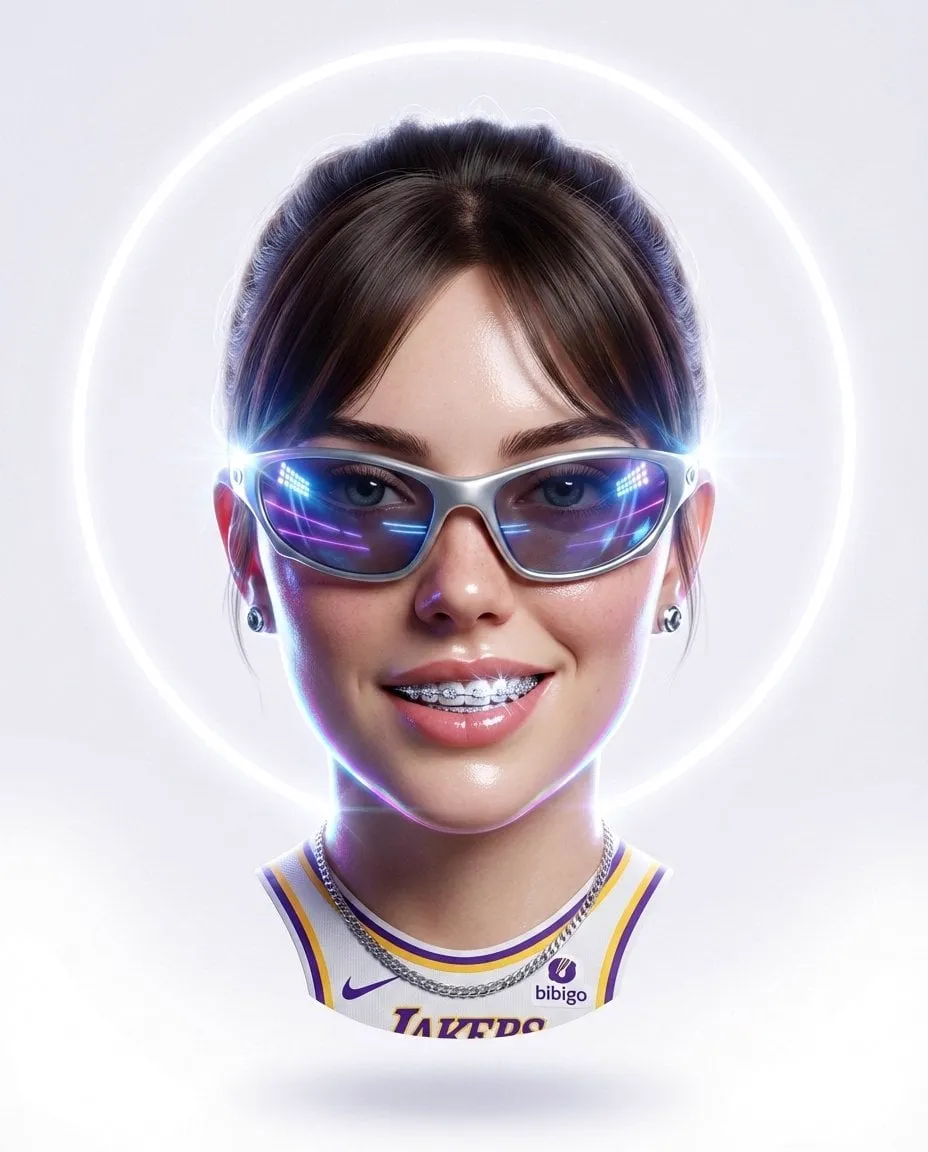

Why consistency is the make-or-break problem in AI video
Ask any team that works with generative video what frustrates them most, and the answer is almost always the same: the character changed. The protagonist's face shifts between shots. The jacket changes color mid-scene. The lighting on the product looks different in every angle. These small inconsistencies destroy the suspension of disbelief instantly, and they are the difference between AI video that feels like a demo and AI video that feels like production.
Consistency is not a nice-to-have. It is the foundation of every serious use case. A brand campaign needs the spokesperson to look identical in every frame. A serialized story needs the hero to stay recognizable across episodes. A product launch needs the item to appear the same from every angle, in every lighting condition. When consistency fails, the audience loses trust in the character, the product, and the brand behind them.
The good news is that consistency is no longer a lottery. It is an engineering problem with known solutions: character anchors, multi-image references, keyframe control, and disciplined quality checks. This guide walks through each layer, explains how they work together, and gives you a workflow you can apply to your next project today.
The character anchor: building a stable identity
Every consistent AI character starts with an anchor. Think of it as the character's canonical record: a rich, multidimensional dataset that captures everything essential about how they look. Face geometry, hair, skin texture, typical wardrobe, posture, even recurring props. The anchor is the reference point that every generation returns to, so the character stays recognizable no matter which scene, which lighting, or which model produced the shot.
Building a good anchor is not about collecting one perfect image. It is about collecting coverage. You need the character from multiple angles: front, side, three-quarter, and back. You need close-ups of the face and full-body shots. You need the same outfit under different lighting conditions. The more complete the coverage, the more information the generation process has, and the less room there is for the model to invent a different face.
Store the anchor in a way you can reuse. Most platforms let you keep reference images attached to a project or a character profile. Keep the canonical set organized and versioned, so when you update the character's look, you know exactly what changed and when.
The anchor also gives you a testing baseline. Every time you generate a new shot, compare it against the anchor before you accept it. If the jawline drifted or the jacket turned blue, you catch it now, not after the episode is published.
Multi-image fusion and reference control
A single reference image is often not enough. When you give the model only one picture, it has to guess what the character looks like from behind, in profile, or under different light. Multi-image reference changes that: you provide several images, and the generation process fuses them into a coherent understanding of the character.
This technique shines in the scenarios that typically break. A character turning around in a hallway, a product spinning on a turntable, a spokesperson walking into a different room — all of these require the model to reconstruct parts of the subject it may not have seen in a single reference. With multiple references, those reconstructions stay grounded in what the character actually looks like.
The practical rules are simple. Use references that match the scene you are generating: if the scene is night-time, include a reference of the character in low light. If the shot is a close-up, include a face close-up in the reference set. The model cannot invent what you did not show it; the references are the only source of truth it has about the character.
The same technique works for products. A product anchor with multiple studio angles, detail close-ups, and consistent lighting gives you product shots that look identical across an entire campaign. This is often the highest-ROI use of multi-image reference, because product inconsistency is one of the fastest ways to lose consumer trust.
Keyframes and motion coherence
References solve the "what does the character look like" problem. Keyframes solve the "what does the character do" problem. A keyframe is a defined state: the start of a movement, the end of a movement, or an important moment in between. The model fills the frames between them, generating motion that connects the defined states naturally.
Keyframe control matters because motion is where AI video reveals its weaknesses. A character walking might glide instead of stride. A product rotating might wobble instead of spin. When you define the key positions yourself, you take control of the motion arc, and the model's job becomes filling in the transition instead of inventing the whole movement.
Dense keyframes give precision but cost effort; loose keyframes are fast but risk drift. The right balance depends on the scene. For an important story beat, place keyframes at the start, the peak, and the end of the action. For routine scenes, define only the start and end and let the model handle the rest.
Keyframes also help with pacing. If you know the music and the edit rhythm of your video, you can place keyframes so the motion lands on the beat. This is where AI video stops feeling like generated clips and starts feeling like directed footage.
Orchestrating multiple models without losing the look
The most capable teams do not rely on a single model. They orchestrate a library: one model for photorealistic scenes, another for stylized looks, another for speed when iterating. This flexibility is powerful, but it multiplies the consistency challenge, because every model interprets references slightly differently.
The solution is to make the anchor and the reference pipeline model-agnostic. Define the character once, in a format that any model can consume, and feed the same reference set to every model you use. When you switch models mid-project, the look stays grounded in the same source of truth.
This is also why character consistency is a system property, not a prompt trick. A prompt can describe a character, but a system — anchors, references, keyframes, and checks — keeps the character stable across models, scenes, and episodes. Teams that treat consistency as a system get reliable results; teams that treat it as a prompt get surprises.
A practical workflow for a consistent character
Here is a repeatable workflow that works for short clips and for multi-episode productions alike.
First, define the character. Write down the character's identity in words: name, age, personality, wardrobe, signature traits. This written definition complements the visual anchor and helps every prompt stay on target.
Second, build the visual anchor. Collect multi-angle references with consistent wardrobe and lighting coverage. Organize them in a canonical set and store them where your tools can access them.
Third, establish the quality baseline. Generate a test shot of the character from a neutral angle and compare it against the anchor. If this simple test drifts, fix the reference set before you generate anything else.
Fourth, produce scene by scene. For each scene, assemble the relevant references, define the keyframes for important motion, and generate. Review each shot against the baseline before accepting it.
Fifth, keep a continuity log. Record what you generated, which references were used, and which settings produced the best results. When you return to the project days later, the log saves you from rediscovering everything.
Sixth, review the full sequence. Watch the assembled video in order. Consistency issues that are invisible in single shots become obvious in sequence, so always do a final pass on the whole edit.
Testing and quality control
Quality control is not an afterthought; it is part of the production loop. Build checks into every stage so that drift is caught early, when it is cheap to fix.
The most effective check is simple comparison. Every new shot gets placed next to the anchor reference, and you answer one question: does this look like the same character? Train your eye on the details that drift first: eye shape, jawline, hairline, clothing color, and texture.
Automated checks help at scale. When you produce many shots, compare generation parameters across batches to catch accidental setting changes. If a batch used a different model or different reference set, expect drift and verify accordingly.
Finally, keep a failure log. When a shot comes out wrong, record why: missing reference angle, loose keyframes, the wrong model. Over time, the failure log becomes a practical guide to what your workflow needs, and it makes every future project faster.
There is one more habit worth building: review your consistency system itself, not just the shots. Once a month, look at the anchors, the prompt blocks, and the reference sets with fresh eyes. Projects change, characters evolve, and models improve. A system that was right two months ago may be slowing you down now. The review is short, but it prevents the slow decay that most teams never notice until a whole episode has to be regenerated.
Common failure modes and how to fix them
Even with a solid workflow, consistency fails in predictable ways. Knowing the failure modes makes them cheap to fix.
The first failure mode is reference mismatch. The references in the set conflict with each other: one shows the character with a beard, another without, or the jacket is a different shade of blue across photos. The model averages the conflict, and every shot drifts somewhere in between. The fix is discipline at collection time: verify that every reference in the anchor agrees on the core traits before you generate anything.
The second failure mode is prompt drift. As a project goes on, prompts get rewritten, abbreviated, or copy-pasted from other scenes, and the character description slowly changes. The fix is a canonical prompt block: a fixed text describing the character that is inserted into every generation, unchanged. Only the scene-specific parts of the prompt should vary.
The third failure mode is model switching. When a better model is released, teams switch mid-project and the new model interprets the references differently, so the look shifts. The fix is to treat model changes as a project decision: either finish the project on the current model, or re-verify the anchor and regenerate affected shots after the switch.
The fourth failure mode is QC fatigue. Early in a project, every shot is checked carefully. By shot forty, checks get rushed, and drift sneaks through. The fix is to institutionalize the check: a fixed comparison layout, a checklist of the five details that drift most often, and a rule that no shot is accepted without the comparison.
The fifth failure mode is changing the character. Sometimes a stakeholder decides mid-project that the character should look different: cooler colors, more mature face, different outfit. That is a legitimate creative change, but it resets the anchor. The fix is to treat it as a new version: update the anchor, re-run the baseline test, and regenerate affected shots. Silently tweaking prompts while keeping old references creates the worst kind of inconsistency, because nothing matches anything.
Each failure mode has a simple fix, and none of them are technical. Consistency is mostly a matter of documentation, discipline, and review rhythm. The tools do the generation; the workflow keeps the character intact.
FAQ
Why does my AI character keep changing between shots? Most often because the reference set is incomplete or inconsistent. Add multi-angle references, keep wardrobe and lighting consistent, and compare every shot against the anchor.
Can I keep a character consistent across different models? Yes, if the anchor and reference pipeline are model-agnostic. Define the character once and feed the same reference set to every model you use.
What is the difference between a character anchor and a reference image? An anchor is the canonical, multi-angle record of the character; a reference image is one piece of that record. The anchor is the system; references are the inputs.
How much effort does consistency take on a real project? The first character is the most work: building the anchor and learning the workflow. Once established, consistency becomes a routine check that adds minutes per shot, not hours.
Do I need technical skills to keep characters consistent? No, but you need discipline. The techniques are visual and organizational: collect references, define keyframes, compare results. The workflow matters more than any technical setting.
