
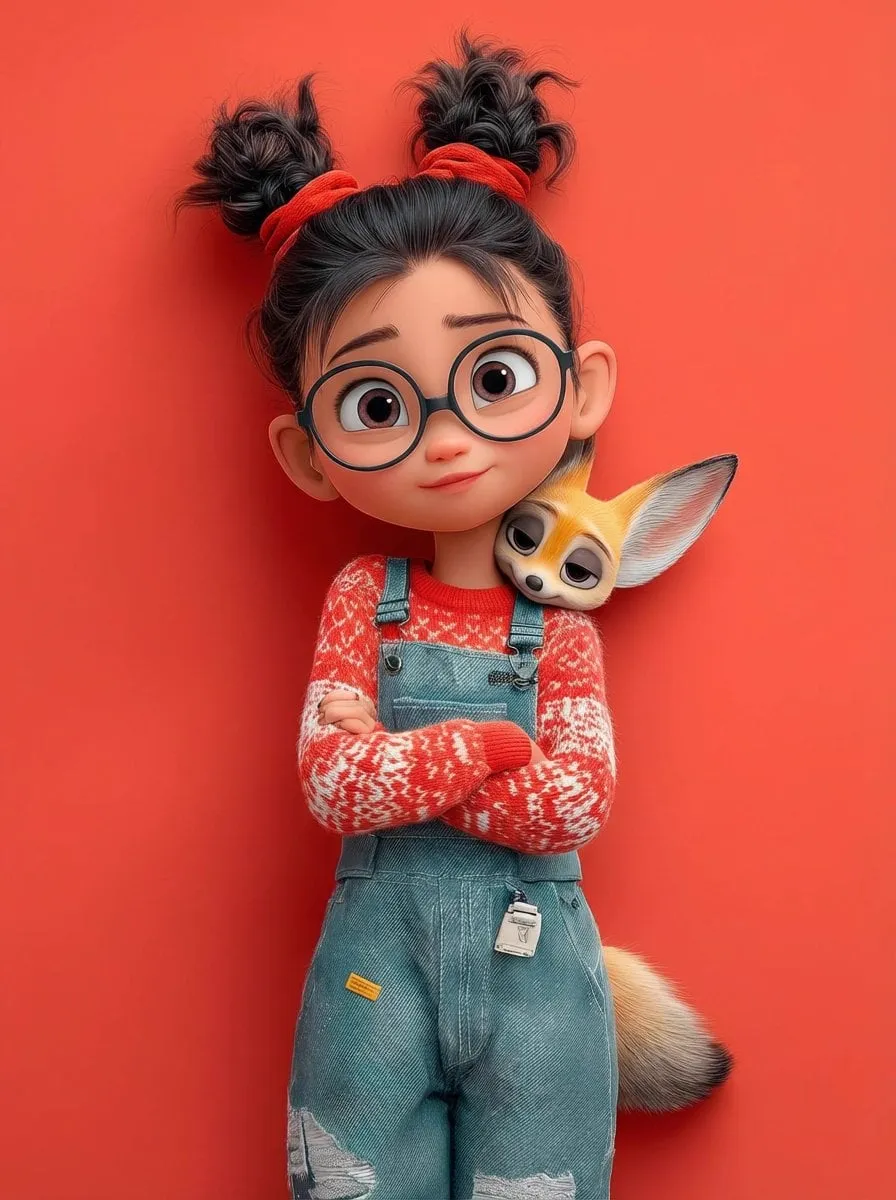
What Consistent Shots Actually Require
A consistent shot is not just a beautiful frame. It is a frame that belongs to the same story as the one before it and the one after it. The character looks like the same person, the lighting feels continuous, the environment stays recognizable, and the visual style does not jump around. In AI video production, achieving this across many clips is the difference between a portfolio of impressive one-offs and an actual story.
The problem is well known to anyone who has generated more than a few clips. A character generated at a desk looks convincing. The same character generated at a door looks like a different person. Hair changes, clothing wrinkles rearrange, eye color shifts. These small drifts destroy narrative trust, and audiences notice them even when they cannot name the cause.
Why Characters Drift in AI Video
Character drift happens because most video models generate each clip from a statistical understanding of the prompt rather than from a fixed identity record. The model knows what a person is, but it does not know who this particular person is unless you give it a strong anchor.
Without an anchor, every new generation is a fresh guess. Lighting conditions, camera distance, and even the wording of your prompt can push the output in a different direction. The more scenes you need, the more chances there are for the identity to wander.
The fix is not to pray for better models, although better models help. The fix is to build a production system that feeds identity into every generation step, so the model is never guessing who the character is.
How Multi-Image Fusion Works
Multi-image fusion is the practical answer to drift. Instead of relying on a single reference image, the workflow extracts identity from several images of the same character and merges them into one stable profile.
Feature Extraction
Each reference image is passed through an encoder that pulls out the features that define the character: facial structure, proportions, hairstyle, distinctive clothing, and other stable traits. The system separates these identity features from incidental details like lighting and background, which should be allowed to change between scenes.
Identity Anchoring
The extracted features are combined into an average identity space. This space becomes the constraint applied to every subsequent generation task. When the model creates a new scene, it does not invent a face from the prompt alone; it has to stay close to the identity profile you defined.
The anchor also protects against model switching. If you generate scene one with one model and scene two with another, the identity profile carries across the change, so the character does not suddenly morph.
Keyframe Control
Keyframes give you explicit control over structure. You decide the starting frame and the ending frame of a shot, and the model fills in the motion between them. Combined with identity anchoring, this means the character starts as your reference, ends as your reference, and drifts as little as possible in between.
Building a Character Bible From Reference Images
Before generating anything, build a small set of consistent references. Treat it like a character bible for a film.
- Collect three to five images of the character from different angles: front, side, three-quarter, and at least one with a different expression or pose.
- Keep lighting consistent across the references. If one image is bright daylight and another is dark studio light, the model will try to average them into something unstable.
- Remove busy backgrounds or replace them with a neutral backdrop. You want the model to learn the character, not the sofa behind them.
- Write a short identity sheet: height, build, hair color, eye color, distinctive features, typical clothing. Use the same wording in every prompt that involves the character.
The better your character bible, the less work the model has to do guessing. Most consistency problems trace back to weak or contradictory references, not to the model itself.
A Step-by-Step Production Workflow
Step 1: Lock the Identity
Upload the reference set and generate a test scene that is not part of the final story. Check that the character looks like the person in the references. Iterate here until the identity is stable. Do not proceed to the real scenes until this passes.
Step 2: Standardize the Prompt Template
Use the same character description in every prompt. Keep the identity sheet wording identical, and only change the parts that should change: location, action, time of day. Consistency in language supports consistency in output.
Step 3: Generate Scene by Scene
Produce each scene with the identity profile active. For scenes where the character must appear at a specific composition, use first and last frame control so the structure is guaranteed at both ends.
Step 4: Review Against the Bible
Before editing anything, do a consistency pass. Compare every clip to the character bible, not just to the previous clip. A slow drift across ten clips is easier to catch when you check each one against the original reference.
Step 5: Fix Selectively
When a clip breaks identity, regenerate that clip rather than patching it in post-production. A single clean regeneration is usually cheaper and better than hours of manual retouching. If the same scene fails repeatedly, simplify the scene or adjust the reference set.
Choosing the Right Models for Consistency
Not all models handle identity equally well. When consistency is your priority, look for models that explicitly support multiple reference images, strong image-to-video modes, or first-last-frame control.
Multimodal reference models are the most reliable for character work because they accept the full character bible as input. Motion-focused models are useful once identity is locked, especially for dynamic scenes. Open models give you the most control but require the infrastructure to run and fine-tune them yourself.
A practical combination is to use one model for identity-critical close-ups and a faster model for filler shots that do not need the same level of fidelity. Keep the identity profile active for both, and you get consistent output without paying the highest cost for every single clip.
Working with Different Lighting Conditions
Lighting is one of the biggest consistency killers. A character generated in bright daylight and then generated in a dim interior can look like two different people, even when the identity anchor is active. The model has to reconcile the reference lighting with the prompt lighting, and the compromise often shows up in the face.
The fix is to prepare lighting variants in advance. Instead of one reference set, build two or three variants of the character bible: a daylight set, an interior set, and a night set. Each variant uses the same angles and outfits, only the lighting differs. When a scene requires a specific mood, use the matching variant as the active reference.
This adds a small amount of setup time and removes a large amount of drift. It also gives you better results faster, because the model is not fighting to reinterpret a character that was only ever shown under one light.
Scaling Consistency to a Series
Once the single-project workflow works, the next step is a series. Series production changes the game because the identity must survive not just across scenes but across episodes, weeks, and possibly different models.
The foundation is a permanent character bible. Store the reference images, the identity sheet, and the tested prompt templates in a project folder that every episode reads from. Do not rebuild the character for each new episode; the whole point is that the identity is already locked.
Set a review cadence. Before each episode goes live, compare the episode clips against the original character bible, not against the previous episode. This catches slow drift before the audience does.
Record what changes. When a new model, a new outfit, or a new setting is introduced, note how it affected consistency. Over time you build a practical knowledge base for your own pipeline: which models preserve identity best, which prompts need adjustment, which scenes always cause trouble.
Series production also rewards a stricter pipeline. Lock the aspect ratio, the color grade, and the output format early, and keep them constant. The audience may not notice consistency in the background, but they definitely notice when it breaks.
Common Pitfalls
- Using a single reference image. One angle is not enough to define a face from every camera position.
- Inconsistent lighting in references. The model averages the lights, and the character ends up looking lit by nothing.
- Changing the identity description between prompts. Small wording changes become visible drift.
- Checking clips only against the previous clip. Compare to the original reference instead.
- Patching broken frames in post-production. Regenerate them instead; it is faster and cleaner.
Troubleshooting a Broken Scene
Even with a strong workflow, some scenes fail. The useful response is not to fight the model but to diagnose the cause. Most broken scenes fall into one of three categories.
The scene fails on identity. The character does not look like the reference. The cause is usually a weak anchor: too few reference angles, contradictory lighting, or a prompt that overrides the identity description. Fix the references, check the prompt wording, and regenerate.
The scene fails on structure. The character looks right, but the composition is wrong: the proportions are off, the action does not make sense, or the ending frame does not match the start. This is a keyframe problem. Lock the first and last frames, simplify the action, and regenerate.
The scene fails on style. The character and structure are fine, but the scene feels like it belongs to a different project. This is usually a style or color problem. Check whether the prompt carried the same visual language as the other scenes, and unify the grade in post-production.
A simple rule: change one variable at a time. If you change the references, the prompt, and the model at once, you will not know which fix worked. Keep a short log of each attempt, and you will solve scene problems in a few iterations instead of a few hours.
Frequently Asked Questions
How many reference images do I need?
Three to five well-chosen angles usually give the best balance. More images help only if they add new information; duplicates just add noise.
Can I use different models for different scenes?
Yes, as long as the identity profile is applied to every scene. The anchor is what survives the model switch.
What if my character still drifts in fast action scenes?
Fast motion is the hardest case for any video model. Reduce the speed of the movement, split the action into shorter shots, or lock more keyframes so the model has less freedom to wander.
Does this work for animals, objects, and products?
Yes. The same workflow applies to anything with a consistent identity: a mascot, a car, a product design. The references just need to cover the angles and states that matter for your project.
How long does a consistent multi-scene project take?
The first project is the slowest because you are building the identity profile and learning what the model needs. After that, the workflow repeats quickly. Most of the time goes into the character bible, not the generation.
Do I need the same model for every scene?
No. The identity profile is what survives the model switch. Use different models where they are strongest, as long as the anchor is applied to every scene and you verify the result against the references.
Final Thoughts
Consistent characters are not a luxury in AI video; they are the requirement that separates storytelling from random generation. Multi-image fusion gives you a practical way to meet that requirement: extract identity from several references, lock it into an anchor, and apply it to every scene and every model you use.
The investment is small. A few hours spent building a proper character bible will save days of fixing drift later. And once you have a workflow that keeps identity stable, you can finally focus on the part that matters: the story. That is the real secret behind consistent shots.
