
Anyone who has tried to make a longer AI-generated video knows the moment of dread when a character suddenly looks different in the next scene. The face is close but not the same, the clothes have silently changed color, and the whole illusion of a coherent story starts to wobble. Keeping a character stable across a sequence of shots is one of the hardest and most valuable problems in AI video production. This guide explains how multiple reference images can be combined to hold a character's identity steady, and how you can build a practical workflow around that idea.
Why Characters Drift Between Shots
Generative video models are remarkable at producing individual images, but they have no inherent memory of what they created a moment ago. Each new shot is generated largely fresh from a prompt. When that prompt is a verbal description, the model must invent what the character looks like from scratch every single time. Because language leaves so much unspecified, two generations of the same description rarely produce the same person.
This drift is the root cause of the consistency problem. It is not a bug you can talk your way around with cleverer wording alone. The reliable fix is to stop relying on description and instead provide a concrete visual anchor that the model can hold on to. That is exactly what combining multiple images achieves.
Using Reference Images to Anchor a Character
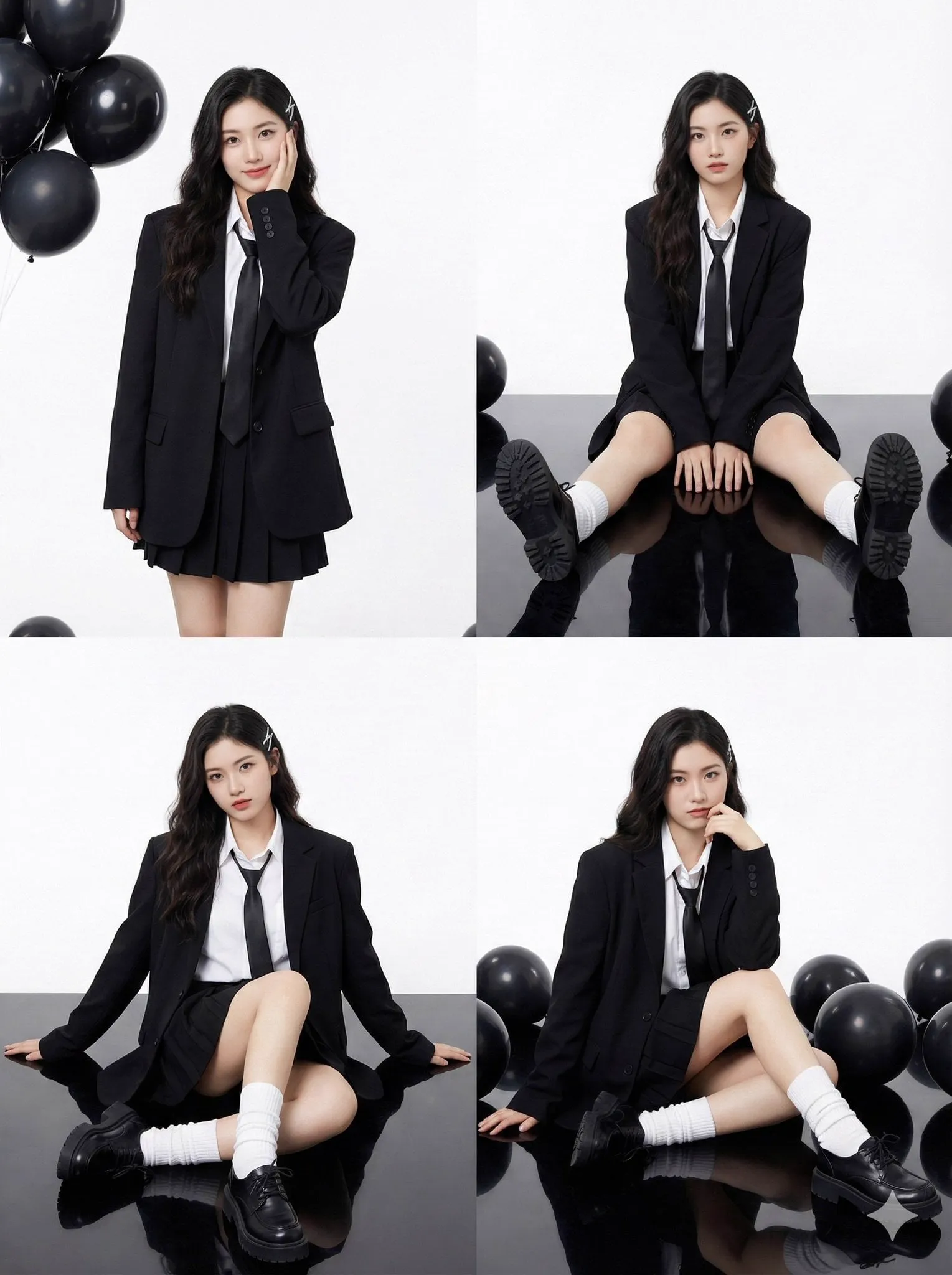
The core idea is straightforward: instead of pointing to a character with words, you point to the character with pictures. Gather several images of the intended person, ideally showing them from different angles and in varied poses. Feed those references into the workflow, and the system extracts a stable representation of the identity: the face, the hair, the clothing, and the other details that make this person recognizable.
With that anchor in place, each new shot is generated with the same visual identity in mind, even as camera angle, expression, and setting change. The character stays the same person throughout the sequence, which is the crucial foundation for any multi-scene narrative.
Choosing Reference Images That Work
The quality of your references directly determines the strength of the anchor. Prefer images with good lighting and clarity. Collect a front-facing view, a side view, a full-body shot, and ideally a few near-close-ups. Consistency in how the person is dressed and styled across the references makes the anchor even more reliable. A little effort here saves a great deal of rework later.
Combining Multiple Models Without Losing Identity
A professional workflow rarely depends on a single generation model. Different tools excel at different things, and creators want the flexibility to switch based on the needs of each scene. That flexibility, however, makes consistency harder, because each model interprets prompts in its own way.
To switch models safely, the visual anchor must be shared across all of them. When the same reference representation is fed to every tool, the character emerges looking like the same person no matter which model renders the shot. This coordination layer is what allows you to enjoy the best of many models while keeping a single, coherent identity.
Handling Inherent Differences Between Models
Different models have different tendencies, some render faces a little softer, some are more detailed, some have a particular color interpretation. When the anchor is strong, these differences become minor stylistic variations rather than identity changes. In practice, this means you can produce a mix of shots from multiple tools and still assemble them as one continuous piece. Test the anchor across your chosen tools early so you understand how each one behaves before you commit to a full sequence.
Plan Resources and Manage the Cost of Generation
Generating dozens of shots takes time and computing power, and failed attempts multiply the cost. A well-managed workflow reduces waste on two fronts. First, stable references cut down the number of retries caused by a drifting face. Second, planning the sequence before generating means you render only the shots you actually need.
Be deliberate about where you spend your heavier resources. Hero shots and the emotional core of the story may deserve more attention and higher-quality generation, while transitional material can be produced more quickly and cheaply. Allocating effort intentionally lets you make the most of whatever budget you have.
Using Direction to Keep a Sequence Coherent
Consistency is not only a technical matter; it is also a creative one. A coherent sequence needs consistent framing language, lighting, and pacing, not just a stable face. This is where a direction layer becomes valuable. Acting like a digital director, it plans the scenes, maps the continuity, and helps arrange shots so the whole piece reads as a single intentional work.
By letting the direction layer handle the repetitive business of ordering and continuity, you are free to focus on the story and the emotional beats that make the sequence worth watching. The result is footage that looks deliberate, rather than a pile of individually impressive but disconnected clips.
Mapping Continuity Scene by Scene
The most reliable way to keep a long sequence coherent is to map it before you generate anything. Write down each scene, the characters who appear in it, and the key visual facts that must carry over, the state of the lighting, the outfit a character is wearing, the mood of the environment. This mapping becomes your continuity bible, a single document you consult at every step.
When every scene is planned against this map, you stop making continuity a matter of chance and start making it a matter of record. If a character enters scene five carrying an object from scene two, the map tells you the object exists even if it is off camera for several scenes. That attention to detail is what separates a story from a series of impressive but unconnected images.
Keeping Lighting and Location Consistent
Faces are not the only thing that can drift. A room can change color temperature, a sky can shift mood, and a location can silently transform between shots. Lock down your locations the same way you lock down characters, with references for the environment and clear notes about the lighting language. When you establish that a scene happens at dusk, keep the generation faithful to that decision across every shot of the location.
Color and light carry enormous storytelling weight. A warm tone suggests comfort, a cold tone suggests isolation, and changing them midway breaks the emotional contract with the audience. Consistent lighting and location are not details; they are the connective tissue of a believable world.
A Practical Workflow for a Multi-Scene Project
Here is a dependable path for a project where consistency matters. Begin by designing your character and collecting a strong set of reference images. Define the visual world, the lighting, and the color palette so the whole project shares one look. Plan the scene order and decide which model will handle which segment. Feed the same character anchor into every segment, and generate scene by scene, checking identity continuity as you go.
If a character drifts, go back to the reference and adjust, rather than rewriting the prompt and hoping. Verify continuity during production, not only in the final edit. When you assemble the piece, confirm that cuts respect the same visual traits. This constant verification is what keeps the end result cohesive.
Troubleshooting Common Consistency Issues
If the character still changes despite strong references, check a few things. Confirm the same anchor is actually being used for every shot. Verify that reference images are clear and lit well, not that a weaker set is producing a weak anchor. And test how each model responds to the anchor, since some will need slightly different reference conditioning. Fixing these roots will do more than any amount of re-prompting.
The Value of an Iterative Approach
Consistency is rarely achieved in a single pass. You will generate a shot, notice that a minor trait drifted, adjust the reference or the conditioning, and generate again. Enquire openly rather than treating the first result as final. Those small corrections compound, and by the middle of a project you will find production moving faster because the character is now fully established and the system is calibrated to it.
Embrace this iteration as part of the craft. The creators who complain that AI cannot hold consistency are often the ones who expect a perfect result from the first prompt. The creators who reliably produce coherent stories are the ones who build the anchor, verify it, correct it, and only then scale it across the sequence. Patience and method, not luck, deliver believable characters.
Moving From Random Clips to Believable Stories
When identity stays stable across shots, an entirely new range of production becomes possible. You can build a multi-scene short film, a cohesive brand campaign, or a serialized narrative in which the audience recognizes the hero every time they appear. The continuity that was once the hardest part of AI creation stops being a barrier and starts being a strength.
Building a Reusable Character Library
One of the best long-term habits is to organize your confirmed character anchors into a small library. When a character survives a full production without drifting, note the references that worked and keep them together. The next time you need that person, you do not have to rebuild the anchor from scratch; you simply reach for the library.
This library also trains your eye. Over a few projects, you learn which reference styles produce the strongest anchors and which approaches tend to fail. That accumulated judgment is exactly the kind of practical knowledge that separates a creator who fights the tool from one who directs it with confidence.
When to Push Quality and When to Move Fast
Not every shot in a sequence deserves the same attention. The moments that carry the emotional core of the story, a first appearance, a key reveal, a farewell, merit the deliberate calibration and re-checking that protect quality. Transitional shots and contextual material can be produced more quickly and economically. Learning to recognize which shots are which, and spending effort accordingly, makes your production both faster and better.
This selective attention is a direct lesson from traditional filmmaking, where the director rations care toward the moments that matter most. Applied to AI production, it means you never waste the expensive calibrations on shots that will barely register with the audience, and you never shortchange the ones that will stay in their memory.
Beneath all the technique lies a simple principle: the audience believes a story when the world remains steady beneath the changes they are meant to notice. A character whose appearance holds steady lets attention rest on what that character does and feels. A location that stays recognizable lets a dramatic shift in mood read as meaning rather than as an error. In this way, consistency is not a constraint on creativity but its quiet foundation, the invisible scaffolding that lets a story stand tall enough for the audience to believe in it.
Final Thoughts
Keeping a character consistent across sequences is the difference between clips and stories. It requires a shift from describing characters to anchoring them, and from hoping a model behaves to deliberately verifying that it does. With strong reference images, coordinated models, and a clear plan, you can produce footage that holds together from the first shot to the last. And when the audience sees the same face, the same person, at the center of every scene, they stop watching a demonstration of technology and start watching a story.
The tools for holding identity are available to any creator, not just studios. A single character, a small set of good references, and a clear map of the scenes are enough to begin. Start there, verify each shot, and let the process teach you how your chosen models respond to the anchor. As you complete more projects, the habit becomes instinct, and the once-frustrating problem of a wandering character gives way to the quiet satisfaction of a world that stays believable. That reliability, more than any single technique, is what turns AI-generated footage into the foundation of real narrative work.
