
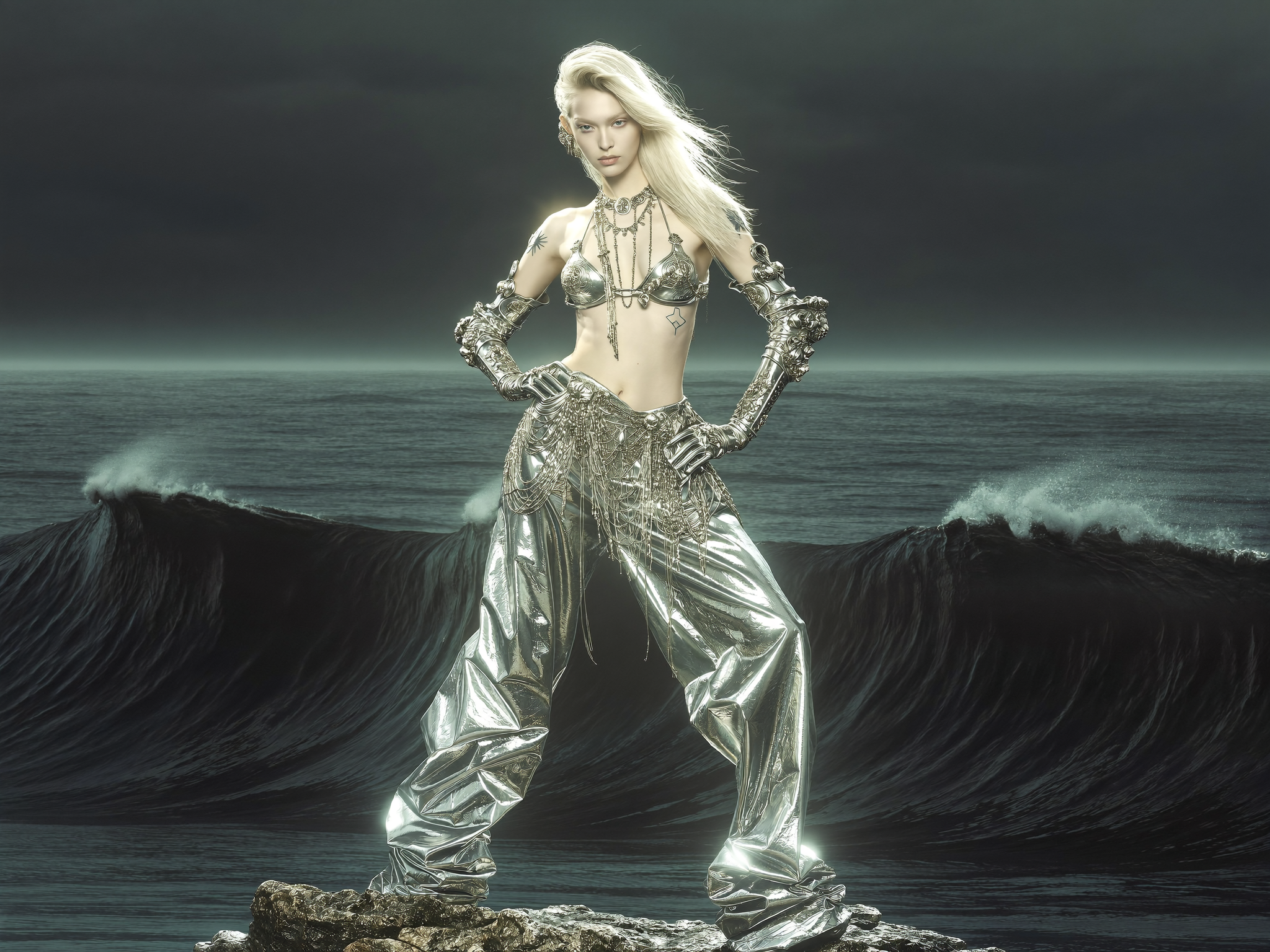
How to build consistent characters in your AI videos
The generative-video industry is moving from producing isolated images to crafting long, coherent narratives. Along the way, one obstacle dominates everything: character inconsistency. Ask a raw text-to-video engine to show the same person in ten shots and you will get ten subtly different versions of that person, a different nose, different clothing, a different hairline. Without a fix, no one can tell a believable story, and no brand can build a recognizable on-screen host.
The solution is a technique called multi-image fusion. Instead of describing your character in words and hoping, you give the model fixed visual references to honor. This guide walks through that technique step by step, from the underlying principles to the practical workflow, so you can lock down a character and keep it stable across every shot, every environment, and every emotional beat.
Why Character Consistency Is the Hardest Problem
Realism in a single frame is no longer the challenge; modern models handle that easily. The challenge is temporal identity, making the same character recognizable across time. This requires the model to track facial features, wardrobe, lighting, and even mannerisms from moment to moment. When a character changes between shots, the viewer's suspension of disbelief collapses, and the story falls apart.
By the middle of 2025, consistent characters became essential because video content is no longer just entertainment. It is a primary marketing and brand-storytelling tool. A brand that launches a recurring AI host, a mascot, or a talking product needs that character to be reliably itself in every appearance, or the brand promise weakens. Consistency is not a nice-to-have; it is the foundation of usable narrative content.
The Principles of Multi-Image Technology
Multi-image fusion goes beyond passing a single reference image to the model. It is a composite approach designed to overcome the limits of traditional text-to-video generation.
When you provide several images of the same subject, the model can reason about the stable features: the face, the body, the clothing, the palette. It learns which properties are invariant across the references and carries them into the moving footage. This fusion of multiple views is far more robust than a single image, because it gives the model enough information to separate the character's identity from the incidental details of any one pose.
The principle extends to the environment. Reference images of a room, a street, or a product establish the invariant spatial and lighting qualities the model should preserve, enabling the same world to reappear consistently from any angle.
Setting Up the Reference Set
A usable reference set has three kinds of shots. First, a front-facing portrait that establishes the face clearly. Second, a side profile that defines the three-dimensional structure of the head. Third, a full-body shot that fixes height, build, and wardrobe. All three should share the same lighting and the same clothing as the scene you are about to generate, because when the references match the target scene, the model starts with very few unknowns to invent.
Laying Out the Steps
Prepare the references first, clearly labeled by subject and purpose. Prompt each shot to include the subject, the environment, the light, and the camera. Then, for the actual fusion, feed the reference set alongside the prompt for every render in the sequence. Review the output against the reference images and repeat the render if the identity has drifted. This validate-and-repeat loop is what ultimately guarantees stability across different angles.
A few practical rules keep the reference set dependable. Shoot or generate all keyframes under the same lighting and with the same clothing as the scene, because inconsistencies among your references force the model to compromise and the character will drift in one direction or another. Keep one canonical set per character and update it deliberately rather than piecemeal, so that every shot in a project draws from the same source of truth. When the script calls for a wardrobe change or a time-of-day shift, generate a dedicated updated set for that story beat instead of stretching an old one. This discipline guarantees that when the model reads your references, it sees one coherent person rather than a family of loosely related faces.
The Supporting Role of an AI Director
Consistency is not only about the face; it is about how footage is planned and sequenced. A valuable addition to any workflow is an AI agent that acts as a film director, helping preserve stability in practical ways.
The director helps with shot planning, deciding camera angles and pacing so that characters and settings are shown in deliberate, consistent ways. It also helps enforce rules across a production, reminding you to reuse the same reference images, the same palette, and the same wardrobe decisions. When a large batch of renders is managed by such an assistant, the chance of a single stray render breaking continuity drops dramatically. It effectively adds the discipline of a continuity manager to a solo workflow.
A Step-by-Step Process for a Stable Character
The following process consolidates the whole technique into a repeatable pipeline.
Step One: Define the Character
Write a character brief before generating anything. Decide the physical traits, the wardrobe, the personality, and the signature mannerisms. This brief guides every reference image and every prompt, keeping you, the creator, consistent even before the model sees anything.
Step Two: Generate a Keyframe Set
Create the front, profile, and full-body reference images. Refine them until they feel like reliable photographs of one person, because the maturity of these keyframes sets the ceiling of your final consistency. If the references themselves look like slightly different people, the fused video will be better, but it can never be perfect.
Step Three: Anchor Every Render
For each shot in your production, pass the keyframe set to the model together with the prompt. Do not rely on the prompt alone to identify the character; the visual references are what carry identity across the sequence. Relying on words alone is the most common cause of drift.
Step Four: Validate and Repeat
Compare each render against the reference images. Check the face, the outfit, and the lighting. If anything has drifted, correct the prompt or tighten the reference images and render again. This loop is not optional; it is the mechanism that turns good-enough footage into genuinely consistent footage. The more rigorous you are here, the more durable the character across your whole library.
Where Full Character Models Fit In
For projects that demand the highest possible consistency, multi-image fusion can evolve toward a dedicated character model. Training returns a reusable asset: a representation of the character that any compatible engine can invoke by name. This is the natural next step for brands and series that will feature the same host or mascot again and again.
Maintaining such an asset is about governance, not just generation. Keep a written character bible, record the reference set and the prompt style, and document any changes over time so that a character launched today still matches its earlier appearances. A managed character model turns a one-off technique into a persistent brand asset with ongoing value.
When should you make the leap from reference fusion to a dedicated model? If the character appears in a few clips a month, disciplined keyframes are probably enough. If the same face will star in a recurring series, a long campaign, or many localized versions, investing in a dedicated model pays for itself by removing the effort of re-establishing the look in every project. Weigh the cost of training and maintenance against how often the character carries a production. The rule of thumb is simple: build a reusable asset the moment consistency becomes a repeated chore rather than an occasional need.
Using Consistent Characters for Business
A stable character is a commercial asset as much as a creative one. Brands use consistent hosts and mascots to build recognition, run product-demonstration series where the presenter remains the same, and craft educational or tutorial content around a trusted face. The same character can appear in social clips, website explainers, and advertising, reinforcing the brand across every surface.
This also opens business models built around trained character assets, such as licensing a distinct on-screen host, creating recurring series with a locked cast, or offering character-likeness work as a service to other creators. The durability of a consistent character turns a single render into reusable intellectual property.
Common Mistakes and Their Fixes
The most frequent failure is skipping the reference set and relying on descriptive prompts alone; always include visual anchors. Another is letting the keyframes disagree on wardrobe or lighting, which forces the model to compromise; keep the reference set internally consistent. A third is accepting a slightly off render because it is close enough; in narrative work, drift compounds quickly across a sequence. Finally, changing the reference images mid-production is a subtle killer; commit to one set for the whole project and only change references deliberately, with a record.
There is also an awareness problem. Many creators fixate on the face and forget the rest of the identity, so the same shot with consistent faces still breaks because the palette, the lighting, or the outfit shifted. Treat wardrobe, lighting, and color as part of the character, and review them with the same rigor as the face. Similarly, do not let the style of rendering change between shots; a character that is hyperrealistic in one clip and painterly in another reads as a continuity break even if the identity is technically consistent. Watch the whole package, and you will avoid the failures that most commonly sabotage narrative work.
Frequently Asked Questions
What exactly is multi-image fusion?
It is a technique where multiple reference images of a subject are passed to the video model so it can learn the stable identity and carry it into every generated shot, keeping the character recognizable across a sequence.
Can a consistent character be used across different models?
Yes. A well-built keyframe set is model-agnostic, so you can route shots to different engines while each honors the same reference identity. This is especially useful in a multi-model pipeline.
How many reference images do I need?
Three is a reliable minimum, a front view, a side view, and a full-body view, all in matching lighting and wardrobe. More angles can help for demanding characters, but quality and consistency of the references matter more than quantity.
How do I know when a render is good enough?
Compare it against the reference images on three axes: face, outfit, and lighting. If all three match and the motion is believable, the render is likely usable. If any has drifted, iterate before moving on.
Is a dedicated character model worth the effort?
For a one-off video, probably not. For a brand or a series that will feature the same character repeatedly, yes, because a reusable asset pays for itself across many productions and becomes recognizable intellectual property.
What tools do I need to get started?
You need a video generation engine that accepts image references and a place to store and organize your keyframe sets. The rest is workflow discipline, which is exactly what this guide gives you.
How do I keep a character consistent when the story spans seasons or settings?
Generate a dedicated reference set for each major story beat. A winter set, a day set, and an evening set each establish the same identity under their own lighting and wardrobe, and pairing each scene with its matching set keeps the character recognizable while allowing the world to change around them. The key is always to change the story, not the identity, and the references encode that rule for every engine you use.
Lock Your Character, Tell Your Story
Character consistency is the difference between impressive footage and a compelling story. By defining your character, building a clean reference set, anchoring every render to that set, and validating each result, you take full control of identity across the length of a production. Start with one character and one short sequence, apply the loop rigorously, and you will have not just a stable character but a repeatable pipeline that lets you build longer, richer stories with confidence.
