
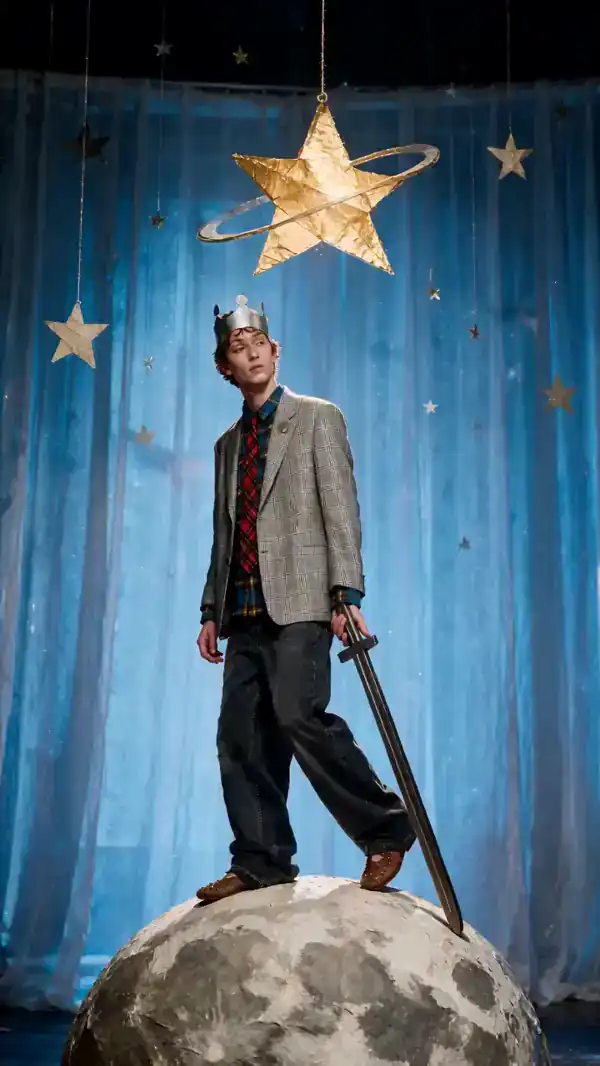
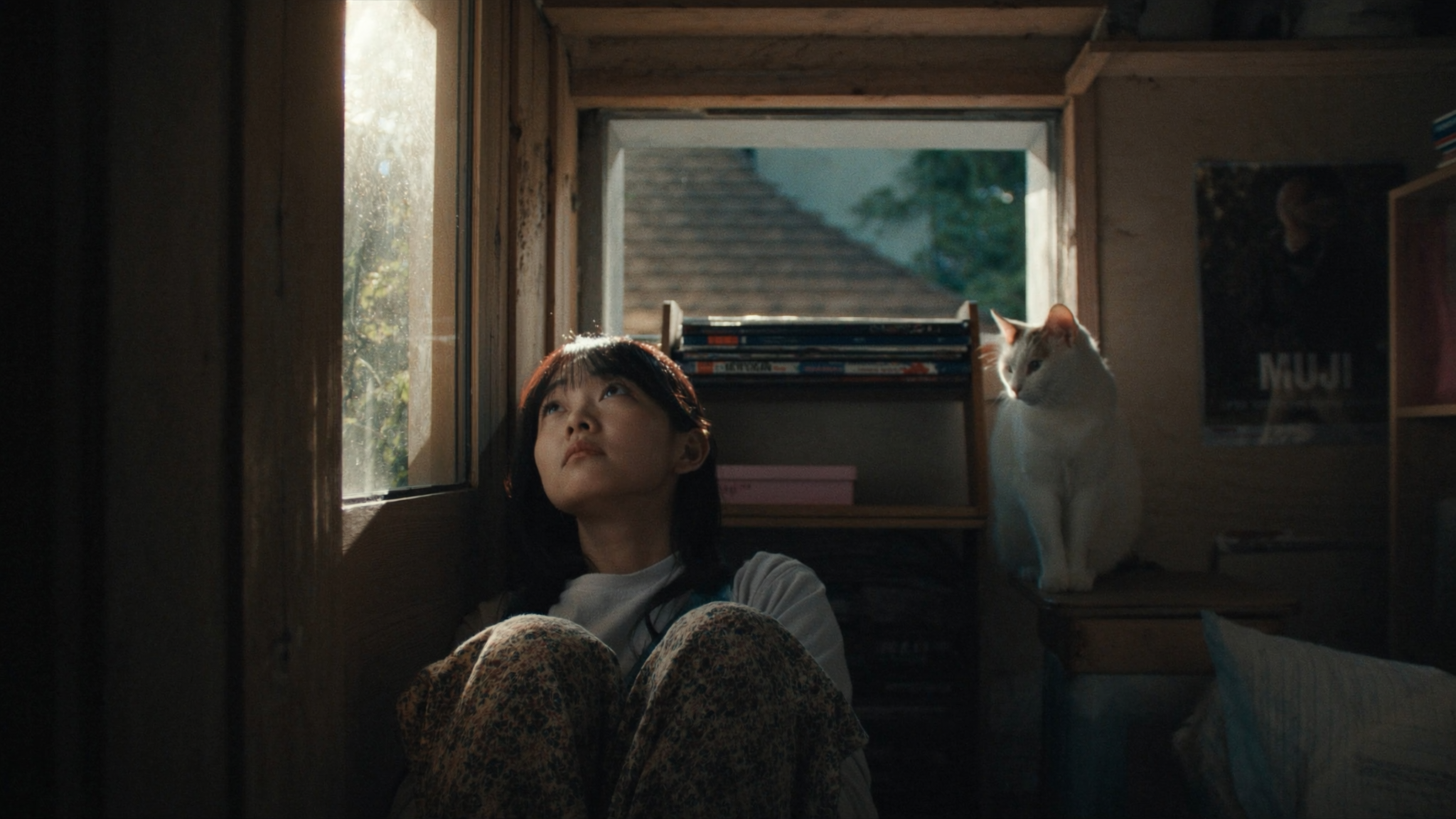

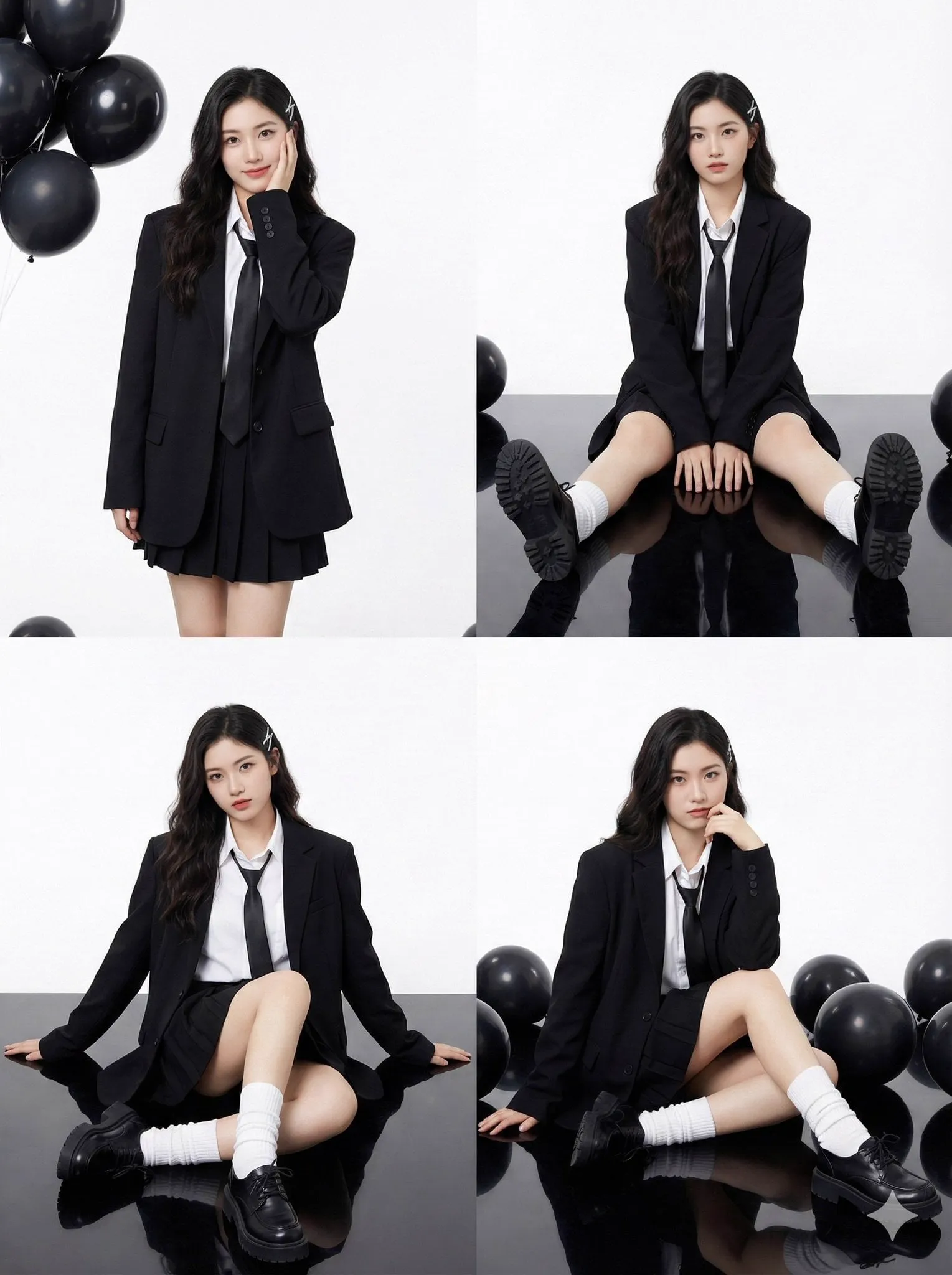
The hardest problem in AI video isn't generating a beautiful shot — it's keeping the same character across many shots. You generate a stunning close-up of your protagonist in scene one, then in scene two the face subtly changes: different eyes, different jawline, different jacket. Viewers notice even when they can't articulate it, and for any serialized content — a brand campaign, an animated web series, a game trailer — this visual drift is fatal. The solution that has emerged in professional pipelines is multi-image fusion: instead of relying on a text description or a single reference, you feed the system several images of the same character and let it extract a stable identity that carries through the entire generation process. This guide explains how the technique works, how to use it in real production scenarios, and how to build a repeatable workflow around it.
Why character consistency became the new standard
For a long time, the benchmark for AI video was simple: does the shot look realistic? Models like the latest text-to-video systems can produce genuinely impressive single shots — accurate physics, convincing lighting, expressive faces. But single-shot quality stopped being the differentiator as soon as creators started assembling multi-scene stories. When you cut from one shot to another, the audience implicitly expects the same character to be the same person. If the protagonist's hairstyle shifts between cuts, immersion breaks and the piece reads as amateur.
The market has moved accordingly. Brand campaigns, interactive experiences, game cinematics, and even short-form social series all demand recurring characters with fixed identities. Creators need the equivalent of a casting department for AI: a way to lock a face, a wardrobe, and a silhouette so that every model, every shot, and every scene draws from the same reference.
How multi-image fusion works under the hood
Multi-image fusion is not simple image blending. It's an engineering process that extracts what makes a character recognizable and re-imposes it on the generation space of the target model. Think of it as building a digital fingerprint of the character.
Building the reference identity
You start by supplying several reference images: a front view, a profile, a three-quarter angle, maybe a full-body shot. The system analyzes more than just facial features. It decodes subtle appearance patterns — shadow distribution, skin texture, hair characteristics, the shape of the mouth at rest, proportions of the body. All of these are compressed into a set of embeddings that represent the character's identity in a mathematical space.
Applying identity across different models
The interesting engineering challenge is portability. Different generation models have different internal architectures — a diffusion-based model and a transformer-based video model don't share the same latent space. The fusion layer must translate the character identity so it can guide any model in the library. This is why the same character set can drive a photorealistic render for a TV spot and an illustrated style for a social campaign without redesigning the character from scratch.
The director layer
Identity isn't only about appearance. Consistency also covers performance: how the character moves, the camera language around them, the emotional tone of scenes. In well-designed pipelines, the fused identity becomes the foundation for a chain of prompts — the director layer uses the character blueprint to generate scene-level instructions, camera moves, and blocking, so the visual identity and the narrative voice stay aligned across the whole project.
Using fusion in real production scenarios
The technique shines in three common situations. Each demands a slightly different setup.
Multi-style ad campaigns
A single campaign often needs the same spokesperson in several styles: realistic for the main spot, stylized for social cutdowns, animated for the youth-focused channel. With fusion, you build the character once, then generate each style variant from the same identity. The audience recognizes the same face even as the rendering style changes — exactly what brand teams want.
Games and interactive experiences
Game projects need characters that remain recognizable across trailers, key art, and in-game cinematics. Fusion helps here by keeping the reference set versioned: when the design team updates a costume or a hairstyle, the new reference set propagates through every generated asset. That's a dramatic reduction in rework compared with re-prompting every shot manually.
High-volume short-form content
Short-form production is a numbers game. You need dozens of clips per week, all featuring the same host or mascot, all on-brand. Fusion makes this viable by turning character creation into a reusable asset: once the identity exists, each new clip is a matter of writing a scene prompt, not re-establishing the character. Volume goes up, and quality stays consistent.
Building your character asset library
Consistency at scale requires treating characters as assets, not as one-off prompts. Here is a practical system.
Create once, reuse everywhere
The first time you design a character, invest in a good reference set: multiple angles, neutral expressions, key poses, wardrobe variations. Store it in a named asset — character name, version, notes about style and usage. From then on, every scene prompt references that asset instead of describing the character from scratch.
Versioning and updates
Characters evolve. A campaign character gets a new outfit; a series protagonist changes hairstyle mid-season. Keep a version history for each character asset so you can regenerate old scenes faithfully while producing new ones with the latest design. This is the same discipline visual effects studios apply to their asset databases, and it pays off immediately in AI pipelines.
Style separation
A strong practice is separating identity from style: the character asset holds who the character is, while a style asset holds how the world looks — color palette, lighting, rendering approach. When you want a moody neon version of your mascot, you swap the style, not the identity. This separation makes remixing fast and keeps the character recognizable in any world.
A step-by-step workflow for consistent character video
Here's a repeatable process you can adopt for your next project.
Step 1: Define and capture the reference set
Write a character bible: name, age, personality, wardrobe, signature traits. Then generate or photograph 5–10 reference images covering the angles and expressions you need. Keep lighting simple and consistent across references — the system learns from differences too, and conflicting references produce unstable identity.
Step 2: Build and validate the fusion asset
Create the fused identity and run a validation pass: generate several test shots in different styles and check whether the character stays recognizable. Fix weak spots by improving the reference set. Never start production with an unvalidated asset.
Step 3: Plan scenes against the asset
Write your scene list with the character asset in mind. For each scene, define the action, camera, and emotional tone. The asset handles identity; your prompt handles the moment.
Step 4: Generate, review, and iterate
Produce scene drafts and review them against your character bible, not just against aesthetic taste. Flag any drift and regenerate with adjusted prompts or extra references. Log what works.
Step 5: Package and reuse
Save successful setups — prompt templates, style choices, camera language — alongside the character asset. The next project starts from your library instead of from zero.
Choosing between fusion approaches
Not all consistency techniques are the same, and it helps to know your options before committing to a workflow.
- Single reference image. Fastest to set up: one image guides the generation. Works for simple projects, but drift appears quickly across many shots or dramatic angles.
- Multi-image fusion. Several references are merged into a stable identity. The sweet spot for serialized content: robust across styles and models, moderate setup cost.
- Fine-tuned character models. Training a small model on a character's images gives the strongest identity lock, at the cost of training time and less portability across different base models.
For most teams, multi-image fusion is the right default: better than a single reference, far more flexible than fine-tuning. Reserve fine-tuning for hero characters with large production volumes, and keep single-image prompts for quick experiments where drift doesn't matter.
When not to use fusion
Fusion is not always the answer. For one-off experimental clips, setting up a reference set wastes time. For stylized or non-character content — landscapes, product close-ups without a recurring subject — identity locking adds nothing. And when the whole piece is a single continuous shot, drift never gets a chance to appear, so simpler prompting suffices. Match the technique to the project: fusion earns its keep exactly when the same subject must survive across multiple generations.
A practical case: weekly web series
A small studio produces a ten-episode web series with one recurring character. Episode one takes three days of manual prompting, and the character visibly drifts by episode three. The fix: they build a five-image reference set, validate it across three styles, and store it as a versioned asset. Episode four now takes four hours of generation work, the character stays recognizable in every shot, and the team reuses the same asset for teasers and key art. The investment in the reference set pays for itself in the first week.
Common mistakes and how to fix them
- Conflicting references. If your reference images disagree with each other — different skin tones, different outfits — the fusion has no coherent identity to extract. Curate ruthlessly.
- Validating only one style. A character can hold in photorealistic rendering and collapse in anime style. Test across the styles you actually plan to use.
- Rebuilding characters per scene. This defeats the purpose. Build once, reuse always.
- Ignoring performance consistency. Appearance is only half of it. If the character's mannerisms change, the audience senses it. Include movement notes and recurring camera language in your scene prompts.
- Skipping versioning. When you update a character, old scenes break. Track versions and decide deliberately whether to regenerate legacy content.
FAQ
How many reference images do I need?
Five to ten well-chosen images are usually enough for a stable identity: multiple angles, a couple of expressions, one or two full-body shots. More isn't automatically better — consistency matters more than quantity.
Can I fuse a character from photos of a real person?
Yes, but only with explicit consent, and commercial use of a real person's likeness carries legal and ethical obligations. When in doubt, consult a professional and document permissions.
Does fusion work with stylized and animated characters?
It works well, provided your references are stylistically aligned. Anime characters, mascots, and illustrated figures fuse cleanly when the reference set uses one consistent art style.
Why does my character still drift in some scenes?
Drift usually comes from three places: weak references, extreme camera angles or poses not represented in the reference set, and prompts that contradict the identity. Fix the weakest link and regenerate.
Is this workflow suitable for solo creators?
Yes — the discipline scales down as well as up. Even one creator producing a weekly series benefits from a versioned character asset: it cuts setup time per episode and keeps the series coherent.
What if my references are inconsistent with each other?
Fusion can only extract what's consistent in the inputs. Curate references until they agree on the essentials — face, hair, body, wardrobe. Fixing the reference set fixes most drift problems.
Can I use fusion with character designs from other tools?
Yes, as long as you can export consistent reference images. Use the same framing and lighting across the exports, and the fusion layer will treat them as one identity.
Conclusion
Character consistency is the difference between a collection of impressive clips and a story. Multi-image fusion gives you the tools to build characters once and carry them across scenes, styles, and projects — turning identity into a reusable asset rather than a daily struggle. Start with a small, well-curated reference set, validate before you commit to production, and build a library as you go. The creators who treat characters as assets will be the ones producing coherent, professional series and campaigns at a volume others can't match.
