
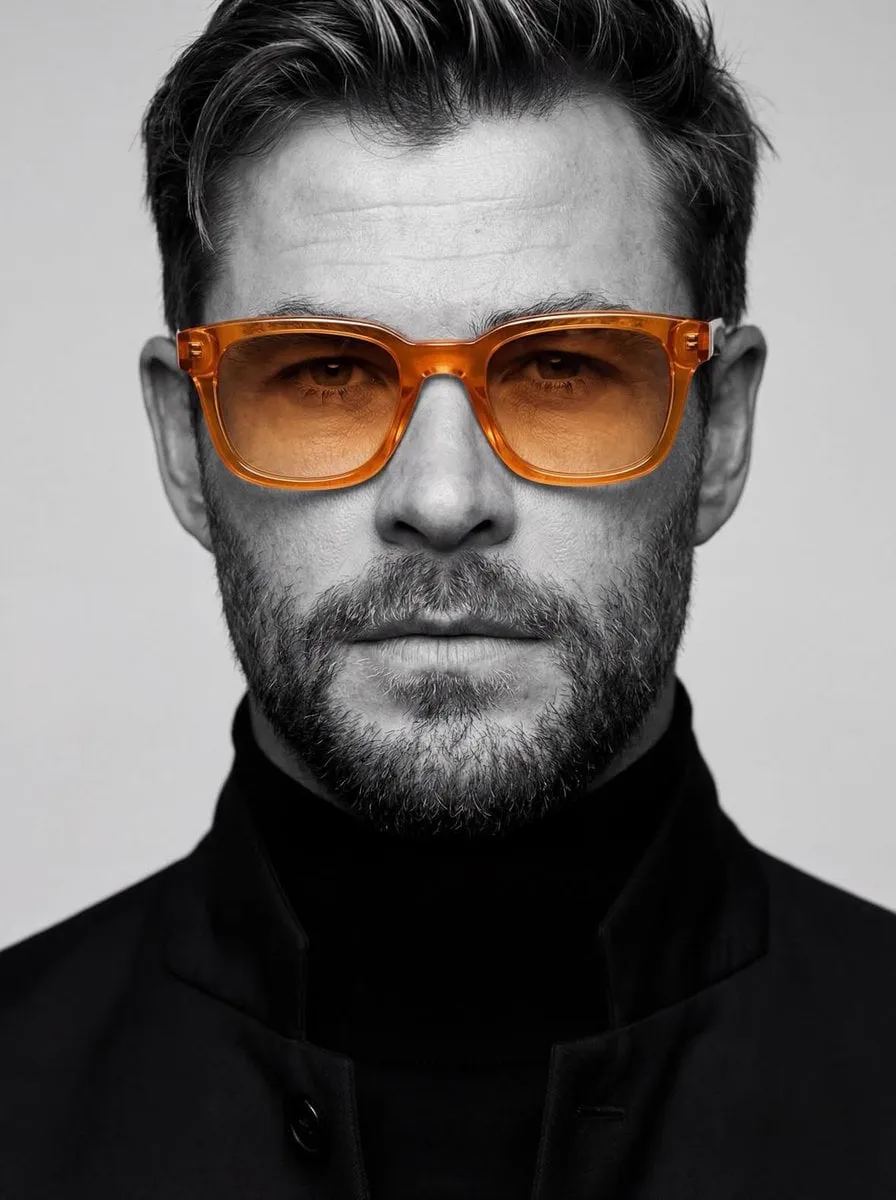
AI video generation crossed a threshold that few people expected so quickly. Early models could produce astonishing individual frames, but the moment you asked for a sequence, identity fell apart: a character would change face between shots, clothing would shift colors, and the story would collapse under the inconsistency. The new frontier of AI video is precisely the thing that was missing: cinematic clips with consistent characters. When a model can keep the same person recognizable across scenes, angles, and lighting conditions, it stops being a toy for making cool clips and becomes a tool for real filmmaking and branded storytelling.
This article is a deep dive into how consistent-character video generation works, which models handle it best, how to build a practical workflow around it, and where the technology is heading.
The Character Consistency Problem
Character consistency is the single hardest technical problem in generative video. A model has to understand a character as a persistent identity rather than a collection of pixels that happen to look similar. It must hold that identity through changes in pose, expression, camera angle, clothing, and lighting, and it must do it over many generations without drifting.
The failure modes are familiar to anyone who has used early video models. The protagonist's face changes subtly between cuts, which viewers notice even when they cannot articulate why. A jacket changes color halfway through a scene. A supporting character appears in the background with a completely different face in consecutive shots. Each failure breaks the suspension of disbelief, and in branded content it is worse: the product, mascot, or spokesperson is the entire point, and inconsistency destroys trust.
The difficulty is architectural. Text-to-video models generate from language alone, and language is too lossy to describe a face precisely enough for identity to survive. The breakthrough came from giving models visual anchors: reference images, multi-image fusion, and keyframe control that tell the model "this specific person" instead of "a woman in her thirties."
Why Consistency Is the Difference Between Viral and Forgettable
Inconsistent characters do not just look bad; they undercut the two things that make short-form video succeed: narrative and recognition.
Narrative requires the viewer to track who is doing what. If a character's identity shifts mid-story, the audience loses the thread, and re-watch and completion metrics suffer. Platforms optimize for those signals, so inconsistency actively suppresses distribution.
Recognition is what turns a video into a franchise. The most successful AI creators are building recurring characters that viewers look forward to seeing, the same way audiences follow a TV series. A character that is visually stable across every episode becomes an asset: merchandise, spin-offs, and brand deals all become possible. That only works if the character is always the same person. Consistency is not a technical nicety; it is the foundation of the creator economy in AI video.
The Technical Toolkit: Multi-Image Fusion and Keyframes
The tools that solved character consistency are now standard features in serious video platforms, and understanding them changes how you work.
Multi-image fusion lets the model read several reference images at once and merge their shared identity into a single consistent character. Instead of describing a face in words, you feed the model three or four photos of the same person from different angles and ask it to render that person in new scenes. The model learns the invariant features, the ones that stay the same across all the references, and applies them to new poses and expressions. This is the core technique for building a character that survives scene changes.
Keyframe control works at the shot level. You provide the starting frame and the ending frame, and the model generates the motion between them. This is invaluable for identity because the character is visually locked at both ends of the shot; the model only needs to fill in the transition. For sequences, you can chain keyframes so that each shot inherits the identity from the previous one, building a stable chain across an entire scene.
A third technique, style locking, keeps the visual world consistent even when the character moves between environments. By reusing the same environment references and lighting descriptions, you prevent the background from drifting in ways that make the character look like a paste-in.
Model-by-Model: Who Handles Identity Best
Not all models are equal on identity, and choosing the right one for your character work saves enormous amounts of iteration time.
Runway Gen-4 made character consistency a headline feature, and its multi-image references handle identity well across scenes and styles, which makes it a strong default for narrative work. OpenAI Sora is the quality benchmark for cinematic realism and scene coherence, and its ability to maintain identity across longer sequences is a major part of what makes it feel like real filmmaking. Kling AI pairs strong identity retention with excellent physics and natural movement, which matters when your character needs to interact believably with objects and environments.
Flux-family models excel at image-level character work and stylized looks, which is useful for building reference packs and for brands with a distinctive art direction. MiniMax Hailuo, PixVerse, and Luma Ray 2 sit at more accessible price points and are good for high-volume testing of character concepts before you commit to premium renders.
The practical pattern is to design characters with a flexible model, lock them with references and fusion, and save premium renders for the shots that matter most.
A Practical Workflow for Cinematic Clips
Consistent characters come from a repeatable process, not from luck. Here is a workflow that reliably produces stable characters across a multi-shot clip.
First, design the character with a character sheet. Generate or source a set of reference images showing the same person from at least three angles, with consistent hair, clothing, and distinguishing features. Write a verbatim character description that captures the details the model needs to hold identity, and reuse that exact text in every prompt.
Second, build the shot list like a director would. Decide the sequence of shots, the camera movement for each, and the emotional beat each shot serves. Consistency is easier when you know exactly what the character is doing in each frame.
Third, generate with anchors. Use multi-image fusion for every shot, always feeding the same reference set. Use keyframes for shots with important action beats. Keep the verbatim description in the prompt alongside the fusion references.
Fourth, check continuity in the edit. Review the assembled sequence with an eye for identity drift: face, hair, clothing, and props. Regenerate individual shots that drift rather than trying to fix them in post, because patching rarely restores identity.
Finally, build the library. Every successful character becomes part of your reusable asset library, and every new video featuring that character starts from the locked references instead of from scratch.
One more habit separates reliable character workflows from one-off experiments: version your character. Every time you adjust the design, whether it is a new hairstyle, a wardrobe change, or a more detailed face, create a new version of the reference set and the description, and keep the old version intact. Characters evolve across a project and across a series, and an unversioned character quietly drifts because shots get generated from outdated references mixed with new ideas. A simple naming convention, such as character-name-v1 and character-name-v2, makes it possible to regenerate any shot consistently and to roll back when a change does not work.
Balancing Cost, Speed, and Fidelity
Character consistency has a price. The models and techniques that deliver stable identity are the most expensive per render, and multi-shot projects multiply that cost.
The budgeting rule is to spend on the shots that establish identity and save on the ones that extend it. The character's introduction shot, the close-ups, and any shot where the character interacts physically with the environment deserve premium renders. Wide shots, transitions, and background plates can be generated on cheaper models because identity pressure is lower there.
Iteration strategy matters too. Test character concepts on budget models before committing to a premium production run. A character design that cannot hold identity on a cheap model will only be slightly better on an expensive one, so validate the design early. Keep a log of which models hold your characters well, because the ranking changes as models are updated.
Director Agents and Automated Cinematography
The next layer of automation is the director agent: software that takes a script, plans scenes, and generates a coherent sequence with consistent characters, camera movement, and pacing. Instead of prompting shot by shot, you hand over the story and the agent handles composition, shot order, and continuity.
These agents change the workflow from assembly-line prompting to creative direction. Your job becomes defining the story, the character, and the emotional arc; the agent's job becomes executing the cinematic language. For creators who think in stories rather than technical prompts, this is the difference between a tool and a collaborator.
The current limitations are predictable. Director agents can still lose control over long-form projects, and their scene decisions are not always tasteful, so human review remains essential. But as a production accelerator, they compress the time between idea and rough cut from days to minutes.
The Platform Ecosystem: Libraries, Training, and Communities
The tools around generation matter as much as the models. Platforms now offer model libraries where creators can browse and switch between the best available generators, community training where you can build a custom model of your own character or style, and marketplaces where trained models are published and exchanged.
The strategic implication is that character work is becoming an asset class. A well-trained character model, one that reliably reproduces a specific person or mascot across unlimited scenarios, is a durable piece of intellectual property. Creators who invest in training and maintaining their characters will compound that advantage as the ecosystem grows.
Common Pitfalls and Fixes
Identity drift in the middle of a sequence: usually caused by changing the description or reference set between shots. Fix: use the identical verbatim description and identical references for every shot in the sequence.
Characters that look right in stills but wrong in motion: the model may be losing identity during fast movement. Fix: use keyframes to lock start and end, and reduce the motion distance between keyframes.
Supporting characters that look wrong in group shots: identity pressure spreads thin when multiple characters share a frame. Fix: give each character its own reference set and generate group shots with fusion rather than text descriptions.
Faces that are photoreal but generic: the character may lack distinguishing features in the description. Fix: add concrete details like scars, freckles, unusual hair, or a distinctive wardrobe to the character sheet.
FAQ
What is the fastest way to get a consistent character?
Feed the model a set of reference images of the same person from multiple angles and reuse those exact references in every shot. Multi-image fusion is the single highest-impact technique.
Why does my character change face between shots?
Almost always because the model is working from text alone or from different references. Lock a single reference set and a verbatim description for the entire sequence.
Do I need a premium model for consistent characters?
Premium models hold identity better, but you can design and test characters on budget models first. Spend premium renders on the shots where identity matters most.
Can I train my own character model?
Yes. Platforms with custom training let you fine-tune a model on your character's images, after which the character is far more stable across generations and scenes.
Is consistent-character video usable for branded content?
It is the whole point of branded content. A spokesperson, mascot, or product that stays identical across a campaign is what makes the campaign recognizable.
What should I learn first?
The reference workflow: character sheet, multi-image fusion, and keyframe control. Those three techniques solve 90 percent of consistency problems.
Can I use consistent characters across different videos?
Yes, and that is the point of building a character library. Once a character's references and description are locked, every new video can start from them, which is how creators build series with recognizable recurring cast members.
