
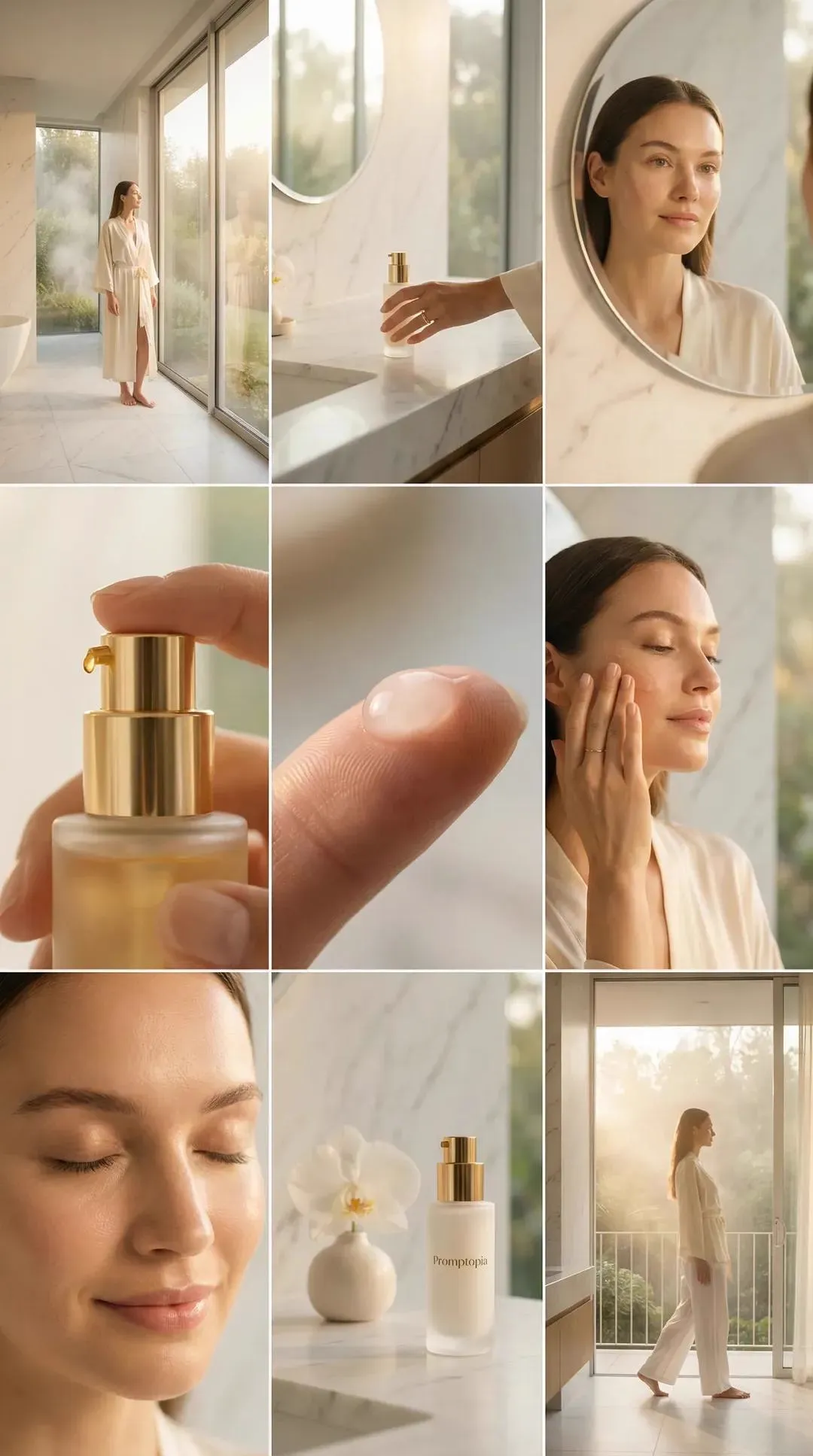

The Character Problem in Generative Video
Every generative video creator eventually hits the same wall. You craft a character you love — distinctive face, memorable style, clear personality. Then you try to put them in a second scene, a third, a whole story, and the character quietly falls apart. The jawline shifts. The eyes change color. The wardrobe mutates. By scene five, your protagonist looks like a different person wearing their clothes.
This is identity drift, and it has been the single biggest bottleneck between AI video and real storytelling. Audiences are forgiving of many technical imperfections, but they are not forgiving of a character who changes appearance every few shots. Recognition is the foundation of narrative: you cannot care about a character you cannot identify.
The solution that has emerged across the industry is multi-image fusion. Instead of describing a character in words — an approach that is inherently ambiguous — you supply a set of reference images that define the identity, and the system carries that identity into every subsequent generation. This article explains how the technique works, why it succeeds where text prompts fail, and how to integrate it into a production workflow that delivers consistent characters scene after scene.
Why Single Images and Text Prompts Fail
Text descriptions are lossy. "A confident woman in her thirties with sharp features" leaves enormous room for interpretation. The model fills the gaps with statistical guesses, and those guesses vary between runs. Even a meticulously detailed prompt cannot encode the subtle geometry of a face that makes it recognizable as the same person.
Single reference images are better but still insufficient. One photo captures a face from one angle, under one light, with one expression. It cannot tell the model what the character looks like in profile, or in shadow, or while laughing. The result is a character who is recognizable only in scenes that closely match the reference photo.
Multi-image fusion attacks both problems at once. Multiple images provide coverage across angles, expressions, and lighting, so the model can separate the stable features — the identity — from the situational ones. The result is a far more robust representation that holds up across scenes, styles, and even different generation models.
How Multi-Image Fusion Works
The process begins with your reference set. The system analyzes each image, looking for features that remain invariant across the set: the shape of the face, the spacing of the features, the texture of the hair, the characteristic details that define who this person is. These invariants are compiled into a unified representation of the character.
That representation then acts as a condition for every subsequent generation. Whether you are generating a close-up, an action shot, or a scene set in a completely different location, the model references the character representation to keep the identity stable. It is a form of visual memory: the system remembers who the character is, no matter what situation you drop them into.
Two properties make this approach powerful. First, it is robust: the identity survives changes of outfit, environment, and mood. Second, it is transferable: the same character representation can be used with different generation models, which means your character is not locked into a single tool.
Building the Reference Set That Defines Your Character
Your character is only as stable as the references that define them. A weak reference set produces a weak identity, no matter how sophisticated the underlying system. Here is how to build a set that holds.
Start with Ten Angles
The ideal starter set includes at least ten images covering the character from multiple angles: front, profile, three-quarter, and variations in height and distance. Coverage matters because the model needs to know what the character looks like from directions other than straight ahead.
Vary the Conditions
Include different expressions — neutral, smiling, serious, surprised. Include different lighting: bright daylight, warm interior, moody shadow. Include at least two outfits. The goal is to teach the model which visual details belong to the person and which belong to the situation.
Keep the Core Consistent
All references must agree on the core identity: face shape, eye color, hair, distinguishing features. A reference set that contradicts itself teaches the model an unstable identity. Review the set as a whole before locking it in, and regenerate any image that does not fit.
Lock It and Label It
Once the set is finalized, treat it as canonical. Label it clearly, store it in a dedicated location, and resist the urge to swap images mid-project. Every change of anchor is a creative decision with consequences for the entire sequence.
Applying Fusion Across Different Models
One of the most valuable properties of a character representation built from references is that it is model-agnostic. Your character is defined by your images, not by any single generation engine.
This gives you real freedom in production. You might want a high-fidelity model for the establishing shots, where realism matters most, and a more stylized model for transitions or dream sequences. With a solid reference set, both models can work from the same character identity, and the character remains recognizable through the change in style.
The practical implication is a production strategy that would have been impossible a few years ago: mixing engines within a single story. Match each scene type to the model that does it best, while the reference system guarantees continuity across the boundaries. The identity lives in your library, not in the tool.
A Production Workflow for Consistent Characters
Consistency is a workflow problem as much as a technical one. The following sequence has proven reliable in real productions.
Step 1: Write the Character Contract
Before generating anything, document the character: appearance, personality, role, the non-negotiables that must never change, and the details that are allowed to vary. This contract guides every decision, including the hard calls about what to regenerate.
Step 2: Generate and Validate the Anchor Images
Build the reference set deliberately. Generate candidates, select the strongest, check coherence across the set, and fill gaps in angle or expression coverage. Validate the set by generating a test scene with it before production begins.
Step 3: Generate Keyframes First
For every sequence, generate the keyframes — opening, transitions, ending — and validate them before filling in the rest. Keyframes are where identity problems surface cheapest. Fix them here, not after hundreds of frames exist.
Step 4: Review Against the Reference Set
As frames come back, compare them against the reference set, not just against your memory of the character. Train your eye to spot the small drifts — a slightly different nose, a shifted palette — that accumulate into big problems.
Step 5: Keep a Production Log
Record the prompts, settings, and reference sets that produced strong results. This log becomes your playbook for future episodes, and it protects you when tools update or team members change.
Using Consistency to Tell Bigger Stories
The ability to keep characters stable unlocks storytelling formats that were previously out of reach for independent creators. Episodic series, multi-scene narratives, brand mascots that recur across campaigns — all of these depend on recognition, and recognition depends on consistency.
For creators, this is the difference between making clips and making a world. A character who survives across scenes becomes someone the audience can follow, worry about, and root for. That emotional investment is what turns viewers into fans.
For brands, consistent characters are assets. A mascot that appears the same way across every campaign builds recognition and trust. The character representation becomes part of the brand's intellectual property — not in a single file, but in a library that can be reused, extended, and protected.
The Creative Freedom Inside the Constraint
It is worth stating clearly: consistency is not the enemy of creativity. A well-built character system holds the identity stable while leaving enormous room for story. The character can change clothes, move through different worlds, grow, and surprise — the reference system holds the core, and the story moves inside it.
The failure mode to avoid is over-constraint. If you lock every detail so tightly that the character cannot change expressions or interact with a new environment, the output becomes stiff and lifeless. The right balance is a strong identity anchor with generous room for variation. Consistency should feel like a reliable actor, not a mannequin.
Common Mistakes and How to Avoid Them
The most frequent mistake is starting with an undersized reference set — one or two images and hope. The second is inconsistent references that contradict each other. The third is swapping anchors mid-project, which destabilizes everything that follows. The fourth is neglecting the environment: a perfectly consistent character floating in an incoherent world still breaks the illusion. The fifth is over-constraining until the character has no room to live.
Each of these is avoidable with the same remedy: preparation, validation, and documentation. The tools change constantly; the discipline does not.
Frequently Asked Questions
How many reference images do I actually need? Ten well-chosen images covering angles, expressions, and lighting is a strong starting point. Add more if the character has complex or unusual features.
Can the same reference set work across different tools? Yes, that is one of the technique's main advantages. The identity lives in your images, so you can move between generation tools without rebuilding your characters.
What do I do if a scene still drifts? Return to the reference set, regenerate the scene with the canonical anchors, and validate against the set. Fix identity problems at the source rather than patching them in the edit.
Is consistency only for characters? No. The same approach works for products, environments, logos, and any recurring visual element. Every recurring element deserves a reference set.
How long does it take to build a solid reference kit? A few hours for a first version, including generation, selection, and coherence review. Refine it as you learn what your character needs.
A note on consistency across sessions: when you return to a project after days or weeks, the reference kit is what keeps the character alive. Without it, every session is a new interpretation; with it, the character walks out of the archive unchanged. Treat the kit as the single source of truth, and your future self will thank you.
A Case Study: Building a Short Series
Put the technique to work with a concrete example. A creator wants to produce a three-episode mini-series about a courier in a neon city. The character contract defines the hero: face shape, hair, signature jacket, personality, and the rule that the jacket color never changes. The reference kit contains twelve images: angles, expressions, two outfits, three lighting moods. Before production, the creator validates the kit by generating a test scene — and spots that the jacket color shifts between references, so two images are regenerated before any real work begins. Each episode starts with keyframes for every major scene; the hero is checked against the reference set at each step, and the production log records which prompts and settings held the identity best. By episode three, the process is routine: the hero looks identical across all scenes, the audience follows the story, and the creator has a repeatable playbook for the next series. The technique transforms a fragile hope into a reliable production method.
Conclusion
Multi-image fusion is the technique that turns AI video generation from a toy into a storytelling medium. By defining characters through curated reference sets instead of ambiguous text, you give the system a stable memory of who your characters are — and you free yourself to put them through anything. The workflow is not glamorous: build the kit, validate the anchors, generate keyframes, review against references, keep the log. But the result is transformative. Characters stop drifting, stories become possible, and audiences can finally care about the people on screen. That is the difference between generating clips and creating worlds.
