
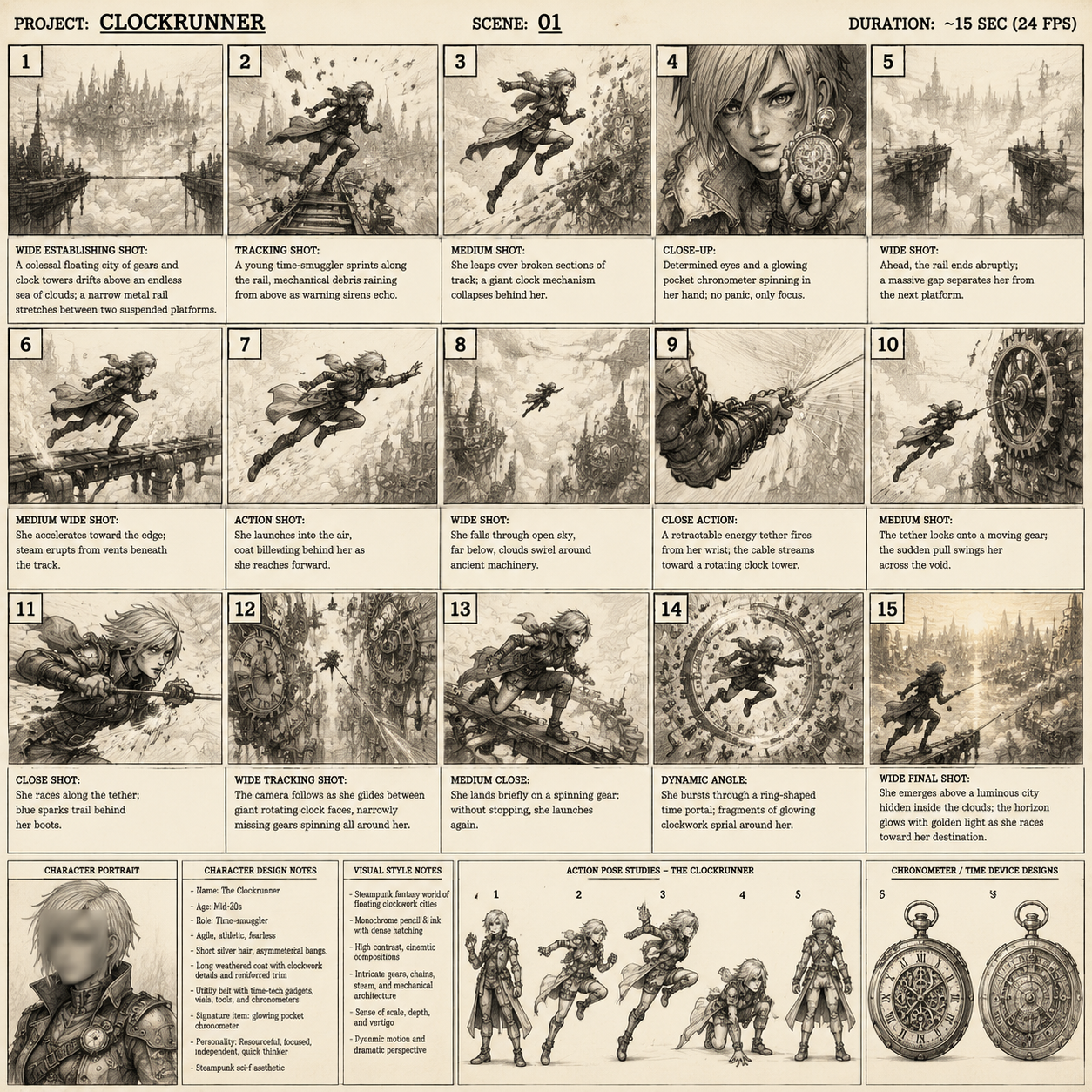
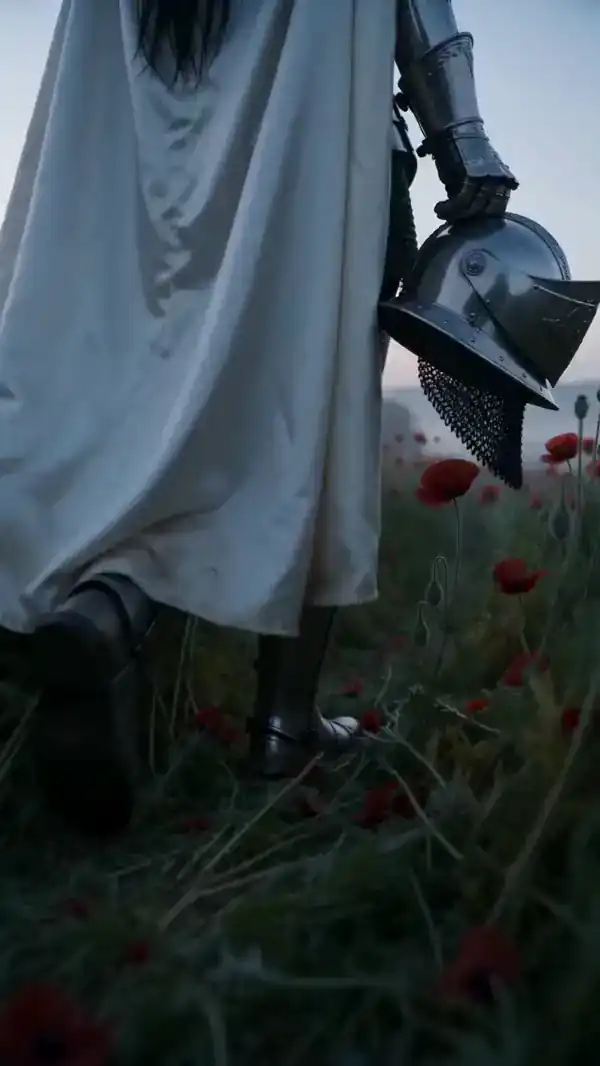
The Problem: Your Character Changes Between Scenes
You generate a hero in a forest at golden hour. The result looks great. Then you generate the same hero walking into a village, using the same prompt, and suddenly the hair is different, the jacket changed color, and the face is close but not quite right. If you have tried text-to-video for anything longer than a single clip, you have met this problem. It is the single biggest obstacle between AI video and real storytelling.
The technical term for this behavior is stochastic drift. Diffusion models start every generation from a random noise seed and sample probabilistically. Two runs with identical prompts rarely produce identical characters. When those characters need to appear across many scenes, every small drift compounds until the audience stops recognizing them.
For creators this is not a cosmetic annoyance. Brands build narratives around mascots, influencers rely on recurring avatars, and educators need the same presenter across a whole series. Consistency is what turns a pile of cool clips into content that people follow.
Why Single-Prompt Generation Fails
A text prompt is a surprisingly weak description of a person. You can write one hundred words about a character, and the model still has to decide the exact eye shape, the precise fabric texture, the subtle way the character stands. Different runs make different decisions, and those decisions multiply across scenes.
Model inflexibility makes it worse. Many models bias toward certain looks, lighting styles, or motion patterns. A prompt that reads perfectly neutral in your head can push the model toward its own default character design, which shifts again when you change scene context or camera angle.
The result is that prompt-only workflows are fine for one-off clips and useless for serialized content. The fix is to give the model something stronger than words: actual images of the character.
How Multi-Image Fusion Defines Identity
Multi-image fusion works the way a casting director works. Instead of describing the actor, you hand over a portfolio: several photographs from different angles, in different outfits, under different light. The model fuses these references into a consistent identity signature and applies that signature to every new scene.
A single reference image is a start, but it leaves ambiguity. The model may lock onto lighting or pose rather than the face. Multiple references resolve that ambiguity. One image establishes the face, another the body proportions, another the wardrobe, another the motion style. Together they describe what the character is, not just what the character looks like in one frame.
This matters most for text-to-video because the model has to animate identity over time. When the identity is defined by images rather than a paragraph, the character carries its features from the first frame to the last, and from scene one to scene ten.
Building a Character Reference Kit
The quality of your fusion depends on the quality of your references. A good reference kit follows a few simple rules.
Use consistent lighting across the set. If one photo has harsh studio light and another is shot in candlelight, the model will blend the two into a character with no clear identity. Shoot or generate references in similar light so the fusion has a stable base.
Cover multiple angles. A front view, a three-quarter view, and a profile give the model enough information to understand the face in three dimensions. Add one full-body shot for proportions and one detail shot of distinctive features like tattoos, glasses, or jewelry.
Keep the character identical in each image. The point is that the subject is the same person in every frame, only the angle or pose changes. Mixed identities confuse the fusion and produce hybrid faces that look like nobody.
Finally, keep the style language consistent. If your project is photorealistic, all references should be photorealistic. Mixing an illustration with a photo forces the model to pick a middle ground that satisfies nobody.
A Workflow That Locks Identity
Once your reference kit exists, the workflow becomes repeatable. This is the sequence that works across most text-to-video tools:
- Define the scene brief. Write down location, action, mood, camera movement, and duration before touching any tool.
- Load the reference kit. Attach the same character images to every scene that features the character, not just the first one.
- Write the prompt around the scene, not the character. The references carry identity, so the prompt should carry action, environment, and camera.
- Keep generation parameters fixed. Use the same resolution, aspect ratio, and seed policy while comparing variants.
- Generate several takes. Pick the best one against your brief, not against your memory of what you wanted.
- Lock the winner with a keyframe. If the tool supports it, use the accepted frame as the start frame for the next scene to chain identity across cuts.
- Review the whole sequence together. Single scenes look fine in isolation; problems appear when you watch the character across all of them.
Choosing Models for Consistency
Not every model treats reference images the same way. Some models have strong character-lock features built in, others treat references as loose suggestions, and others barely support multi-image input at all.
When you evaluate a model for consistent characters, run a simple test: generate the same character in three different scenes from the same reference kit, then compare the faces side by side. Models that pass this test are worth building a pipeline around. Models that fail it are fine for single clips but will fight you on every serialized project.
Also consider the model's style fingerprint. Photorealistic models like the Runway generation lineup or the Kling series behave differently from stylized models. Choose the family that matches your project's visual language, then verify consistency within that family before committing.
Combining Fusion with Prompt Engineering
Reference images carry identity, but the prompt still controls everything else. The two tools work together: the references answer who, the prompt answers what, where, and how.
Keep character descriptors out of the prompt once references are attached. Repeating the character's description can actually dilute the fusion, because the model tries to reconcile the image-based identity with your textual version. Instead, describe the scene, the action, the lighting, and the camera. Reserve text for elements the references cannot cover.
When you do need to vary the character, such as a costume change, add one new reference image showing the new outfit and describe the change in the prompt. The model then fuses old identity with new wardrobe instead of inventing a brand-new person.
Testing, Reviewing, Iterating
Consistency is not a one-time setup; it is a quality gate you enforce on every scene. Build a review habit that checks three things:
- Identity: Is this recognizably the same character as in the reference kit?
- Expression: Does the face and body language match the scene's emotional tone?
- Continuity: Does the wardrobe, lighting, and environment match the established world?
When a scene fails the identity check, do not regenerate blindly. Change one variable at a time: swap a reference image, adjust lighting language in the prompt, or try a different model in the same family. Keep notes on what worked, because the fixes that work for one project usually transfer to the next.
With a reference kit, a fixed parameter set, and a review checklist, text-to-video stops being a slot machine and becomes a production tool. The characters stop drifting, the scenes start connecting, and you can finally tell a story longer than fifteen seconds.
Advanced: Costume Changes and Stylistic Variation
Once the base identity is locked, the same reference kit can support variations. The trick is to change one dimension at a time. For a costume change, add a single reference image of the character in the new outfit, keep the face references identical, and describe the change in the prompt. The fusion now mixes the locked face with the new wardrobe.
For mood changes, adjust lighting language in the prompt instead of swapping references. A character in shadow reads differently from the same character in daylight, and the model can apply that shift while preserving identity. For time jumps, such as an older version of the hero, generate a dedicated reference set for that stage of the character and use it for those scenes. Consistency lives inside a version of the character, not across versions.
Failure Modes and Their Fixes
Even a disciplined workflow hits problems. The most common failure modes and their fixes:
Face melts in motion: the references conflict or the motion is too large. Tighten the kit, reduce per-take motion, and re-run.
Clothes change between scenes: the wardrobe was never established. Add a wardrobe reference and name the outfit in every prompt.
Style drift across a project: the model quietly pulls the character toward its own defaults. Return to the reference kit, verify every scene uses the same set, and standardize parameters.
Expression is wooden: the references define a static face. Include one or two images with strong emotion so the model learns how this face emotes.
Model swap breaks identity: different models read references differently. Keep the hero scenes on the model that passed your consistency test, or rebuild the kit for the new model.
Background changes the character: the model borrows color and light from the scene and applies it to the subject. Keep reference backgrounds neutral and describe lighting separately in the prompt.
When Consistency Matters Less
Not every project needs hard identity locking. Fast-turnaround content, meme-style clips, and experimental pieces benefit from variety; the audience expects novelty, not continuity. In those projects, treat consistency as a taste decision rather than a gate.
The discipline pays off when the work is serialized, branded, or narrative. Learn to switch the strictness on and off, because using a heavy reference pipeline everywhere wastes time without improving the result. The same reference kit that powers a ten-scene brand story can stay in the drawer for a one-off trend clip.
Tools That Support Consistency
The tooling market now includes dedicated character workflows: reference kits, identity lock modes, and frame chaining. When evaluating a tool, ask whether it keeps the same reference set attached across a whole project, whether it supports start and end frames, and whether it can re-use parameters between scenes. These three features determine most of your daily consistency work.
A tool with a slightly weaker model but strong identity tooling is often more valuable than a powerful model with no way to lock a face. Start with the workflow features, then compare model quality inside the ones that pass. The right tool is the one that makes the consistent path the easy path, because what is easy gets done every time.
FAQ
How many reference images should I use per character?
Four to eight is a good range. Fewer leaves ambiguity, more risks confusing the model with conflicting details. The sweet spot covers face, body, wardrobe, and one distinctive feature.
Can I use multi-image fusion with any text-to-video model?
Only models that accept multiple image inputs. Check the model's capabilities first, and run the three-scene test described above before building a workflow around it.
Why does my character change even with references attached?
Usually one of three causes: inconsistent reference lighting, mixed styles in the kit, or a prompt that re-describes the character and fights the fusion. Fix the kit and simplify the prompt.
Do reference images affect the rest of the scene?
They can leak style and environment. Keep references tightly cropped to the character or clearly framed, and describe the scene separately in the prompt.
What if I need the character in a completely different art style?
Create a second reference kit in that style and use it for those scenes. Consistency lives inside a style, not across styles.
Does multi-image fusion work with stylized or animated characters?
Yes, as long as the reference kit itself is stylized consistently. Build the kit in the target art style and keep every image inside that style.
How long does it take to set up a consistent-character workflow?
The first setup takes a few hours, mostly reference curation and one model test. After that, each new scene takes minutes because the kit and parameters already exist.
Should I lock characters for documentary or news-style content?
Only if the same person recurs. For one-off interviews or real footage, rely on the footage itself and use fusion sparingly, where it genuinely helps continuity.
What should I do when the model ignores my reference images?
Check that the references actually attached, then verify the prompt is not contradicting them. If the model still ignores them, switch to a model known for reference adherence and re-test with the three-scene method.
Is character consistency more important than motion quality?
It depends on the project. For serialized stories and brands, consistency comes first. For one-off spectacle shots, motion quality wins. Decide per project and set the workflow accordingly.
