
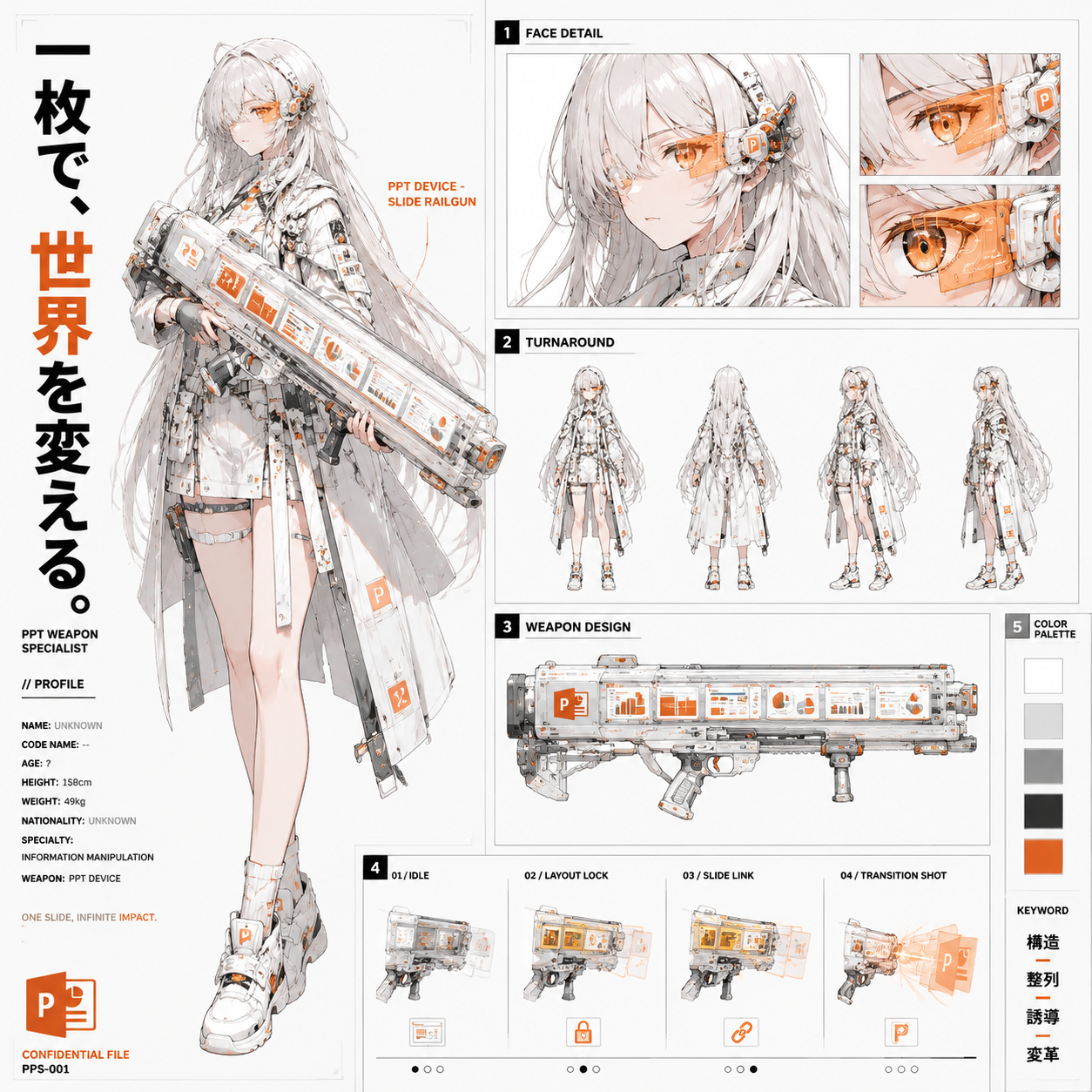

Why Consistent Style Transfer Is the Hardest Problem in AI Video
Anyone who has generated a short AI video sequence knows the frustration. You write a careful prompt, you render a beautiful first frame, and then the model produces a second frame that drifts — the subject's face changes, the lighting shifts, the texture of the background becomes something else entirely. This problem, which professionals call style transfer inconsistency, is the biggest gap between what generative video promises and what it actually delivers on set.
The cause is structural rather than a simple bug. Most generative models treat each image as a fresh, self-contained result. They have no built-in memory of the frame before, so every new frame is a slightly different interpretation of the prompt. The result is a string of individually lovely frames that fail to hold together as a sequence.
The solution facing the entire field is to make the visual elements reusable and addressable — a little like assembling scenes from legos instead of painting each one from a blank canvas. This idea, sometimes described as treating visuals as discrete building blocks rather than continuous textures, is at the heart of modern efforts to achieve reliable style consistency in AI production. This article breaks down that approach into practical terms you can apply to your own workflow.
From Continuous Textures to Discrete Building Blocks
The conceptual shift is subtle but powerful. Traditional image and video synthesis treats a scene as a continuous flow of color and light. The model generates pixels as a cohesive whole, which makes it hard to isolate and repeat a specific element.
The block-based view starts from the opposite assumption: a visual scene is made of units — a face, an outfit, a color accent, a lighting mood — that can be defined, stored, and recalled independently. When those units are stable, a character who appears in scene one can reappear in scene five looking like the same person, not merely like a close cousin.
Why does this matter for style transfer? Because style is, at its core, a question of consistency. When you can address the same visual unit across frames, you can lock its appearance. The palette stays true, the texture stays true, and the subject stays recognizable. The moment you treat style as a property you can set rather than an accident you hope for, everything downstream becomes more controllable.
Pixel-Level Control and What It Unlocks
Some of the most effective tools in this space operate at the level of individual pixels and the metadata attached to them. Instead of treating a pixel as just a color value, the pipeline treats it as a small, richly described unit that carries information about texture, position, and relationship to the scene.
This granular control unlocks a few practical abilities:
- Stable keyframing. When you define the look of a keyframe, that definition can travel to subsequent frames, so the sequence holds its style instead of drifting.
- Selective styling. You can restyle one element — the background, for example — without disturbing the character in the foreground.
- Precise masking of variation. You decide exactly which parts of the frame are allowed to change and which must stay fixed.
For a working video pipeline, this is the difference between hoping a model behaves and directing it. The more of the style decision you can specify directly, the less you leave to chance.
Keeping Style Consistent Across a Sequence
Once you accept that style must be enforced rather than hoped for, the workflow changes. Here are the concrete techniques that production teams use to keep a look stable from the first frame to the last.
Lock the Keyframes, Let the Motion Interpolate
The most reliable lever is to design a few keyframes deliberately and let the generator fill in the motion between them. If the first frame, a midpoint, and the final frame all share a consistent palette and subject, the interpolated transition will read as consistent even when individual details vary. You are not reviewing every frame — you are anchoring the sequence at the points that matter.
Share a Single Style Reference Across Clips
A sequence of clips within one project should share the same reference images. When every clip starts from the same canonical look, the generator pulls every new scene toward the same visual identity. This is how a brand keeps a product drop, a tutorial, and a promotional clip feeling like one campaign.
Set the Control Level Deliberately
Every stylization tool exposes some control over how strongly it follows the reference. Set it too high and every result looks identical, which kills variety. Set it too low and the reference barely matters, which reintroduces drift. The sweet spot keeps characters and palettes locked while letting composition and lighting breathe. Establish that balance once and apply it across the project.
Reuse the Same Subject Description in Every Prompt
One of the simplest yet most effective habits is to paste the exact same character description — face, clothing, tone — into every prompt for that character. Small variations in wording are a frequent source of unintentional drift. When the model receives identical references, identical glossaries, and identical framing language, consistency follows more reliably.
Blending Multiple Images to Ground a Character
A powerful technique for strong consistency is multi-image fusion: providing more than one reference image so the model can derive a stable identity rather than guessing from a single sample. One image alone can be ambiguous; several images together define the character with much more certainty.
Three references often do the work:
- A front view to establish the facial structure.
- A three-quarter or action view to establish posture and motion.
- A lighting reference to establish the mood, so the character behaves the same way under the same light.
With a small reference set, the model has enough information to construct a single coherent identity. This is the technique behind characters who survive across an entire series rather than a single video.
Choosing Models for Granular Consistency
Not every generator can deliver the level of control described above. The ability to lock keyframes, fuse multiple references, and maintain character identity over time varies widely from model to model. Building a reliable workflow therefore means matching the right kind of generator to the right kind of scene.
- For character-centric hero shots where identity must survive, favor models with proven temporal coherence and strong reference following.
- For backgrounds and transitions, where the visual carries less weight, lighter and faster models are adequate.
- For stylized or illustrated work, models with strong control over aesthetic direction outperform those optimized for pure photorealism.
As with any toolkit, the goal is not to crown a single model. It is to understand what each engine is good at and to route shots accordingly, so the whole project reads as one careful production rather than a patchwork of differing defaults.
Building an Effective Video Production Pipeline
Bringing consistency into your daily work is about process as much as about models. A disciplined pipeline turns a hard problem into a repeatable one.
Define the Reference Library First
Before generating a single frame, collect the references that define your project's look. A hero image, a lighting image, and a few character views. Keep them organized and versioned so every clip starts from the same source of truth.
Route Shots by Difficulty
Batch your shots into hero, supporting, and transition tiers. Generate the hero tier with your most capable model, the supporting tier with a solid workhorse, and the transitions with a fast engine. This balances quality and cost without a single bottleneck.
Validate the Frames That Matter
You will rarely have time to review every frame. Set checkpoints at the hook, the midpoints, and the final frame of each clip. If those hold the style, the clip is almost certainly on brief.
Version Everything
Keep the reference images and settings saved under a project name and version number. Weeks later, when you need another episode or a re-render, you can reproduce the exact look without rediscovering it.
Integrating an AI Director into the Workflow
As generative tooling matures, the most practical layer being added is an AI directing layer that sits above individual models. Rather than writing dozens of isolated prompts, you describe the intent — a character, a mood, a structure — and the directing agent assembles a coherent shot list that respects your references.
This is helpful specifically because it centralizes consistency. The agent knows the character reference, the palette, and the keyframe policy, and it applies them uniformly across the whole sequence. You spend your creative energy where human judgment is irreplaceable, and the agent handles the bookkeeping of making everything match.
The combination — a directing layer for structure, a block-based approach for style, and a small set of well-chosen models for execution — is what turns generative video from a toy into a production tool.
Common Mistakes and How to Avoid Them
Even with a good pipeline, a few habits routinely undermine consistency.
- Changing the prompt wording per shot. Consistency dies when the description wobbles. Reuse identical reference language.
- Reviewing every frame. It is exhausting and ineffective. Anchor at keyframes instead.
- Relying on a single reference image. One image is ambiguous. Use a small reference set for identity-critical characters.
- Over-tuning the style control. Pushing the reference too hard produces homogeneous, lifeless output. Leave room for natural variation.
- Ignoring the model's comfort zone. Forcing an engine to do something it is bad at fights the tool. Route shots to the model that suits them.
From Non-Photorealistic to Photorealistic Transitions
One of the more interesting uses of block-based style control is moving a project between looks deliberately — from a stylized, illustrated pass to a photorealistic one, or the reverse — without breaking the underlying subject. Because the character and palette are defined as addressable units, the restyling touches only the surface treatment while the identity stays intact.
This is invaluable in campaign work. A brand might want an animated teaser to lead viewers into a photorealistic main film. If both passes share the same character references and keyframe policy, the transition feels intentional rather than jarring. The audience recognizes the same protagonist across two very different visual languages.
The same mechanism supports high-fidelity style application. Rather than hacking a stylization on top of an already-generated image, you apply the style at the point of generation, guided by the reference unit. The result integrates naturally with the subject, light, and motion instead of sitting on top like a filter.
Troubleshooting When Consistency Still Breaks
Even with solid fundamentals, drift happens. Here is a short troubleshooting order when a sequence starts to fall apart.
- Recheck the reference set. Are you feeding the same three references every time, or did one go missing mid-project?
- Compare prompt wording. If the description of the character changed even slightly, that is usually the culprit. Return to the canonical wording.
- Inspect the control dial. If output suddenly looks unpredictable, the intensity may have been reset or moved and is no longer anchoring the look.
- Confirm the model. An engine swap without a reference re-anchor can introduce a whole new visual language. Re-establish the anchor if you changed engines.
Working through this list catches the overwhelming majority of consistency failures and saves hours of re-rendering.
Frequently Asked Questions
Is style consistency even possible with today's tools?
It is possible, but it requires deliberate technique: keyframe anchoring, shared references, and controlled style intensity. It rarely happens by accident.
How many reference images do I need?
For identity-critical subjects, two or three well-chosen references are the practical sweet spot — more than a handful can dilute the result.
Why does my character keep changing between frames?
Most likely because each frame is being generated from independently varying interpretations of the prompt. Reusing identical descriptions and shared references is the direct fix.
Do I need the most expensive model for everything?
No. Route shots by difficulty. Spend your strongest model on hero, identity-bearing scenes and lighter engines where speed matters more than fidelity.
What is the fastest way to verify consistency?
Render a few frames from different parts of the sequence and place them side by side. If they share a palette and a subject that reads as the same person, you are on track.
The Bottom Line
Consistent style transfer is rarely a single tool's feature. It is an outcome you engineer through technique — treating visuals as reusable building blocks, locking the frames that matter, grounding characters in multiple references, and routing each shot to the model that can deliver it. Beneath the enthusiasm for powerful generators lies this quieter, harder discipline, and it is the one that separates professional-looking sequences from a pile of pretty but disconnected frames.
Start with one project. Build a reference set, define your keyframes, and commit to a small, versioned pipeline. Consistency will not appear on the first render, but it will progressively become the default of your process — which is exactly what a reliable production tool should do.
