
The Dream of Film-Grade Sci-Fi Without a Film Budget
For most of the history of cinema, science fiction has been the most expensive genre to produce. Spaceships, alien worlds, futuristic cities, energy weapons, zero-gravity physics — every element had to be built, painted, lit, and composited by teams of artists. A single visual-effects shot could cost tens of thousands of dollars, and a full feature could burn through an effects budget larger than the GDP of a small country. This created a paradox: audiences love science fiction, but very few people can afford to make it.
Generative AI has changed that equation in a way that few other technologies have. Text-to-video and image-to-video models now allow a single creator to produce shots that would have required a full VFX pipeline just a few years ago. The technology is not perfect, and it is not a replacement for skilled artists. But it has dramatically lowered the barrier to entry, and for independent filmmakers, game studios, marketing teams, and even hobbyists, the ability to generate sci-fi-grade visuals on a laptop is genuinely transformative.
This guide walks through the practical side of that process: how to choose the right AI video tools, how to keep characters and environments consistent across shots, how to control camera and motion, and how to build a repeatable workflow that produces usable results rather than random noise.
Why Science Fiction Is the Hardest Genre for AI Video
Before jumping into tools, it helps to understand why sci-fi pushes AI video models to their limits. The genre asks for several things that generic video generators are not naturally good at.
Physical plausibility. Sci-fi worlds are invented, but they still need to obey the rules of light, gravity, and motion that audiences unconsciously expect. A spacecraft should move with mass; a force field should refract light believably; explosions should have weight. When models get physics wrong, the result feels cheap immediately.
Visual consistency. A film is built from dozens or hundreds of shots of the same location, the same character, the same vehicle. If the hero's armor changes color between shots, or the spaceship's design drifts from scene to scene, the illusion collapses. Consistency is the single biggest technical challenge in AI filmmaking, and it is exactly where most tools fail.
Scale and composition. Sci-fi is about big ideas rendered in big images — city-sized ships, planetary vistas, infinite corridors. Models trained mostly on everyday footage can struggle with compositions that involve extreme scale and unusual architecture.
Motion control. Genres like romance or comedy can live with loose, organic camera work. Sci-fi demands intention: slow dolly shots down corridors, dramatic push-ins on reactors, sweeping orbital reveals. Without some form of camera control, your sci-fi film will look like a home video with spaceships.
None of these problems are unsolvable, but they require a workflow designed around them rather than a single magic button.
Choosing the Right Model for the Job
The most important decision in AI video production is model selection. Different models have different strengths, and the gap between a good choice and a bad one is larger than most people expect.
Photorealistic and High-Control Engines
For cinematic realism, models in the Runway line (such as Runway Gen-3 and Gen-4) and the Flux family are strong starting points. Runway's newer models are known for their ability to handle camera motion and to maintain quality over longer generations, which matters for action-oriented sci-fi scenes. Flux, originally known for image generation, has expanded into video with an emphasis on prompt adherence and stylistic consistency — useful when you need a very specific look carried through many shots.
Open and Asian Models for Specialized Strengths
The field is not dominated by Western labs alone. Kling AI models, developed in China, have become famous for prompt adherence and for handling dynamic motion with fewer artifacts. MiniMax Hailuo offers strong physics simulation at a lower cost, which makes it a good workhorse for testing ideas. The Alibaba Wan series and models like PixVerse and Luma also deserve attention: PixVerse is known for its large catalog of cinematic lens controls, and Luma's Dream Machine line handles natural motion well for establishing shots and environment transitions.
Style and Animation Models
If your sci-fi project is stylized rather than photorealistic — think animated series, graphic-novel aesthetics, or retro-futurism — you may want dedicated style-preserving models. Many platforms expose specialized models for anime, 3D-render looks, and painterly styles. The rule of thumb is simple: pick the model whose training distribution matches your target aesthetic. A model trained on real-world footage will fight you if you ask for cel animation.
A Practical Workflow for Sci-Fi Scenes
The following workflow assumes you have access to a platform that aggregates multiple models, but the logic transfers to any combination of standalone tools.
Step 1: Concept and Reference Pack
Start away from the video tool. Write a one-paragraph description of the scene: what is happening, where, at what time of day, and what the emotional beat is. Then collect or generate reference images — concept art, stills from films with a similar mood, architectural photography, anything that defines the palette and design language.
The reference pack does two things. It clarifies your own vision, and it gives you material for the next step.
Step 2: Establish the Style Anchor
Before generating video, generate still images. This is where you lock the look: the color grade, the materials, the lighting, the architecture. Generate variations until one image feels right, then treat it as the anchor for the entire scene or sequence.
This step is often skipped, and it is a mistake. Trying to establish a visual identity directly in video is like painting a mural without a sketch — you will burn many attempts and still not converge.
Step 3: Lock Keyframes
Once you have an anchor image, use it as an input to the video model. Most serious workflows rely on keyframe control: you specify a first frame, sometimes a last frame, and sometimes intermediate frames, and the model fills in the motion between them.
For a spaceship reveal, for example, you might provide a close-up of the ship as the first frame and a wide shot as the last frame, then let the model generate a camera pull-back that connects them. This gives you a level of determinism that pure text-to-video cannot offer, and it is the single most effective way to control composition.
Step 4: Generate with Intentional Prompting
When you do write prompts, be specific about the things that matter and leave room for the model to do what it does well. A good sci-fi prompt includes the subject, the setting, the camera move, the lighting, and the mood. For example: "A weathered cargo ship drifting past a ringed planet, slow dolly push-in, cold blue key light with warm rim light, volumetric dust, photorealistic, cinematic anamorphic framing." Notice that the prompt names the camera move, the lighting setup, and the lens look — these are the elements that separate cinematic output from generic output.
Step 5: Consistency Passes
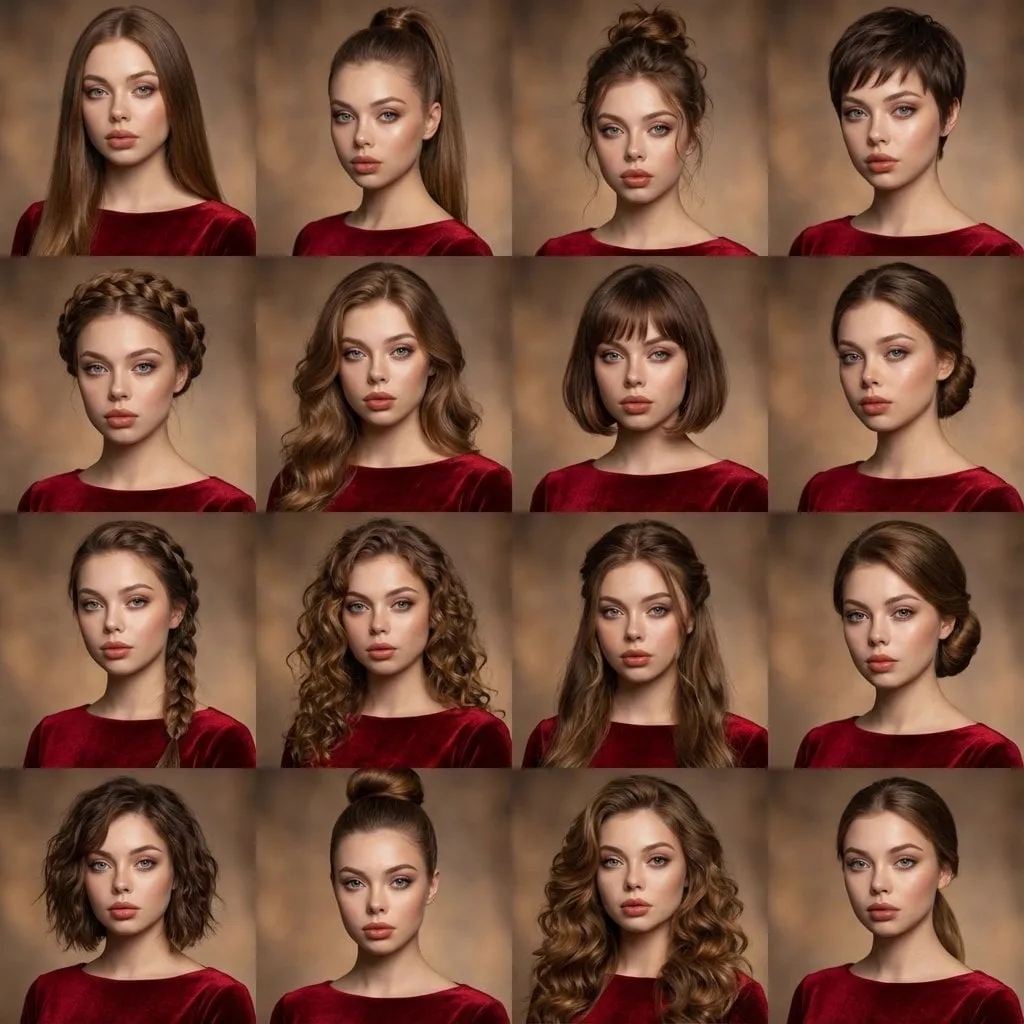
For multi-shot sequences, the key is to keep the same anchor images and reference set across every shot. Use multi-image fusion where your tool supports it: feed the model two or more images of the same character or vehicle so that it can lock identity across generations. If a character appears in several scenes, generate a small set of consistent portraits first and reuse them as inputs.
You should also develop a style sheet — a short text block describing the character's costume, the ship's design language, and the palette — and paste it into every prompt. Repetition is not lazy; it is how you force consistency across a distributed system.
Step 6: Post-Production and Sound
Raw AI generations are rarely final. Grade the footage, stabilize shaky shots, and fix small inconsistencies in a video editor. Audio is the cheapest way to elevate perceived quality: a strong sound design pass — ambience, whooshes, impact sounds — makes a mid-tier visual read as high-tier. Consider using AI audio tools for music and effects, but treat them as creative instruments rather than one-click solutions.
Building a Scene Bible
Professional sci-fi productions run on documentation, and AI workflows benefit from the same discipline. Create a scene bible before you generate a single clip. It should contain four sections:
World rules. Write down the physical rules of your universe. Is gravity normal? Does the technology glow? What colors dominate each planet or station? These rules become the constraints you repeat in every prompt.
Character sheets. For each character, write a two-sentence description plus a costume paragraph. Reuse these verbatim. If you have portrait images, keep them in one folder and reference them as inputs for every shot involving that character.
Location cards. For each environment, write a description of architecture, lighting, palette, and atmosphere. Pair it with anchor images.
Shot list. List every shot you need, with camera move, lens, duration, and the character or location it references. This is your production plan; every generation should map back to a line in it.
The scene bible is what separates a coherent short film from a slideshow of pretty images. It is also what makes AI video feasible for teams, because everyone — human or model — works from the same source of truth.
Prompt Patterns That Actually Work
A few prompt patterns produce consistently better sci-fi output.
The establishing shot pattern: "Wide establishing shot of [location], [time of day], [weather or atmosphere], [lighting], [camera move], [lens look]."
The character pattern: "Full-body shot of [character description], [costume details], [setting], [lighting], [camera angle]." Reuse the same character description verbatim in every shot.
The motion pattern: "Slow [camera move] toward [subject], [subject action], shallow depth of field, [lens]." Motion descriptors like "slow dolly," "orbiting," and "handheld" are understood by most modern models.
The material pattern: "Close-up of [object], [material], [surface detail], [light interaction]." Sci-fi props live or die on material detail, and models respond well to explicit material language like "brushed titanium," "holographic glass," and "weathered carbon fiber."
The transition pattern: "Match cut from [scene A] to [scene B], same lighting, same palette." Transitions are where amateur AI films fall apart; spelling out continuity in the prompt helps the model bridge shots.
Common Failure Modes and How to Fix Them
Characters change appearance between shots. The fix is almost always in the references: build a consistent portrait set, use multi-image inputs, and reuse the same text description.
Motion is too fast or too chaotic. Many models default to energetic motion. Add "slow" and "smooth" to your motion descriptors, and use keyframes to bound the movement.
Physics looks wrong. Choose a model with stronger physical simulation for shots involving liquids, collisions, or gravity. Test the same prompt on two or three models and pick the one whose physics you trust.
Composition is boring. Move away from centered subjects. Specify camera height, angle, and lens. "Low angle," "extreme wide," and "close-up" are not decoration — they are direct instructions.
Everything looks the same. If your shots all share the same grade and framing, your style anchor is too strong and your prompt variety is too weak. Vary the setting, time of day, and lens language while keeping the anchor characters consistent.
Backgrounds drift between shots. Generate the environment as stills first, then use those stills as the base for each shot. A consistent environment is easier to maintain than a consistent character, but only if you treat it as a reference asset rather than letting the model invent it fresh every time.
Frequently Asked Questions
Do I need a powerful computer? No. Modern platforms run models in the cloud; you need a browser and a decent internet connection. Local models exist, but cloud platforms give you access to the best current engines without hardware investment.
How long does a single shot take? It varies by model and length, but a few minutes per generation is typical. Plan your day around iterations, not around individual shots.
Can I use AI video commercially? Yes, in most cases, but check the license of each model and platform. Some models restrict certain commercial uses; read the terms before shipping a paid project.
Is consistency ever perfect? Not yet. You will still do cleanup passes, and a skilled editor is worth more than any model setting. Treat AI video as a collaborator that handles the heavy lifting, not as a finished product.
How do I keep costs reasonable? Budget-friendly models are often good enough for pre-visualization, tests, and background shots. Spend your premium generations on the hero shots that carry the scene, and use cheaper models for everything else.
Should I generate in segments or as one long clip? Segments. Shorter generations are easier to control, retry, and assemble. A 5-to-10 second shot is the sweet spot for most tools; assemble longer sequences in the edit.
A Final Checklist
Before you call a scene finished, run through this list: the style anchor is consistent with the reference pack; every character matches the scene bible; keyframes are locked for hero shots; motion descriptors are explicit; the palette and lighting hold across cuts; sound design has been added; and the clip has been graded in post. If any item fails, fix it before moving to the next scene.
Final Thoughts
Sci-fi filmmaking has always been about the illusion of impossible things made believable. AI video tools have put that illusion within reach of independent creators, but the craft has not disappeared — it has moved. The artists who will win with this technology are not the ones who click generate and hope; they are the ones who build disciplined workflows, who control references and keyframes, who write precise prompts, and who understand that consistency is a production process, not a model feature.
Start small: pick one scene, build a reference pack, generate fifty stills, choose your favorite, and turn it into a ten-second shot. Then do it again. The tools are already good enough. The missing ingredient is the workflow — and you now have one.
