
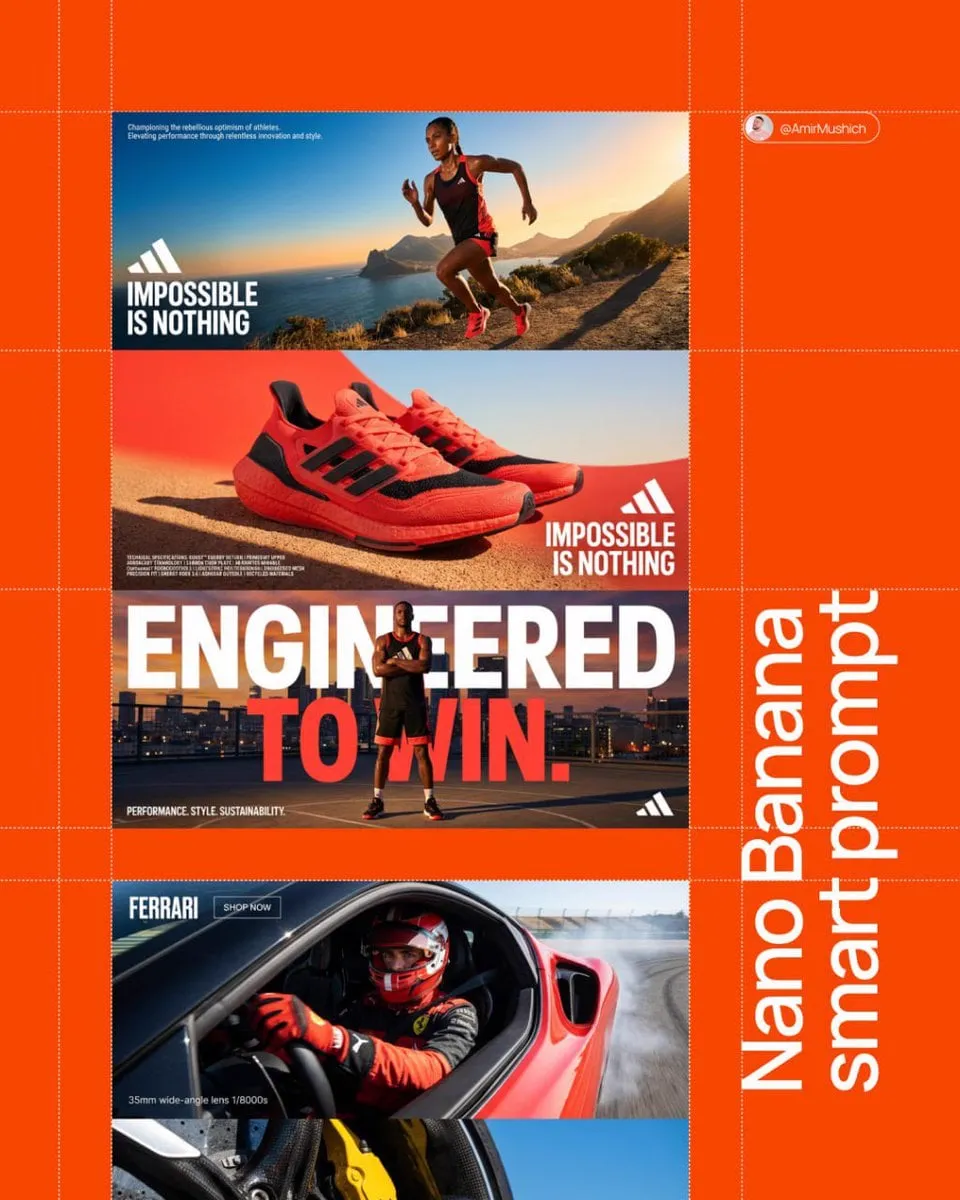
Introduction: Advertising Without a Big Budget
For most small businesses, video advertising used to be out of reach. A single professional production — script, crew, actors, studio, editing — could cost more than the monthly marketing budget. The result was a two-tier market: brands with money could afford video ads, and everyone else had to settle for static images or low-quality clips.
That equation has changed. Generative AI has made it possible to create effective video ads with little or no money. In 2025, the barrier is no longer budget — it is knowledge. The teams and individuals who understand how to combine free tools, well-written prompts, and a clear production workflow can produce ad clips that compete with work made by agencies. This guide walks through the entire process: choosing tools, planning your ad, writing prompts, generating footage, assembling the final clip, and optimizing cost.
Why Free AI Video Ads Are a Real Opportunity Now
The advertising industry has always depended on visual innovation, but high production costs kept that innovation out of reach for most market players. Generative AI changed the math in three ways:
- Cost: Free tiers and affordable plans make experimentation nearly free. You can test dozens of creative directions without spending on production.
- Speed: What took weeks now takes hours. A campaign idea can go from concept to finished clip in a single work session.
- Scalability: Once a workflow is established, producing variants for different audiences or platforms is a matter of prompting, not reshooting.
Market data supports the trend: a large majority of marketers say they plan to increase their use of AI-generated video, driven by its ability to cut content production costs dramatically. The opportunity is real — but it rewards people who work systematically, not people who just click "generate" and hope.
Step 1: Define the Concept and Write the Ad Scenario
Every good ad starts with a clear brief. Before touching any tool, answer these questions:
- What is the product or service? What problem does it solve?
- Who is the target customer? What do they care about?
- What is the single message? One ad, one message. Trying to say everything means saying nothing.
- What is the call to action? Visit the site, buy now, sign up, follow?
Write a short scenario: a beginning (hook), a middle (the message or demonstration), and an end (call to action). For a 15–30 second ad, keep it to three or four beats. Example: (1) close-up of a problem — tangled cables on a desk; (2) product reveal — a cable organizer; (3) benefit — clean desk, happy user; (4) call to action — "Get yours today."
This scenario is your script. It guides every prompt you write and every edit you make.
Step 2: Master Prompt Writing for Ad Videos
The quality of AI-generated video depends heavily on how you describe the scene. A vague prompt produces generic footage; a specific prompt produces usable footage. Structure your prompts with these elements:
- Subject: exactly what appears — product, person, object. Be specific about appearance, color, and details.
- Setting: where the scene takes place — kitchen, studio, city street, abstract background.
- Action: what happens — pouring, opening, walking, zooming. Describe motion clearly.
- Camera: shot type and movement — close-up, wide shot, slow push-in, aerial.
- Lighting and mood: soft morning light, dramatic neon, clean studio light.
- Style: photorealistic, minimalist, cinematic, 3D render.
A good ad prompt example: "Photorealistic close-up of a sleek black coffee maker on a marble counter, steam rising, warm morning light from the side, slow push-in, cinematic depth of field, clean and premium mood." Compare that to "coffee machine" — the first gives the model everything it needs to produce an ad-quality frame.
Write prompts in a template format and reuse them. Build a small library of prompt templates for recurring needs: product hero shot, lifestyle scene, before-and-after, abstract background. This turns prompting from an art into a repeatable process.
Step 3: Choose Your Toolchain
No single tool does everything, and the best approach is a combination:
- Video generation: modern text-to-video and image-to-video tools turn your prompts into clips. Free tiers exist on most platforms, with daily or monthly limits.
- Image generation: for thumbnails, keyframes, and reference images. Some video tools accept a generated image as the starting frame, which gives you more control over the result.
- Editing: a simple timeline editor (mobile or desktop) for assembling clips, adding text, captions, music, and transitions.
- Audio: tools for music, voiceover, and sound effects. Even free stock audio libraries work well.
The key principle: use each tool for its strength and keep the workflow simple. More tools mean more complexity, not necessarily better results.
Step 4: Generate with Strategy
Random generation wastes your free quota. Generate with a plan:
- Generate more than you need. Ten clips give you a better chance of two usable ones.
- Use keyframes for control. Generate or select a strong opening image, then ask the video model to animate it. This keeps the product recognizable.
- Keep reference images of your product. If the model supports multiple reference images, use them to keep the product consistent across clips.
- Check every clip. Look for obvious errors: distorted text, deformed hands, products that change shape. Reject and regenerate rather than "fixing it in post."
Remember that a single ad is usually assembled from several short clips. You do not need one perfect long video — you need three or four good moments cut together.
Step 5: Assemble, Add Sound, and Polish
Editing is where the ad comes together. Follow the scenario from Step 1:
- Cut clips to the rhythm of the music. Cuts on the beat create energy.
- Add text overlays for the hook and the call to action. Keep text short — one message per screen.
- Add captions if there is a voiceover; many viewers watch without sound.
- Use music that matches the mood of the ad. For product demos, clean and upbeat; for luxury products, calm and elegant.
- Keep the first second strong. The hook decides whether anyone sees the rest.
Polish does not mean effects. It means clean cuts, readable text, good sound, and correct pacing.
Step 6: Optimize Cost and Get More "Free" Output
Free tools come with limits — daily generation caps, resolution limits, watermarks. Here is how to work with them:
- Plan batches: generate all the clips for an ad in one session, then edit, rather than generating one clip at a time.
- Use cheaper or faster models for tests and drafts. Save premium generation for the final hero shots.
- Use image-to-video workflows when possible. Animating a good image often costs less than full text-to-video generation and gives you more control.
- Take advantage of community and training features: many platforms reward users who contribute or train models with bonus allowances or extra free generations. This is a legitimate way to extend free capacity.
- Track your usage. Know what each clip costs in your quota so you can decide where to spend it.
The goal is not to be free forever — it is to validate ideas cheaply and invest only when a direction shows promise.
Step 7: Test, Measure, and Iterate
A video ad is a hypothesis, not a final product. After publishing, measure:
- Hook performance: did viewers stay past the first few seconds?
- Completion: did people watch to the call to action?
- Clicks and conversions: did the ad drive the desired action?
Run variants: change the hook, change the music, change the offer. Let the data decide. The systematic teams that test multiple variants consistently outperform teams that polish a single idea forever.
Example: Building a 20-Second Product Ad
Let's put the whole workflow together with a concrete example. Suppose you sell a small leather wallet and want a 20-second ad for social media.
- Scenario: (1) hook — a close-up of the wallet sliding out of a pocket; (2) problem — a desk covered in loose cards and coins; (3) reveal — the wallet holding cards, cash, and coins in one slim package; (4) call to action — "Carry less. Live more. Shop now."
- Prompts: for the reveal shot, write a specific prompt — "Photorealistic close-up of a slim brown leather wallet on a wooden table, cards neatly stacked inside, soft natural window light, shallow depth of field, slow push-in, premium mood." Generate it in a batch with three or four variations.
- Reference images: use photos of the actual wallet from three angles as references so every clip shows the same product. This is the consistency step most beginners skip.
- Assembly: cut the four beats to an upbeat track, add a bold hook text for the first second, captions throughout, and the call to action at the end.
- Review: watch on a phone. If the first second is not compelling, replace the hook clip and test again.
This entire process — from brief to a first finished version — fits in a single afternoon using free tiers and a simple editing app. The discipline of the scenario is what makes it an ad; the tools just execute it.
Building a Repeatable Template Library
The fastest way to scale is to stop writing prompts from scratch. Build a template library as you work:
- A hero shot template: subject, lighting, background, camera move.
- A lifestyle scene template: setting, action, mood, characters.
- A before-and-after template: two scenes, transition style, overlay text.
- A call-to-action end card template: layout, colors, font style.
Every time a prompt produces a great result, save it as a template with the prompt text and a note about what worked. Over a few weeks, you will have a library that lets you produce a new ad in minutes instead of hours. The library is your accumulated skill, stored in a reusable form.
Common Mistakes
- Skipping the scenario. Generating without a brief produces random footage that does not sell anything.
- Vague prompts. "Nice product video" gives you nothing usable.
- Ignoring audio. A silent ad or badly mixed sound loses viewers instantly.
- Overloading text. Too much text per screen overwhelms viewers.
- Giving up after one generation. The first output is a draft, not a result. Iterate.
- Forgetting legal basics. Do not use protected characters, real people without permission, or misleading claims.
FAQ
Can I really make a good ad completely for free?
Yes, for testing and even for launch campaigns, using free tiers of generation tools, free editing apps, and free stock audio. The limits are time and skill, not money.
How long should a video ad be?
For social platforms, 15–30 seconds is the sweet spot. For display and paid channels, follow the platform's recommended lengths. Short is not automatically better — the message must fit the length.
Do I need a voiceover?
No, but it helps. Text overlays and captions work for silent viewing, which is the default on many platforms. A good voiceover adds emotion, but only if it is clear and well-mixed.
Will AI-generated ads look cheap?
They will if the prompting is lazy. With specific prompts, consistent references, good editing, and proper audio, AI-generated ads can look professional. The craft is in the workflow, not in the tool.
What about paid tools — should I upgrade?
Only after you have validated a workflow with free tools. When you know exactly what premium features you need, upgrading is a clear ROI decision. Upgrading without a workflow is just spending.
How do I know if an ad idea is good before investing time in it?
Test the message cheaply first: write the hook text, pick a strong thumbnail image, and run it as a simple image or text ad with a small budget. If the click-through rate is promising, produce the full video version. Let the cheapest possible test guide your production spend.
Conclusion
Creating free video ads with AI is a skill, and like any skill, it improves with practice and system. Define the message, write a scenario, master prompt templates, generate with strategy, assemble with care, and let data guide the next version. The combination of free tools and a disciplined workflow puts video advertising within reach of any business — no agency, no studio, no big budget required. What is required is the willingness to learn the process and iterate until the ad works.
