
Introduction
Every marketer has felt the same frustration: the campaign is solid, the budget is approved, the targeting is clean, and then the creative lands with a thud. Nobody stops scrolling. The video plays for two seconds and dies. The problem was never the strategy on paper; it was the video itself. In 2025, attention spans are measured in fractions of a second, and the ad creative is the single highest-leverage variable in any campaign. You can fix your targeting later, but if the video does not earn the first three seconds, nothing else matters.
This playbook is about creating ad videos that actually stop the scroll and hold attention long enough to convert. It covers the formats and platforms that matter, the storytelling techniques that work in short-form, the AI production tools that let small teams move at the speed of large ones, and the testing and optimization loops that separate winning campaigns from expensive experiments. The goal is not to admire technology; it is to build a repeatable process that produces better ads, faster, with less waste.
The 2025 video advertising landscape
Short-form video has stopped being a trend and become the default. TikTok, Instagram Reels, and YouTube Shorts now dominate viewing time on every platform that matters. The implication for advertisers is uncomfortable but clear: the formats that worked for television, and even the longer native videos that worked five years ago, are losing effectiveness. Users do not watch ads out of patience; they watch them because the first frames convinced them it was worth their time.
Several forces are compounding the pressure. First, video marketing spend keeps growing while average attention keeps shrinking. Second, the cost of producing high-quality video is falling because of generative AI, which means the bar for what looks "professional" has risen while the barrier to entry has dropped. Third, platforms are rewarding content that keeps people inside their ecosystem, which favors native, mobile-first, vertical video over repurposed horizontal assets. If your ad looks like a television commercial squeezed into a phone screen, the algorithm and the viewer will both punish you.
The practical takeaway is not to panic about every new format. It is to design your creative workflow around the reality that you will need many versions, in many aspect ratios, for many audiences, and you will need to refresh them constantly. A pipeline that can produce and test variations cheaply is no longer a luxury; it is the minimum viable setup for competitive advertising.
Why the first three seconds decide everything
The hook is not a stylistic choice; it is a survival mechanism. Viewers scroll with their thumbs and decide in the first moments whether a video deserves their attention. If the opening frames are a logo, a slow fade-in, or a generic product shot, you have already lost most of the audience. The hook has one job: create a reason to keep watching. It can be a surprising visual, a bold claim, a question that creates curiosity, a movement pattern that breaks the feed, or a direct statement of the problem the viewer is feeling.
Effective hooks tend to share a few properties. They are specific rather than vague. "Your ads are wasting money" is weaker than "You are paying for impressions that nobody sees." They create a gap between what the viewer knows and what they want to know. They match the medium: on mobile, text overlays matter because many people watch with sound off, so the first frames should communicate even in silence. And they connect emotionally or practically to the viewer within seconds, not after a long setup.
One practical technique is to write the hook before you write anything else. Draft five to ten opening variations for every ad concept, then test the strongest ones. The hook is also where AI tools earn their keep: you can generate multiple visual openings cheaply, with different subjects, lighting, and camera moves, and let the data decide. What you cannot do is treat the hook as an afterthought that gets bolted onto a finished video.
The creative foundation: consistency and variety
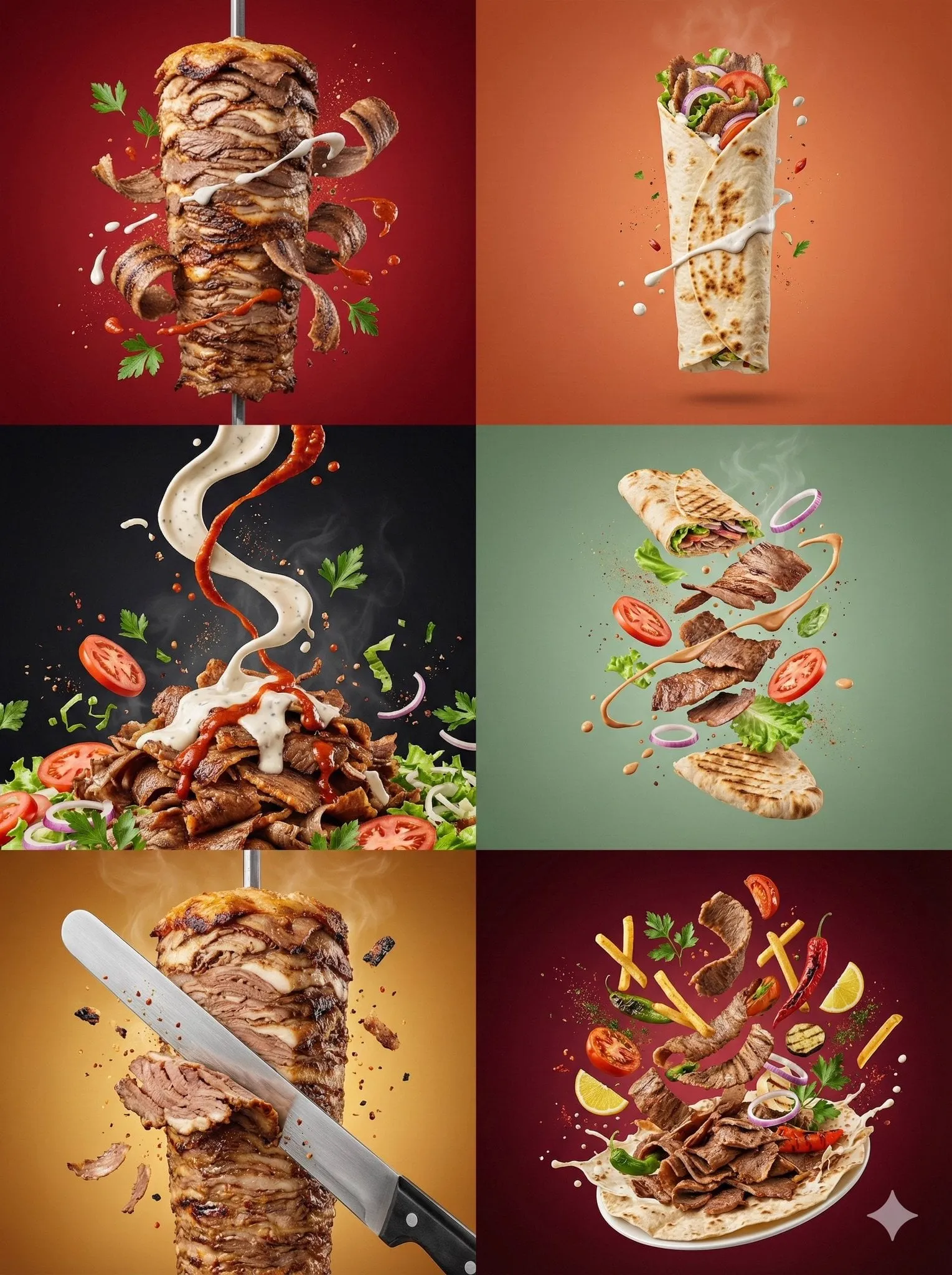
The biggest mistake in AI-assisted advertising is using one model for everything and hoping for the best. Different creative problems need different tools. A product shot with realistic textures benefits from a model known for photorealism. A stylized brand world needs something with strong aesthetic direction. A campaign that runs across many assets needs visual consistency, which is exactly where single-model pipelines tend to fail.
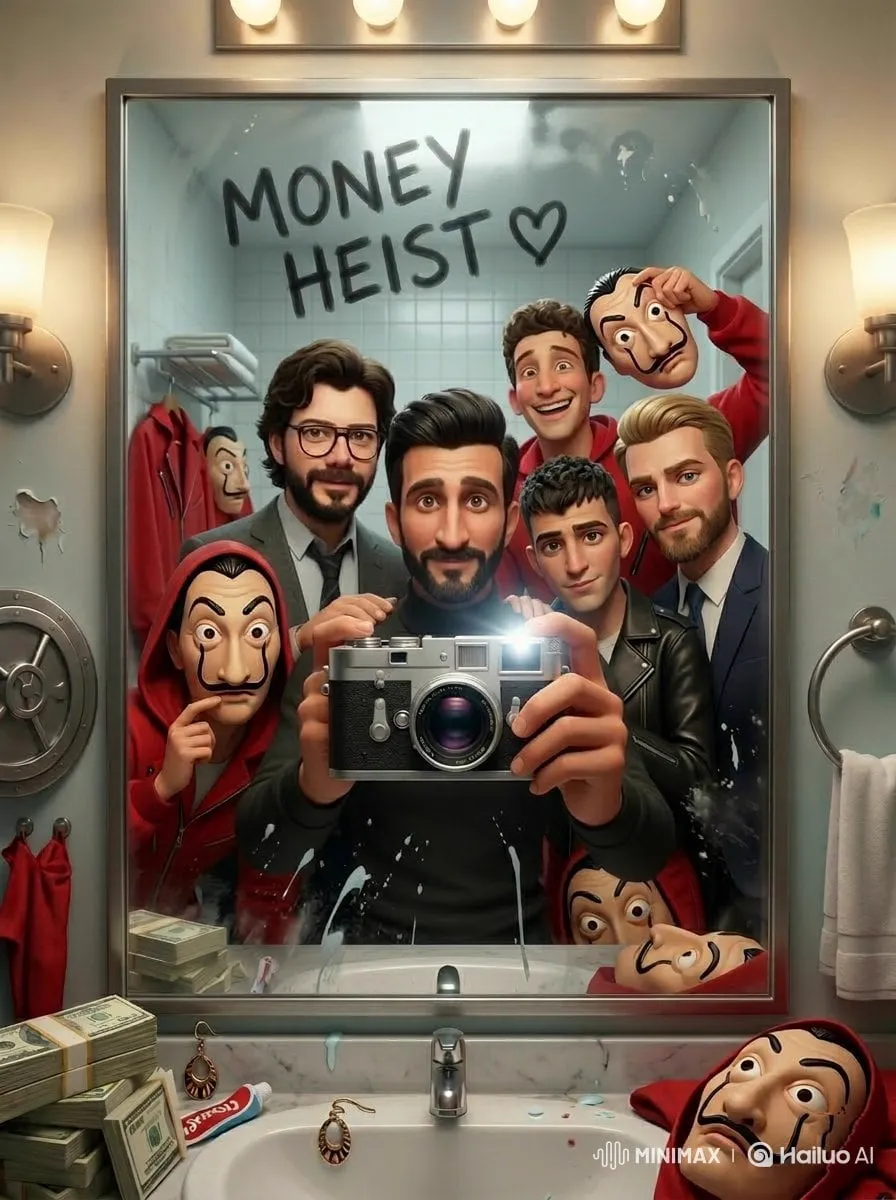
The key concept here is visual consistency: the same product, character, or brand identity should look the same across every frame, scene, and asset in the campaign. Viewers notice inconsistency even when they cannot name it, and it quietly destroys trust. In practice, consistency is achieved through reference images, keyframes, and careful prompt discipline rather than by describing the product with words and hoping the model remembers. Feed the model a strong reference of the product and the character, lock the lighting direction, and keep the prompt language stable across variations.
Variety is the other half of the equation. A campaign that shows the same shot ten times gets ignored ten times. The most effective AI-assisted workflows generate families of variations: different angles, different settings, different emotional tones, different hooks — all sharing a consistent core identity. This is the pattern that wins: one brand truth, many executions.
Building the creative pipeline
A practical ad video pipeline has four stages: concept, production, variation, and optimization. Each stage has its own tools and its own pitfalls.
Stage one: concept
Start with the offer, the audience, and the single message you want to land. Write the hook variations, sketch the story arc, and decide on the emotional register. This stage is cheap, so spend real time here. The best AI production in the world cannot rescue a weak concept.
Stage two: production
Generate the core visual assets. For product-led ads, start with a strong hero image or keyframe, then animate it. For story-led ads, build the scene list and generate each scene with a consistent reference set. Keep the technical parameters disciplined: resolution, aspect ratio, lighting description, and camera movement should be specified in the prompt or the tool settings, not left to chance.
Stage three: variation
Turn the winning concept into a family of assets. Generate multiple hooks, multiple durations, multiple aspect ratios for different placements. This is where AI changes the economics of advertising: a team that could previously afford three versions can now test thirty. The goal is not to spam the feed with near-duplicates; it is to explore a deliberate space of differences — different openings, different CTAs, different emotional tones — while keeping the brand consistent.
Stage four: optimization
Ship the variations, measure performance, and feed the results back into the next round of production. Track the metrics that actually reflect campaign health: hook retention, watch-through rate, click-through rate, and cost per conversion. Use the data to decide which hooks, styles, and messages get more budget, and which get killed. The output of one cycle is the input of the next.
Storytelling techniques that work in short-form
Short-form storytelling is not television storytelling compressed; it is a different craft. The classic three-act structure collapses into a single beat: a promise, a payoff, and a reason to act. The promise is the hook. The payoff is the moment that delivers on it. The reason to act is the CTA, and it works best when it feels like the natural next step rather than an interruption.
A few techniques consistently outperform. First, show the transformation: before and after, problem and solution, ordinary and extraordinary. The transformation is the most reliable emotional engine in advertising because it is concrete and visual. Second, use motion deliberately: sudden cuts, camera pushes, and speed changes create rhythm and hold attention, but they must serve the story rather than decorate it. Third, let the product act: instead of describing what the product does, show it doing it. Fourth, close with a clean, specific CTA that tells the viewer exactly what to do next.
Character and style consistency matter in storytelling ads more than anywhere else. If the same character appears in scene one and scene four with a different face or outfit, the story breaks. This is why reference-driven generation is so important for narrative work: the character's identity must be locked before you generate the scenes, and re-checked at every stage.
Distribution: matching format to platform
Each platform has its own grammar, and the same creative asset rarely works everywhere without adjustment. Vertical 9:16 is the native shape for TikTok, Reels, and Shorts, and it is where most attention lives. Feed-style placements favor hooks that work in silence, with bold text overlays. Stories and spotlight placements are even shorter and more ephemeral, so the message must be instant. In-feed longer placements give you more room for storytelling but demand stronger retention throughout.
The practical approach is to design for the most restrictive format first — the vertical, sound-off, three-second version — and then extend it. If the core concept survives the hardest constraint, it will survive the easier ones. Keep the master asset flexible: generate in high resolution and export in multiple crops, rather than generating once in a horizontal frame and hoping the crop works.
Audio is a different kind of asset. Many viewers watch with sound on, and the right music, voice, or sound design multiplies the emotional impact. But because so many viewers watch muted, the visual must carry the message alone. Build the video so it works twice: once with audio, once without.
Testing, iteration, and personalization
The difference between a good campaign and a great one is usually not a single brilliant video; it is a testing system that finds the winning variation and then compounds it. Start with a structured test: a clear hypothesis, a small number of controlled variations, and a defined success metric. Change one variable at a time — the hook, the CTA, the visual style — so you know what actually moved the numbers.
A/B and multivariate testing become dramatically more powerful when production costs are low. With AI, you can test multiple hooks against each other in days rather than weeks. The winners get more production budget; the losers get cut. Over time, the same discipline that product teams apply to feature development — build, measure, learn — becomes the rhythm of your creative team.
Personalization is the frontier. The same product can be presented differently to different audience segments: different pain points, different cultural references, different visual styles. AI makes segment-specific creative affordable because each variation is a small incremental cost instead of a full production. The data you already have about your customers — their problems, their language, their context — becomes the input for creative that feels individually relevant rather than broadcast.
Using AI video tools without losing your brand
AI production tools are a means, not a message. The brands that win with AI are the ones that use it to express a clear identity more consistently and more cheaply, not the ones that use it to produce generic "AI-looking" content. Keep your brand's visual language in control: reference images, color palettes, typography, and tone of voice should be defined before the generation starts, and the output should be reviewed against those standards.
A few rules keep the process clean. Always review generated output before it ships; AI errors — extra fingers, garbled text, broken geometry — are still common enough that blind automation is risky for public-facing ads. Keep the prompt language consistent across a campaign so the style does not drift. Archive your winning prompts and reference sets, because they are now part of your brand system. And be honest about the limits: generative tools are excellent for exploration and variation, but hero assets for major campaigns may still deserve human art direction and retouching.
Measuring what matters
Creative teams love vanity metrics, and advertising rewards them with comfortable lies. Impressions tell you how much you spent, not how well you spent it. The metrics that matter are the ones that track the viewer's actual behavior: hook retention in the first seconds, watch-through rate, click-through rate, conversion rate, and cost per acquisition. A video with a great hook but a weak CTA will show up in the retention data; a video with a weak hook will never get the chance to show anything.
Set up the measurement before you launch the campaign, not after. Decide the primary success metric, the minimum viable sample size, and the decision rule for killing or scaling a variation. Then run the loop: launch, measure, learn, produce the next round. The teams that win are not the ones with the best single video; they are the ones with the best loop.
A sample workflow for a product launch
To make this concrete, here is a realistic workflow for a product launch campaign. Start with the product truth: what problem it solves, for whom, and what makes it different. Write ten hooks; pick four. Build the hero keyframe from the product reference, then generate the core scenes. Produce three versions: a 6-second vertical teaser, a 15-second story cut, and a 30-second longer narrative for placements that allow it. Add text overlays for sound-off viewing, and add a clean CTA on the final frame. Launch the four hooks as a controlled test on the primary platform. Let the data pick the winner, then scale it and generate fresh variations of the winning direction. Document everything — prompts, references, metrics — so the next campaign starts from a higher baseline.
Common mistakes and how to avoid them
The most common mistakes in AI-assisted ad production are predictable. Using one model for every job ignores the fact that different tools have different strengths. Over-prompting produces chaotic results; a prompt that lists forty details often performs worse than one that specifies the subject, the action, the setting, and the style. Ignoring consistency produces a campaign that feels disconnected. Forgetting the sound-off viewer produces videos that die silently. Testing without a hypothesis produces data you cannot act on. And shipping generated output without review produces brand damage that is expensive to repair.
None of these mistakes are fatal if you build the process to catch them. Reference sets, prompt templates, review checkpoints, and a simple testing framework cover most of the risk. The discipline is the same as in any craft: control what you can, measure what you cannot control, and iterate.
Frequently asked questions
How many ad variations should I test?
Start with four to six genuinely different variations — different hooks or different visual directions — rather than twenty near-duplicates. The goal is signal, not volume. Once you find a winning direction, generate fresh variations of that direction.
Do I need a big team to produce AI video ads?
No. The main requirement is a clear process and strong references. Small teams and even solo marketers can run a competitive production pipeline with the right tools and a disciplined workflow. The bottleneck is usually concept quality and review, not raw production capacity.
Should I worry about viewers recognizing AI-generated ads?
Viewers care about whether the ad is relevant and interesting, not about the tool used to make it. Generic AI output feels generic; well-crafted output, whatever the tool, feels professional. Invest in art direction, consistency, and review, and the "AI look" becomes a non-issue.
What is the most important metric for ad creative?
Hook retention in the first three seconds is the gatekeeper. If viewers leave immediately, nothing else matters. After that, watch the watch-through rate and the conversion metric that matches your campaign goal.
Can the same video work on every platform?
Rarely, without adjustments. Design for the most restrictive format — vertical, sound-off, short — and then adapt. Export in multiple crops and add platform-appropriate overlays and CTAs rather than shipping one asset everywhere.
Conclusion
Creating ad videos that stop the scroll is not about a single secret; it is about a system. Hook first, consistency throughout, variation at scale, and measurement that feeds the next cycle. Generative AI has lowered the cost of production dramatically, and the teams that benefit are the ones that build the loop: concept, production, variation, optimization, repeat. Start with one campaign, run it through the full loop, and let the data teach you. The next campaign will be faster, cheaper, and better — and that compounding improvement is what separates winning advertisers from the rest.
