
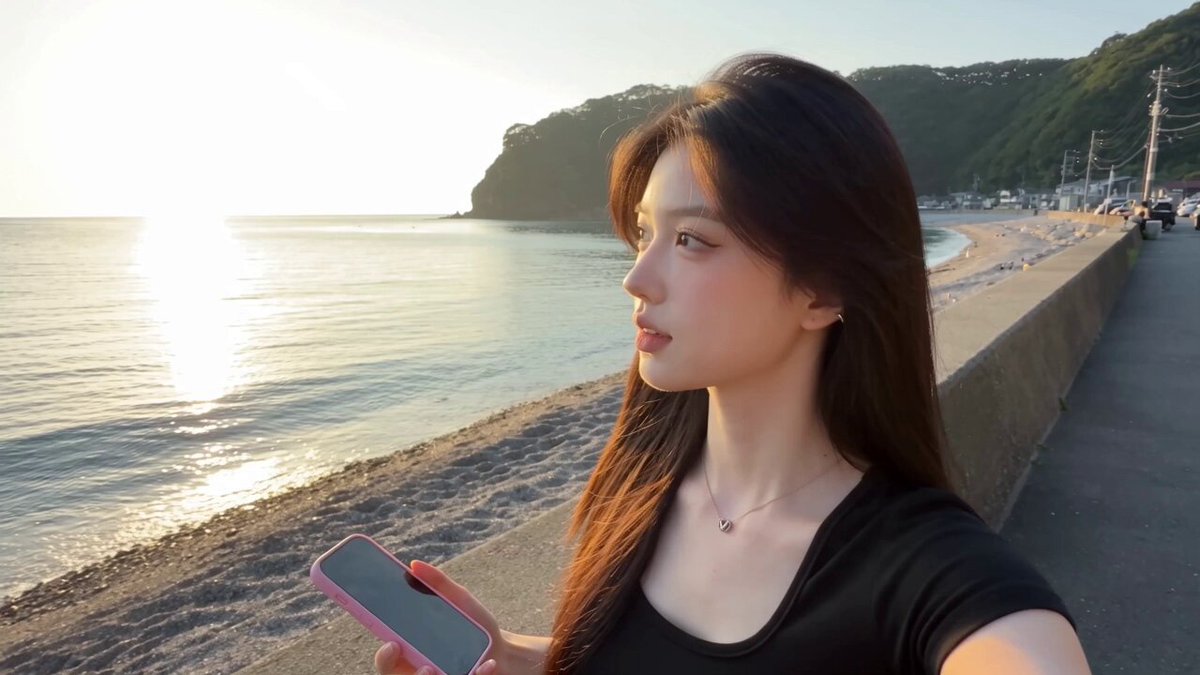

For most of film history, the filmmaker's dream of building unlimited visual worlds was constrained by budget, location, and weather. A single convincing establishing shot could require a production team, permits, and travel. That constraint is precisely what generative AI is dissolving. When a computer can render a photorealistic scene from a written description, the camera, the set, and the location become optional. This is not a distant fantasy; it is a working reality with practical techniques that creative teams are already using. This guide explains the technology, how to write prompts that produce convincing realism, and how to build a reliable workflow without owning a single camera.
The shift from stills to living scenes
The first wave of generative imaging delivered high-quality stills, beautiful but frozen. The current frontier is dynamic: coherent, moving video where the realism has to hold across every frame. This is genuinely harder, because a model must not only render a convincing image but also keep lighting, texture, and object identity stable as the scene moves. A flickering background or a character whose face changes mid-shot instantly destroys the illusion.
The practical consequence is that generating a photorealistic scene is now about motion, not just appearance. A good result requires the model to understand physics at a shallow level: how cloth drapes, how light hits skin, how depth of field behaves when the camera focuses. The better the model handles these cues, the more believable the scene.
This shift matters to a wide audience. Marketers can build product visuals without a studio, indie filmmakers can block out scenes before spending money on a real shoot, architects and designers can illustrate concepts, and educators can visualize ideas that have no physical referent. The creative industry is being reorganized around the idea that realism is a parameter you ask for, not a budget you raise.
How the technology gets realism right
Several building blocks combine to produce photorealistic output. At the core are models trained on enormous datasets of real images and video, from which they learn the statistical relationships of light, texture, and geometry. Pure data alone is not enough; the architecture must be able to generate coherent sequences of frames and respect the prompt.
Core technologies behind visual precision
The modern stack usually combines a text encoder, which understands your description, with a diffusion-based generator that turns noise into images through iterative refinement. For video, a temporal component extends this process across frames, keeping the appearance consistent while allowing motion. Guidance mechanisms let you steer the result toward faithfulness to the prompt or toward diversity, and control terms let you constrain camera movement, composition, and other cinematic parameters.
What separates a good production tool from a toy is the ability to control these signals without fighting the model. When a model respects camera language, depth, and motion, an editor can direct a scene rather than merely hope for a good random outcome.
The essence of prompt engineering for realism
Prompt craft is where many photographers-turned-AI-users excel, because they think in photographic language. Describe the lens, the setting, the time of day, the lighting, and the mood as if briefing a shoot. Be specific about the subject, its position, the environment, and the camera behavior. A prompt like "a cinematic close-up of a woman in golden-hour light, shallow depth of field, 85mm lens look, soft bokeh" will produce much more realism than "a woman outdoors."
Negative prompts are equally valuable: telling the model what to avoid, such as distortion, extra limbs, or flat lighting, sharply improves quality. And a small set of stylistic anchor words, like cinematic, photorealistic, or natural light, consistently nudges output toward believability.
The role of consistency in storytelling
Realism matters most when you are telling a story, because viewers subconsciously expect continuity. If a character's face shifts, an object changes position, or a scene's lighting jumps, the illusion breaks. Consistency techniques, such as multi-image reference fusion and character-consistency controls, let you lock a subject's identity across scenes. Combined with scene-consistency tools, they make it possible to maintain a coherent visual world over an entire sequence, which is what turns isolated realistic clips into narrative film.
Building without a set: the practical creative workflow
A camera-free production still follows the logic of a real shoot, just rearranged. You begin with concept and script, then translate ideas into visual language, generate and curate, and finally assemble and refine. The discipline of a traditional pipeline pays off.
Start by writing a clear creative brief: what are you trying to show, and to whom? From there, break the concept into individual shots and describe each one with the photographic language discussed above. Generate multiple candidates for each shot rather than accepting the first result. Curate ruthlessly, keeping the versions where realism, composition, and story align.
Once you have the shots, assemble them into a sequence and check for cross-scene consistency. Apply color and grading to unify the look, add audio, subtitles, and a soundtrack, and review the result on the same device your audience will use. Iteration is normal; the good shots emerge from a loop of generation, review, and revision.
A worked outline for a product visual
Imagine you need a hero image for a new sofa. Instead of renting a studio, you write a brief: modern living room, golden evening light, minimalist light-wood interior, the sofa as the emotional centerpiece, a coffee cup on the table, shallow focus. You generate a few candidates, reject the ones with warped fabric or awkward perspective, and pick the strongest. Then you create matching video for a short promo, keeping the same room and lighting so the still and the video read as one brand asset. This is a realistic example of how a small team can compete with a full production without owning equipment.
When photorealism is not the goal
Not every project calls for realism. Stylized animation, pictorial looks, and graphic treatments are often more effective for certain messages and more forgiving of imperfections. Decide the style before you generate, and steer the model accordingly. Understanding when to pursue realism and when to choose an illustrative style is part of the craft. A brand with a playful identity may achieve far more with clean vector-style visuals than with photorealistic renders.
Controlling camera and direction
Once you can control camera language, AI generation becomes a directing tool rather than a lucky lottery. The ability to specify an aerial shot, a handheld feel, a slow push-in, or a locked tripod frame gives your output a deliberate point of view. Use explicit motion descriptions and keep them short; overwriting the motion can confuse the model.
You can combine camera control with reference imagery. If you have a real set, a still photograph of the location can anchor the generated scene, giving you both the realism of the actual space and the flexibility to add elements. Hybrid workflows, real references plus generative variation, are often the most reliable way to build trust in the results.
Good practices and common pitfalls
Keep a studio mindset even without a studio. Maintain a consistent "hero" for your subject and reuse effective prompt patterns. Document what works in a prompt library, because a set of vetted descriptors will save you hours on future projects.
Be wary of body and detail errors with human subjects; hands, faces, and clothing seams are common weak points. Generate at sufficient resolution and inspect close-ups. Use negative prompts to suppress common artefacts, and regenerate rather than trying to fix a deeply flawed frame in post production.
Plan for delivery from the start. Choose aspect ratios, resolutions, and formats that fit where the content will appear, and generate the final versions in the right format instead of rescaling later. A little planning prevents embarrassing quality drops at publication.
Iteration, not perfection
It is worth repeating that the best results come from rapid iteration. Generate, inspect, adjust the prompt, and regenerate. Keep the seed or reference when a result is close and you only want a small change. Over time you will build a mental model of how the tool reacts to language, and your first-pass hit rate will climb steadily.
Resolution, detail, and realism
Realism is partly a matter of resolution and detail. A low-resolution output may look smooth at a distance but falls apart when a viewer zooms in on a face, fabric, or fine text. For scenes that will be inspected closely, or displayed large, generate at the highest resolution your workflow supports from the start. Upscaling a small image afterwards can improve apparent sharpness but cannot invent the fine detail that was never there.
Detail matters most in the areas the human eye reads hardest: eyes, hands, hair, fabric seams, and natural texture like wood grain or skin pores. When you are inspecting candidates, zoom into these zones rather than just admiring the overall composition. A scene that looks right in a thumbnail but breaks on close inspection will be a problem in any professional context.
There is also a tension between detail and speed. Detailed renders cost more compute and take longer. Decide a detail budget for each project: a hero asset deserves the full pipeline, while a background plate or a quick draft may be fine with a faster pass. Matching detail to the asset's role keeps your workflow efficient without compromising the scenes that matter.
Blending real and generated footage
The most dependable realism often comes from a hybrid approach. You combine real reference material with generative variation instead of relying on the generator to invent everything. A photograph of a real location, a product, or a person can anchor a generation, giving it a photographic base that the model then extends or restyles. This reduces the risk of the model inventing plausible-but-wrong details from scratch.
Hybrid workflows shine on real commercial work where accuracy matters. A brand using its actual product photography as the base can generate background variations, new angles, or seasonal looks while keeping the product faithful. An architect can start from a real site photo and imagine how the completed building would look. The reference keeps the result grounded while the generator supplies the reach.
The skill here is managing the mix. A good reference eliminates hallucinated structure; too much generation on top of it drifts back toward the abstract. Start with a strong, clean reference, generate conservative variations, and only push toward wilder changes when the direction is confirmed. This balance is what makes hybrid workflows trustworthy for paying clients.
A practical starting point
Do not wait until you understand the entire field before you begin. Pick one well-regarded tool, write a single clear prompt, and accept the first few results with whatever imperfections they carry. Then improve from there: add a negative prompt, lock a style word, use a reference image, and compare the outcome. Five short projects will teach you more than reading about dozens of models.
Set yourself a simple goal for each experiment, whether it is holding a character consistent, controlling the light, or nailing a camera move. Write down the prompt and settings that worked. In a short time you will have a personal playbook, and the intimidating field will resolve into a set of familiar, reliable moves you can call on without hesitation.
Frequently asked questions
Do I need to own a camera or a set at all? For fully AI-generated content, no. Many workflows still blend AI output with real footage, but a complete AI pipeline needs no camera.
Can AI match true photographic quality? With premium models and careful prompts, output is often indistinguishable from photography for many scenes, though complex human subjects and motion remain the hardest.
How do I keep a character looking the same across scenes? Use character-consistency and multi-image reference fusion features that anchor identity, and keep settings stable across related shots.
Will AI replace photographers and filmmakers? It will change how much is shot versus generated, but art direction, narrative, judgment, and taste remain human work. AI is best treated as a powerful assistant to those skills.
Is AI-generated content safe to use commercially? Generally yes, but check each tool's terms and be mindful of rights when depicting recognizable people or brands.
What is the single most important skill to learn first? Writing precise, intentional prompts. Everything else follows from your ability to describe a scene so the model knows exactly what to build.
