
![[product], luxury product hero shot, dark velvet background, single spotlight...](https://storage.brightvectorlabs.com/prompts/bright/product-and-brand/2012919379575570766-0.webp)
Video marketing has become the center of gravity for almost every modern brand, and artificial intelligence has completely changed how that video gets made. What once required a production crew, expensive equipment, weeks of editing, and a large budget can now be produced in hours by a small team. The result is both an opportunity and a problem: opportunity, because almost anyone can now publish compelling motion content; problem, because the algorithm feeds and feed everyone swim in now look eerily similar. This is exactly why creative thinking matters more than ever. The tools have leveled the playing field, but originality is still a human choice.
This guide is written for marketers, founders, social media managers, and creators who want to use AI video tools strategically. It is not a tool review and it is not a list of prompts to copy and paste. Instead, it gives you a set of reusable ideas, workflows, and decision criteria that will help you produce video that is fast, consistent, on-brand, and genuinely interesting. Whether you run a two-person ecommerce brand or a content team at a mid-sized agency, the frameworks below will help you move from scattered experimentation to a repeatable pipeline.
Why Creative Video Ideas Broke Open in the Last Few Years
For a long time, video production was a bottleneck. You needed a camera, lighting, actors or presenters, a place to shoot, and editors who understood pacing, sound design, and color. Every one of those steps introduced cost and delay. Generative AI flipped the economics. Text-to-video and image-to-video models now understand composition, movement, lighting, and even narrative continuity far better than they did even a year earlier. Businesses that were previously priced out of video are now producing daily short-form content for social platforms.
But democratization has a side effect. When everyone has access to the same models, creative differentiation has to come from ideas rather than from access. The brands that stand out are not the ones with the newest tool; they are the ones with the strongest concept, the clearest visual identity, and the discipline to use the tool consistently across a whole campaign rather than as a series of one-off experiments.
The numbers point in the same direction. Businesses have steadily shifted their budgets toward short-form video because it delivers engagement, brand recall, and conversion at a lower cost than many other formats. AI does not replace the strategy behind video marketing. It replaces the tedious, repetitive parts of production. That is the mental model to hold onto: the strategy writer, the art director, and the editor all still have essential jobs. The AI is the intern who works very fast and never complains.
Designing Cohesive Visual Stories Across a Campaign
The single most common failure in AI-generated video marketing is inconsistency. You generate one beautiful clip of a product, then another clip that looks like it belongs to a completely different brand. The characters change faces between shots, the lighting shifts, the background style drifts, and the whole thing reads as a collage rather than a story. Viewers notice immediately, even if they cannot articulate why. A video is persuasive when it feels like one deliberate world created by one director with a clear vision.
Consistency is achievable if you treat it as a production discipline rather than something you hope the model does for you. The first step is to define a firm visual reference before you generate anything. Choose your palette, your character design, your location, your camera language, and your lighting style as if you were writing an art direction brief. Those decisions give every clip a shared DNA. When you hand that brief to a model, you anchor each prompt to the same visual vocabulary, and the output coheres far more reliably.
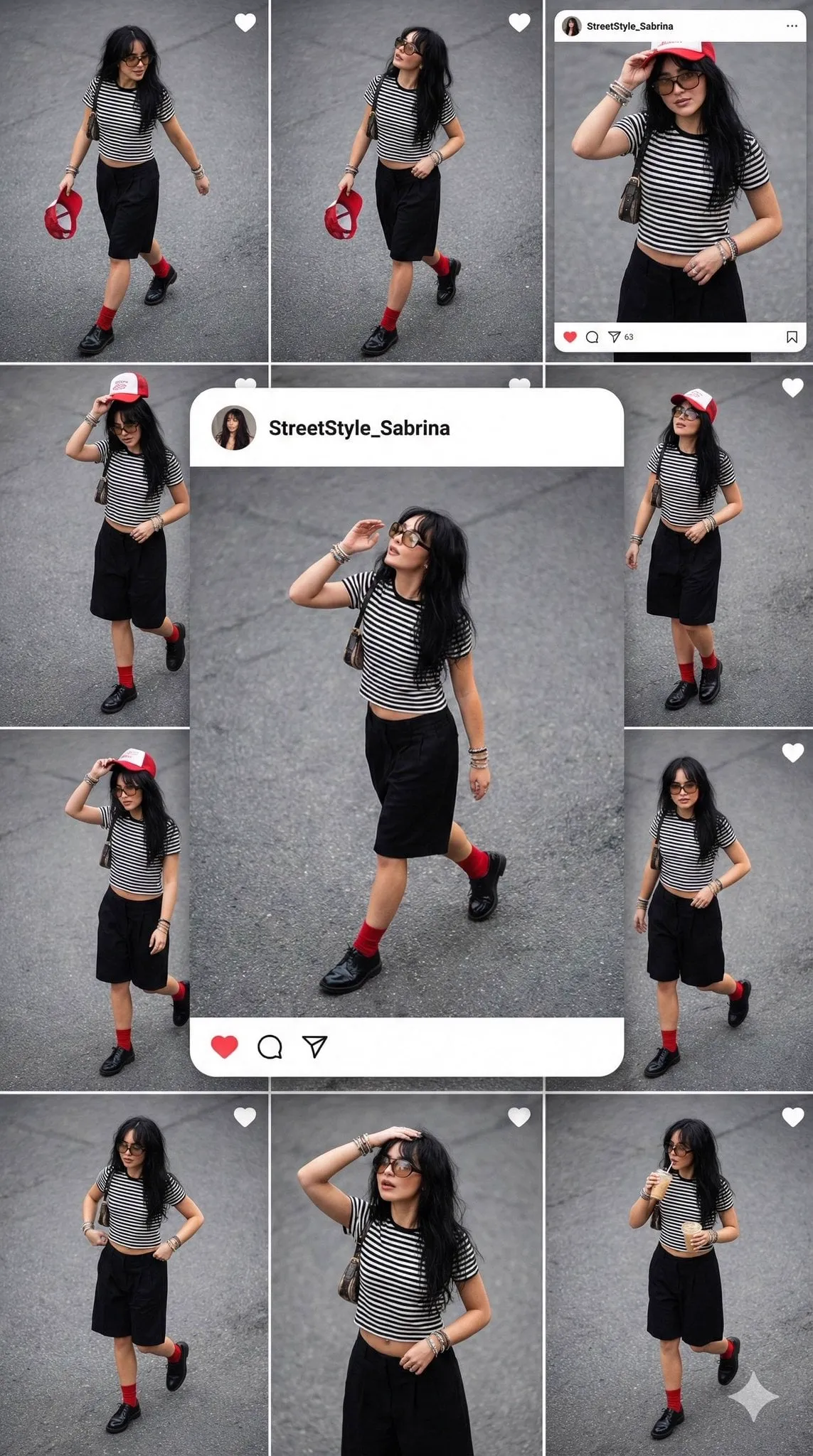
Multi-image fusion is one technique that helps here. Instead of describing a face from scratch in every prompt, you provide reference images of your character and your environment, and the model uses those images as the visual anchor for each new shot. The character keeps the same face, wardrobe, and mannerisms. The product keeps the same packaging and lighting. The environment keeps the same set dressing. This is the closest thing AI video has to a physical cast and crew, and it is the key to producing a series that feels like it was shot on one day on one set.
Once you have committed to a reusable visual identity, structure the campaign before generating. Sketch out a short arc the way a filmmaker would: an opening hook, a middle that builds curiosity or tension, and a payoff that either teaches, surprises, or offers a clear next step. Even a fifteen-second clip benefits from this. A clip that opens with a close-up, reveals context, and lands on a call to action outperforms one that just shows the product floating over a background. The AI generates the frames; you are the one who supplies the logic that makes them mean something.
Turning an AI Director Agent into Your Workflow Backbone
The hardest part of any video project is not creating one good clip; it is creating twenty good clips that belong together and tell one story. This is where a director-style assistant becomes more than a novelty. A capable AI director agent can take a vague creative intention, like "show how our lamp transforms a plain living room," and break it into the concrete shots, camera moves, and visual requirements needed to execute that idea. It translates creative language into production language.
In practice, you can use such an agent to standardize the messy middle of production. You describe the story you want to tell, the tone you need, and the visual references you have locked. The agent then proposes a shot list, suggests the kind of camera movement that supports each beat, and drafts the prompts that the video model needs to produce each shot. Instead of three people having an unstructured debate about what the next clip should be, you get a repeatable process that produces consistent output every time.
This becomes even more valuable when you work with multiple models. Different models have different strengths. Some are better at realistic human faces. Others handle stylized or animated content beautifully. Some are extremely fast and inexpensive, ideal for drafts and variations. A director agent can route each shot to the model best suited to it, so you are not forcing one engine to do everything. The result is that you spend less time fighting the tools and more time making creative decisions.
The key discipline is to keep the agent in its lane. It is a production coordinator, not the creative vision itself. You decide what the brand stands for, what the tone should be, and what the viewer should feel. The agent handles the logistics of turning that vision into renderable work. Teams that remember this division of labor get far better results than teams that ask the tool to invent their strategy for them.
Generating Product and Educational Content at Scale
One of the highest-value uses of AI video is turning a single product into a large library of marketing assets. A physical product can be shown in dozens of contexts, at different angles, in different lighting, and in different use scenarios, without ever staging a real photo shoot. Educational content follows the same logic. A complex process can be demonstrated step by step in a visual medium, the way a tutorial benefits from being seen rather than read.
For product videos, anchor your brand identity and let the model explore variations around it. Show the product in everyday life, in a premium setting, in motion, in close-up detail, and in combination with related items. Each variation gives you an asset you can test across different platforms and audiences. What you are really doing is building an asset library you can pull from for months, which changes the economics of content marketing entirely.
Educational and product-explainers are equally powerful. Rather than a human presenter reading a script to camera, you can generate scenes that visually demonstrate each step of a process. This works well for software walkthroughs, recipe content, assembly instructions, and how-to content in almost any niche. The viewer sees the outcome being produced, which makes the information far easier to absorb than a wall of text.
The discipline here is sequencing. Map out every step you need to show before you start generating, then produce the shots in order and verify continuity as you go. If you fix problems at the storyboard stage you save a great deal of rework later. Batch the work so that generating, reviewing, and rendering happen in phases rather than interleaved chaotically. A little process goes a long way toward making scale sustainable.
Using AI-Generated Voice and Music to Raise Emotional Impact
Video does not work on visuals alone. Sound design, voiceover, and music shape how the audience feels about what they see, usually without them being aware of it. A clip of a sunrise feels serene with a soft piano bed and tense with a driving beat. The same frames can tell two completely different emotional stories depending on what sits beneath them.
Modern AI voice generators produce narration that sounds natural and expressive, and they do it in dozens of languages. This matters for brands that want to localize the same campaign across many markets without paying for a separate voice session in each country. You can generate consistent voiceover in your target languages, review it for the right tone, and drop it into the timeline directly.
AI music has reached a point where you can generate a track that matches a desired mood, tempo, and length without licensing a library cue. This is a huge advantage for content that needs to feel unique rather than sourced from the same stock libraries every other brand uses. A custom-sounding track reinforces the idea that the content is bespoke and intentional.
The creative rule is to treat sound as a first-class decision, not an afterthought. Decide on the emotional arc early. Choose whether the piece is warm, urgent, playful, or premium, and make the voice and music reinforce that single choice. When the picture, voice, and music all point the same emotional direction, the video becomes far more persuasive than the sum of its parts.
Running Fast A/B Tests Across Different Models
When a single render used to take days, you could only afford one version of your ad. That constraint disappears when generation is fast. Now the cheap move is to produce several variants of the same concept and let real audience data pick the winner. This is A/B testing for video, and it is one of the most overlooked sources of advantage in AI video marketing.
Start with a core message and produce versions that differ in a controlled way. Change the opening hook while keeping the body identical. Change the visual style from realistic to stylized while keeping the script the same. Change only the music or only the pacing. By isolating a single variable in each pair, you learn something actionable rather than just which video "felt" better. Run the variants against one another and let the platform's data speak.
Model selection feeds directly into this strategy. If one model produces a more realistic look at a higher cost and slower speed, and another model produces a slightly more stylized but nearly instant result, you can use the fast model for most of the testing and reserve the premium model for the winning concept. This hybrid approach keeps your testing budget small while ensuring your best-performing idea gets the highest production value.
The discipline is to measure the right thing. Watch time, completion rate, and click-through matter more than raw views. A video with fewer views but a much higher completion rate is often the stronger piece. Let the metrics guide which variant wins, then double down on producing more content in the winning direction.
Choosing the Right Model for Quality, Speed, and Budget
Not all video models are created equal, and the differences matter more than any single "best model" claim. A model that excels at realistic scenes may be slow and expensive. A fast, economical model may struggle with complicated human movement or text on screen. Understanding these trade-offs is what separates teams that get good results from teams that get frustrated.
The practical approach is to categorize your needs. For hero content that carries your brand's premium image, invest in a high-quality model that delivers the realistic or stylized look you need, even if it costs more and renders slower. For social proof, variations, drafts, and high-volume testing, use the fast, economical options. The cost structure of each task should shape the model you pick, not the other way around.
It is also worth keeping specialized models in your rotation. Some engines are particularly strong at a specific aesthetic, such as cinematic lighting, anime, or retro film grain. When your concept calls for that aesthetic, reaching for the specialized model beats forcing a generalist to imitate it. A tasteful blend of tools, coordinated by a director agent, typically outperforms a single-model workflow.
Building a Scoring System to Pick Your Best Concepts
Before you spend a single render on generation, you should know how you will decide whether an idea is good. A small scoring sheet protects you from the trap of falling in love with a render just because it looked expensive. Score every concept on a few fixed axes, such as how clearly it communicates a core idea, how aligned it is with the brand's visual identity, how likely it is to feel original in the feed, and how easy it is to produce at scale.
Give each axis a simple score and add them up. The concepts that score highest become your production queue for the week. This sounds like overkill for a fifteen-second clip, but it trains your team to think about video as a repeatable system rather than an endless series of one-off lucky guesses. Over time, the scoring sheet doubles as a record of what sorts of ideas actually performed, which makes your future concepting smarter.
Pair this with a simple content calendar. Decide how many videos you will produce per week, which platform each one targets, and which stages of the funnel each piece serves. A mix of top-of-funnel brand pieces, mid-funnel educational content, and bottom-funnel product demos keeps your library balanced and gives you something to measure across the few weeks of a campaign.
Common Mistakes and How to Avoid Them
Most teams make the same handful of mistakes when they start using AI video. Knowing them in advance saves budget and time. The biggest is chasing "wow" without a strategy, producing technically impressive clips that do not map to any business goal. Define the outcome before you open the tool.
The second mistake is ignoring consistency, letting each clip drift until the campaign looks like five different brands. Lock your visual reference and reuse it religiously. The third is composing every video with text-on-screen as a crutch, assuming a caption will carry a weak visual or message. The visual and the message should reinforce each other, not cover for each other.
The fourth mistake is overpolishing the wrong clips. Teams use their premium model on every test variant, wasting budget on losing ideas. Use the fast model to iterate and the premium model to finalize. Finally, many teams quit after one failed batch. Video is an iterative medium. The teams that improve are the ones that treat every campaign as a learning cycle, measure honestly, and systematically raise their average idea quality over time.
Frequently Asked Questions
Do I need to know how to use complicated editing software to make AI video?
No. Most of the value happens before the edit: concept, storyboard, prompts, and voiceover. Basic editing skills help you tighten pacing, but the heavy lifting of generating frames is done by the model.
How do I keep my character looking the same in every clip?
Use reference images of the character as a visual anchor in every prompt, and reuse the same art-direction brief across the whole project. Consistency is a production discipline, not a model feature you can switch on.
Is AI video good enough for real advertising?
Yes, for many categories. The key is using premium models for hero content and reserving faster, cheaper models for testing and social variations. Quality, speed, and budget become a deliberate trade-off you manage.
Can I use AI voiceover in languages I do not speak?
Modern voice generators cover many languages naturally. You can localize a campaign across markets without separate voice recording sessions, but always have a native speaker review the final render for tone and accuracy.
How many video variants should I test?
Test a handful of focused variants that each change one variable, such as the hook, the style, or the music. Controlled pairs teach you more than a messy batch where everything changes at once.
The Long-Term Play for Creative Video Marketing
The teams that win with AI video are not the ones with the flashiest renders. They are the ones that treat video as a system: a fixed visual identity, a pipeline that routes work to the right model, a scoring process that chooses ideas rationally, and a measurement loop that turns performance data back into better concepts. The technology changes quickly, but these structural habits keep working.
For most brands, the realistic move is to start small and build the pipeline one piece at a time. Lock a single character and environment. Produce a small batch of related clips. Let a director-style agent coordinate the shots. Test a couple of variants. Measure, learn, and expand from there. That is how creative video marketing stops being a series of expensive experiments and becomes a competitive habit your team can run week after week.
