
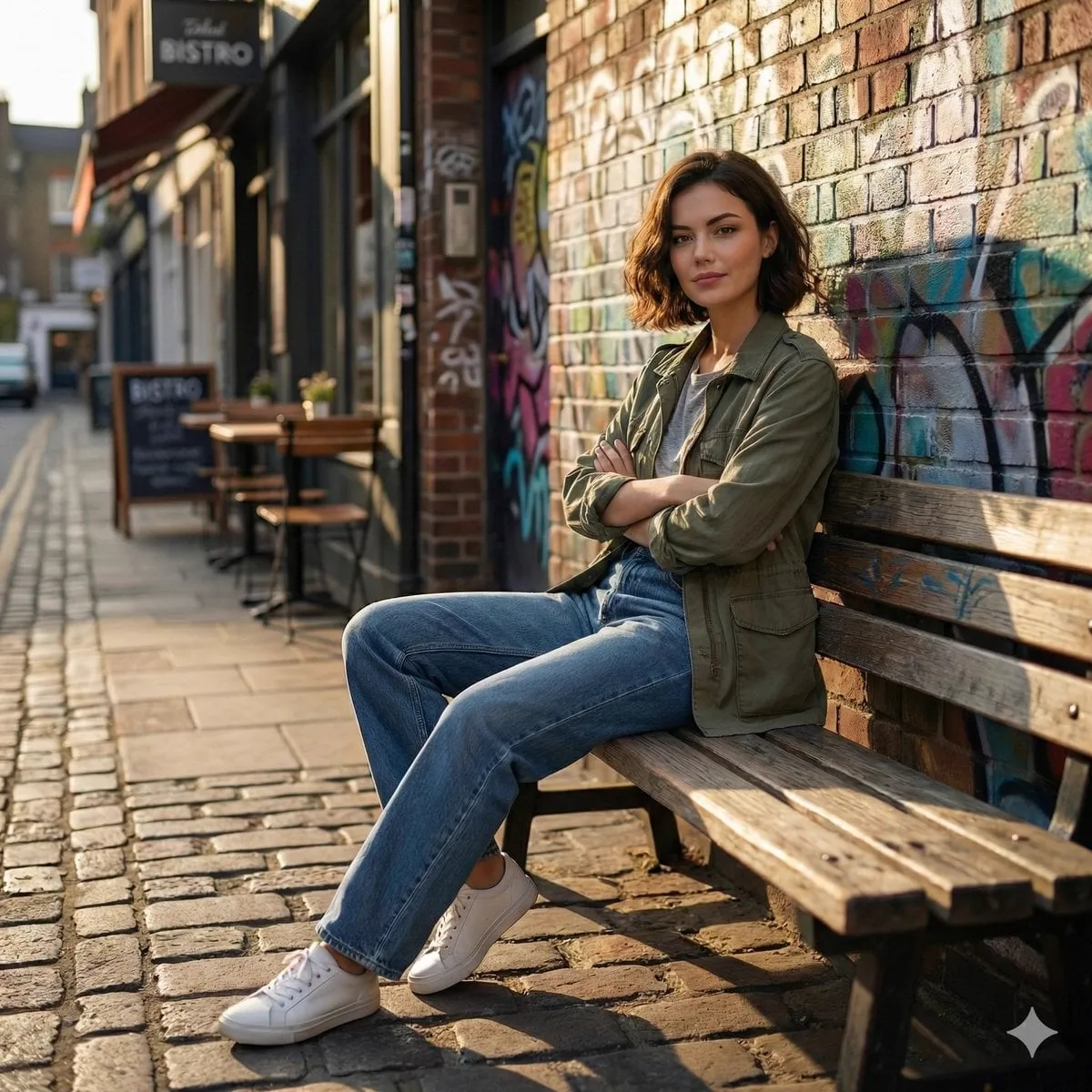
Why AI Image Detection Matters Right Now
Every few months, the gap between what a camera records and what a model generates gets a little harder to see. Photorealistic output from modern generators has reached the point where most people cannot reliably tell a synthetic image from a real photograph by eye alone. That matters far beyond casual scrolling: synthetic images are used to fabricate evidence, impersonate public figures, manipulate markets, and flood review systems with fake proof.
The stakes are practical, not abstract. A real estate listing with AI-generated interiors can collect deposits for apartments that do not exist. A brand replying to a viral screenshot can be built on an image that never happened. A journalistic outlet can be forced to retract a story because a verification step was skipped. The goal of AI image detection is therefore not to eliminate all synthetic media, but to create a reliable layer of scrutiny that forces decisions to slow down when authenticity matters.
This guide walks through the technical signals, the tooling, the workflow, and the limits of detection so that anyone publishing, moderating, or investigating images has a repeatable process instead of a gut feeling.
What Actually Gives AI Images Away
Synthetic images fail in predictable places, even when they look convincing at a glance. The first skill to build is knowing where to look.
Faces remain the classic giveaway. Check the area around the eyes: pupils that are duplicated, irises that merge into the sclera, eyelashes that blur into one mass. Teeth are another hotspot; generators often produce merged or floating teeth, and ears frequently show asymmetric geometry. Hair strands that loop into each other or dissolve into the background are a strong signal, especially at high resolution.
Hands and fingers are the most famous failure point, though newer models handle them better than the older ones. Look less at the count of fingers and more at how the fingers connect to the palm, whether nails exist on the correct side, and whether the wrist anatomy makes sense. If a hand is blurred in an otherwise sharp image, treat it as suspicious rather than stylistic.
Text is a reliable tell. Signage, labels, books, and license plates rarely render perfectly. Look for letters that smear together, words that repeat, or character sets that mix inconsistently. Watermarks that half-fail, like a logo that is clearly painted over content, also betray synthetic origin.
Finally, examine the background. Surfaces that should be straight, like wall edges, floorboards, and door frames, often warp gently. Reflections in windows and glasses frequently disagree with the light sources in the scene. Small objects in the distance tend to merge into noise instead of resolving into recognizable shapes.
None of these signals is conclusive on its own. A single artifact can come from heavy compression, motion blur, or a cheap lens. Detection is about accumulating signals until the explanation that fits all of them is "this was generated."
How Generative Models Leave a Digital Fingerprint
Understanding why artifacts appear helps you search for them deliberately. Diffusion models, the dominant architecture behind modern generators, start from pure noise and iteratively denoise it toward an image guided by a text prompt. This process leaves statistical traces that differ from the noise produced by a camera sensor.
The most studied trace is in high-frequency information. Camera noise has a characteristic distribution related to the sensor and ISO setting. The noise in generated images is smoother and more uniform, often described as "plastic" because it lacks the fine grain that real sensors produce. Forensic tools measure this difference in the frequency domain rather than relying on the human eye.
Different models also leave different fingerprints. The exact way a model schedules noise removal, the training data it consumed, and its architecture all shape the statistical residue. Researchers have shown that trained classifiers can attribute an image to a specific generator family with surprisingly high accuracy, even when the image has been resized or compressed. This is the basis of model attribution, which is more powerful than simple real-versus-fake classification because it gives an investigator a specific origin to chase.
There is a catch: generators are updated constantly, and each new version shifts the fingerprint. A detector trained on one model version degrades over time. This is why detection systems need continuous retraining and why a single frozen tool is not a defensible verification strategy.
Invisible Watermarks and Signed Provenance
The strongest form of detection is not forensic; it is designed in. Several major model providers now embed invisible watermarks into their output. These are patterns added to pixel data that survive resizing, cropping, and recompression to a surprising degree. Dedicated software can read the watermark and confirm that a specific provider generated the image.
Beyond watermarks, the industry is moving toward cryptographic provenance. Systems such as C2PA attach signed metadata to an image that records its edit history: when it was captured, by which device or software, and what changes were applied. An image with a valid provenance chain can be trusted; an image with stripped or conflicting metadata should be treated as unverified.
This solves a real problem with forensic detection, which is probabilistic. Provenance is deterministic when it is present and intact. The weakness is adoption. Most screenshots, social downloads, and messaging-app forwards strip metadata without anyone noticing. As a result, provenance works best at the point of publication: newsrooms, stock platforms, and official accounts can require signed content, while ordinary users see little of it in their daily feeds.
A pragmatic detection workflow therefore treats watermarks and provenance as the first question, not the last. Check whether the file carries signed metadata, whether the platform that hosted it preserves it, and whether a watermark reader recognizes the source. Only when those checks come up empty does the investigator fall back to statistical forensics.
Machine Learning Detectors and Their Limits
Classifiers trained to separate real from synthetic images are the workhorse of automated detection. They operate on image embeddings, usually the same kind of representations used for object recognition, and learn the subtle statistical differences that humans miss. Good detectors achieve impressive accuracy on held-out data and degrade gracefully under compression.
Their limits matter more than their accuracy. First, they are brittle across generators: a model trained on one family may confidently misclassify output from a newer or less common family. Second, they are vulnerable to adversarial modification. Simple changes, like a slight color shift, a few added noise pixels, or a JPEG re-encode, can push a borderline image past a detector's threshold. Third, they produce a probability, not a verdict. A score of 87 percent synthetic is evidence, but it is not proof of intent, origin, or malice.
For practitioners, the correct use of a classifier is as a triage layer. It sorts a large volume of images into "likely real," "likely synthetic," and "needs review." Human attention then goes to the middle bucket and to any high-stakes image regardless of score. Automation narrows the search; it does not replace judgment.
A Step-by-Step Detection Workflow
Building a repeatable process is more valuable than memorizing a list of tells. The following workflow works for a single suspicious image and scales to moderation queues.
-
Check the file's provenance first. Read the metadata with a tool that exposes XMP and C2PA fields. Look for generator signatures, edit history, and conflicting camera data. Strip or absent metadata is not proof of AI, but it changes the burden of proof.
-
Do a visual pass with a checklist. Faces, hands, text, edges, reflections, and background objects. Write down what you find instead of forming a conclusion as you scan.
-
Run at least two independent detectors. Use a mix of cloud-based and open-source tools. Record the confidence scores. If the two disagree strongly, the image goes to manual review.
-
Check for reuse. Reverse image search and perceptual hash lookups reveal whether the image appeared earlier with different context, which is common for both real and synthetic content. An image that appears nowhere else, claims to be a news photo, and scores high on detectors is a red flag.
-
Verify the subject, not just the pixels. If the image claims to show an event, a person, or a place, confirm the details independently: date, location, lighting, weather, and uniforms. Fabricated images often fail at the level of factual consistency even when they pass forensic checks.
-
Document the outcome. Record which tools were used, what scores were produced, and what decision was made. This audit trail protects the decision maker and feeds future improvement.
When the Image Came from a Video
A growing share of synthetic media arrives as video frames. Detection here adds a temporal dimension: consistency across frames. Generated videos still struggle with continuity, so characters' faces, clothing patterns, and background objects change subtly between shots and even between seconds.
Extract multiple frames across the video and run the visual checklist on each. Inconsistent jawlines, changing eye color, and clothing that shifts pattern are strong indicators of generation. Also check audio-visual sync; poorly synced lips remain one of the most common failures in generated clips.
For still images that claim to be frames from a real event, ask for the original clip. A real video will have stable metadata, a plausible file structure, and frames that share sensor noise characteristics. A generated video will show the same statistical fingerprints as a generated still, plus temporal instability.
The Legal and Ethical Side of Detection
Detection is not neutral. A false positive accuses someone of fabricating evidence; a false negative lets a fabrication spread. Organizations that publish or moderate images should define what threshold of evidence triggers what action, and they should be transparent about that threshold.
There is also a category problem: not all synthetic images are deceptive. A company's marketing render, a design mockup, and a meme edit are legitimate uses of generative tools. Detection systems should distinguish "synthetic" from "misleading" and only escalate the second category. Treating every AI-generated image as fraud trains people to ignore real flags.
Creators who work with generative tools can protect themselves by keeping original assets, retaining generation logs, and adding visible labels where required. Disclosure is increasingly expected by platforms and audiences, and it removes most of the ethical hazard of synthetic media.
Tools You Can Start With Today
You do not need a research lab to begin. A practical stack includes one metadata inspector, one or two open-source detectors, and a reverse image search service. Several established detection projects release models and demos that you can run locally or call through an API, and the major cloud providers offer moderation APIs that include synthetic-image scoring. Start with free tools, run them on a labeled test set of your own real and generated images, and calibrate your thresholds before relying on them in production.
Expect to revisit the setup quarterly. Generators improve continuously, and a detection stack that is not refreshed will quietly lose accuracy until a high-stakes miss exposes it.
Frequently Asked Questions
Can AI detection be 100 percent accurate? No. Detection is probabilistic, and deliberate attackers can tune outputs to defeat specific detectors. The realistic goal is raising the cost of deception and catching the casual cases that dominate real-world misuse.
Do watermarks survive screenshots? Simple invisible watermarks often survive resizing and screenshots; robust watermarking is designed to survive them. But a screenshot taken with OCR-visible UI overlay or heavy recompression can still damage the signal.
Is it easier to detect faces or landscapes? Faces are easier because human anatomy is a strong prior: generators have a narrower margin of error, and small distortions are visible. Landscapes and abstract scenes are harder because acceptable variation is larger.
What should I do with an image I strongly believe is synthetic? Preserve the original file with metadata intact, record the detection results, and make decisions based on the stakes of the claim. If it affects a publication, legal matter, or public figure, escalate to a human reviewer and keep the audit trail.
Does detection still matter if provenance becomes standard? Yes. Provenance covers images that pass through the pipeline intact; much of the web strips it. Forensic detection remains the safety net for everything that arrives without signed history.
