
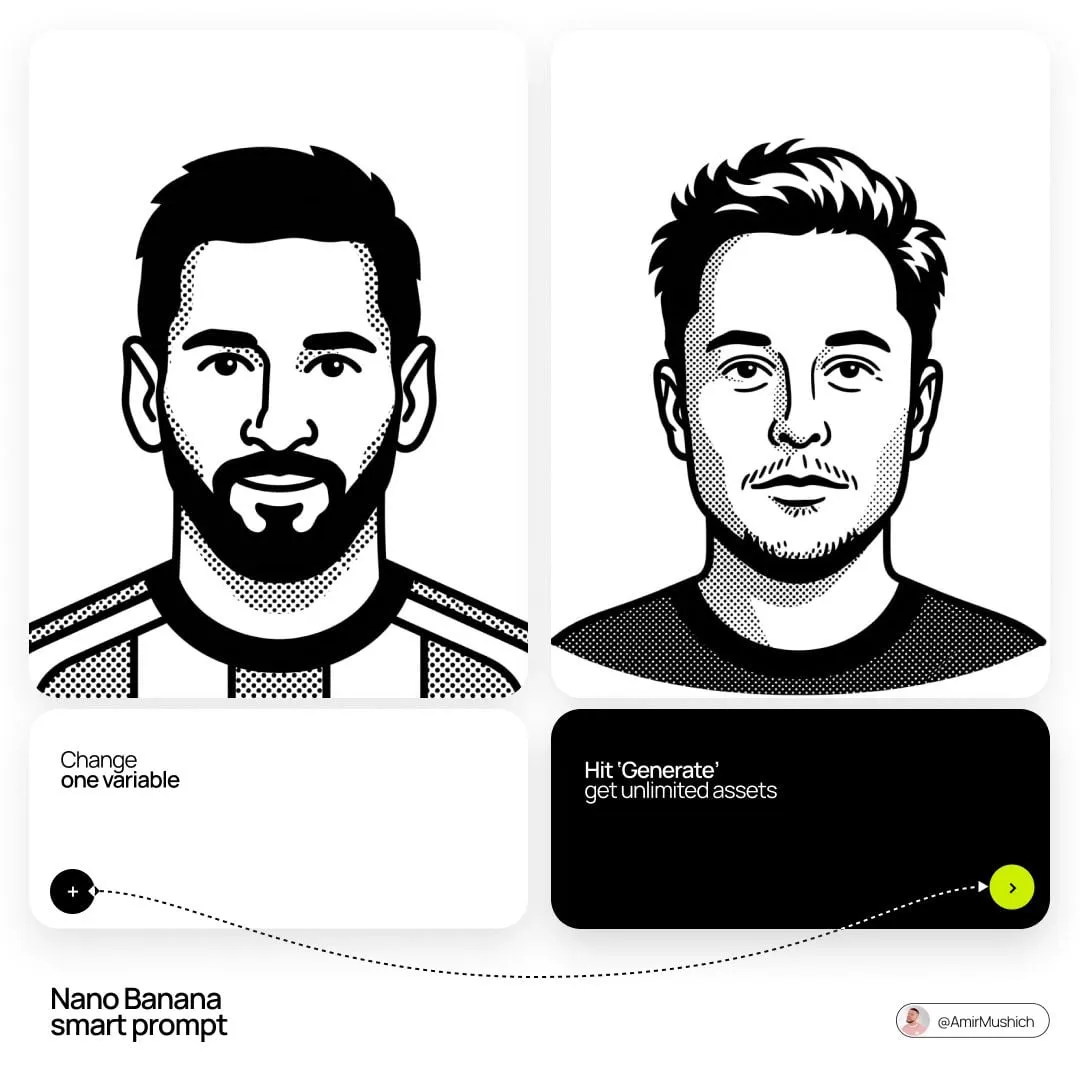
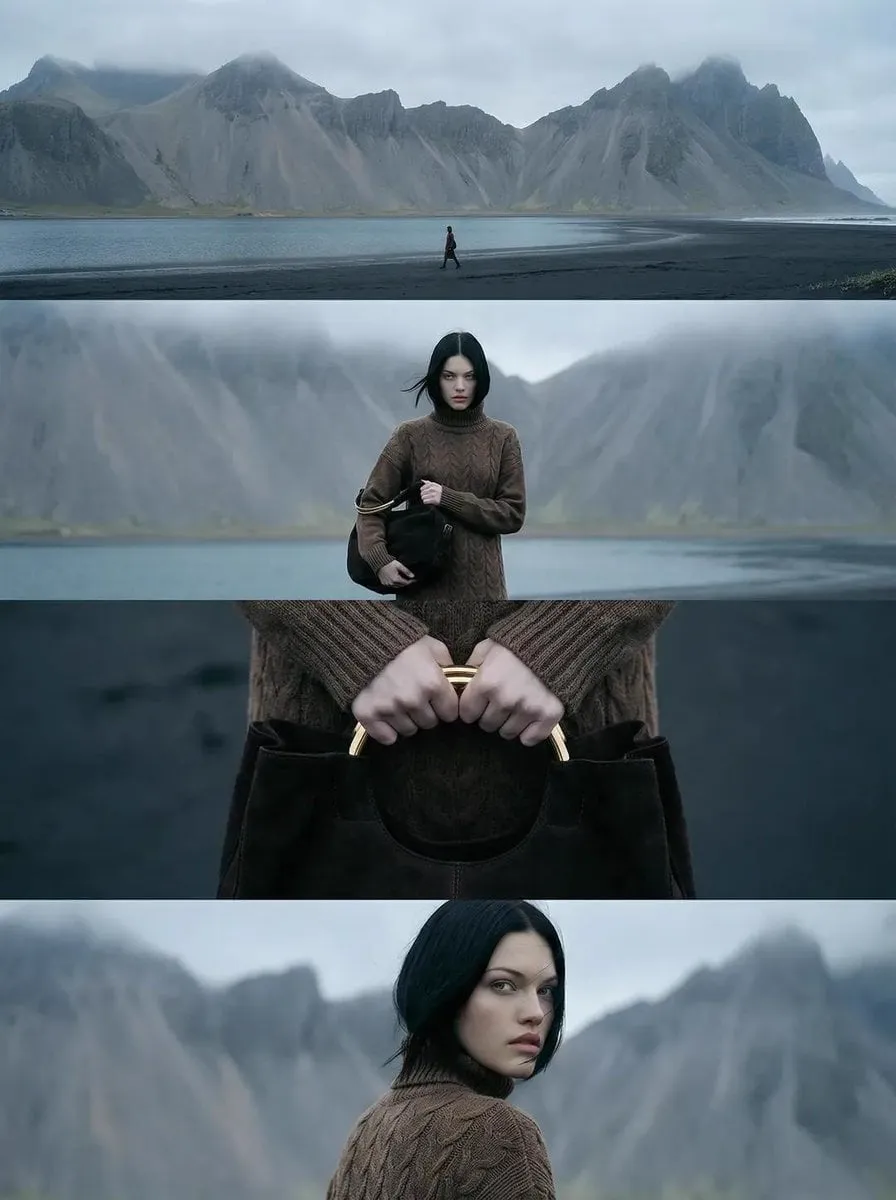
Generative AI has crossed a threshold that many people did not expect to reach this quickly. It is now genuinely difficult to tell whether a polished image, a convincing news-style video, or a long-form article was created by a human or produced by a model. For publishers, brands, and independent creators, that ambiguity has a direct cost: original work loses value when it can be imitated, and trust erodes when audiences cannot tell what is real.
This guide explains how AI-generated content leaves traces, how detection tools actually work and where they fail, and how creators can protect original work with watermarks, provenance records, and smarter publishing workflows. The goal is not paranoia; it is practical risk management for anyone whose income depends on content that can be copied.
Why Detection Has Become a First-Class Concern
The volume of synthetic content is growing faster than most content teams expected. High-quality generation tools are no longer experimental; they are cheap, widely available, and increasingly good at producing realistic video, voice, and text. That creates three distinct problems.
The first problem is plagiarism and unauthorized imitation. A creator's distinctive style can be replicated with reference images and prompt tuning, and the copies can be published faster than the original author can respond.
The second problem is misinformation. A realistic but fabricated video of a public figure speaking, a product launch, or a news event can circulate before anyone checks it. The reputational and legal damage lands on the victim, not the generator.
The third problem is value dilution. When a platform is flooded with low-effort synthetic content that mimics popular formats, audiences become skeptical of the entire category, including the original, high-quality work it imitates.
Detection matters for all three. It is not about banning AI; it is about knowing what is in front of you and protecting the work you actually made.
How AI-Generated Content Leaves Traces
No generator is invisible, at least not yet. Models leave signals that forensic tools can read, even when the output looks flawless to the human eye.
Statistical fingerprints are the most reliable signal. Every neural network architecture has preferences in how it distributes noise, arranges color gradients, and handles texture. A model trained on particular data will, on average, produce images whose frequency spectra and artifact patterns differ measurably from a camera's output. Advanced detectors do not look for a single flaw; they build statistical profiles of known models and compare new content against them.
Structural artifacts are visible to careful inspection. Common tells include unnatural consistency in hair strands, overly symmetrical faces, text that garbles at the edges, background details that blur into mush, and physics that is almost right but subtly wrong. Individually, each artifact can be dismissed; together, they form a pattern.
Unexplained metadata gaps are another clue. Camera-generated photos carry EXIF data: device, lens, exposure settings, and GPS in many cases. AI-generated images often strip or fabricate this metadata. A video that claims to be documentary footage but has no recording metadata, no device chain, and no editing history is already suspicious before you analyze a single frame.
For video specifically, temporal inconsistency is a strong signal. Synthetic clips tend to have small flickers, morphing edges, or background objects that subtly change between frames. Human eyes miss these; frame-differencing algorithms catch them.
The Limits of Detection Tools
It is important to be honest about what detection software can and cannot do. A detector is a probabilistic tool, not a verdict. Every detector has a false-positive rate, and false positives are dangerous: accusing a legitimate creator of using AI can destroy a career.
Detection quality depends on three factors. First, the detector must know the generator. A detector trained on images from model A performs poorly against model B. New models appear constantly, so detectors are always racing to catch up. Second, the content must be uncompressed or lightly compressed. Social platforms re-encode everything, and each compression pass destroys the subtle statistical signals detectors rely on. Third, the content must not have been deliberately modified. Simple filters, resizing, cropping, and re-saves all degrade detectability.
Because of these limits, detection works best as a triage filter: flag suspicious content for human review, not as an automatic accusation. For high-stakes decisions, combine multiple detectors with human forensic analysis.
Watermarking: The Defensive Counterpart to Detection
Detection tries to identify synthetic content after the fact. Watermarking tries to label content at the moment of creation, so identification is never a guess.
Two kinds of watermarks exist. Visible watermarks are the logo and text overlays you already see everywhere; they deter casual theft but are trivially cropped or covered. Invisible watermarks are the interesting layer: patterns embedded in the pixel data or frequency domain of an image, or in the waveform of audio, that survive cropping, compression, and most edits.
The strongest invisible watermarks are designed to be robust against the attacks that actually happen in the wild: re-encoding, resizing, color grading, and re-screenshoting. Some are cryptographic, meaning the watermark encodes a signature that can be read only with the matching key. That lets a platform prove provenance without letting anyone else forge it.
Watermarking is not a silver bullet. A determined actor can still remove most watermarks with specialized tools. But it raises the cost of theft, and more importantly, it creates an audit trail: if a stolen clip appears on another platform with its watermark intact, the owner has evidence.
Provenance and Registration: Making Ownership Provable
Watermarks answer the question "was this made by AI?" A different question is "who made this, and when?" For that, you need provenance: a record of a work's origin, chain of custody, and rights.
The most durable provenance systems use distributed ledgers or public registries. When you publish a work, you register a fingerprint, typically a cryptographic hash of the file, alongside your identity and a timestamp. Because the hash is unique to the file, anyone who later finds the same file can check the registry and see that it existed on a certain date under a certain owner. This does not stop someone from stealing your work, but it gives you credible evidence in a takedown dispute or a licensing negotiation.
Practically, creators should adopt three habits. Register every finished asset, not just the ones you think are valuable; a series of registrations establishes a consistent record. Keep original files with their metadata intact, because the hash of the original is your best evidence. And register early, at publication time, because the value of a timestamp collapses once a dispute begins.
Deepfakes and Synthetic Video: A Special Case
Synthetic video deserves separate attention because it is the most convincing and the most harmful form of AI-generated content. A realistic video of a person saying something they never said is not a copyright problem; it is a reputational, financial, and legal weapon.
Video forensics looks for different signals than image forensics. The strongest are physiological: synthetic faces often have subtle inconsistencies in eye-blink patterns, pulse-driven skin color changes, and natural micro-movements of the head. Models trained on compressed footage sometimes produce artifacts around the mouth and jaw where speech and expression meet.
But video detection is an arms race with a lag. By the time a detector reliably catches one generation of deepfake technology, the next generation has fixed its tells. This is why organizational defenses matter more than individual tools: verify the source of video before trusting it, establish out-of-band channels for sensitive requests (a video of your CEO requesting a transfer should be confirmed by phone, not by the video itself), and train staff to treat high-stakes synthetic media as a security issue, not a curiosity.
Building Detection into Your Publishing Workflow
Detection tools are most effective when they are part of a routine, not an emergency response. Here is a workflow that fits a small content team or an independent creator.
Pre-publish screening: run inbound content, whether from freelancers, agencies, or AI assistants, through at least two detectors with different methodologies. Record the results in your asset log. The point is not to reject everything flagged; it is to know what you are publishing and be able to answer for it.
Chain-of-custody requirements: ask anyone supplying content to provide source files, prompts, and edit history. Legitimate human creators can usually produce these in minutes; a suspicious supplier will hesitate or improvise.
Incident response: define in advance what you will do when a commissioned asset is flagged. Will you request replacement? Reject payment? Notify downstream platforms? Having a policy before the incident makes enforcement fast and fair.
For platforms and larger publishers, integration goes deeper. Detection can run inside a CMS at upload time, flagging content before it ever reaches the public site. Audit trails can be attached to every asset, and takedown workflows can reference the stored provenance record automatically. The integration should be configurable: low-risk content streams can pass through quickly, while high-visibility assets, anything from major campaigns or public figures, get the full screening treatment.
The Legal and Regulatory Landscape
Regulation is catching up with technology, and the direction matters for creators. Several jurisdictions are moving toward labeling requirements: AI-generated content that is presented as human-made may need to be disclosed. Platforms are adopting content credentials standards that attach authorship and editing history to media files.
For original creators, these trends are mostly favorable. Disclosure rules make synthetic imitation easier to identify. Credential standards give provenance a common format across platforms. And copyright law, while still evolving, generally protects human expression more strongly than machine output, which means provable authorship is becoming more valuable, not less.
The risk is regulatory overreach: labeling requirements applied too broadly can stigmatize legitimate AI-assisted workflows, and mandatory detection can create false-positive accusations. Creators should understand the rules in their markets, keep records of their workflows, and be ready to show their process when it is challenged.
Frequently Asked Questions
Can detection tools be fooled? Yes. Every current detector can be defeated by a determined actor using targeted editing or a generator it has not seen. Detection is a filter, not a lock.
Does compression destroy watermarks? Robust watermarks survive normal platform compression; weak ones do not. Check what your watermark provider guarantees before relying on it.
Is AI-assisted work automatically "AI-generated"? It depends on the definition in the regulation or platform policy you are dealing with. Many policies distinguish between full generation and human-directed editing. Document your process so you can explain it.
What should I do if my original work is flagged as AI-generated? Keep your source files, metadata, and any registration records. Contact the platform with your evidence and request human review. A well-documented creator wins these disputes far more often than a vague denial.
Do I need to register every image? No, but register the assets you care about: hero content, commissioned work, and anything you plan to license. Registration is cheap relative to a lost dispute.
How accurate are detection tools in practice? Accuracy depends on the generator, the compression level, and the detector. On lightly compressed content from known models, the best detectors perform well above chance, but real-world performance on heavily re-encoded social content is much lower. Treat any single score as a weak signal and combine several detectors with human review for high-stakes decisions. Vendors report accuracy numbers under ideal conditions; test the tool on your own content before trusting it.
Final Thoughts
AI-generated content is not going away, and detection will never be perfect. The practical strategy is layered: use detection as a screening tool, protect your work with robust watermarks, build provenance records you can prove, and keep your workflow documented enough to defend. The creators and platforms that will survive the synthetic content wave are not the ones with the best detectors; they are the ones with the cleanest records and the most honest processes. Start small: adopt one detection step, register your next few important assets, and refine from there.
