
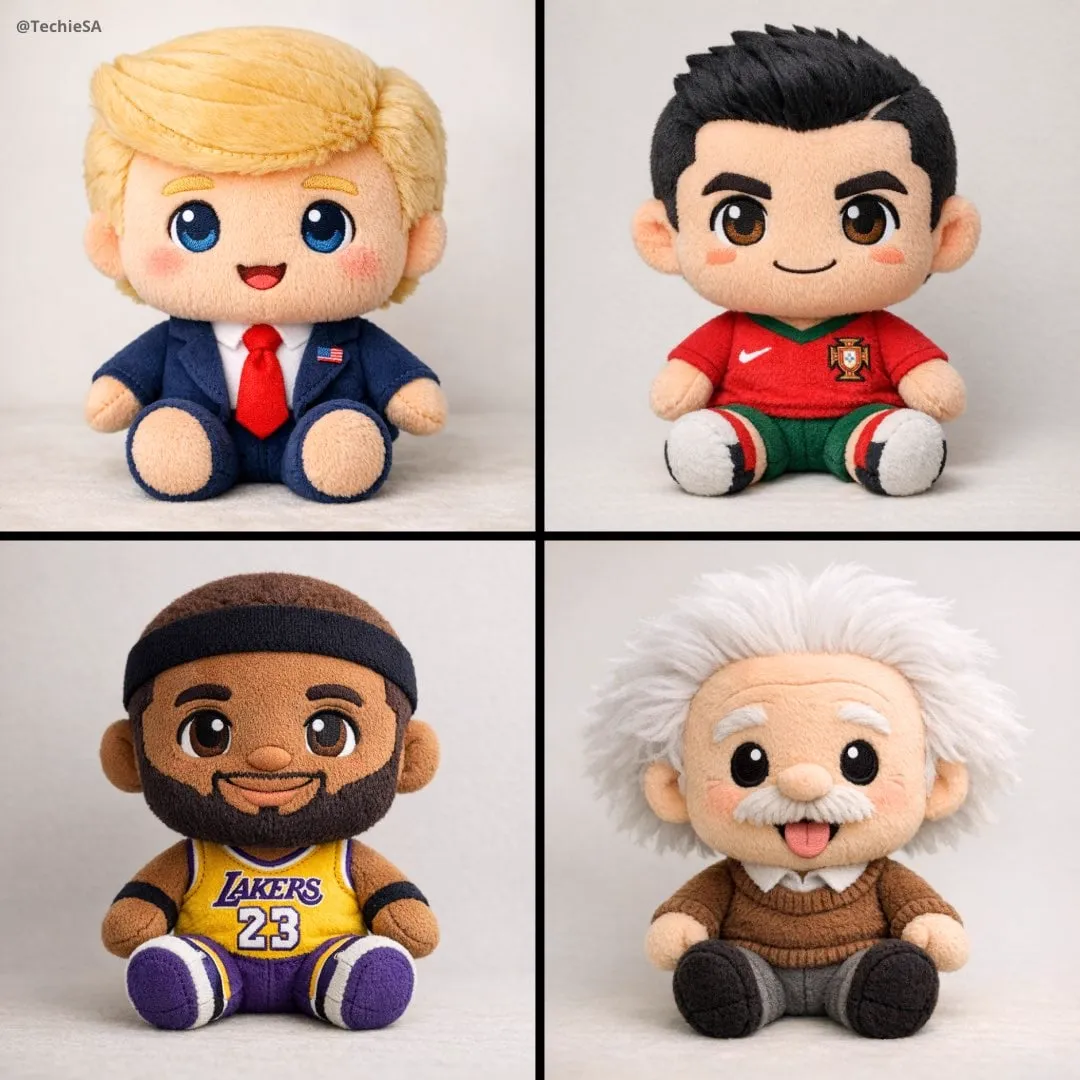


How to Spot AI-Generated Images and Keep Your Content Safe
The images people share online are no longer what they appear to be. A photorealistic portrait may have been produced in four seconds by a model that has never seen a camera. A news photograph may contain faces that never existed. By the middle of this decade, synthetic media has moved from an interesting experiment to a mainstream production tool, and with that shift comes a difficult question for every publisher, marketer, and content team: how do we know what is real, and how do we protect ourselves when we cannot tell?
This guide is a practical field manual for the era of synthetic images. It explains why AI-generated visuals are so hard to detect, walks through the technical signals that still give them away, and lays out a concrete workflow for keeping your content pipeline safe, legal, and credible. The goal is not paranoia. It is the same discipline that any mature industry develops once a new technology becomes cheap and universal: verification before publication.
Why AI-Generated Images Are So Hard to Detect
For most of the history of digital media, authenticity was assumed. A photograph was evidence, because producing a convincing fake required skill and time. Generative AI destroyed that assumption in a few years. Modern image models are trained on enormous datasets of real photographs, and they reproduce the statistical patterns of photography so faithfully that the classic tells, the extra fingers, the garbled text, the waxy skin, are disappearing.
The problem is compounding, not static. Each new generation of models learns not only from real images but also from the flaws of previous models. Detection systems that work today often fail tomorrow, because the distribution of synthetic images keeps moving. This is why simple rules like look for weird hands are no longer sufficient. What works is a layered approach: metadata, forensic signals, provenance systems, and human judgment, each covering a different weakness of the others.
There is a second reason detection is hard: the boundary between real and synthetic is blurring. Modern workflows routinely combine a real photograph with generative edits, or generate a base image and then composite it over authentic footage. A pure fake is easier to catch than a hybrid, and hybrids are becoming the default.
The Metadata Layer: What the File Tells You
The first check costs nothing and takes seconds: read the file metadata. Digital images carry structured information about how they were created, and while metadata can be stripped or forged, most casual content is not cleaned. Tools that read metadata are built into most operating systems and freely available as small utilities.
Look for three things. The generator tag: many AI tools record the model name or a marker such as created with generative AI in the metadata fields. The editing history: software such as Photoshop and many AI platforms write a record of what was done to the file, and an unexpected edit trail can be revealing. The creation timestamp and device fields: an image allegedly shot on a phone but carrying no camera model, or carrying a timestamp inconsistent with the story around it, deserves suspicion.
Metadata is a triage tool, not a verdict. A clean file proves nothing, because stripping metadata takes a click. But a dirty file, one that clearly names a generator or an AI editor, ends the discussion early. Run the metadata check on every image that arrives from an unverified source, and teach your team to do the same.
The Forensic Layer: Pixel-Level Signals
When metadata is clean or absent, move to forensic analysis. This is the layer that examines the image itself for statistical and structural anomalies. Dedicated detection tools and trained models look for patterns that generative architectures tend to leave behind, even when the image looks flawless to the human eye.
Common forensic signals include inconsistencies in noise patterns, since cameras add a characteristic sensor noise that generative models reproduce imperfectly; compression artifacts distributed in unusual ways; anomalies in hair, teeth, and other high-frequency detail; lighting and shadow geometry that does not match a single physical scene; and reflection and refraction behaving differently from optics in the real world. On the video side, the same signals appear per frame, plus temporal artifacts: faces that subtly shift between frames, backgrounds that shimmer, motion that obeys prompt logic rather than physics.
A practical tip for the non-specialist: zoom in. Push into high-detail regions like eyes, hair, jewelry, and text. Synthetic images often resolve these regions with an uncanny uniformity, a smoothness that real photographs do not have. Text is especially useful because many models still garble small text, and a sign in the background that reads almost correctly but not quite is a strong hint. None of these signals is definitive on its own; each is a vote in a larger assessment.
The Provenance Layer: C2PA and Content Authenticity
The most promising defense against synthetic media is not detection after the fact but provenance at the source. The Content Authenticity Initiative and the Coalition for Content Provenance and Authenticity, known as C2PA, have defined a technical standard for attaching tamper-evident provenance information to digital content. When a camera, an editing tool, or a generative platform supports the standard, it writes cryptographically signed records of the content's history into the file. A consumer can then inspect the file and see whether it was captured, edited, generated, or combined.
This approach inverts the problem. Instead of asking whether an image is real, you ask what the image claims to be, and whether that claim is cryptographically verifiable. An image with a valid provenance chain from a trusted device is trustworthy in a way that no forensic analysis can match. An image with no provenance is not automatically fake, but it carries no proof, and in high-stakes contexts, absence of proof should change how it is treated.
The limitation is adoption. Provenance only works when creators and platforms participate, and participation is still uneven. Many generative tools already label their outputs, and the major camera and software vendors are shipping the standard, but a large fraction of the content circulating online has no signed provenance at all. Treat provenance as a positive signal when present, and as a gap to manage when absent.
The Human Layer: Judgment, Context, and Verification
After the technical checks, there is no substitute for the oldest tool in journalism: asking where the image came from. A surprising number of synthetic images circulate simply because nobody asked. When an image matters, trace it. Find the earliest appearance, check whether it predates the tool that could have created it, look for the same image on multiple sites, and contact the source when possible.
Context is a powerful detector. An image that perfectly fits a viral narrative, arrives just in time for a controversy, and has no verifiable backstory is exactly what a manipulator would produce. The absence of provenance, combined with an emotionally convenient message, is a red flag even when the image itself shows no technical flaw.
Search engines and reverse image search are free and fast. Run the image through a reverse search and inspect the results: where does it appear, and how old are the appearances? An image that first shows up attached to an AI demonstration is likely synthetic. An image that appears across many independent news pages with consistent dates is likely genuine. Reverse search does not prove authenticity, but it maps the image's history, and history is evidence.
Building a Safe Content Workflow
The checks above are only useful if they are part of a routine. Here is a workflow that any team can implement in a day.
Step one: intake policy. Decide which images require verification. Anything destined for publication, especially news-adjacent, brand-facing, or user-generated content, gets checked. Decorative stock and clearly labeled AI illustrations skip the heavy process.
Step two: metadata pass. Run every image through a metadata reader and log the results. Flag any image that names a generator or an AI editor.
Step three: forensic pass. For images that pass metadata but matter, run a detection tool or a trained-eye review. Zoom into high-detail regions and check for the classic signals.
Step four: provenance check. Inspect for C2PA records when available. If the image claims a provenance chain, verify it; if it claims none, note the gap.
Step five: source verification. For high-stakes images, trace the origin, run a reverse search, and confirm the earliest appearance is consistent with the story.
Step six: labeling and logging. Record the outcome of each check, and label AI-generated content clearly when required by your platform or your own standards. Keeping a log also lets you measure how often detection fails, which tells you when to update your tools.
Legal and Rights Dimensions
Synthetic images raise questions that go beyond authenticity. Copyright is the most active area: in many jurisdictions, the question of who owns an AI-generated work, and whether it is copyrightable at all, depends on the degree of human creative input, and the law is still settling. Courts in different countries have reached different conclusions, and any business relying on AI-generated assets should have a current view of the rules that apply to its own jurisdiction.
There is also the rights problem of training data. Images generated by models trained on copyrighted works can resemble those works closely enough to create legal exposure. A brand that publishes an image that happens to echo a protected artwork, or a person's likeness generated without consent, faces a real risk. The practical mitigation is the same as for any content: keep provenance records, retain the prompts and generation settings, know the terms of the tools you use, and obtain rights for any recognizable people or protected elements.
The deepest legal risk is misuse, not creation. Deepfakes used for fraud, impersonation, or defamation expose the creator to liability that is already being tested in courts worldwide. For content teams, the rule is simple: the fact that a tool can generate something does not make it safe to publish.
What This Means for Content Creators
For legitimate creators, the rise of synthetic media is not only a threat; it is an opportunity to differentiate. Audiences are becoming aware that images can be fake, and trust is becoming a competitive asset. A brand that can demonstrate verification, that labels its AI content honestly, and that never publishes an unverified image builds a reputation that content farms cannot copy.
Operationally, this means making verification a visible part of the pipeline rather than an afterthought. Show the checks on the important stuff. Be transparent about what was generated and what was captured. The platforms are moving in the same direction, with provenance and labeling becoming default features, and teams that already have the workflow in place will absorb those changes without disruption.
The balance to strike is between vigilance and productivity. Not every image deserves the full five-step process; most content is low-stakes and can move fast. The skill is triage: knowing which images matter enough to verify, and verifying those rigorously. That judgment is the real professional skill of the synthetic media era.
FAQ: AI-Generated Image Detection
Can detection tools be beaten?
Yes. Detection is an arms race, and sophisticated users can strip metadata, inpaint artifacts, and tune generators to defeat specific detectors. That is why this guide recommends layers: metadata, forensics, provenance, and human judgment together are far harder to defeat than any single tool.
Is every image without metadata suspicious?
No. Many legitimate images have their metadata stripped by social platforms during upload, which destroys the metadata layer for a huge share of real content. Absence of metadata is a gap, not a verdict. It matters most when combined with other signals.
Are AI images automatically copyright-free?
No. Copyright law varies by jurisdiction, and the human-input question is unsettled. Some countries protect AI-assisted works when human creative contribution is meaningful; others do not. Treat AI-generated assets as a rights question to be resolved per project, and keep full generation records.
How often do professional detectors get it wrong?
Both false positives and false negatives occur, and the rates shift as models improve. This is normal for a statistical tool. The practical answer is not to expect a perfect detector but to design a workflow where a wrong answer on any single layer does not decide the outcome.
What should I do when I find a deepfake of myself or my brand?
Document the evidence, including the image, its metadata, and where it appears. Check the platform's reporting procedures, which most major platforms now have for synthetic media. For serious harm, such as fraud or impersonation, the documentation becomes the basis for legal action, so preserve everything before removing anything.
Conclusion: Verification Is a Habit, Not a Tool
The era of trusting your eyes is over, and it is not coming back. AI-generated images are too good and too cheap, and the pace of improvement guarantees that the next generation will be harder to detect than this one. The professional response is not a single perfect detector, which does not exist, but a layered routine applied with judgment. Check metadata, inspect the pixels, look for provenance, trace the source, and make verification a visible part of your workflow. Teams that build this habit now will publish with confidence, protect their brand from manipulation, and earn the trust that increasingly scarce in a world full of perfect fakes.
