
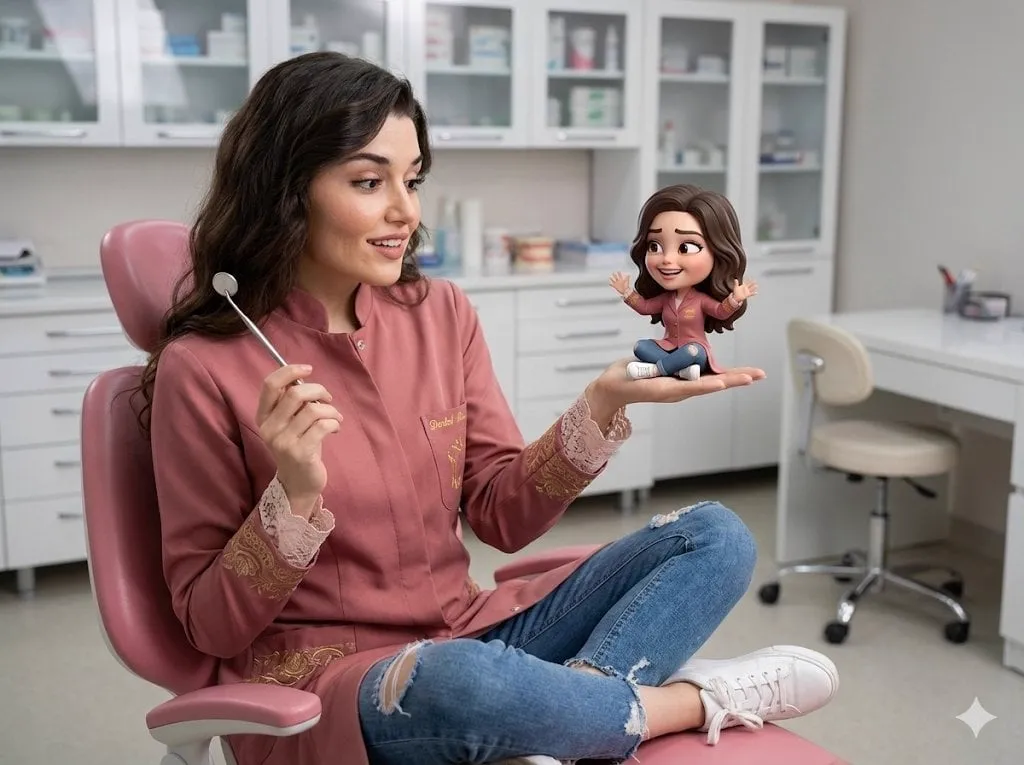

AI-generated video has crossed the line from demo novelty to everyday media. News clips, product demos, celebrity interviews, and political statements can all be synthesized with tools that are cheap, fast, and widely available. That is powerful for creators and dangerous for everyone else. The same technology that lets a small team produce a professional film also lets a bad actor fabricate convincing evidence. Knowing how to detect synthetic video is no longer a specialty skill for forensic experts; it is basic digital literacy for journalists, platform moderators, brands, and ordinary viewers.
This guide covers the practical methods for identifying AI-generated video: visual artifacts, metadata and provenance, audio forensics, machine learning classifiers, and the workflow questions that determine whether a detection effort actually succeeds.
Why the Human Eye Is Not Enough
The first thing to accept is that your eyes will fail you. Modern generation models are explicitly trained to eliminate the tells that fooled viewers in earlier generations: warped hands, melting faces, garbled text. The errors that remain are subtle, momentary, and often invisible at normal playback speed.
Human perception is also biased. We are more likely to accept a video as real when it confirms what we already believe, and more likely to doubt one that challenges us. Confirmation bias makes the naked eye a poor detection instrument, which is exactly why adversarial content is designed to exploit emotional reactions: the viewer stops analyzing and starts reacting.
That does not mean visual inspection is useless. It means visual inspection is only the first pass, a way to generate suspicion, never a way to confirm authenticity. Anything that matters should be checked with tools and methods that do not depend on perception.
Pixel and Temporal Inconsistencies
The classic forensic layer looks for artifacts in the pixels themselves. Generation models produce images and frames that differ statistically from camera-captured footage, and those differences leave traces.
Look for lighting that does not behave physically. Shadows that shift direction without a light source, reflections that do not match the surfaces, and highlights that appear on the wrong side of an object all suggest a model that approximated light instead of simulating it. Skin texture is another rich area: synthetic skin often has an unnaturally smooth, plastic quality, especially around the eyes and mouth, and pores or micro-detail may be missing entirely.
Temporal artifacts are even more revealing because video models must maintain consistency across frames. Watch for objects that subtly change between frames: a necklace that gains or loses a link, text on a sign that mutates, fingers that flicker, background elements that warp when the camera moves. These flickers are the modern equivalent of the warped-hand tell, and they are still common enough to be useful, particularly in fast-moving footage where the model had less compute to spend per frame.
Blinking and eye behavior deserve special attention. Human blinking follows a biological rhythm, and many models still produce unnatural blink rates or eyes that do not track the scene correctly. If a person in a video blinks too rarely, or their gaze drifts without relation to what they are looking at, that is a strong signal.
Metadata and Cryptographic Provenance
Every file carries metadata: creation software, timestamps, device information, and sometimes editing history. When a video is generated by software, the metadata often names the generator or an SDK, and this can be the fastest route to a definitive answer. Export settings, unusual codec strings, and missing camera fields are all clues.
The weakness of metadata is that it is trivially editable. A few seconds in a metadata editor strips the history from any file, and re-encoding a video removes most traces. So metadata is a supporting indicator, not proof.
Cryptographic provenance is the more robust answer. Standards like C2PA (Coalition for Content Provenance and Authenticity) attach cryptographically signed manifests to content at creation time. A camera or a generation tool can record what was created, when, and by what software, in a way that is verifiable and tamper-evident. If a video carries a valid C2PA manifest from a known capture device, that is strong evidence of authenticity. If it carries no manifest at all, that is not evidence of fakery, but it is a reason to be cautious, because legitimate capture increasingly signs content by default.
The limitation is adoption. Provenance only works when the ecosystem participates: cameras, editing tools, platforms, and generation tools all need to support the standard. Until then, the absence of provenance information is common and proves nothing by itself.
Audio Forensics
Video is not just pictures, and detection is not just visual. The audio track often contains the clearest artifacts because audio generation and video generation are frequently handled by separate models that were not perfectly aligned.
Listen for room tone that is absent or wrong. Real recordings have a continuous low-level ambient sound: air conditioning, traffic, the hum of electronics. Generated audio is often unnaturally clean, as if the scene existed in a vacuum. Reverb is another clue: voices and sounds should reflect the space they are in, and synthetic audio frequently has mismatched or missing reverberation.
Lip-sync errors remain common. Even with good generation, the relationship between mouth movement and speech can drift by tens of milliseconds, which most viewers feel as a subtle wrongness even when they cannot name it. Analyzing the audio waveform against the video frames with software can quantify what the ear perceives.
Voice cloning adds another layer. A convincing deepfake can use a real person's voice, so voice alone proves nothing. Check the prosody: natural speech has hesitations, breaths, and irregular emphasis, while cloned voices often have an unnaturally even delivery. Also check acoustic fingerprints: the frequency profile of a voice recorded on a specific microphone has a stable signature, and a sudden change in that signature mid-video is suspicious.
Machine Learning Detection Systems
The most scalable approach is to fight models with models. Classifiers trained to distinguish synthetic from real footage can process far more video than any human team, and they catch artifacts that are invisible to the eye.
Convolutional neural networks (CNNs) are the workhorses of this field. They analyze spatial patterns in individual frames, learning the statistical fingerprints left by generators: specific noise patterns, upsampling artifacts, and color distribution anomalies. Modern systems extend this with temporal models that analyze sequences of frames, catching the frame-to-frame inconsistencies that single-frame analysis misses.
The critical concept is generalization. A detector trained on one generation model may fail completely on a newer model from the same vendor, because each new generator produces different artifacts. This is the arms race at the heart of AI detection: generators improve, detectors must be retrained, and the gap between model releases is exactly when bad actors strike.
Model-agnostic approaches try to escape this race. Instead of learning the fingerprints of specific generators, they look for universal properties that any generator must violate: physical plausibility, statistical consistency with natural video, and coherence between audio and visual streams. These approaches are less accurate on easy cases but far more durable, and they are the foundation of detection systems that survive model updates.
Ethics and Legal Boundaries
Detection is a powerful tool, and like all powerful tools it comes with constraints. False accusations have real damage. Calling a legitimate video a deepfake can destroy a journalist's career, and falsely authenticating a synthetic video can spread disinformation. Both errors must be treated as serious failures, not acceptable collateral.
Detection results should always be reported with confidence levels, not as binary verdicts. A video that shows generator artifacts is "highly likely synthetic," not "definitely fake." The difference matters in journalism, courtrooms, and public discourse.
There are also legal boundaries. Analyzing metadata and file structure of content you have legitimate access to is generally unobjectionable, but scraping, intercepting, or circumventing protections to obtain content is not. The rules differ by jurisdiction, and the safe default is to analyze content you have lawful access to, and to use detection tools that respect platform terms of service.
Building a Practical Detection Workflow
Detection is rarely a single tool; it is a process. A practical workflow has five stages.
First, triage by stakes. A meme shared among friends does not need the same rigor as a video that could influence an election or a stock price. Match your effort to the consequences. Second, collect context: where did the video appear, who posted it, what is the claimed source? Provenance of distribution is often more revealing than the pixels. Third, run automated scans: metadata extraction, artifact analysis, audio checks, and any available classifier. Fourth, do human review of the flagged segments, because models still need a human to interpret results in context. Fifth, document everything: what was checked, what was found, what confidence was reached, and what remains uncertain.
For organizations, the workflow should be institutionalized. Social media teams need a checklist for viral content. Newsrooms need a policy for verification before publication. Brands need a process for spotting unauthorized synthetic content that uses their identity. The technology is only as good as the discipline around it.
A Quick Field Checklist
When you need a fast assessment without a full lab, run through these checks: does the video have any provenance manifest? Does the metadata identify generation software? Do eyes and hands hold up at slow playback? Does lighting behave physically? Does the audio have room tone and natural breathing? Do background objects stay stable across frames? Does the person blink naturally? Does lip movement match speech timing? If several checks fail, treat the video as suspect. If they all pass, you still cannot call it authentic, but you can raise your confidence.
Real-World Cases: When Detection Gets Hard
The theory of detection is cleaner than the practice. Three recurring situations show why even a disciplined workflow can struggle.
The first is the re-encoding problem. Almost every video you encounter on social platforms has been re-encoded, resized, filtered, and compressed multiple times. Re-encoding destroys many of the fine-grained artifacts that detectors rely on, while introducing compression noise of its own. A video that survives this journey with no visible artifacts is not necessarily real; it may simply have been scrubbed clean by the distribution chain. This is why provenance information, which survives re-encoding, is so much more valuable than pixel analysis on its own.
The second is the hybrid case: real footage with synthetic elements. A genuine interview with a cloned voice, a real product shot with a generated background, authentic audio with a generated face. These composites defeat binary thinking entirely, because the video is simultaneously real and synthetic, depending on which track you examine. The correct answer is not "real or fake" but "which parts are which," and that requires component-level analysis rather than a single verdict.
The third is the adversarial generation case: content deliberately designed to defeat detectors. Bad actors now run their outputs through detection tools during production and adjust until the video passes. Against such content, artifact-based methods fail by design, and only behavioral and contextual analysis remains: where the content appeared, who benefits from it, whether the claimed source can be verified. The lesson is that detection is one tool in a larger verification system, and the system is what ultimately decides trust.
Frequently Asked Questions
Can AI detection ever be perfect?
No. Detection is probabilistic, and both generators and detectors are in continuous development. The goal is not perfection but calibrated confidence: knowing how sure you are, and acting accordingly.
Is a video with no metadata automatically fake?
No. Many legitimate videos have stripped or missing metadata due to editing, platform re-encoding, or messaging apps. Absence of metadata is a caution flag, not a verdict.
Do free detection tools work?
Some do, on limited classes of content. They are useful for triage but should not be the sole basis for high-stakes decisions. Evaluate any tool on samples you know the ground truth for before trusting it.
What should I do if I detect a deepfake of myself or my brand?
Document the evidence first, then use the platform's reporting channels and, where appropriate, legal remedies. Speed matters: synthetic content spreads fast, and a clear public response often limits the damage.
Will provenance standards solve this eventually?
They will help considerably, but adoption is partial and even signed content can be generated by tools that honestly sign themselves as generators. Provenance shifts the question from "is this real" to "who created this and with what tool," which is a more answerable question.
