
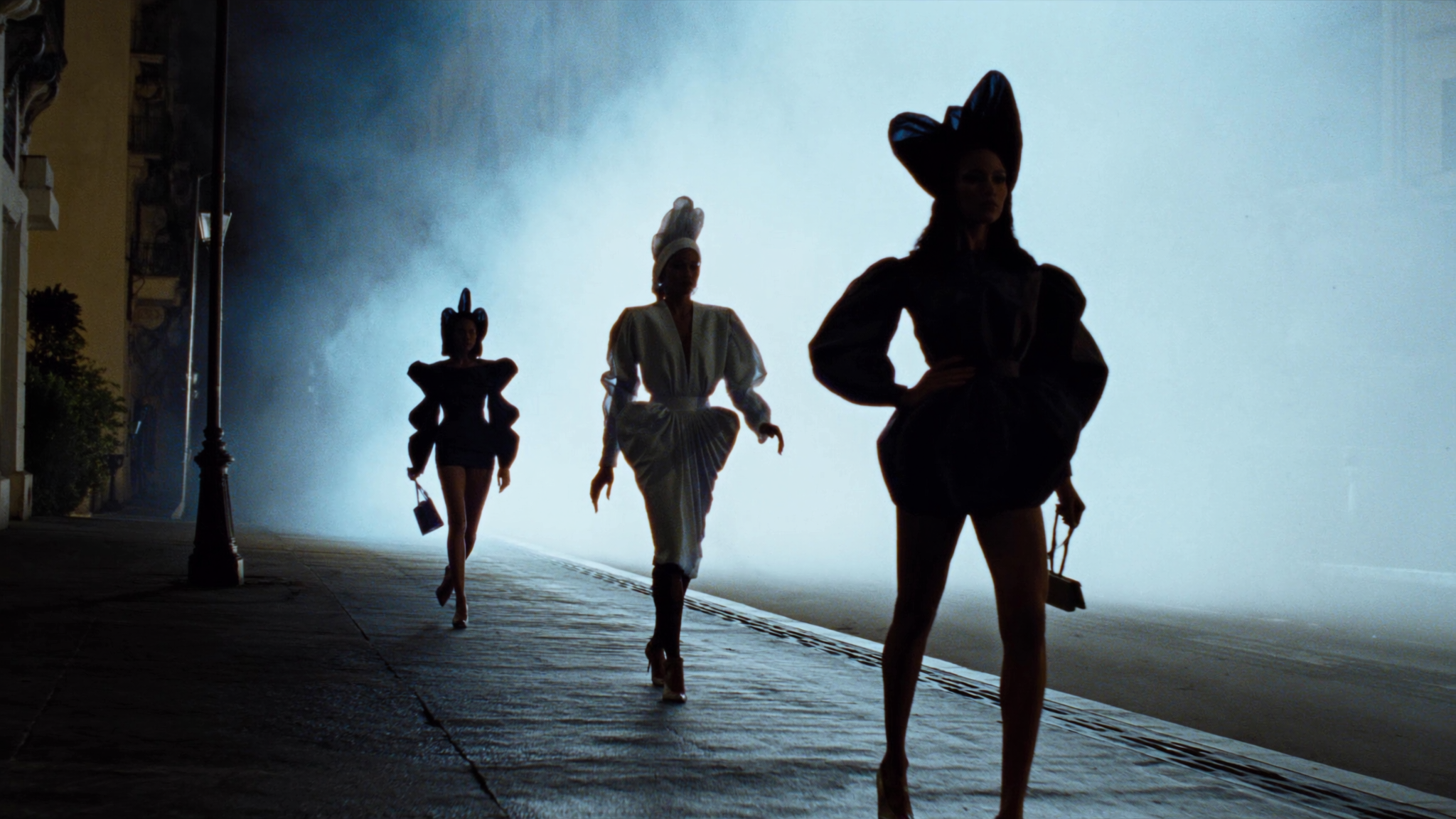

Every few months, a new wave of AI-generated video floods social media, and with it comes the same familiar question: will AI destroy YouTube? Creators worry that machine-made channels will crowd out human work, flood the platform with cheap content, and crash the economics of video. It is a reasonable fear. It is also, so far, not what the data shows. What is actually happening is more interesting: AI is changing what it takes to make video, who can make it, and what viewers expect. YouTube is not being destroyed. It is being reshaped, and creators who understand the new rules are the ones who benefit.
This article looks at the evidence, the technology, and the strategy side of the question. You will see why the panic is understandable, what the current generation of video models can and cannot do, how the recommendation system actually treats AI content, and what practical steps a creator can take to stay competitive in a world where anyone can generate footage from a prompt.
The Short Answer: Reshaping, Not Destroying
The most honest answer to the question in the title is that AI is not destroying YouTube, but it is changing the job description of a creator. The total volume of video being uploaded has grown sharply, and a meaningful share of new uploads is now assisted or fully generated by AI tools. Yet the platform keeps growing, viewership keeps growing, and advertising keeps flowing. What changed is not the size of the pie but how slices are earned.
Think about what a channel actually needs to succeed. It needs a distinct point of view, a reliable visual identity, a publishing rhythm, and an audience that trusts the creator. AI can accelerate the production part of that equation, sometimes dramatically, but it cannot supply the trust. Viewers do not watch a channel because the footage is technically flawless. They watch because the creator understands them, entertains them, or teaches them something they cannot get elsewhere. That part of the job remains stubbornly human.
That is not a comforting slogan. It is a description of how incentives work. If AI content were uniformly rewarded by the algorithm, the first wave of mass-generated channels would already dominate every niche. Instead, what we see is a split: generic AI content gets mediocre performance, while creators who use AI as a production tool inside a strong concept continue to grow. The technology amplifies whatever the creator already has. A great concept with AI production becomes great content faster. A weak concept with AI production becomes weak content faster, because production is no longer the bottleneck that hides it.
Where the Panic Comes From
The fear did not appear out of nowhere. Several things happened in quick succession that made the threat feel concrete.
First, the quality jump was abrupt. Older text-to-video models produced short, wobbly clips that looked obviously synthetic. The latest generation produces coherent scenes with stable characters, plausible motion, and cinematic lighting. For an average viewer scrolling through a feed, the difference between a generated establishing shot and a real one is often invisible.
Second, the volume is real. Because generation is cheap and fast, some operators built channels that publish dozens of videos per day, most of them assembled from generated footage, automated narration, and recycled scripts. When you see a niche flooded with suspiciously similar content, it is natural to assume the flood will drown everything else.
Third, the economics of attention are zero-sum in the short term. Every minute a viewer spends on a generated video is a minute they are not spending on a human creator's video. When supply grows faster than demand, average watch time per video falls, and creators who rely on high view counts feel the squeeze even if their own content has not changed.
All three observations are true. The mistake is extrapolating from them to the conclusion that human creators are obsolete. That conclusion ignores how platforms, advertisers, and viewers have adapted so far, and it ignores the actual quality ceiling of current tools.
What the New Generation of Video Models Actually Changed
The current generation of models, from names like Runway, OpenAI Sora, Alibaba Wan, Kling, and PixVerse, is a genuine leap over what came before. The most important changes are worth understanding precisely, because they explain both the opportunity and the limit.
The first change is duration and coherence. Earlier tools generated three-to-five second fragments that had to be stitched together. Modern models can produce longer sequences where the subject stays recognizable across cuts, the camera moves with intent, and the scene obeys basic physical logic. That makes it possible to generate not just b-roll but usable narrative shots.
The second change is adherence to prompts. Models are dramatically better at following instructions about style, lighting, camera angle, and subject. You can ask for a rain-soaked neon alley at night from a low angle and get something close to what you imagined. This matters because prompt adherence is what turns generation from a lottery into a craft. The better the adherence, the more the outcome depends on the skill of the person writing the prompt, which is exactly the kind of skill that can be learned and developed.
The third change is multimodal input. Many tools now accept reference images, so you can feed the model a character design, a location still, or a style frame and ask it to animate within those constraints. Image-to-video and multi-reference workflows are what make character consistency possible across a longer project, and character consistency is the difference between a demo reel and an actual story.
None of this replaces the filmmaker. But it does replace a large part of the physical production pipeline: locations, sets, lighting crews, actors for some shots, and hours of editing. That is why the professional reaction to these tools is not panic but repricing. Work that used to require a budget now requires a skill.
The New Creator Workflow: From Camera Skills to Prompt Skills
The most visible shift inside the creator economy is the migration of the creative bottleneck. In the traditional workflow, the bottleneck was production: you needed a camera, a location, time, and editing ability. In the AI-assisted workflow, the bottleneck moves upstream to concept and instruction.
That means the valuable skills are changing. Writing precise visual prompts, designing a coherent look, planning a shot list, and curating the output of a model are now the core competencies. Someone who has never held a cinema camera can produce a short film that looks professionally shot, provided they can describe what they want with enough clarity and judge whether the result matches the vision.
A practical way to think about it is a three-stage pipeline. Stage one is concept: the idea, the audience, the story, and the visual identity. Stage two is instruction: translating the concept into prompts, reference images, and model choices. Stage three is curation: selecting, fixing, and assembling the best outputs into a finished video. The stages are not equally automatable. Concept and curation remain deeply human. Instruction is the zone where skill and taste meet the tools.
Creators who are worried about AI should ask themselves which stage they actually add value in. If the answer is only the physical act of recording, then yes, the economics of their niche will keep changing. If the answer includes concept, voice, judgment, or audience trust, they are not competing with models. They are using models.
How YouTube's Algorithm Really Treats AI Content
Platforms do not have a blanket policy against AI content, and they cannot reliably detect all of it anyway. What they optimize for is viewer satisfaction, and that is the key to understanding how the algorithm behaves.
Signals like click-through rate, average view duration, return visits, and engagement density still dominate. A video that people click and then abandon quickly is punished regardless of whether it was generated or filmed. A video that holds attention and gets rewatched is rewarded regardless of its production method. This is good news for human creators who make genuinely engaging content, and it is bad news for the most cynical kind of mass-generated spam, which tends to have high production volume but low engagement quality.
There is a second, subtler effect. As the volume of AI content grows in a niche, the algorithm has more candidates to choose from, and the bar for earning distribution rises. A niche that once rewarded any decent video now rewards only videos that stand out. The result is a quality filter that pushes creators toward stronger hooks, better pacing, and more distinctive formats. That is not destruction; it is escalation, and it is exactly the kind of escalation that favors creators with a real point of view.
The practical implication is simple: stop worrying about whether the algorithm will punish AI content and start worrying about whether your content earns attention. The same metrics that protected you before still protect you now. Hooks matter more, the first ten seconds matter more, and clarity of value matters more, because the competition is stiffer at every level.
Picking the Right Model for the Job
One of the most confusing parts of the new landscape is that there is no single best model. Different tools have different strengths, and part of the new professional skill is knowing which one to reach for.
For photorealistic scenes with strong lighting and detail, models like the Flux series and Runway Gen-4 are common choices. For stylized or animated looks, other tools such as Vidu or Kling often perform better with dynamic motion and reference support. For long cinematic sequences with complex scene changes, the Sora and Wan families have shown strong results. The landscape changes quickly, so the rule is not to memorize a leaderboard but to build a small test set of your own prompts and evaluate tools against it on the dimensions you actually care about: adherence, consistency, speed, and cost.
Cost deserves an honest discussion because it shapes strategy. High-quality generation is not free, and the difference between cheap and expensive models is visible in complex scenes. The practical approach is tiering: use fast, affordable models for exploration, drafts, and simple shots, and reserve premium models for hero shots, character reveals, and anything that carries the emotional weight of the piece. Budget is a strategy variable, not a barrier.
Beyond Production: New Ways to Earn
The reshaped landscape also creates new revenue streams that did not exist a few years ago. The most interesting one is model ownership. Several platforms now allow creators to train custom models on their own visual style and then share or license those models to other users. A distinctive aesthetic becomes an asset, and a creator who builds a recognizable look can earn from it even when they are not producing videos.
There are also growing markets for prompt packs, style presets, and reference libraries. A filmmaker who develops a reliable workflow for a particular genre, a particular mood, or a particular character type can package that knowledge and sell it. The creator economy is expanding beyond finished videos into the inputs and recipes that other creators use.
None of this replaces ad revenue or sponsorships, but it changes the risk profile of the job. A creator whose income depends on one platform and one format is fragile. A creator with a distinct style, an audience, and a library of reusable assets has multiple levers to pull.
A Survival Strategy for Creators
If you are a creator reading this and feeling the pressure, here is a concrete strategy that respects both the technology and the realities of the platform.
First, define what you uniquely provide. Write it down. It should not be a tool, a format, or a topic. It should be a perspective, a taste, or a relationship with the audience. This is your moat, and it is the thing AI cannot copy.
Second, build a consistent visual identity. Use reference images, style presets, and repeated characters or locations so your channel is recognizable within three seconds. Consistency compounds: the more uniform your look, the stronger your brand.
Third, systematize your production. Write reusable prompts, keep a library of approved style frames, and document your workflow so you can publish at a steady rhythm without burning out. The creators who win the volume game are not the ones who generate the most; they are the ones who generate the most while keeping quality and voice intact.
Fourth, invest in the skills that cannot be automated: hook writing, storytelling, pacing, and audience research. These are the skills that determine whether a viewer clicks, stays, and returns. They were important before AI and they are more important now, because production is no longer a differentiator.
Fifth, experiment with new revenue models early. Even a small side income from a model, a preset pack, or a course gives you optionality and reduces the anxiety of depending on one stream.
FAQ: Does AI Destroy YouTube?
Will AI-generated channels take over YouTube? Not as a whole. They will take over niches where viewers accept generic content, which are the same niches that were already low-value. In niches where viewers want personality, expertise, or storytelling, human creators keep the advantage.
Can viewers tell when a video is AI-generated? Sometimes, but less often than most people assume. The real question is whether it matters. Viewers punish content that fails to hold attention, not content that is generated.
Should creators disclose AI use? Yes, when it is honest to do so. Disclosure builds trust, and trust is the currency of the platform. Hiding generation is a short-term play with real downside.
Is it too late to start a channel with AI tools? No, but the entry bar has moved. You can no longer win by producing what everyone else produces slightly faster. You can still win with a strong concept, a defined audience, and consistent execution.
What is the biggest mistake new AI creators make? Treating generation as the product. The output of a model is raw material, not a finished video. The people who succeed treat AI as the fastest camera ever invented and still do the work of a creator around it.
The Bottom Line
AI is not destroying YouTube. It is destroying the version of YouTube where production difficulty was the barrier to entry. The platform is becoming more competitive, more visual, and more demanding, and the tools that seemed like a threat are available to everyone, including you.
The creators who survive this transition will not be the ones who resisted the tools or the ones who surrendered to them. They will be the ones who kept asking the same question the platform has always rewarded: what can I give this audience that they cannot get anywhere else? AI changed the answer to that question, but it did not change the question.
