
Every serious generative artist hits the same wall eventually: the first prompts are exciting, the results are unpredictable, and after a few hundred generations it feels like the model decides what you get, not you. The difference between someone who occasionally gets a lucky image and someone who reliably produces epic, coherent work is rarely raw talent. It is prompt engineering, practiced as a craft. This guide breaks that craft down into concrete techniques you can apply today: how to build a visual vocabulary, how to keep styles and characters consistent, how to tune prompts for specific models, and how to chain references into a real production workflow.
None of this requires memorizing magic phrases. It requires understanding what the model actually attends to, and then giving it structured, specific, unambiguous instructions. If you have ever watched a colleague produce stunning images with the same tool that gives you mediocre ones, the difference is almost always in the prompt.
What Makes a Prompt Epic
An epic prompt is not a long prompt. It is a structured prompt. Keyword dumps — "epic, cinematic, 4k, masterpiece, highly detailed" — produce generic results because every other user is writing the same thing. The model averages all those requests into blandness.
An epic prompt does three things. First, it specifies concrete subjects: not "a forest" but "a fog-drenched Nordic fir forest at dawn, moss-covered trunks, a thin mist layer at ground level, pine needles carpeting the soil". Second, it controls the visual environment: light, color, material, atmosphere, camera. Third, it states what to leave out — either through negative prompts or by omission. The result is a prompt that constrains the model's distribution instead of sampling it randomly.
Compare these two prompts for the same scene:
- Weak: "epic mountain landscape, beautiful, cinematic"
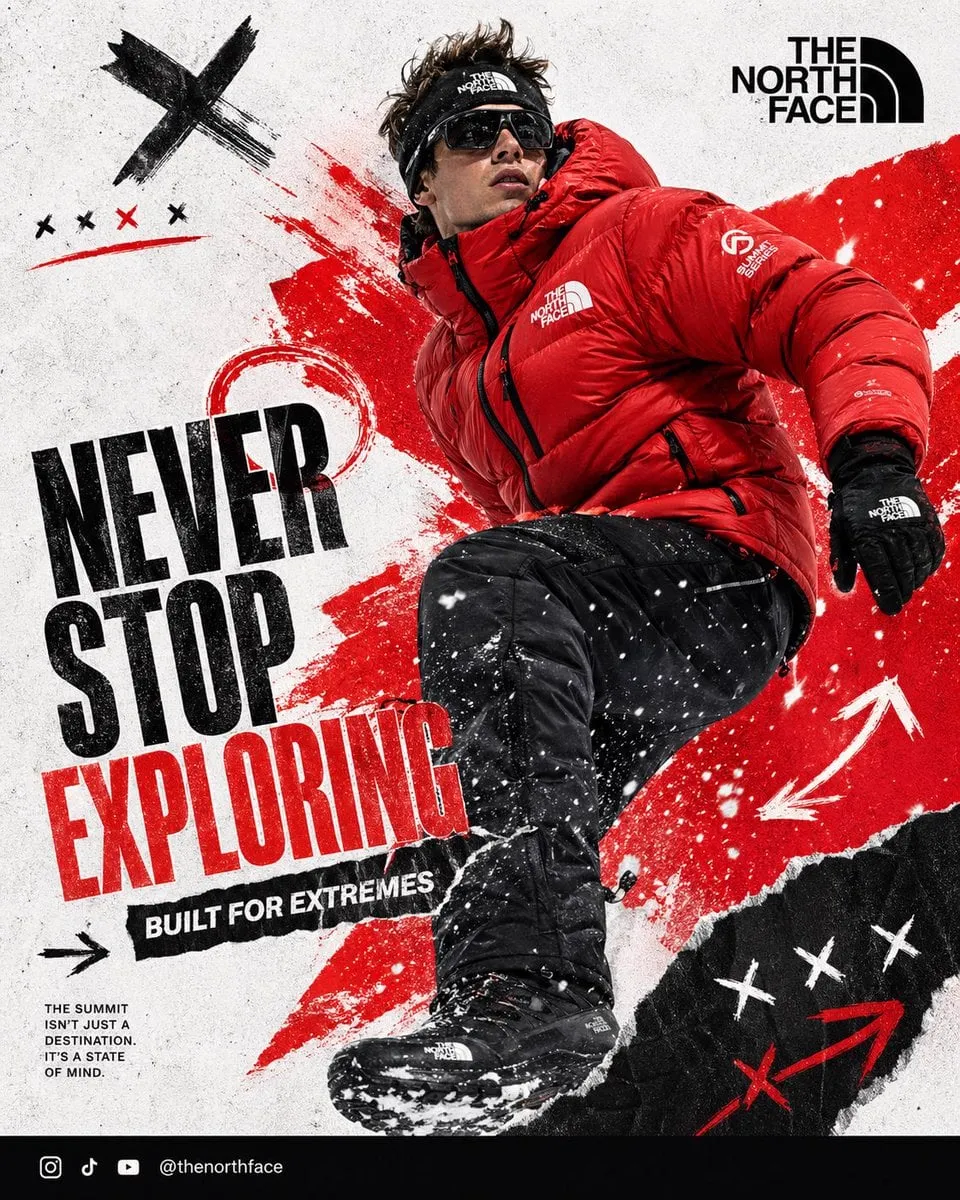
- Strong: "a lone climber in a red jacket standing on a granite ridge above a sea of clouds, golden hour light from the left, sharp shadows, alpine peaks receding into haze, shot on a 35mm lens, anamorphic bokeh, photorealistic"
The second version gives the model ten concrete anchors. Each anchor eliminates a whole class of wrong outputs. That is the entire secret of epic prompting: specificity is control.
Building a Visual Vocabulary: Detailed Description That Works
You cannot write specific prompts from memory every time. Professionals build a visual vocabulary — a personal library of phrases, each of which reliably produces a known effect. You can build yours around six layers:
- Light: "golden hour", "hard noon sun", "overcast diffusion", "neon spill", "volumetric god rays", "candlelight with warm falloff"
- Material: "weathered steel", "wet asphalt", "brushed aluminum", "aged leather", "frosted glass", "raw concrete"
- Atmosphere: "thin fog at ground level", "haze from heat", "dust particles in a light beam", "snow falling slowly"
- Composition: "extreme low angle", "over-the-shoulder", "rule of thirds with negative space on the left", "centered symmetry"
- Camera: "85mm portrait lens", "wide 24mm", "macro", "drone shot from 200 meters", "handheld with subtle shake"
- Palette: "muted teal and rust", "monochrome with a single red accent", "pastel gradient sky"
A strong fill-in template for scenes:
Subject (who or what) + Action or state (what is happening) + Environment (where and when) + Light (how it is lit) + Material detail (what surfaces look like) + Camera (how it is seen) + Style anchor (medium or rendering style).
Two worked examples:
Example A — epic landscape: "a lone lighthouse keeper walking along a storm-battered breakwater, waves exploding against the rocks, late afternoon light breaking through heavy clouds, wet stone glistening, shot on a 24mm lens with a slight wide-angle distortion, cinematic color grade"
Example B — cinematic portrait: "an elderly fisherman with deep wrinkles and weathered hands mending a net, low warm side light from a workshop window, dust motes in the light beam, muted blues and browns, 85mm lens, shallow depth of field, painterly realism"
Each example is one sentence with many concrete anchors. If the result is close but not right, you change one anchor at a time, never the whole prompt.
Style and Character Consistency: Your Prompt Signature
In video production, consistency is the hardest problem. The same character must look the same in every scene, every angle, every lighting condition. The prompt-level solution is a prompt signature: a reusable block of text that defines the character and the style once, and is pasted into every generation.
A character signature looks like this:
"Character: Mara, a woman in her thirties, short black hair with a silver streak, pale skin, green eyes, wearing a dark green utility jacket with brass buttons, silver earrings; style: muted cinematic color palette, soft directional lighting, photorealistic, 85mm lens"
A style signature looks like this:
"Style: painterly watercolor, loose edges, warm cream paper texture, limited palette of indigo, ochre and rust"
Now every prompt becomes: [scene description] + [character signature] + [style signature]. Because the model sees the same defining tokens every time, the output drifts far less. This is the same principle that makes character sheets work in traditional animation, applied to prompts.
For even tighter consistency, use reference images. Most modern tools accept a character image or a style image as input; the prompt then describes the scene while the reference enforces the identity. The combination — reference image plus signature block — is dramatically more stable than either alone. If you are making a series, define these signatures once, store them in a document, and never rewrite them from scratch.
Model-Specific Tuning: Different Engines, Different Grammar
Every model was trained on different data with different prompt conventions. A prompt that sings on one engine can fall flat on another. Rather than fighting this, learn each engine's grammar:
- Natural-language models (several text-to-video engines) prefer full sentences: "The camera slowly pushes in as the character turns toward the window." They respond poorly to comma-separated keyword lists.
- Keyword-oriented models respond to dense, comma-separated attribute lists and often ignore sentence structure.
- Models with explicit syntax support weights and emphasis markers; see the next section.
- Video models additionally need motion verbs and camera moves. "Beautiful woman" produces a static image with subtle movement; "the woman walks toward the camera while the wind moves her hair" produces a shot with intent.
Practical rule: keep the structural skeleton of your prompt stable across models, and adjust only the style vocabulary. If you are switching from a photorealistic engine to an anime engine, keep the subject, environment and light; replace the style anchor ("photorealistic, 35mm") with the new one ("anime, cel shading, crisp lineart, saturated colors"). You will find that most of your vocabulary transfers; only the style layer changes.
Weighting, Order, and Syntax: Technical Levers That Matter
Most models pay more attention to the beginning of a prompt than the end. Put your most important elements first: subject, then action, then environment, then lighting, then style. If you need to emphasize something, many engines support weighting syntax such as parentheses with a multiplier. Use it sparingly. A common beginner mistake is weighting everything, which is equivalent to weighting nothing — the model normalizes the input.
Order of operations for refining:
- Change the most important anchor first. If the subject is wrong, no lighting fix will save it.
- Adjust one variable per generation. Keep a log: prompt version, settings, what changed, what happened.
- When something works, preserve it. Copy the winning block into your vocabulary before you lose it.
A useful habit is to keep a prompt experiment log — a simple table with columns for prompt, model, seed, result, and notes. After a few weeks you will have a personal reference that is worth more than any generic prompt guide.
Art History and Film Language as Prompt Material
The fastest way to unlock distinctive styles is to borrow the vocabulary of art history and cinema. These terms are dense with visual meaning and models have been trained on enormous amounts of described artwork:
- Movements and eras: chiaroscuro, impressionism, art nouveau, Bauhaus, vaporwave, Nordic noir
- Cinematic techniques: dolly zoom, dutch angle, anamorphic flare, rack focus, long take, crane shot
- Material references: Kodak Portra film grain, tungsten practicals, softbox diffusion, backlit smoke
- Genres with strong visual identity: noir, cyberpunk, Wes Anderson symmetry, documentary naturalism
The caution: avoid naming living artists for commercial work. Use movements, genres, and techniques instead — they carry the same visual information without the legal exposure. "Cinematic portrait with chiaroscuro lighting, dark background, single dramatic key light" gives you the mood of a Rembrandt study without naming anyone.
References, Chaining, and Iterative Workflows
Epic work rarely comes from a single generation. It comes from chains: generate, evaluate, refine, and pass the result into the next stage. The most common production chain looks like this:
- Generate a base image with a strong prompt.
- Use that image as the reference for variations — change the composition, not the identity.
- Take the best variation and animate it with an image-to-video model, describing the motion separately.
- Use multi-image references where supported: one image for the character, one for the environment, and let the engine fuse them.
- Iterate on the video draft with a fast model before committing to a high-cost final render.
The key discipline is to keep the identity constant while changing only what you intend to change. If you generate ten variations and the character's face changes in each one, stop and fix the reference before continuing. Iterating on top of inconsistency compounds the problem.
A single epic shot is a moment; a sequence is a story. To keep a multi-shot video coherent:
- Keep the character and style signatures identical across all shots.
- Vary only the action and camera in each shot's prompt.
- Use first-frame locking so each shot starts where the previous one ended.
- Plan the shot list like a director: wide establishing shot, medium, close-up, reaction. Write it down before generating.
- Test one transition fully before committing to the rest. If the cut between shot two and three feels wrong, fix it before rendering the remaining shots.
This director's mindset is what separates a collection of pretty clips from a sequence that feels intentional. The tools will keep improving, but the discipline of planning, consistency, and iteration is what makes the work yours.
Building a Personal Prompt Library
The fastest path to better results is not better models — it is a personal prompt library. Every time a prompt produces something you want to see again, it is an asset. Treat it like one.
A simple system has three parts. First, a vocabulary file: phrases grouped by light, material, atmosphere, composition, camera, and palette, each annotated with what it actually produced. Second, a signature bank: your character signatures and style signatures, stored once and reused forever. Third, a results log: for each winning prompt, record the model, the settings, the seed if applicable, and a screenshot of the outcome.
This library compounds. The first month feels like slow going because you are building it; by the third month you will rarely write a prompt from scratch. You will assemble scenes from proven blocks the way a designer assembles layouts from a component system. Teams can share the library too — one person discovers that "frosted glass with a neon rim light" reliably works, and the whole group benefits. This is the difference between an artist who repeats their luck and an artist who owns their style.
Evaluating Results Like a Critic
Generative work rewards a specific skill: knowing why an image works or fails. Most people evaluate by gut feeling — "this one is cool" — and then cannot explain what to fix. Critics evaluate structurally, and you can borrow their framework:
- Subject: is the main subject clear, correctly placed, and consistent with the prompt?
- Light: does the lighting make sense as a single coherent source? Are shadows consistent with highlights?
- Composition: does the eye travel the way you intended? Is there a clear focal point?
- Craft: textures, edges, proportions, and small details — where does the illusion break?
- Intent: does this image do the job it was made for, regardless of how impressive it is?
Run every generation through this list before deciding whether to keep, tweak, or discard it. When you tweak, change the layer that failed: a lighting problem gets a lighting fix, not a rewrite of the whole prompt. This turns iteration from random mutation into directed search, and it is the single fastest way to raise the floor of your work.
FAQ
How long should an AI image or video prompt be? Long enough to be specific, short enough to stay legible. Two to four sentences with five to ten concrete anchors is a good range. Beyond that, most models start averaging out the details.
Why do models ignore parts of my prompt? Usually because the prompt is overloaded or the ignored part is buried at the end. Move the essential element to the beginning, or reduce the total number of instructions.
Can I use artist names in prompts? For personal experimentation, often yes. For commercial work, avoid living artists; use movements, genres, and techniques instead.
How do I keep a character consistent across many generations? Define a character signature, use a reference image, and never change the signature mid-project. Document the settings.
What is the best prompt structure for video? Subject and action first, then environment and light, then camera movement, then style. Video models need motion verbs and camera instructions that image models ignore.
Do longer prompts always produce better results? No. A long prompt full of redundant adjectives performs worse than a short prompt full of concrete anchors. Specificity beats volume.
Start with one scene, build your vocabulary, and log everything. Within a few sessions you will notice the shift: instead of hoping for a good result, you will be directing the model toward one.
