
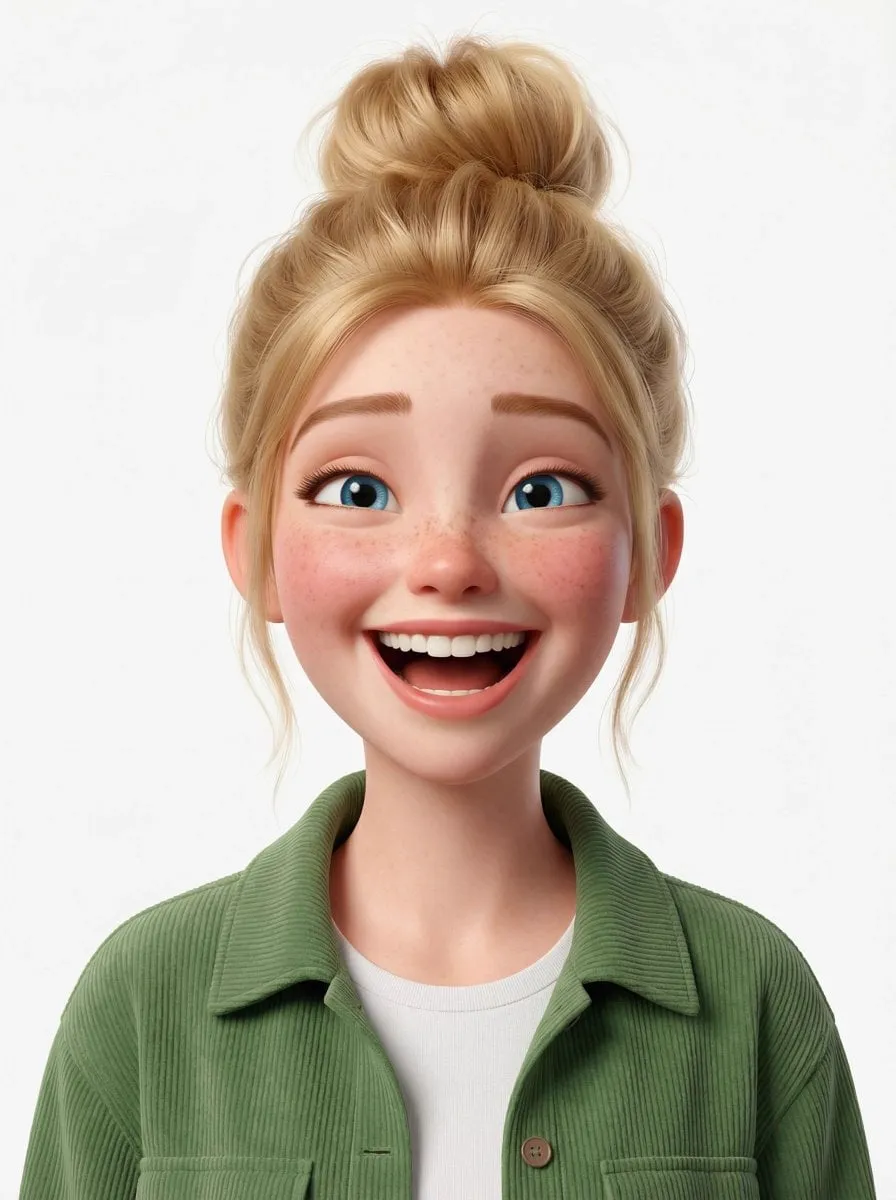
The Moment Realistic AI Animation Stopped Being a Demo
For years, AI-generated video had a recognizable look: slightly waxy faces, physics that bent the rules, and movement that felt synthetic. Audiences learned to spot it in seconds. That telltale "AI look" was the biggest barrier between generated footage and content that could actually be published for brands, films, and serious creators. In 2025, that barrier started to break. The Flux series — a family of image and video generation models built around photorealism and physical coherence — became one of the clearest examples of what changed.
This article explains what the Flux generation actually does, why realism and consistency improved so dramatically, how to compare it against other leading models like Runway, Sora, and Kling, and how to build a practical workflow around it. The goal is not hype. It is a working understanding of where the technology stands and how to use it well.
What Makes the Flux Series Different
The Flux models, developed by Black Forest Labs, began as image generation models and expanded into video generation. Two technical choices set them apart from earlier generations.
The first is an emphasis on prompt adherence at the level of detail. Early text-to-video models took a general description — "a woman walking down a rainy street" — and produced something roughly matching it. Flux models are substantially better at holding onto specifics: the color of the coat, the time of day, the style of the lighting, the brand on a storefront. That precision matters for creators who need a particular visual to survive from prompt to final frame.
The second is physical coherence. Objects behave like objects. Shadows fall in the right direction, water moves like water, fabric folds under gravity, and motion does not morph the subject's face into something else. Photorealism without physical coherence still reads as fake; the combination of the two is what pushes generated footage past the uncanny valley for many viewers.
Within the family, there are distinct tiers. Flux Pro is built for maximum quality and visual fidelity, aimed at creators who prioritize polish over speed. Flux Dev is designed as an open-weight development model that developers and studios can fine-tune and integrate into their own pipelines. Both share the same underlying approach to realism, but they target different workflows: one is a service, the other is a foundation you build on.
Why Consistency Finally Works
The second biggest complaint about AI video, after the synthetic look, was inconsistency. Generate two shots of the same character and you got two different people. That problem is largely solved by multi-image fusion, and the Flux series integrates this technique well.
The idea is simple in concept. Instead of describing a character with words alone, you provide the model with a set of reference images — a front view, a profile, a shot showing the outfit, a close-up of the face. The model merges those images into a stable identity and carries it across every generated scene. The character's face, clothing, and mannerisms remain consistent because the model is working from images, not adjectives.
In practice, this changes production planning. A creator no longer writes "a tall man in a blue jacket" and hopes for the best. They shoot or generate a small reference set first, then feed it to the model. This is the same discipline studios use for character sheets and turnaround models in traditional animation. The AI workflow just makes it faster.
Multi-image fusion also helps with style consistency. If a brand wants a consistent look across a campaign — the same color grade, the same lighting style, the same camera language — reference images carry that style far more reliably than repeated prompts.
Comparing Flux with Runway, Sora, and Kling
No single model wins every job. The useful question is which model fits which task.
Flux is the strongest choice when photorealism and fine detail are the priority: product shots, cinematic environments, character-driven footage where identity must hold across many scenes. Its strength is quality and control. The trade-off is that it tends to be heavier — higher quality costs more compute and more patience.
Runway Gen-4 is the established workhorse of professional AI video. Its strengths are reliable motion, good scene structure, and a mature ecosystem with editing tools built around generation. It is a strong default for narrative content and for creators who want predictable output at reasonable cost. Runway is often the safer choice when you need a full production pipeline rather than one-off shots.
Sora, from OpenAI, excels at long, physically plausible sequences and at understanding complex natural-language prompts. It produces some of the most impressive camera work and scene continuity of any public model. It is a strong pick for ambitious scenes with lots of motion, but it can be harder to control for precise brand requirements.
Kling, from Kuaishou, is a cost-efficient option that performs well on realistic motion and stylized content. It is a favorite for testing, high-volume work, and creators who need good results without premium compute budgets. Its quality-to-cost ratio is the best argument for including it in a workflow.
The practical approach is a multi-model workflow: use Flux or Sora for hero shots, Runway for scene work, and Kling for iterations, tests, and volume. Teams that commit to a single model usually compromise somewhere — quality, cost, or control.
Building a Realistic Animation Workflow
A reliable workflow for realistic AI animation looks like this:
1. Define the visual identity first
Before generating anything, decide what the subject looks like. Collect or create three to five reference images: face, body, outfit, environment, and a style frame that defines lighting and color. This step determines whether the final output is consistent. Skip it and you will fight the model for hours.
2. Write scene-level prompts
Break the script into scenes and write a prompt for each one. The prompt should describe the subject (using the reference identity), the action, the environment, the camera, and the mood. Keep the subject description identical across all prompts for a project. Copy-paste it from a template instead of retyping it.
3. Generate keyframes for critical shots
For shots where the subject or product must look exactly right — a hero product shot, a character close-up, a scene transition — generate the first and last frames explicitly, then animate between them. Keyframe control is the difference between a scene you can approve and a scene you hope will pass review.
4. Iterate in batches
Generate multiple variants of each scene in a batch, review them side by side, and keep only the best. This is faster and cheaper than generating sequentially. Most professional workflows generate at least three or four variants per shot and pick one.
5. Post-process like a video editor
Raw generated footage still needs editing: trimming, captions, audio, color adjustment, and often a stabilization pass. Treat the AI output as footage, not as a finished video. The editing suite is where the piece becomes watchable.
Managing Generation at Scale
Realistic models are compute-hungry, which makes task management part of the workflow. When generating many scenes, use a task queue instead of running everything in a single blocking session. A queue lets you submit a whole storyboard and process scenes in order, retry failures, and track what has been completed.
Two operational habits matter:
- Version everything. Store every generated clip with its prompt, model, and settings. When a client or stakeholder asks for a change, you can reproduce the exact conditions instead of guessing.
- Monitor costs. High-quality models cost more per generation. Track spending per project and per scene type. If a project is blowing the budget, the fix is usually better prompts and keyframes, not more generations.
Choosing the Right Model for the Job
Use this decision framework when starting a project:
- Photorealism is the priority: Flux.
- Long scenes with complex motion and natural language prompts: Sora.
- Predictable narrative work with a mature toolset: Runway.
- Budget-conscious volume and testing: Kling.
- Custom fine-tuning and integration into your own app: Flux Dev or another open-weight model.
The framework is a starting point, not a law. Model quality shifts quickly, and every team's constraints differ. The right habit is to test two or three models on a representative shot before committing to a full project.
Practical Tips for Realistic Results
- Light the scene with words. Describe light sources explicitly: "golden hour, soft window light from the left, gentle shadows." Lighting language is the fastest way to improve realism.
- Keep the subject simple. A complex subject with many moving parts invites errors. Simplify the outfit, the background, or the action until the model handles it cleanly.
- Use negative constraints sparingly. Modern models handle positive instructions better than long lists of prohibitions. Write what you want, not everything you do not want.
- Check hands and faces. Even the best models occasionally fail on small details. A quick zoomed review of hands, eyes, and text in the frame catches most issues.
- Do not fight a bad prompt. If a scene fails twice, rewrite the prompt or change the keyframes rather than re-rolling the same prompt.
Practical Prompt Examples for Realistic Scenes
Prompts are where good results are won or lost. Here are three annotated examples that follow the workflow described above, from a generic request to a production-grade one.
Weak prompt: "A man walks down a street."
Better prompt: "A man in his forties wearing a dark blue coat walks down a narrow European street in the late afternoon."
Production prompt: "Using the reference set of Marcus, show him walking down a narrow cobblestone street in Lisbon at golden hour, soft warm sunlight from the left, long shadows, a slight breeze moving his coat, camera follows at medium distance with a subtle push-in, photorealistic, shallow depth of field."
Notice the difference. The production prompt names the subject via the reference set, specifies the location, the time of day, the light source, the motion of clothing, the camera behavior, and the finish. Every clause gives the model a decision it no longer has to guess.
For a product shot, the same structure applies:
Product prompt: "Using the reference set of the espresso machine, show it on a wooden counter, steam rising from a cup beside it, soft morning light through a window on the right, camera slowly orbiting from front to three-quarter view, photorealistic, clean minimal background."
And for a character close-up with keyframe control:
Keyframe prompt: "Generate the final frame: Marcus turning toward the camera, eyes slightly narrowed, dusk light on his face, background softly blurred. Animate from the approved first frame to this final frame with a slow, steady push-in."
Keep a library of these prompt patterns. After a few projects you will have templates for scenes, products, and characters that consistently produce strong results, and you can reuse them with small edits instead of writing every prompt from scratch.
Frequently Asked Questions
Is Flux available to individual creators, or is it enterprise-only?
The family spans both. Flux Pro is available as a service through multiple platforms, while Flux Dev is an open-weight model that developers can self-host and integrate. Individual creators can access both paths depending on their tooling.
Can I use these models for commercial projects?
Most public platforms grant commercial usage rights for content you generate, but the terms differ by model and provider. Read the license for the specific model and service you use, and keep records of generation metadata.
Do I still need a video editor?
Yes. Generation produces footage; editing produces a video. Captions, audio, pacing, and color grading are still manual work in most workflows, though editing tools are integrating AI features quickly.
How do I keep the same character across a whole series?
Build a permanent reference set for the character, store it with your project files, and reuse the same reference images and subject description in every episode. Consistency is a data problem, and the reference set is the data.
Which model should a beginner start with?
Start with a single strong all-rounder, learn its prompt style and limits, and master the keyframe workflow. Add a second model once the first one's weaknesses are clear. Starting with five models at once guarantees confusion.
Final Thoughts
Realistic AI animation crossed a threshold in 2025. The synthetic look is no longer inevitable, consistency is achievable through reference-driven workflows, and the gap between generated footage and professional content has narrowed dramatically. The models that made this possible — Flux, Sora, Runway, Kling, and the rest of the field — are not interchangeable. Each has strengths, and the teams that win are the ones that match models to tasks, build reference systems, and treat generation as one step in a real production pipeline. The technology finally delivers what the demos always promised. The remaining work is ours: learn the tools, build the process, and make something worth watching.
