

From Prompt to Picture: The New Production Line
Film production has always been a chain of expensive, sequential steps: development, pre-production, shooting, post-production, distribution. Generative AI models are compressing that chain in ways that change not just the budget, but who gets to make films at all. The most visible force in this shift is the new generation of video models — Flux for image-level photorealism and Kling for long-form narrative coherence — but the real story is how these models fit together in a working pipeline.
The market has responded accordingly. Video generation is moving from a curiosity to a core production tool, and the models that win are the ones that solve the problems filmmakers actually have: keeping a character recognizable from scene to scene, controlling the camera, and delivering usable quality without a dedicated VFX team.
This guide breaks down what Flux and Kling actually do well, where the budget models fit, and how to assemble all of it into a pipeline that produces consistent, film-like results.
Flux: Photorealism and Prompt Discipline
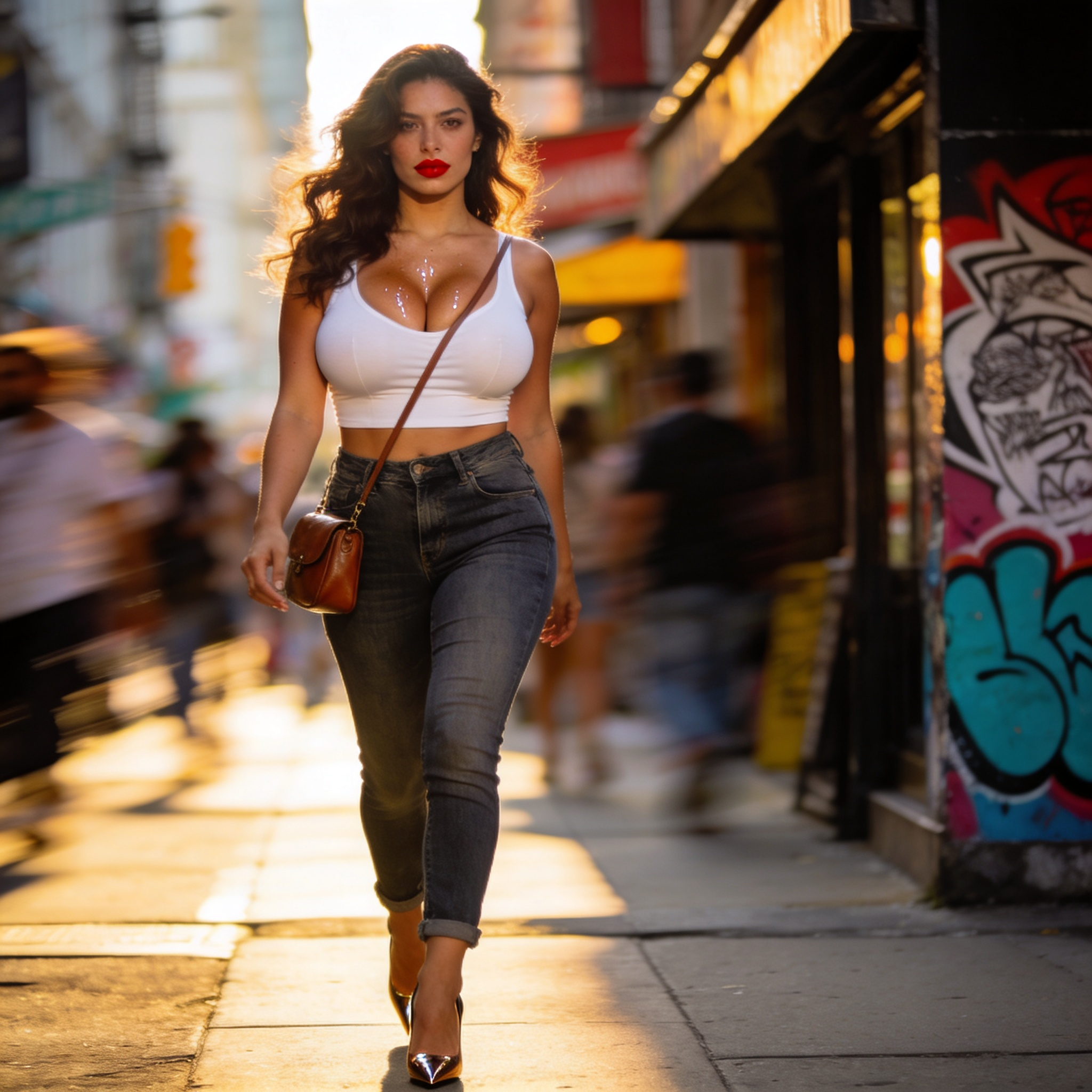
Flux earns its reputation from output quality: skin texture, fabric detail, lighting falloff, and material realism that read as photographic rather than generated. If your project lives or dies on visual believability — product shots, cinematic stills, realistic environments — Flux is often the strongest starting point.
The less obvious strength is prompt understanding. Flux tolerates dense, specific descriptions: exact lens choices, lighting directions, color palettes, and compositional rules. That matters because it lets a director describe a shot the way they would brief a cinematographer, rather than wrestling a vague prompt toward an accidental result.
The discipline cuts both ways. The more control you want, the more precise your prompt must be. A lazy prompt on a photorealistic model produces a confident-looking image that is subtly wrong: extra fingers, impossible shadows, or wardrobe that changes between frames. The fix is workflow, not magic: write shot-by-shot prompts with the same structure — subject, action, setting, lighting, lens, palette — and validate each element before generating at scale.
Kling: Narrative Coherence Across Long Scenes
Where Flux excels at the single frame, Kling's strength is time. It has been built with a focus on prompt adherence and stability over longer sequences, which makes it the better choice when a scene must stay believable across several seconds: a character walking through a room, a conversation with consistent blocking, an action beat where physics must read correctly.
Kling models also handle culturally specific contexts well, which matters for international productions. Gestures, architecture, fashion, and social norms encoded in the training data let teams produce scenes that feel native to a region without an army of local references.
The practical implication: use Kling for the shots where continuity is the risk, and use a photorealistic image model for the frames where texture and light are the risk. Most strong AI film pipelines use both, because they are solving different problems.
The Budget Tier: Hailuo, Luma Ray, and the Price-Per-Shot Question
Not every shot in a production needs a flagship model. Budget models like Hailuo and Luma Ray trade some fidelity for speed and cost, and they are the workhorses of exploratory production: motion tests, previz, drafts for client approval, and filler shots where the content is simple.
The price-per-shot mindset changes how you plan. A typical short film might need forty usable shots. If you draft every shot on a budget model and only promote the ten that carry the film's emotional or visual weight to a premium render, your total cost collapses. The expensive model never touches a throwaway frame.
The hidden skill is knowing which shots deserve promotion. The close-up on the lead actor, the establishing shot that sets the tone, the hero product moment — those justify premium quality. The transition shots, the background plates, the reaction inserts — budget quality is often indistinguishable.
There is also a timing advantage to the budget tier that is easy to overlook. Because draft models render quickly, you can iterate on composition, camera, and pacing without burning hours on premium renders. That speed is not just convenient; it improves the final film, because more iterations mean more chances to find the version that works. In practice, teams that draft widely and render narrowly produce more polished results than teams that commit to a premium render for every first idea. The budget tier is not the place where quality is sacrificed; it is the place where quality is discovered.
Beyond Text Prompts: Control Tools That Feel Like a Camera
The biggest shift in the current generation of tools is control. Text-to-video treats the director like a writer; the new control features treat them like a cinematographer. Multi-modal models now accept reference images, so a character's face or a location's architecture can be locked before generation starts. Camera-focused tools let you specify lens behavior, motion blur, and movement curves directly, which is how you get dolly moves and whip pans instead of static, floating frames.
When you chain these controls, the workflow starts to resemble a real production:
- Lock the look with reference images — character sheet, location stills, color script.
- Block the shot in a draft pass using a fast model.
- Iterate on camera and timing with the control tools, not by re-rolling the prompt.
- Render the final take with the premium model and the locked references.
This is the difference between prompting and directing. Teams that treat the tools as a camera department get dramatically more consistent output than teams that treat them as a random generator.
Building a Scene-Consistent Film Workflow
Consistency is the problem that separates hobbyists from professionals, and it is solved upstream, not downstream. Before you generate a single shot, build the reference package:
- Character sheet: the lead and supporting characters from multiple angles, in the wardrobe they will wear, under the lighting they will be shot in.
- Location stills: each major set from several angles, so you can match eyelines and composition across coverage.
- Color script: a small set of palette swatches that define the film's look, applied to every scene.
Every generation, regardless of model, starts from this package. When a shot drifts, the reference set tells you exactly what to correct instead of guessing. Teams that maintain this discipline report far fewer reshoots, because the model is no longer inventing the character from scratch every time.
Working with Generated Footage in the Edit
Generative footage changes the editor's job in ways that are easy to underestimate until you sit down at the timeline. The first difference is rhythm. Generated shots do not carry the natural timing of filmed material — no actor's pause, no camera operator's breathing — so the editor has to impose rhythm through pacing choices: how long a shot holds, where the cut lands, how the audio bridges the gaps. Plan for a pacing pass, not just an assembly pass.
The second difference is fixability. A film footage error is often fixable in post — a color grade, a stabilization pass, a speed ramp. A generated footage error is usually a regeneration problem: the hand warped, the reflection broke, the physics read wrong. The efficient workflow is to classify every problem as "fix in post" or "regenerate", and to regenerate early and cheaply rather than trying to rescue a bad take. Every minute spent finessing a broken generated shot is a minute that could have produced a clean one from a draft model.
The third difference is continuity of technical specs. Generated shots need to match on frame rate, aspect ratio, and grain structure, or the film falls apart visually. Lock those specs at the start of the project, generate everything to the same canvas, and grade every shot against the same reference still. Editors who enforce technical continuity upstream spend their time making creative decisions instead of repairing mismatches.
What This Means for Directors, Editors, and Studios
For directors, the new tools change the role: less time herding crew logistics, more time on shot design and performance. For editors, the change is subtler but real — AI-generated footage comes with unpredictable rhythm, so cutting to a consistent frame rate and pacing requires the same judgment as cutting any footage, plus new vocabulary for what is "fixable" in post. For studios, the economics are the headline: a short film that once required a full crew can now be produced by a small team, and the cost structure shifts from fixed overhead to per-shot spend.
That democratization is not a threat to craft; it raises the bar for taste. When everyone can generate a decent image, the differentiator becomes story, composition, and the judgment of which shots deserve the expensive render. The tools remove the technical tax on bad ideas, which means ideas themselves matter more than ever.
Choosing a Model for Your Project
Use this quick map as a starting point:
- Photorealistic stills and hero frames: Flux-class image models.
- Long, stable scenes and character movement: Kling-class video models.
- Fast drafts and previz: budget models like Hailuo or Luma Ray.
- Reference-locked characters across shots: tools with multi-image fusion or image-to-video input.
- Camera control and lens behavior: platforms with explicit motion and camera parameters.
Test your actual shots on two or three candidates before committing. Model quality varies by content type, and the leaderboard winner for landscapes may lose on close-ups. Your footage is the only benchmark that matters.
Beyond the models themselves, plan the glue that holds the pipeline together: consistent naming for assets, a shared folder structure for references, and a fixed review cadence where every shot is checked against the reference package before it moves into the edit. These habits are unglamorous, but they are what separates a team that can ship a film every month from a team that restarts every project. The models improve every quarter; the workflow is what you own, and it is the part of the system that compounds.
FAQ
Can Flux and Kling be used in the same project?
Yes, and it is often the best approach. Use Flux-class image models for reference frames and hero stills, then use Kling for the video sequences where temporal stability matters. Lock the references first so the two models agree on the look.
Is AI-generated film production really cheaper?
For small teams, yes — dramatically. The cost shifts from crew and equipment to compute, and per-shot pricing rewards planning. A disciplined workflow can produce a credible short film for a fraction of a traditional budget.
Do I still need a director's eye with these tools?
More than ever. The tools execute, but someone has to decide which shots carry the story, which moments justify premium renders, and when a generated take is actually good. Taste is the scarce resource now.
What is the most common mistake teams make?
Generating shots before locking references. Without a character sheet and location stills, every shot re-invents the character, and the film falls apart at the cut. Fix the upstream workflow and most downstream problems disappear.
How do I keep generated footage consistent in the edit?
Lock your frame rate and aspect ratio at the start, grade all shots against the same color script, and cut with the same pacing rules you would use for any footage. Consistency is a pipeline decision, not a post-production accident.
Should I storyboard before generating?
Yes, and the storyboard does double duty: it plans the film, and its frames become the reference stills that keep the look consistent. A storyboard generated from the same reference package as the final shots prevents drift before it starts.
What if the model cannot do the shot I need?
Split the shot. If a single generation cannot deliver the action, break it into two smaller beats — a close-up that establishes the moment and a wider shot that completes it — and cut between them. Dividing the problem is the oldest editing trick, and it works perfectly with generative footage.
How much should I plan before generating?
More than feels natural. A shot list, a reference package, and a color script prevent most downstream problems, and they cost nothing to produce. The teams that generate first and plan later are the ones who reshoot the most.
