
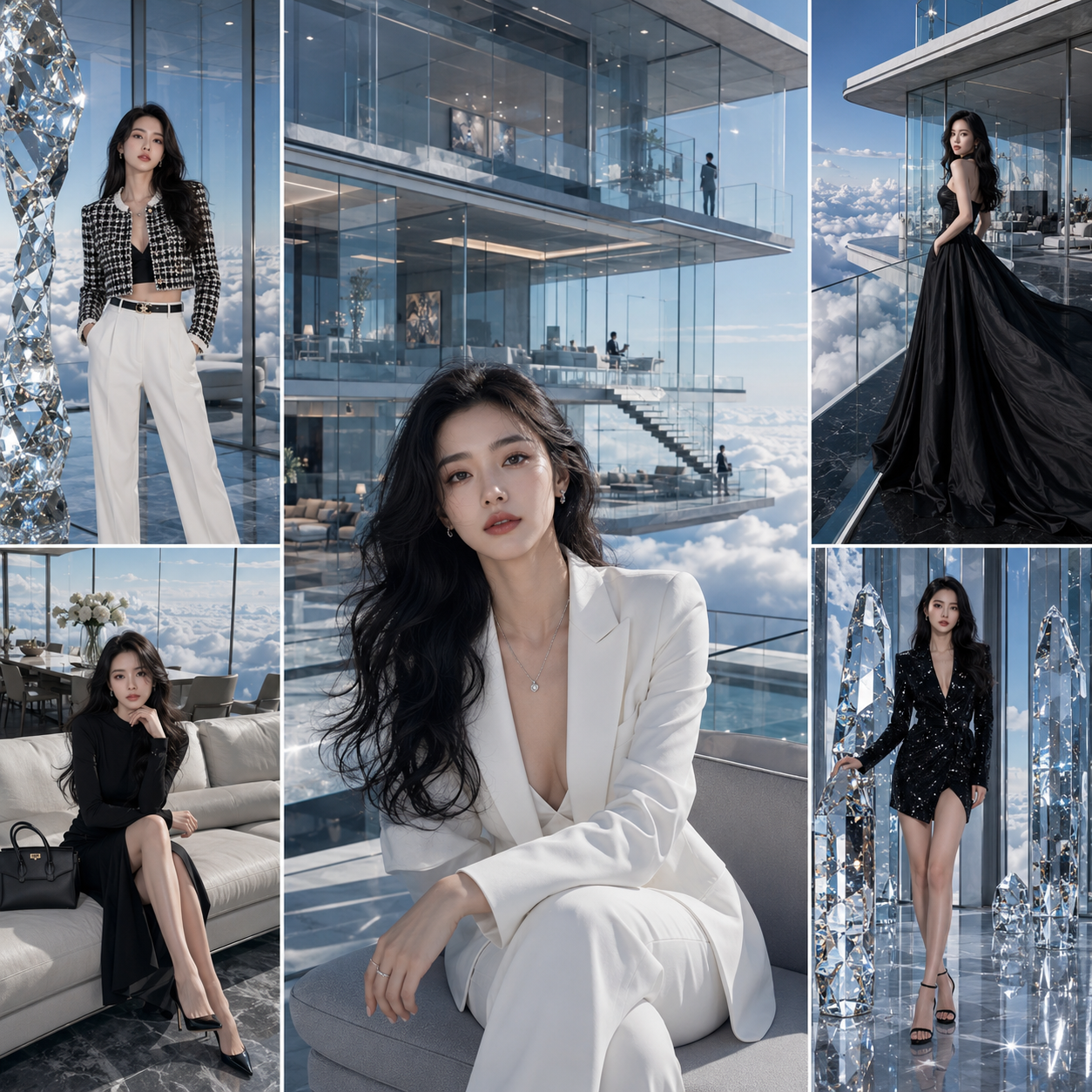

Text-to-video used to be a promise. For years, creators heard that AI would soon let them type a sentence and get a usable clip, and for years the reality was a series of short, weird, watermark-heavy experiments. The technology existed, but it was not a tool. It was a demo.
That has changed. In 2025, text-to-video is a practical production method with a wide range of price points, and a meaningful slice of the market is genuinely free or very low cost. A small business, an indie creator, or a student can now produce watchable video without a production budget. The problem is no longer access. The problem is choice: dozens of models, confusing free tiers, hidden limits, and no clear map from "I want a video" to "here is the right free tool for my job."
This guide is that map. It covers how text-to-video generation works under the hood, what the free and budget options actually deliver, how tools like Pika Labs compare with the alternatives, how to write prompts that get results from free models, and when the free path stops being the smart choice.
How Text-to-Video Generation Works
Under the hood, modern text-to-video systems are built from two families of technology working together. Large language models handle the text: they parse your prompt, understand the objects, actions, and relationships you describe, and help convert that understanding into detailed instructions for the visual system. Diffusion models do the rendering: they start from noise and progressively refine frames until they match the semantic description, while a temporal layer keeps the motion coherent across frames instead of producing a slideshow.
The result is that the same prompt can produce very different output quality depending on how well each component handles your specific request. A model with strong language understanding but weak temporal coherence gives you gorgeous stills and wobbly motion. A model with strong motion but weak language understanding gives you smooth video that ignores half your prompt. This is why "which model is best" has no single answer: the best model depends on what you are making.
The other factor is the generation cost. Video models are expensive to run, far more expensive than image models, because every second of video is many frames, and every frame is a full generation pass. This is why free tiers exist at all: providers give you a taste in the hope you will pay for more, and the generous ones are subsidizing your experiments to build habits.
What Free Tiers Actually Deliver
Let us be honest about the free tier landscape. It is better than it was, and it is still constrained. Most free options share the same pattern: a limited number of generations per day or per month, short clip length, lower resolution, a watermark, or a queue that makes you wait while paying users jump ahead. None of that makes free tools useless; it just means you should plan around the constraints.
The practical use cases for free text-to-video are:
Concept testing. Before you spend money on a paid generation, confirm the visual idea works. Free tools are perfect for testing prompts, styles, and compositions at zero cost.
Social media experiments. Short, rough clips can be perfectly adequate for testing whether an audience responds to an idea. The algorithm does not know or care how the video was made; it cares whether people watch.
Client or stakeholder visualization. A free-tier rough cut is a great way to show direction before committing budget to the final render.
Learning. If you are new to prompt engineering, the free tier is your practice ground. Burn through your free generations learning what works; the skill transfers to every paid tool.
What free tiers are not good for: final deliverables, brand-facing assets, long sequences, or anything where a watermark would embarrass you. Treat free as a learning and testing layer, and treat paid as the finishing layer.
Pika Labs and the Alternatives
Pika Labs became the name most people associate with text-to-video, and deservedly so: it popularized the category with playful, accessible tools and a strong community. The Pika interface is approachable, and its free tier historically gave newcomers a real chance to generate clips without paying. For a first experience with text-to-video, Pika remains a reasonable starting point.
But "starting point" is the right framing, because the field has moved fast, and the serious alternatives now outclass the entry level in specific dimensions.
Kling is the model to test when you care about motion and realism. Kling models produce some of the most convincing physical motion in the category, with characters and objects that move like they have weight. The free or budget tiers are more limited than the premium levels, but even the entry level shows the motion quality that made Kling famous.
Runway is the professional's choice. Runway Gen-4 and its neighbors are built for controllable, higher-quality production work, with strong tools for consistent characters and precise instruction following. Runway is rarely the free option, but it is the benchmark that free alternatives are measured against, and its subscription plans are the standard upgrade path for serious creators.
Sora, from OpenAI, is the model that reset expectations for what AI video could look like, with long, coherent, physically plausible scenes. Sora is premium-priced and often capacity-limited, which makes it a destination for hero shots rather than a daily driver, but its influence is everywhere: the realism bar that other models now chase.
Luma offers strong quality with an emphasis on speed and a friendly workflow, and it is a common recommendation for creators who want premium results without the complexity of a full production suite. Its Dream Machine line made high-quality generation accessible to a much wider audience.
The pattern should be clear: the free tools get you in the door, the mid-tier models do the daily work, and the premium models handle the shots that need to be flawless. Most professional workflows use all three layers, not one.
Choosing the Right Tool for the Job
With so many options, a simple decision framework helps more than a benchmark list. Ask three questions.
What am I making? A quick social test clip does not need a premium model. A client-facing brand spot does. Match the tool to the stakes of the deliverable.
What is my bottleneck? If your problem is motion quality, choose accordingly. If your problem is character consistency, choose a model with strong reference support. If your problem is cost, choose the tool with the most generous free tier for your use pattern. Know the constraint you are optimizing before comparing tools.
How much iteration will this need? Drafts should be cheap. If you expect ten versions before one works, use the fastest, cheapest tool for versions one through nine, and only pay for the final render. This simple habit cuts production costs more than any other single practice.
Prompt Engineering for Budget Models
Free and budget models have weaker instruction following than premium ones, which means your prompts must do more of the work. The good news is that the same skills that make prompts work on free models make them better everywhere.
Start with structure. A strong prompt names the subject, the action, the setting, and the camera in that order: "a red fox runs through a snowy forest, close-up tracking shot, soft morning light." Subject-action-setting-camera covers the essentials in one sentence, and it gives the model a clear hierarchy instead of a cloud of adjectives.
Be specific about what matters, and silent about what does not. Free models cannot hold ten details in mind. Choose the three or four details that define the shot, and leave the rest vague. A prompt that says "a woman in a blue coat walks down a rainy street, neon signs reflecting in puddles, slow motion" tells the model exactly what to prioritize.
Use negative guidance sparingly. Many tools support negative prompts, telling the model what not to include, but budget models apply them inconsistently. Save negatives for one or two recurring problems, like "no text" or "no extra limbs," rather than listing everything you fear.
Think in shots, not in films. Free tiers generate short clips. Plan your project as a sequence of short shots, and use a consistent style line in every prompt so the shots feel like one piece: "same palette as shot one, overcast daylight." Consistency of prompt style is how you fake consistency of world.
Building a Complete Video Without Paying
A realistic free workflow strings together the tools you have. Here is a practical sequence.
First, write the script and break it into shots. For a thirty-second video, that might be six to ten short clips. Each clip becomes one generation.
Second, generate each shot with the best free tool you have for that content, using the prompt structure above and a shared style line. Expect to regenerate: budget the free-tier limits into your plan, and draft the least important shots first so you still have quota when you reach the hero shot.
Third, assemble in a free editor, trim the clips, add captions, and add a simple audio bed from a royalty-free library. Captions alone massively improve retention, and they hide a multitude of sins in rough footage.
Fourth, review the result as a whole, not frame by frame. The audience will not pause to inspect; they will feel whether it holds together. Fix the shots that break the flow, not the shots that are merely imperfect.
This workflow will not produce a Hollywood blockbuster. It will produce a usable, honest video for almost zero cost, and it teaches you the entire production loop, script, shot, generate, edit, review, that applies at every budget level.
When Free Stops Being the Answer
There comes a point where the free path costs more than the paid path, and it arrives sooner than most people expect. The signs: you are regenerating the same shot five times because the free tier limits resolution or length; you are waiting through queues that waste more time than a subscription would cost; or you are delivering client-facing work with a watermark you cannot remove.
When the video is for a customer, a brand, or a serious distribution channel, the calculation changes. A single paid generation can cost less than the hourly rate you would spend fighting free-tier limits, and the quality difference is visible to the audience. The upgrade moment is not about vanity; it is about the value of your time and the stakes of the deliverable.
The smart approach is tiered, not either-or. Keep the free tools for drafts and experiments, and pay only for the shots that matter. Most professionals end up with one or two subscriptions that cover their daily work, plus free tools for testing, plus premium models for hero shots. The budget follows the stakes.
FAQ
Is free text-to-video good enough for social media?
For testing and low-stakes content, yes. For brand-facing posts, the watermark and quality limits usually make paid a better value. Let the stakes decide.
Which free tool is the best for beginners?
Start with whichever tool offers the most generous free tier and the friendliest interface; the skills transfer. Once you know what you are optimizing for, motion, consistency, cost, you can switch to the model that fits.
How do I avoid the watermark?
Free tiers watermark output by design; that is the price of free. If the deliverable cannot carry a watermark, budget for a paid plan or a one-off purchase.
Can I make money with free AI video?
Yes, with caveats. Many creators use free tools for client moodboards, internal drafts, and low-stakes content. For paid deliverables, expect to invest in the tools that make the output professional.
Do I need a powerful computer?
No. The heavy lifting happens on the provider's servers. You need a decent browser and a stable connection; the quality of your output depends on the prompt and the model, not your GPU.
Final Thoughts
Free text-to-video is no longer a tease; it is a genuine production layer. The tools are good enough to learn with, test with, and even ship low-stakes content from, and they make the entire category accessible to anyone with an idea. The discipline is the same at every price point: structure your prompts, plan in shots, keep a consistent style line, and let the stakes of each deliverable decide what you pay for.
The field will keep evolving, and today's free tier will be tomorrow's baseline. The skill that does not depreciate is judgment: knowing what each tool is good at, knowing what your project needs, and knowing exactly where your time and money are best spent. Master that, and the tools become a detail.
