
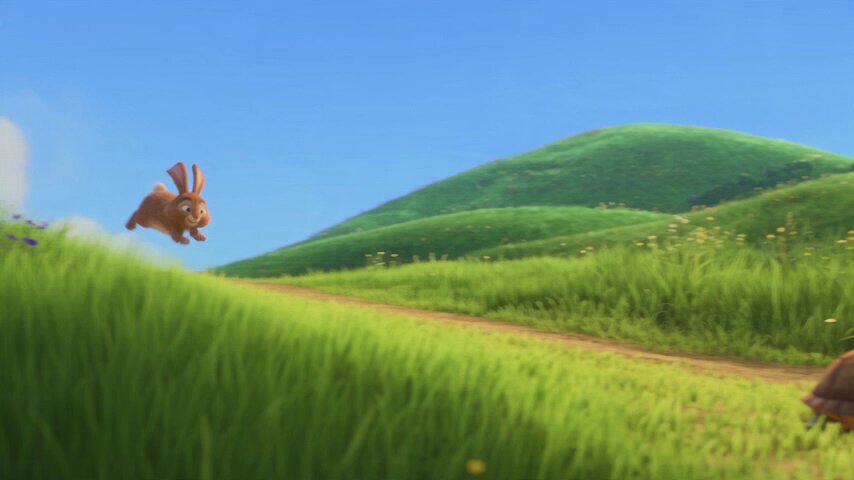
Turning words into moving pictures
The idea of typing a sentence and watching a coherent scene appear on screen was science fiction a few years ago. Today it is an everyday working tool for independent filmmakers, marketers, educators, and storytellers. AI text-to-video has grown from a curiosity into a reliable bridge between the imagination and the finished cut, and in the middle of this decade it is changing who gets to call themselves a filmmaker. This guide walks through the full journey, from choosing the right prompt and model to assembling consistent, high-quality shots and delivering a short film that looks intentional rather than accidental.
People new to the field often assume that text-to-video is a single magic button. The reality is more layered. A finished short film is the product of many individual decisions: how you describe the opening frame, which generation model matches the mood you are after, how you keep a character's face stable from shot to shot, and how you edit the resulting clips together. Each of these steps can be planned ahead, which is exactly why a structured approach beats random experimentation. This article gives you a repeatable workflow rather than a handful of tricks.
Why AI video generation changed the rules
For most of the history of cinema, the cost of making film was a wall. Cameras, lighting, sets, cast, crews, and post-production software all required money and people. A creator with an idea but no budget had few options. AI video generation removes large parts of that barrier because the computational work of producing imagery is done by models rather than by physical equipment and human labor.
This matters far beyond entertainment. Marketing teams now produce product demos and social cuts overnight instead of booking studio time. Educators generate illustrative animations to make abstract concepts visible. Nonprofits explain complex issues with bespoke visuals. Designers rapidly prototype motion concepts and test them with audiences before committing to expensive traditional production. The phrase “it is cheaper to try” has become the new default, and that changes the creative economy in a fundamental way.
There is another, subtler shift. Because generation starts from language, the person who writes well gains an exceptional advantage. Your ability to observe the world, describe light and motion and mood, and structure a sequence becomes the creative asset. In this new production model, storytelling and writing skill sit at the very center of filmmaking, while heavy technical mastery of cameras and software moves to the margins.
How text becomes video under the hood
To use these tools well, it helps to understand roughly what is happening when you press generate. Modern text-to-video systems are built on generative models that have learned to associate text with patterns of pixels and motion. When you describe a scene, the system retrieves the statistical relationships between your words and the visual characteristics they usually accompany, then constructs frames that follow those relationships over time.
A diffusion-based model starts from a field of random noise and progressively refines it toward an image or video that matches the prompt, guided at every step by the text. The temporal dimension is the hardest part. A static image can be plausible with almost any arrangement, but a video must keep objects consistent, respect physics, and avoid objects dissolving between frames. Generation systems handle this by modeling how frames relate to one another across time, and the quality of that temporal modeling is the main differentiator between tools.
The role of the prompt
The prompt acts as both script and art direction. It tells the model what should be in the frame, but also the style, the camera language, the lighting, and the mood. Short, vague prompts produce short, vague results. Detailed prompts that include subject, setting, action, camera movement, lens, and atmosphere produce far more controlled output. This is why prompt engineering is a genuine craft, and why writing clearly pays off so directly in video work.
Choosing the right model for your project
There is no single best text-to-video model, because different projects have different constraints. Understanding the trade-offs lets you pick deliberately instead of defaulting to whatever is newest.
Resolution and initial quality matter most when you plan to use the footage as a hero shot with no repair. If you want long, coherent sequences with complex action, you benefit from a model that is strong at temporal consistency and physics. If speed and iteration matter because you are exploring many ideas, a leaner and faster model will serve you better than a heavyweight one that takes many minutes per clip. If you work across a series of related shots and need them to feel like one production, a model that supports image conditioning and scene control is worth more than raw resolution.
A practical strategy is to keep a small arsenal of models mapped to job types. Use your highest-fidelity model for the moments you will not touch again, a balanced model for general storytelling, and a quick model for drafts, thumbnails, and early director’s cuts. This is faster than trying to find one tool that does everything.
Keeping consistency across multiple shots
Consistency is the difference between a video and a film. Audiences forgive rough edges, but they notice when a hero's face changes from one shot to the next or when a location looks different between cuts. Because each prompt is independent, models will naturally drift. You need workflows to anchor the visual identity.
One of the most effective tools is character reference through images. Start by generating a key image of your character, then carry that image into subsequent generations so the model tries to match the face, wardrobe, and proportions. The same logic applies to locations and key props. Treat these anchor images as the production bible for your piece.
Keyframe control offers another lever. Instead of describing an entire sequence in one prompt, you can define the first and last frames explicitly and let the model interpolate the motion between them. This is invaluable for camera pushes, pans, and transitions where you want a precise beginning and end state. Combined with image-to-video paths, keyframing gives you the kind of control that used to require a full 2D or 3D pipeline.
A practical workflow for making a short film
Start with a shot list
Treat AI video like a real production. Before generating anything, write a shot list. Break your story into individual shots, each with a subject, an action, a camera move, and a mood. This planning step is where writing meets directing, and it saves you enormous time later because each generation now has a clear brief instead of a vague wish.
Write prompts as production notes
For each shot, write a prompt that reads like miniature art direction. Describe the location and time of day, the character and what they are doing, the framing and lens, the lighting, and the emotional tone. Include negative instructions where the tool supports them, such as avoiding extra limbs, warped text, or flickering motion.
Generate, review, regenerate
Generation is iterative. Expect a rate of unusable output; a one-in-five success ratio is normal and acceptable, so plan your compute and your budget accordingly. Review each clip for the basics, subject consistency, motion stability, and lighting before you worry about finer details. Regenerate anything that fails the basics rather than trying to fix it in editing.
Assemble and pass through editing
The final step is editing. Cut out the weak frames, keep the strong ones, and use standard edit software to add audio, music, color grading, and text. Sound does most of the emotional work in a short film, so spend real effort there. A good sound design dramatically improves the perceived quality of generated footage.
Common problems and how to fix them
Flickering and morphing plague early generations. Shorten the clip, add anchor images, or cut the problem shot rather than tolerating it. Unsatisfying physics, such as objects that float or move oddly, are improved by describing weight and contact explicitly in the prompt and by using models known for realistic motion. Trademarked or recognizable people and brands should be avoided entirely, both for legal reasons and because models handle them poorly.
Low resolution is best handled by generating at the highest resolution your chosen model supports and by designing shots, such as close-ups and static composition, that look good even when slightly softer. Text rendering inside video is historically weak; keep words out of your frames and add titles in editing instead.
Prompts worth stealing
A few starting templates get consistent results. For a cinematic establishing shot, try describing a wide lens, golden-hour light, a specific locale, and slow subject movement. For a character moment, anchor a reference image and specify a shallow depth of field with natural face texture. For an action sequence, be explicit about the direction of motion and the rhythm of cuts. Reuse a stable prefix for the style and vary only the action and subject lines between shots so the collection feels unified.
Avoid stuffing your prompt with brand names of models, which rarely helps the output. Focus instead on concrete visual vocabulary, such as “film grain,” “soft window light,” “slow dolly push,” or “desaturated teal shadows.” This vocabulary is model-neutral and transfers across tools.
Building a film in blocks
Beyond a single clip, treat your film as blocks. Establish the world with wide establishing shots, introduce characters with clean anchor images, run the action in short controlled bursts, and write transitions that bridge scenes through matching objects, sounds, or camera moves. Respect that each block is cheap to regenerate, so iterate on structure freely before committing.
This modular approach also makes longer formats feasible. Rather than asking one prompt to sustain minutes of coherent story, which most tools cannot do reliably, you generate dozens of short shots and assemble them. Compose a score or design sound to glue the blocks together into something that feels intentionally directed.
Measuring the quality of your output
Quality is not only subjective. Check that subjects persist correctly, motion respects gravity and contact, lighting is consistent with how shots are cut together, and framing supports the story. Watch your rough cut in sequence, not clip by clip, because sequence often reveals problems that individual clips hide. Share it with a fresh viewer and ask specifically where they lost interest or felt confused, then revise those points.
Where to go next
The leap from experimenting to making real films happens when you adopt a production mindset: plan shots, anchor your characters, regenerate deliberately, edit with intention, and let sound carry the emotion. Text-to-video is a tool that rewards clear writing and strong taste more than technical mastery.
Start small. Make a three-shot scene, show it to someone, and learn what worked. Then build a longer piece. The barriers to becoming a filmmaker have never been lower, and the main requirement, a story with the confidence to tell it, has not changed at all.
Frequently asked questions about AI text-to-video
How long should my text-to-video clips be? Most current generators work best in short bursts, from a few seconds up to roughly ten. Plan your film as a series of short shots and edit them together rather than expecting one long generation to stay coherent. Shorter clips are easier to control, easier to regenerate on failure, and easier to assemble into a finished scene.
Do I need a powerful computer? The heavy computation happens in the cloud with most tools, so a mid-range laptop is usually enough to write prompts and edit the results. Your machine mainly needs to handle playback and editing software. Some high-end local models exist, but they are not necessary to start producing short films.
Can I use AI video commercially? Yes, in most cases, but licensing terms vary by tool and model. Always check the terms of service for the platform and model you use, keep records of what you generated and with which tool, and avoid including recognizable real people, trademarks, or copyrighted elements unless you have explicit rights.
How much of a short film can AI realistically produce? AI can produce the visual footage, and increasingly the story scaffolding, music, and effects. But a distinctive film still needs human direction: the edit, the sound design, the pacing, and the emotional judgment. Treat AI as the camera and the lab, not as the director.
What is the fastest way to improve my results? Improve your prompts. Concrete, specific descriptions of subject, setting, light, and camera produce noticeably better output than short generic ones. Keep a library of prompts that worked and reuse the vocabulary across a project so the shots feel connected.
