

Why One-Click AI Generation Feels Like a Creative Superpower
There was a time when producing a professional image or a short video meant mastering cameras, lighting, composition, and editing software. For most people, the gap between the idea in their head and the finished asset was simply too wide. Generative AI has closed that gap. You describe what you want, and within minutes you have a usable image, an animated scene, or a finished short video.
That is the real promise of one-click generation: it removes the technical barrier between creativity and output. It does not replace taste, storytelling, or strategy. It removes the friction that stopped those things from becoming visible work. Anyone with a clear idea can now produce content that looks like it came from a studio, and teams can iterate on concepts at a speed that was impossible before.
This guide covers how one-click generation actually works, how to get the best results from image and video models, and how to build a repeatable creative workflow around these tools.
What Happens When You Click Generate
Behind the button is a complex pipeline. A text encoder translates your description into a mathematical representation. A diffusion model then starts from noise and progressively refines an image, guided by that representation, until it matches your description as closely as the model understands it. Video models do the same thing frame by frame, while adding the extra challenge of temporal consistency, keeping motion smooth and subjects stable across frames.
Understanding this helps you set expectations. The model does not search a database of existing clips. It synthesizes something new every time. That is why the same prompt can produce different results, and why small changes in wording can have outsized effects. It also explains why the quality of your description matters more than any other factor you control.
One-click does not mean zero decisions. It means the technical decisions are handled for you. The creative decisions, what to generate, which style to pursue, what to keep and what to discard, remain entirely yours.
Prepare Before You Generate
The best generators reward preparation. Before you open a tool, decide what you want to communicate. A vague request produces a vague result, and vague results require many rounds of revision.
A useful preparation routine looks like this:
- Define the purpose. Is this a social post, a product mockup, a storyboard frame, or an ad concept?
- Collect references. Gather images that capture the mood, palette, and style you want. Most tools accept reference images, and they are far more effective than adjectives alone.
- Write a detailed description. Include the subject, the action, the environment, the lighting, and the camera angle. The more specific you are, the more control you retain.
- Decide the format. Aspect ratio, resolution, and duration matter. A vertical 9:16 video is a different project from a horizontal 16:9 one.
This preparation takes ten minutes and saves hours of revision. Professionals treat the prompt as the first draft of the final asset, not as an afterthought.
Choosing the Right Image Model
Image generation is the foundation of most creative workflows, and the model landscape is diverse. Some models produce photorealistic results that are hard to distinguish from photographs. Others specialize in illustration, anime, or painterly styles. Others excel at graphic design elements like typography and clean layouts.
There is no universally best model, only the best model for a given job. A good rule is to match the model to the final use:
- Photorealism for product mockups, architectural visualization, and lifestyle imagery.
- Illustration or stylized models for branding, editorial art, and content with a distinct visual identity.
- Fast models for brainstorming and mood boards, where volume matters more than polish.
Keep a small evaluation set, a handful of prompts that represent your typical work, and test new models against it. The model that impresses you on a demo reel may not be the one that handles your specific subjects best.
Choosing the Right Video Model
Video generation adds motion, and motion is where quality differences become obvious. The current models vary widely in their ability to handle physics, character consistency, and complex camera movement.
For most projects, ask three questions before picking a video model:
- How long does the clip need to be? Some models generate short clips natively; longer sequences require stitching multiple shots.
- How much motion is involved? Fast action, crowds, and complex physics stress models more than a static scene with subtle camera movement.
- What is the aesthetic? Photorealistic models and stylized models are not interchangeable, and forcing the wrong aesthetic produces uncanny results.
A practical strategy is to separate the pipeline: generate keyframes as images, then animate them with a video model. This gives you precise control over composition and character appearance, while the video model handles the motion. Many professional workflows use exactly this hybrid approach because it combines the strengths of both model types.
Keeping Characters and Scenes Consistent
Consistency is the single hardest problem in generative video. A character should look like the same person in every scene, and a location should not change architecture between shots. Models have improved dramatically here, but the discipline is still on you.
The most reliable method is reference-based generation. Supply the model with images of the character or location, and it will anchor its output to those references. Treat these references as the source of truth for the entire project.
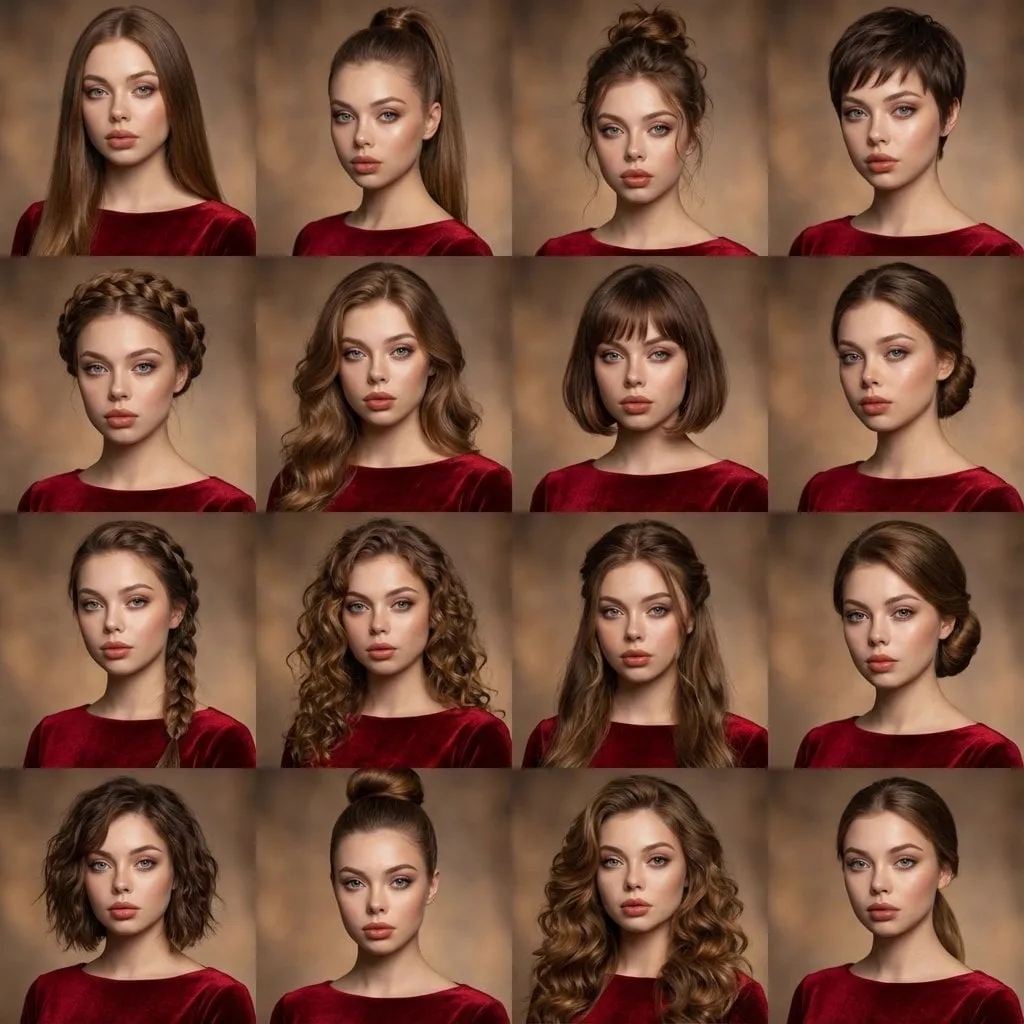
Create a character sheet early: a front view, a profile, and an action pose. Generate every scene using those same reference images. When a shot drifts, regenerate it with the references rather than trying to fix it in editing. It is faster and the result is cleaner.
The same logic applies to style. Define the color palette and visual language at the start of the project, and carry them through every prompt. Consistency is not a single technique; it is a habit applied across the whole workflow.
Director Agents and Storytelling
The newest layer of the workflow is the director agent: software that takes a script or a story description and manages the production of an entire sequence of shots. Instead of prompting one clip at a time and hoping they match, you describe the story once and the agent plans the scenes, selects models, and generates the shots with shared style and pacing.
This matters for anyone producing narrative content, whether it is a 30-second ad, a product story, or an explainer series. The agent keeps the continuity decisions centralized, which reduces the drift that happens when different scenes are prompted independently. It also frees you to focus on the story, the pacing, and the emotional arc instead of the mechanics.
Director agents are not magic. They still depend on the quality of the script and the references you provide. But they move the creative workflow from shot-by-shot improvisation to planned production, which is where professional results come from.
Adding Sound and Music
A generated video without proper audio feels unfinished, no matter how good the visuals are. Audio is half the experience, and it is the half that beginners most often neglect.
Modern tools offer two complementary capabilities: music generation and voice synthesis. Music generation lets you describe the mood, genre, and tempo of a soundtrack, and receive a track that fits. Voice synthesis turns a script into narration with natural prosody and emotional range.
Build the audio into the workflow rather than bolting it on at the end. Choose the music direction when you approve the visual style. Record or generate the narration when the script is final. Then assemble everything together, adjusting the mix so dialogue, music, and effects sit at the right levels.
Licensing is a hidden benefit of generated audio. Tracks produced for your project do not come with the usage restrictions and clearance headaches of stock libraries, which matters for commercial work and client deliverables.
A Practical Workflow for Social Content
Social media is where one-click generation pays off fastest, because the volume demand is relentless. A simple repeatable workflow keeps the quality high and the effort low:
- Batch the ideation. Write ten hooks or concepts in one sitting instead of one at a time.
- Batch the generation. Create a shared palette and reference set, then generate the images and clips for all ten concepts together.
- Batch the assembly. Add captions, music, and branding in a single editing pass.
- Publish and measure. Track which concepts perform, then double down on the patterns that win.
The point of batching is not speed for its own sake. It is consistency. When you work in batches, the visual language stays uniform across the content you publish, and that uniformity builds recognition. Audiences start to identify your content before they even read the caption.
Combining Generators With Traditional Tools
Generative AI does not have to replace your existing toolkit. The strongest workflows combine generators with traditional tools, using each where it is strongest. Photography and stock assets provide authentic material that AI can extend. Editing software handles the assembly that generators are not designed for. Graphic tools create the typography and layout that image models still struggle to produce reliably.
A common hybrid pattern: design the layout and typography in a graphic tool, generate the photographic elements with AI, then composite everything together. Another pattern: shoot or license a hero image, then use AI to create variations, backgrounds, and animations from it. The generator becomes an extension of your existing production, not a replacement for it.
The principle is to stop thinking about tools as competitors and start thinking about them as layers. Each layer does what it does best, and the workflow routes each task to the right layer. Teams that adopt this mindset produce better work with less friction than teams that try to make one tool do everything.
Batch Operations and Prompt Templates
Volume is where generative AI shines, but volume without structure produces chaos. Batch operations are the answer: prepare the materials once, then execute many generations with consistent parameters. Instead of writing ten prompts from scratch, build a template with the fixed elements of your style, and change only the variables for each item.
A practical batch session for a content series might look like this: define the palette and style references once, write the subject and action for each of the ten posts, then generate all of them in a single pass. Review the batch as a set, not as individual images, because the consistency across the set is part of the value.
Templates also protect your quality bar. When the fixed elements are locked, the variables cannot drift too far. New team members can produce work that matches the established style without years of experience. The template is the institutional memory of your visual identity, and it makes good results repeatable rather than accidental.
Common Pitfalls and How to Avoid Them
- Overpromising the model. No model can render an idea you did not describe. Write the description first.
- Ignoring references. Descriptions are good; reference images are better. Use both.
- Skipping the draft pass. Generate cheap versions, review the story, then invest in the final quality.
- Forgetting audio. A silent video, or one with mismatched music, reads as unfinished.
- Chasing every new model. Build an evaluation set and test objectively instead of switching on hype.
- Discarding failed prompts. Log what did not work. That knowledge is as valuable as the successes.
Frequently Asked Questions
Is one-click generation really that easy?
The generation itself is easy, but good results require craft. The skill is in preparation, prompt writing, reference management, and curation. People who treat the tool as a magic button get inconsistent results; people who treat it as an instrument get repeatable quality.
Can I use the output commercially?
Generated content can be used commercially, but check the specific terms of the platform you use, especially for client work and high-reach campaigns. When in doubt, keep records of the generation prompts and settings, which many platforms provide for provenance.
How do I make my characters look the same across scenes?
Use the same reference images for every generation, describe the character identically in every prompt, and create a character sheet at the start of the project. Regenerate any shot that drifts instead of trying to fix it in post-production.
What is the fastest way to learn?
Start with one tool and one format. Generate thirty images with the same subject and different prompts to learn how the model responds to language. Then generate the same scene with different styles. Systematic practice teaches you the model's behavior faster than random experimentation.
How much does it cost?
Costs vary by platform and model. The practical approach is to separate the workflow: use inexpensive fast models for drafts and mood boards, and reserve premium models for the final approved assets. Most teams find the economics work out to a small fraction of traditional production costs for most formats.
