
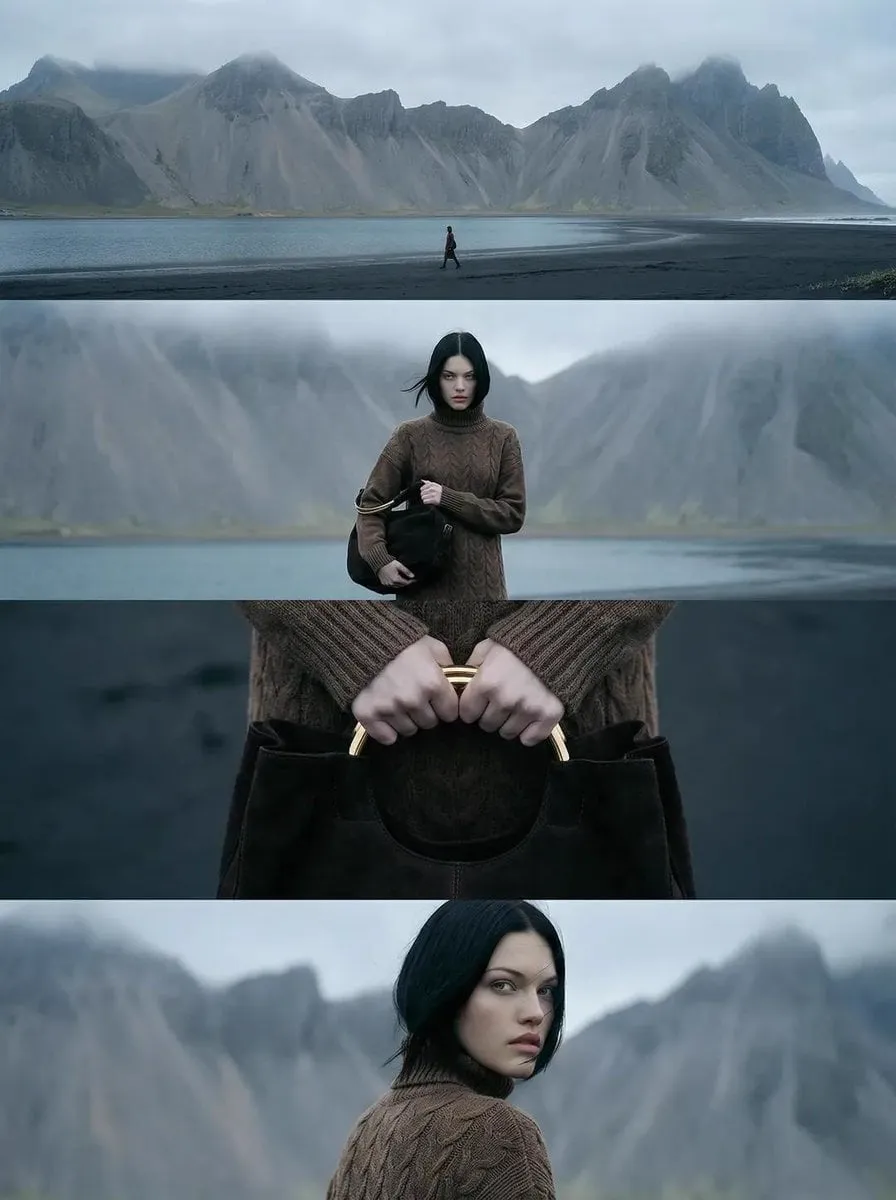

Generative AI has crossed a threshold. In a few years it moved from producing curiosity images to creating high-resolution, long, and consistent video from a plain text prompt. For anyone who makes media professionally — marketers, designers, indie filmmakers, and educators — this changes the economics of ideas. You can now sketch a concept, generate a rough visual, and iterate on a look before anyone touches a camera. This guide compares the leading names in the space, explains what actually separates them, and helps you match a tool to the work you do.
The landscape in a single frame
The market splits into two camps. On one side are models tuned for still images, led by familiar names such as Midjourney, that are now extending into motion. On the other are dedicated video generators, dominated by Runway and OpenAI Sora, that treat a prompt as the beginning of a moving scene rather than a picture. Between them sit a host of challengers from Asia and specialist tools that balance cost and convenience.
The practical reality is that no single model wins every category. Choosing the right tool means knowing what each player does best and, just as important, what it compromises to get there.
The still-image leaders and their step into motion
Midjourney: aesthetic control first
Midjourney remains the benchmark for style. Its image output is consistently beautiful, and it gave creators a way to dial in mood, palette, and composition that rivals feel an echo of. Its expansion toward video builds directly on that aesthetic strength: clips inherit the same careful look, which makes Midjourney a strong choice for brand-oriented visuals where polish matters more than physics.
The trade-off is control over time. Its video output has focused less on temporal realism and more on maintaining its signature visual quality. If your priority is a specific artistic direction reproduced faithfully, Midjourney is a natural home; if you need convincing motion or intricate action, you will often pair it with a dedicated video model.
The video-first leaders
Runway: the editor's model
Runway grew from an editing tool, and that history shows. Its strengths lie in flexibility: iterative control, inpainting and compositing, and a workflow that lets you reshape a clip rather than treat it as a finished frame. For professionals who already think in timelines, Runway fits naturally and keeps delivering on the craft side of production.
It is the model to reach for when you need to finesse material — fix a moment, change an object, or blend generated footage with real footage. The emphasis is on control and iteration rather than on the first-pass realism of some rivals.
OpenAI Sora: modeling the physics of scenes
Sora's breakthrough is comprehension, not just pixels. Its training pushed the model to understand how the physical world behaves, so objects cast consistent shadows, water flows believably, and a scene holds together over a longer span. For anything that must read as real — a product bobbing in the sea, a crowd moving through a plaza — Sora is the current reference point.
Its limitations come down to access and compute. Strong results require significant resources, and the model has been guarded in how it is offered, which can put it out of reach for casual or budget-conscious creators. Teams that must produce believable real-world footage, though, keep returning to it.
The challengers redefining the race
The most interesting dynamics in 2025 come from challengers, many of them based in Asia, that pair aggressive ambition with competitive access.
Kling AI and MiniMax Hailuo
Both have earned respect for specialized strengths. Kling AI has been praised for physically coherent motion and faithful character behavior, while MiniMax Hailuo brings strong stylization and efficient generation for animated and character-driven content. They close the gap on the leaders in key tasks and often do so at a friendlier cost, making them serious options for volume production.
PixVerse and Luma Ray
These tools focus on creative control and lens language: camera moves, depth, and composition. PixVerse leans into accessible, community-driven generation, while Luma Ray remains a strong, dependable engine for realistic short clips. They are excellent places to experiment because they lower the cost of trying an idea.
Pika, Vidu Q1, and Tencent Hunyuan
Rounding out the roster are generalists that balance range and efficiency. Pika is known for fast, playful editing-style generation; Vidu Q1 and Tencent Hunyuan push impressive realism for broad audiences. They are the pragmatic choices when you need dependable results across many types of scenes rather than a specialist edge.
Image quality versus video consistency
A recurring tension in this space is the trade-off between the beauty of single frames and the coherence of a moving sequence. Image-first models such as the Flux family produce frames that are, frame for frame, often more stunning than video models; yet the video stills may wobble, and character identity may not hold from shot to shot. Video-native models invest in temporal consistency, and their individual frames can look softer precisely because the model is solving a harder problem over time. Deciding which compromise you can live with is the fastest way to narrow the field before you ever compare a rendered clip.
Knowing which failure is acceptable is the key decision criterion. If your deliverable is a striking keyframe or hero shot, a strong image model with light motion suits you. If your deliverable is a scene that holds together for several seconds, invest in a video-native model. Trying to use one for the other almost always leads to disappointment.
Matching the tool to the job
A practical decision framework works better than popularity lists.
Brand and styled visuals
Choose based on aesthetic control. Midjourney leads for signature looks; pair it with a motion tool when the piece must actually move.
Realistic product and environment footage
Choose based on physical believability. Sora and the strongest physics models win here; use a leader model for the hero shot and switch to an efficient model for supporting plates.
Editing, compositing, and iteration
Choose Runway-class tools that treat generation as a craft you can reshape. The value is in the workflow, not a single first-pass frame.
High volume and social content
Choose cost-efficient generalists such as Pika, Vidu, Kling AI, or Hailuo. They deliver good-enough quality at scale, letting you publish fast without a punishing per-clip cost.
Narrative, character-driven series
Choose tools with strong consistency features, and pair a video model with a reference-fusion workflow so the same character survives many scenes. No single model currently nails long-form character identity on its own.
Building a practical multi-tool workflow
The most effective productions are rarely single-tool. A realistic pipeline looks like this: sketch ideas and define a look with Midjourney; generate hero photorealistic footage with a physics-capable model such as Sora; composite and finesse with Runway; and produce supporting clips and social variants with an efficient tool such as Pika or Vidu. Because each model does its piece well, the combined output beats anything a single model produces alone. This division of labor also makes the pipeline resilient: when one model is down or over capacity, the others keep the project moving until it returns.
Keep assets portable. Store reference sheets and prompt skeletons so a look survives the handoff between tools. Version your prompts, and save finished scenes as reusable plates.
Practical guidance for teams
Start with the deliverable
Define the end use before choosing a model. A hero keyframe, a moving product demo, a social loop, and a narrative series each call for a different primary tool.
Budget the compute
Physics-heavy and high-fidelity models cost more per clip. Assign your premium generation budget to hero content and use efficient models for exploration and volume.
Keep an eye on the calendar
Video models update quickly. What lags this quarter can leapfrog next. Re-test your top three tools every few months rather than assuming last year's ranking still holds.
Building an evaluation checklist
To compare tools fairly, give every candidate the same tests. A short, repeatable checklist removes guesswork from what is otherwise an emotional decision.
Motion test
Describe a simple action with clear physics, such as something falling into water. Compare how convincingly the model handles the movement and whether it keeps the subject coherent across the whole clip.
Style control test
Pick a distinctive visual style and see how faithfully each tool reproduces it. Note whether the model holds your palette and framing or drifts toward its own default look.
Consistency test
Generate the same subject in three different scenes and check whether identity holds. This matters most if you make series or character-driven work.
Editorial work test
For Runway-style tools, try iterating: regenerate a specific region, change an object, and blend with your own footage. Smooth iteration is the whole value proposition, so test it explicitly.
Volume and access test
Estimate the real per-clip effort and whether the tool scales to your cadence. A brilliant model you cannot use quickly is worth less to a busy creator than a capable one you can.
Cost strategy for serious production
Generative media plans and quotas vary, but a few principles hold. Put the bulk of your premium generation into hero content and brand-defining shots, and use efficient tools for exploration, placeholders, and social variants. Meter your usage by project rather than by whim, and keep a running note of what each deliverable actually charged. When you gather enough data, the numbers tell you both which tool pays for itself and which scenes are eating the budget for results you do not need.
When to invest in a multi-tool pipeline
You reach the point of diminishing returns with a single tool when you keep hitting its specific weakness. If every hero shot needs physics you cannot get, add a physical-realism specialist rather than fighting your current model. If the look is the brand, add a stylistic model and keep it for keyframes. The trigger for a second tool is not novelty; it is a concrete, recurring need that your primary tool cannot meet. Add tools deliberately, one at a time, and only when the workflow demands it.
Usage rights and practical notes
Where you plan to publish also shapes the choice. Brand work, client deliverables, and commercial campaigns warrant checking the licensing terms of the model you use and reading how outputs may be used. Transparently logging which model produced which shot makes audit and reuse smoother, and it helps you explain decisions if a client asks. These practical steps feel like overhead now, but they protect long projects and make scaling to a wider team far less stressful. Keep that log in the same project folder as your references, and note the date, model version, and settings for each approved shot so any scene can be reproduced on demand.
Frequently asked questions
Is Midjourney better for video than Runway or Sora?
It depends on the goal. Midjourney wins on aesthetic polish and a specific look; Runway wins on editing and iteration; Sora wins on believable physics and longer coherence. Match the tool to the deliverable.
When should I use Sora over cheaper models?
Use Sora when physical believability is the top requirement and the output will be seen at large scale. For exploration, social content, and volume work, efficient models often deliver good enough quality for a fraction of the cost.
Can these tools keep a character consistent across a series?
Only partially, and only with extra effort. Use reference-fusion techniques and a disciplined reference set; no model currently maintains identity across a long series on its own.
Do I need a powerful computer?
No. The leading video models run in the cloud through a browser. Local experimentation is possible with open models but requires a strong GPU if you render on your own machine.
